Throughout this investigation, one lesson has become increasingly clear.
Understanding the science is only part of the story.
To understand the business, you first have to understand the structure behind it.
Every organisation has a legal framework.
Every investment has an ownership structure.
Every intellectual property portfolio belongs to someone.
Those are not controversial observations.
They are the starting point of every corporate investigation.
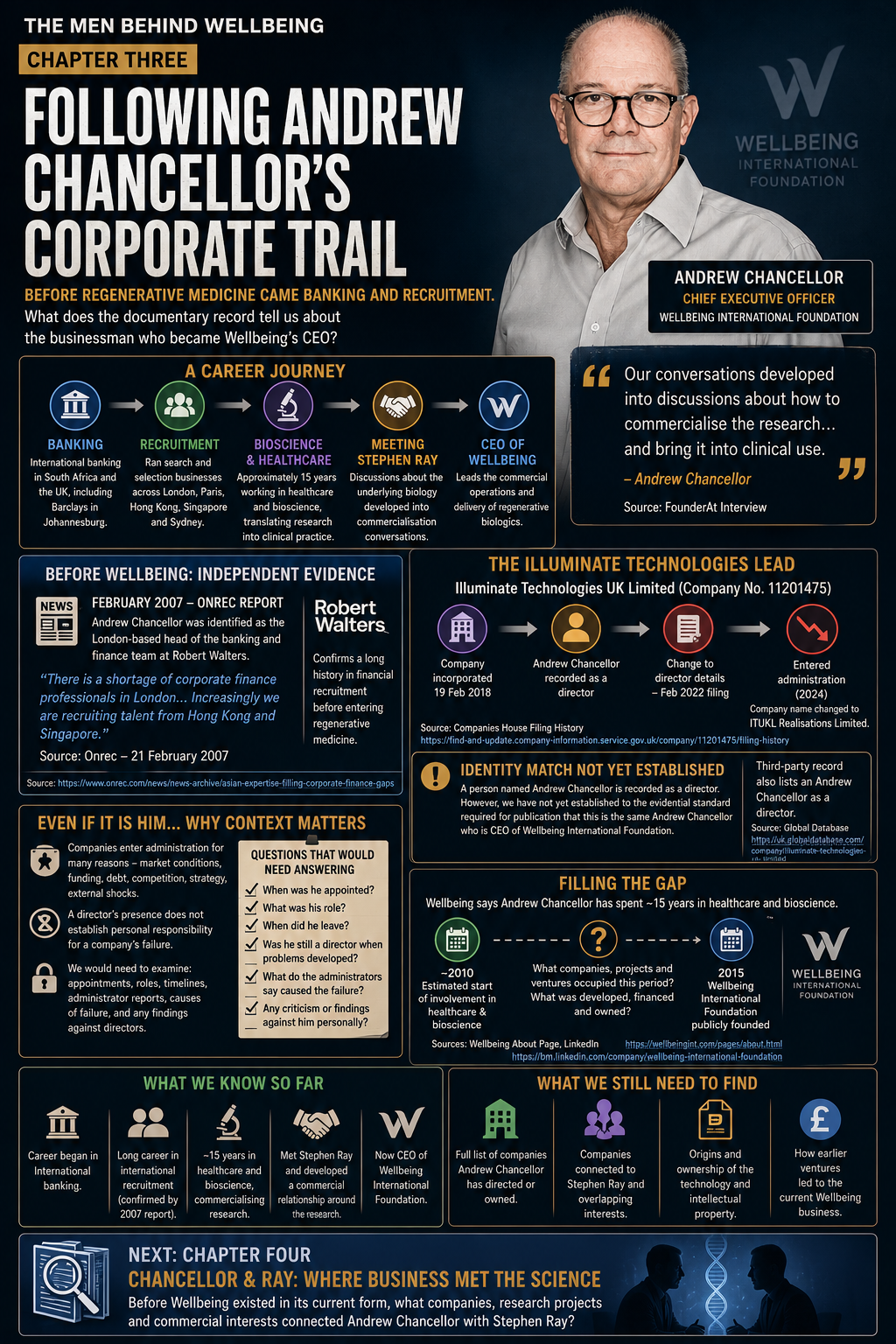
As I moved beyond scientific papers and into company records, a new set of questions began to emerge.
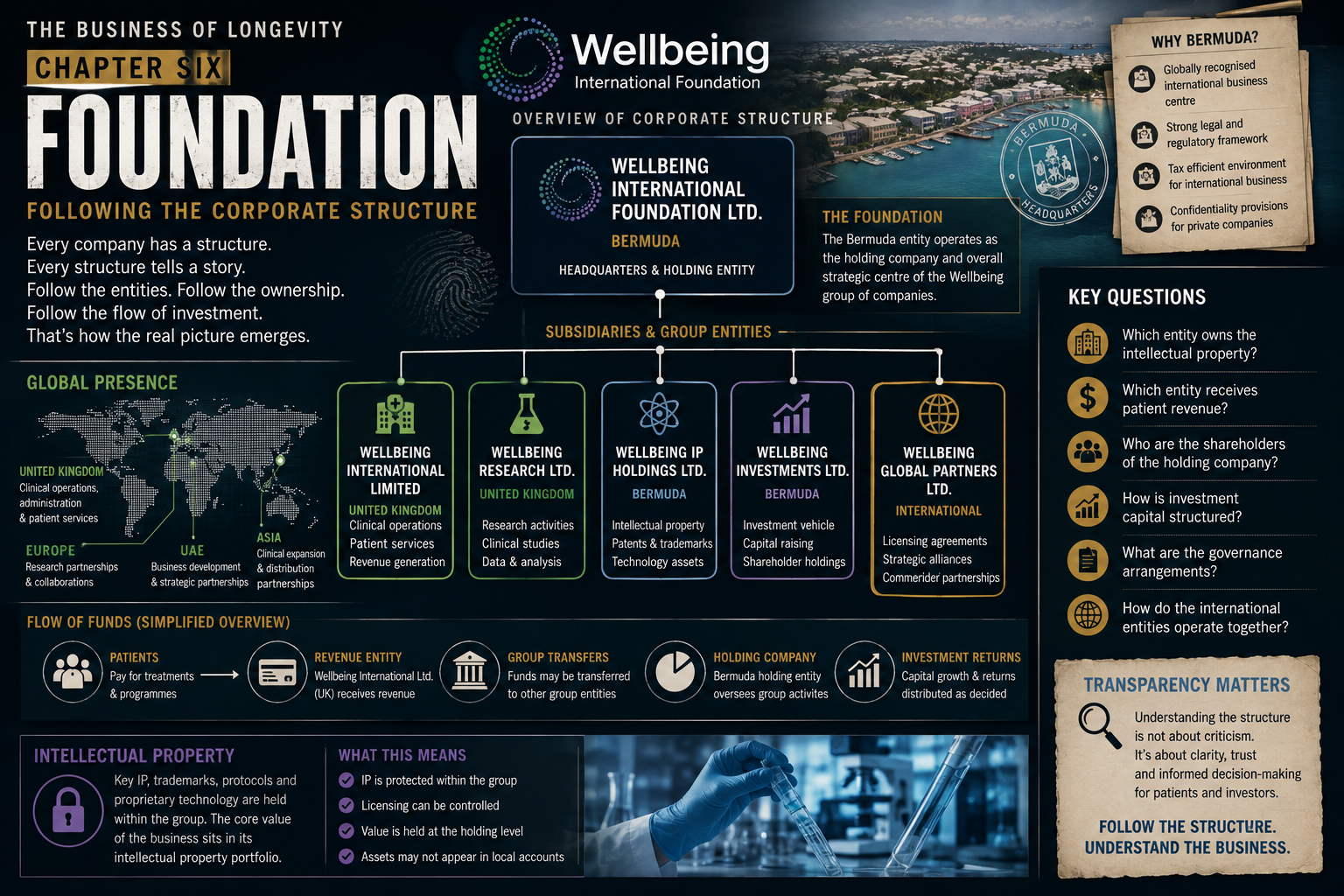
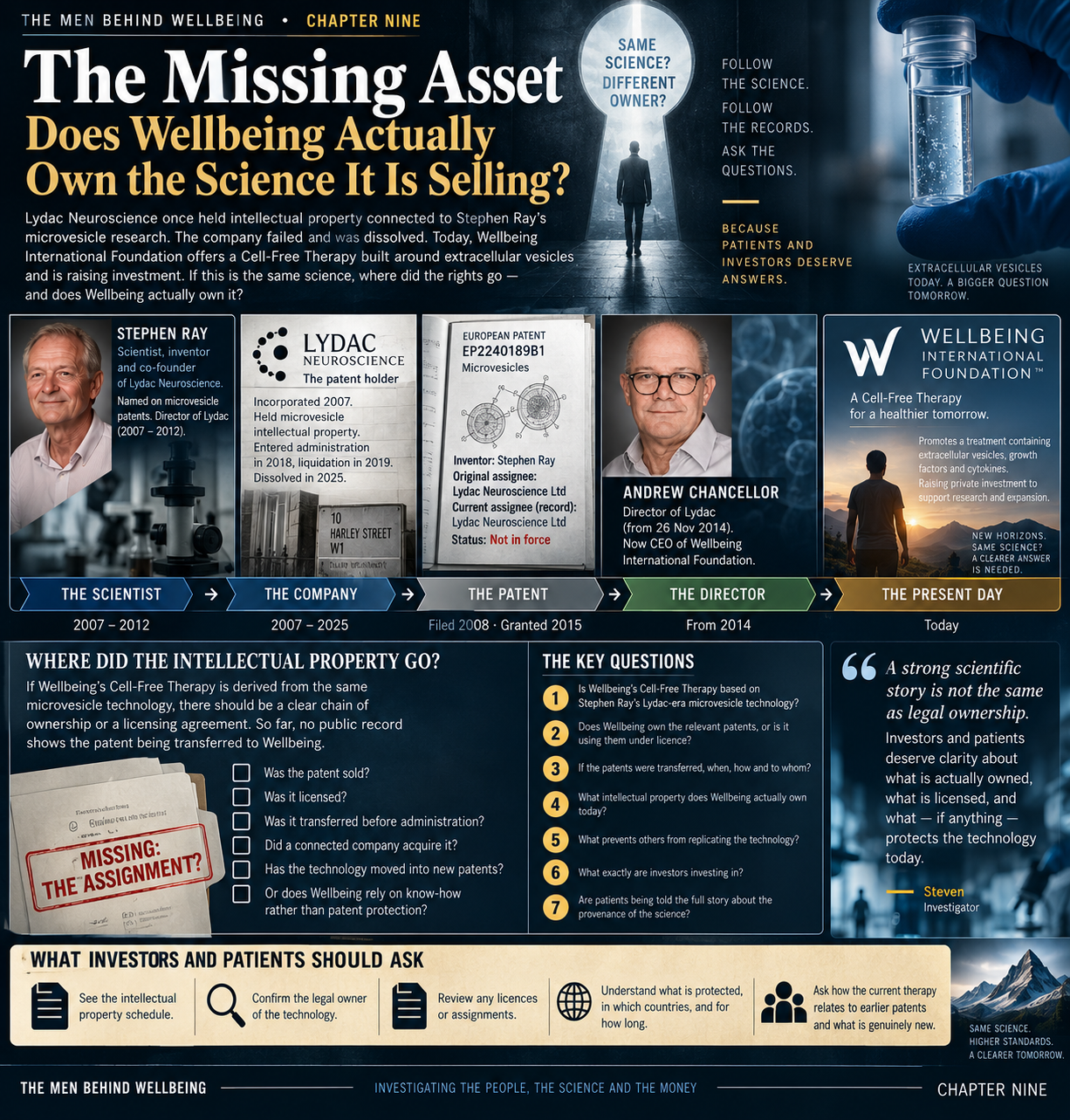
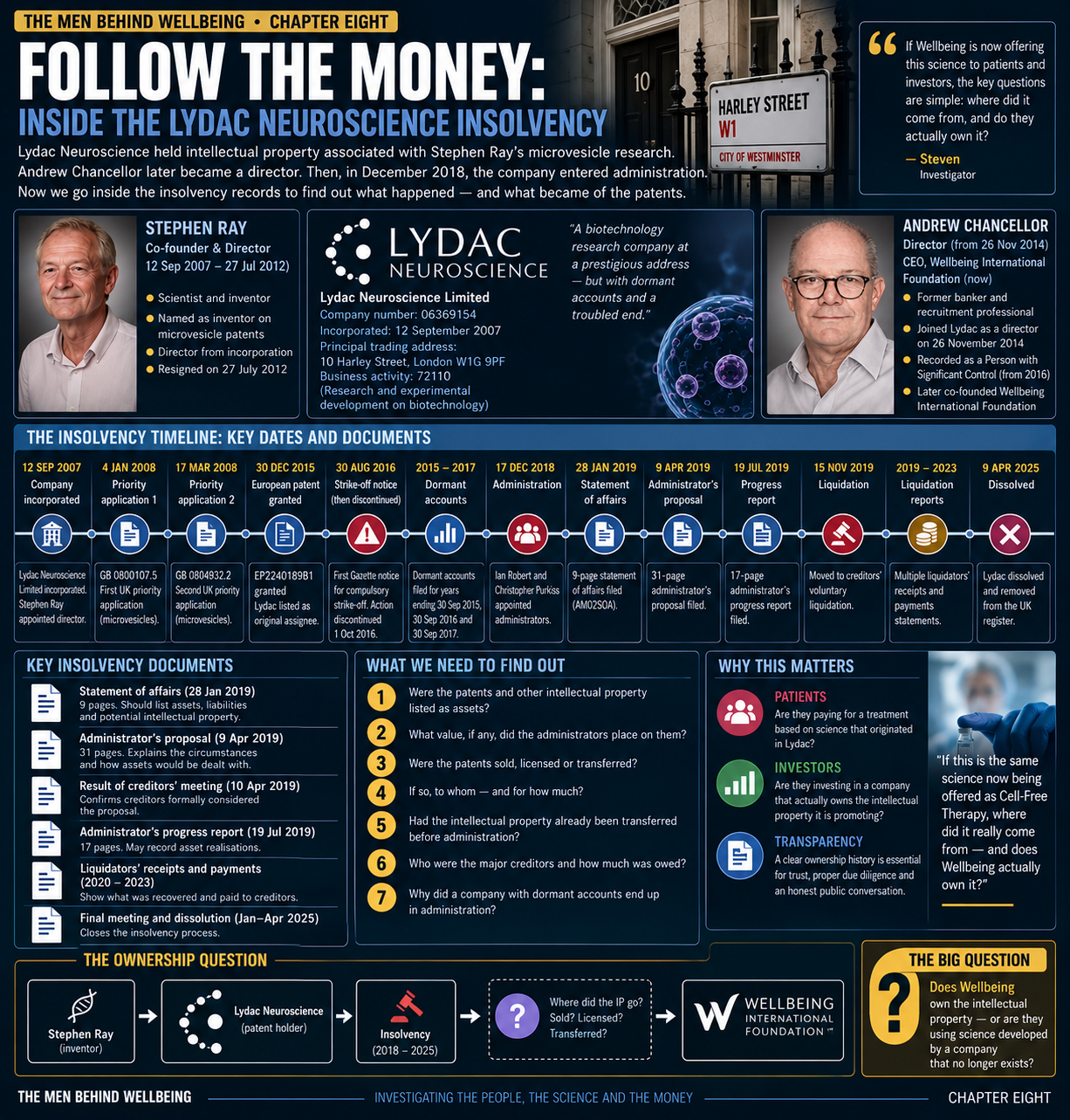
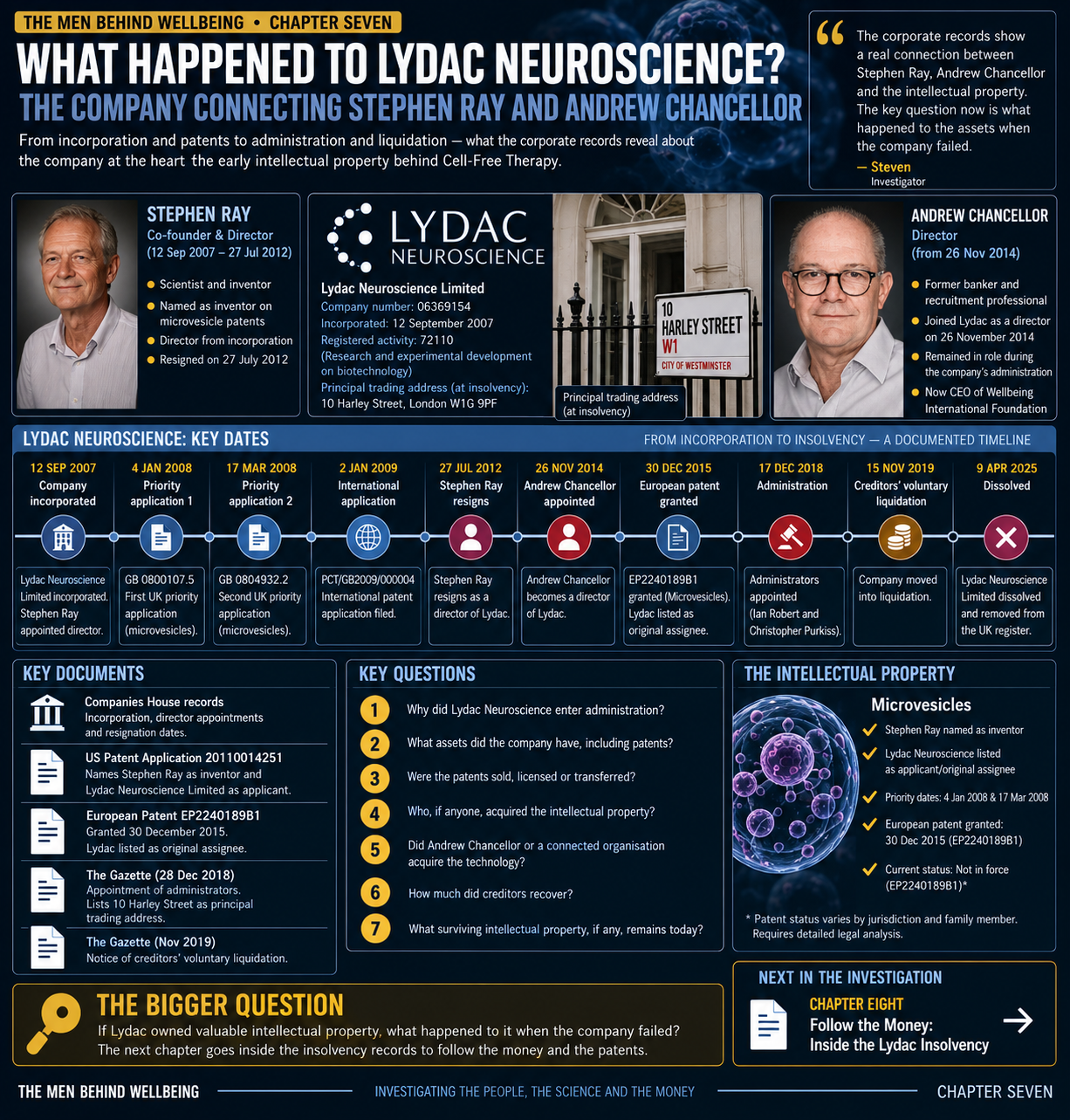
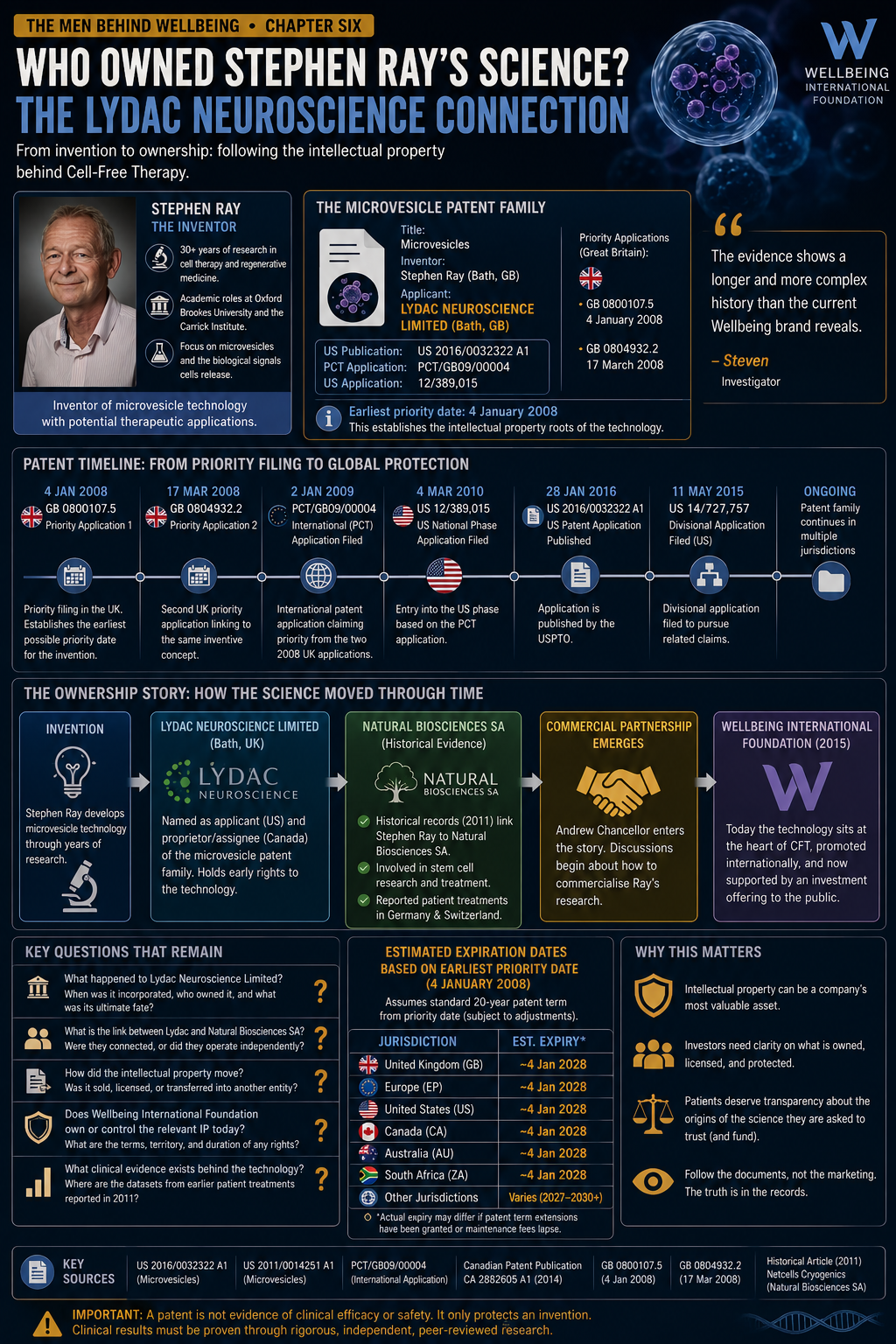
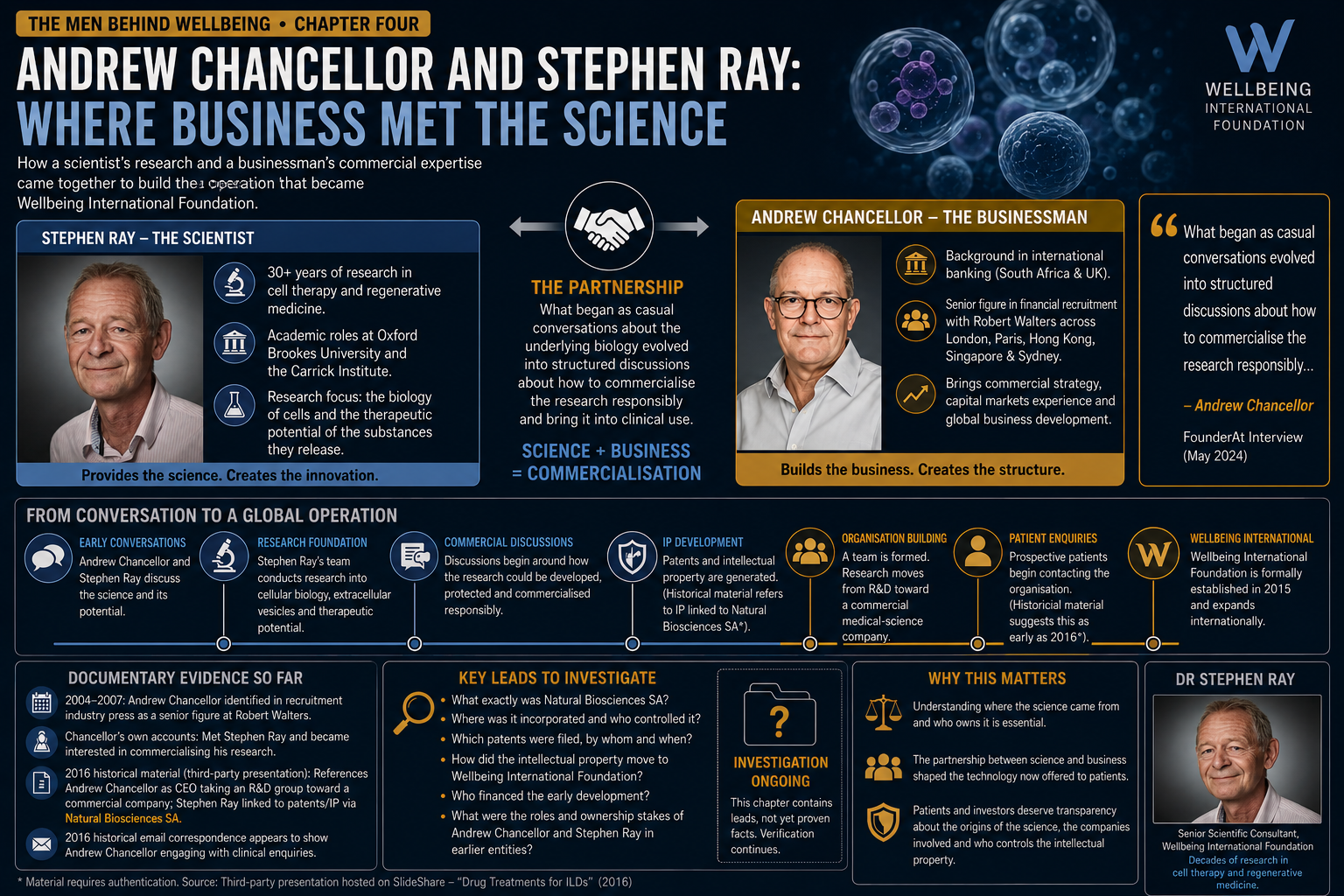
Who owns the intellectual property?
Which company receives patient revenue?
Which entity raises investment?
Where does one company end and another begin?
Answering those questions proved considerably more difficult than expected.
Looking Beyond the Brand
Most people encounter Wellbeing International Foundation through its website.
They see a healthcare organisation promoting regenerative medicine, longevity science and innovative biological therapies.
That is the public face of the business.
The legal structure, however, is something entirely different.
Behind every recognised brand sits a network of companies, directors, registrations, contracts and corporate relationships.
Sometimes that network is remarkably simple.
Sometimes it spans multiple countries and multiple legal entities.
Understanding that structure is not about suspicion.
It is about clarity.
Why Corporate Structure Matters
Corporate structures exist for many legitimate reasons.
Businesses separate activities to manage risk.
Intellectual property may be held in one company.
Clinical operations in another.
Research in a third.
Investment and finance in yet another.
Large pharmaceutical companies have done this for decades.
There is nothing unusual about it.
The important question is not whether multiple entities exist.
The important question is whether people can understand how they relate to one another.
For patients, that means understanding who is providing the treatment.
For investors, it means understanding where the assets sit.
For regulators, it means understanding who is responsible for what.
Transparency benefits everyone.
The Bermuda Question
One aspect of Wellbeing's corporate structure immediately attracted attention.
The organisation identifies Bermuda as its headquarters.
Bermuda is a respected international financial centre and home to many multinational businesses.
Companies choose Bermuda for a wide range of legitimate commercial reasons, including international operations, legal certainty and corporate flexibility.
The jurisdiction itself is not the issue.
The challenge is that privately held companies incorporated there often publish considerably less financial information than publicly listed businesses.
That means outsiders attempting to understand ownership, financial performance or capital structure have fewer publicly available documents to work with.
It does not imply secrecy.
It does, however, make independent due diligence more challenging.
Following the Money
One of the recurring themes throughout this investigation has been investment.
Wellbeing publicly announced that it had completed the first tranche of its 2026 funding round.
The announcement confirmed that capital had been raised to support continued growth.
What it did not disclose publicly included:
- the amount raised;
- the valuation of the business;
- the identities of investors;
- the investment structure;
- ownership changes resulting from the fundraising.
For a privately owned company, there is nothing inherently unusual about keeping those details confidential.
Nevertheless, anyone attempting to understand the business is left with an incomplete picture.
Without those details, it becomes difficult to assess how the organisation is financed or how ownership may have evolved over time.
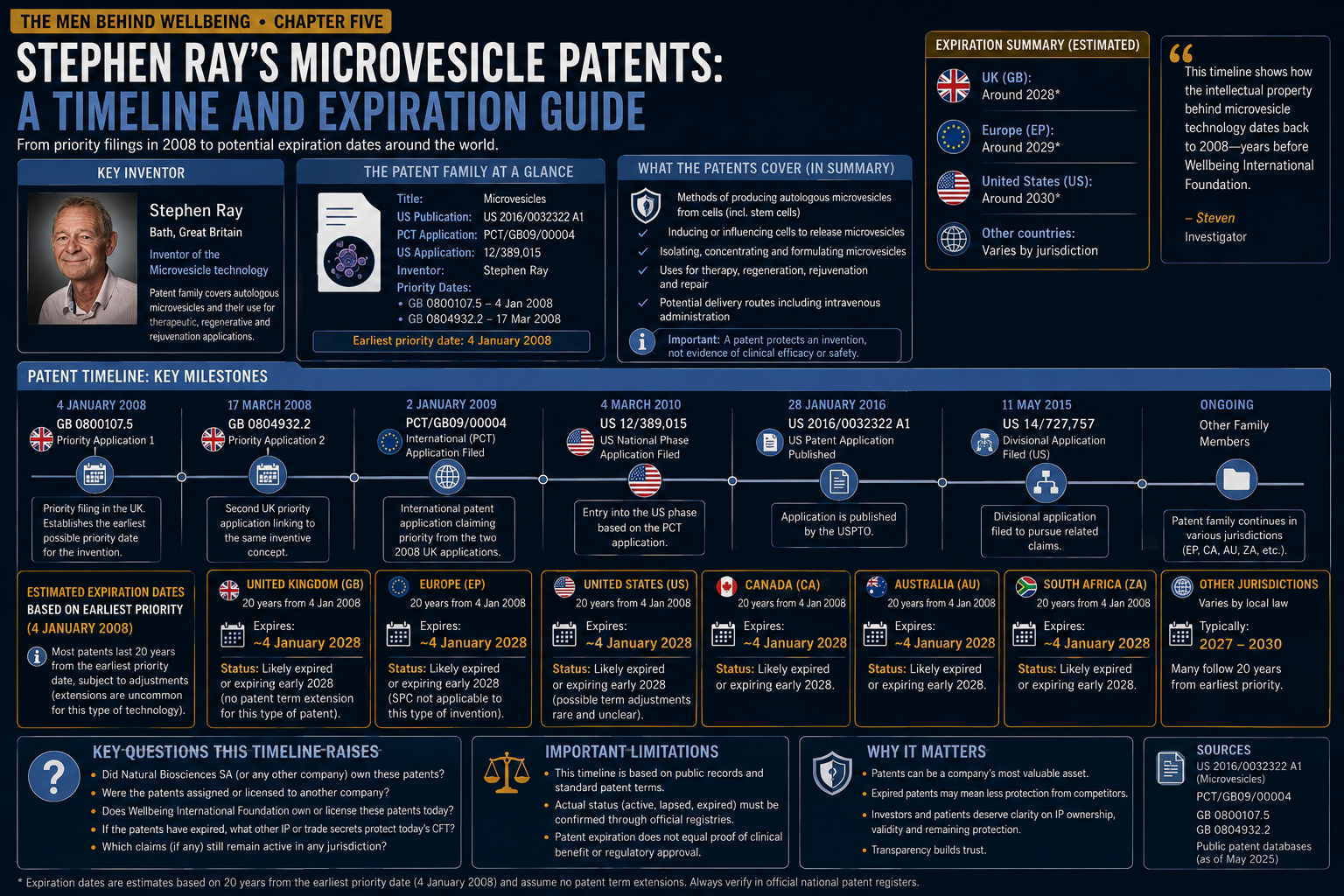
Intellectual Property
Throughout the biotechnology industry, intellectual property is often the most valuable asset a company owns.
Patents.
Research.
Manufacturing processes.
Trade secrets.
Licensing agreements.
These assets frequently represent far more value than laboratories or office buildings.
That naturally raises another important question.
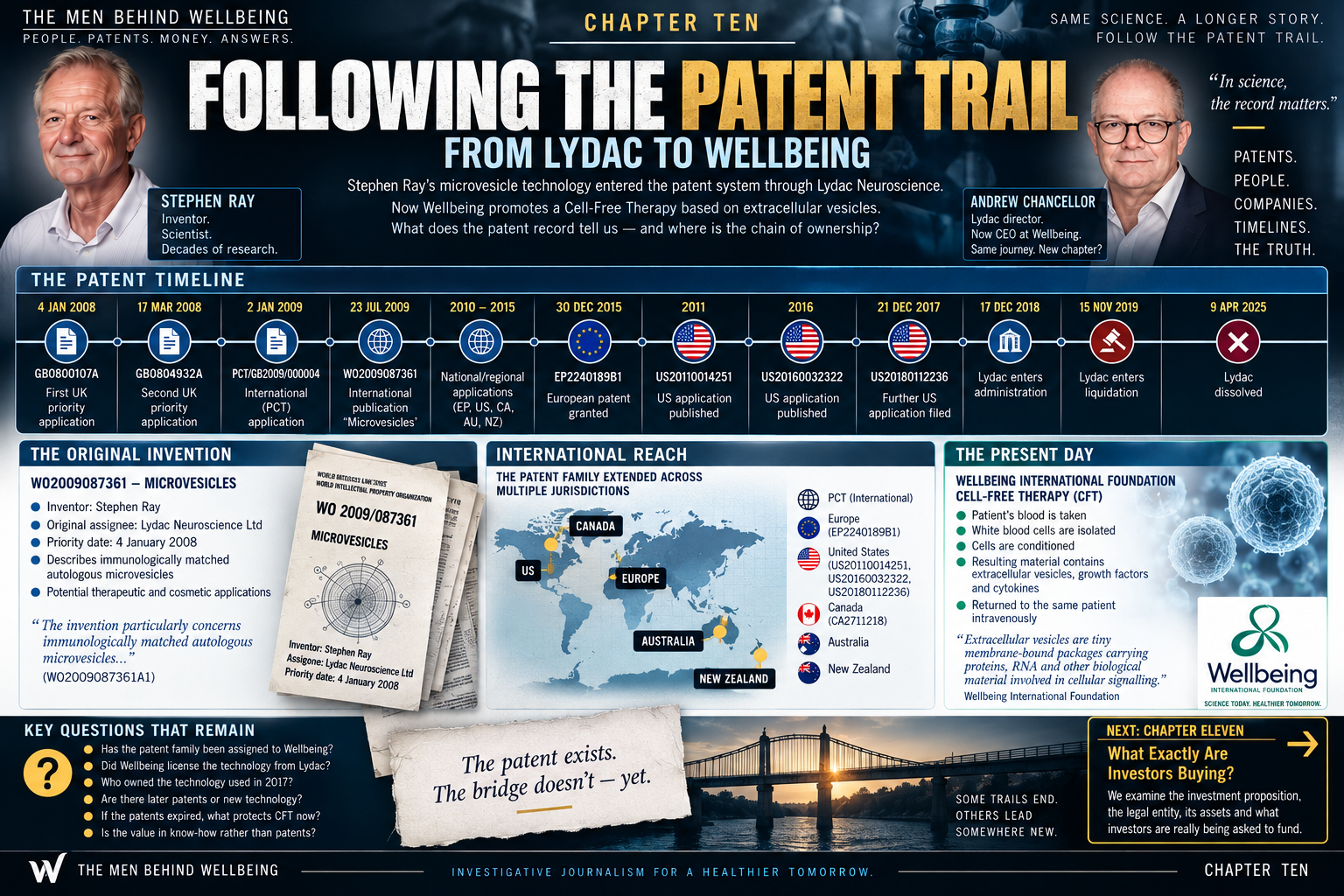
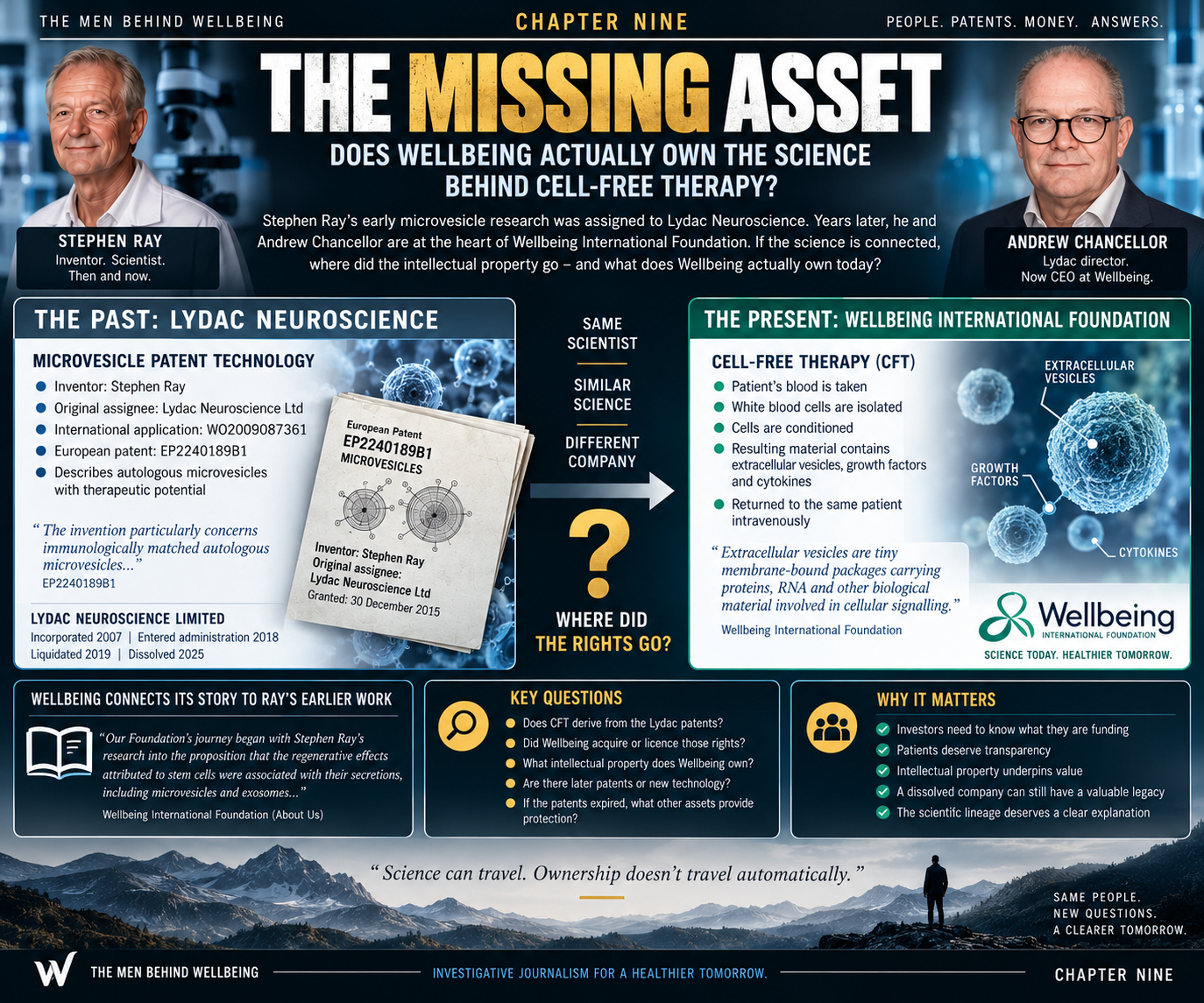
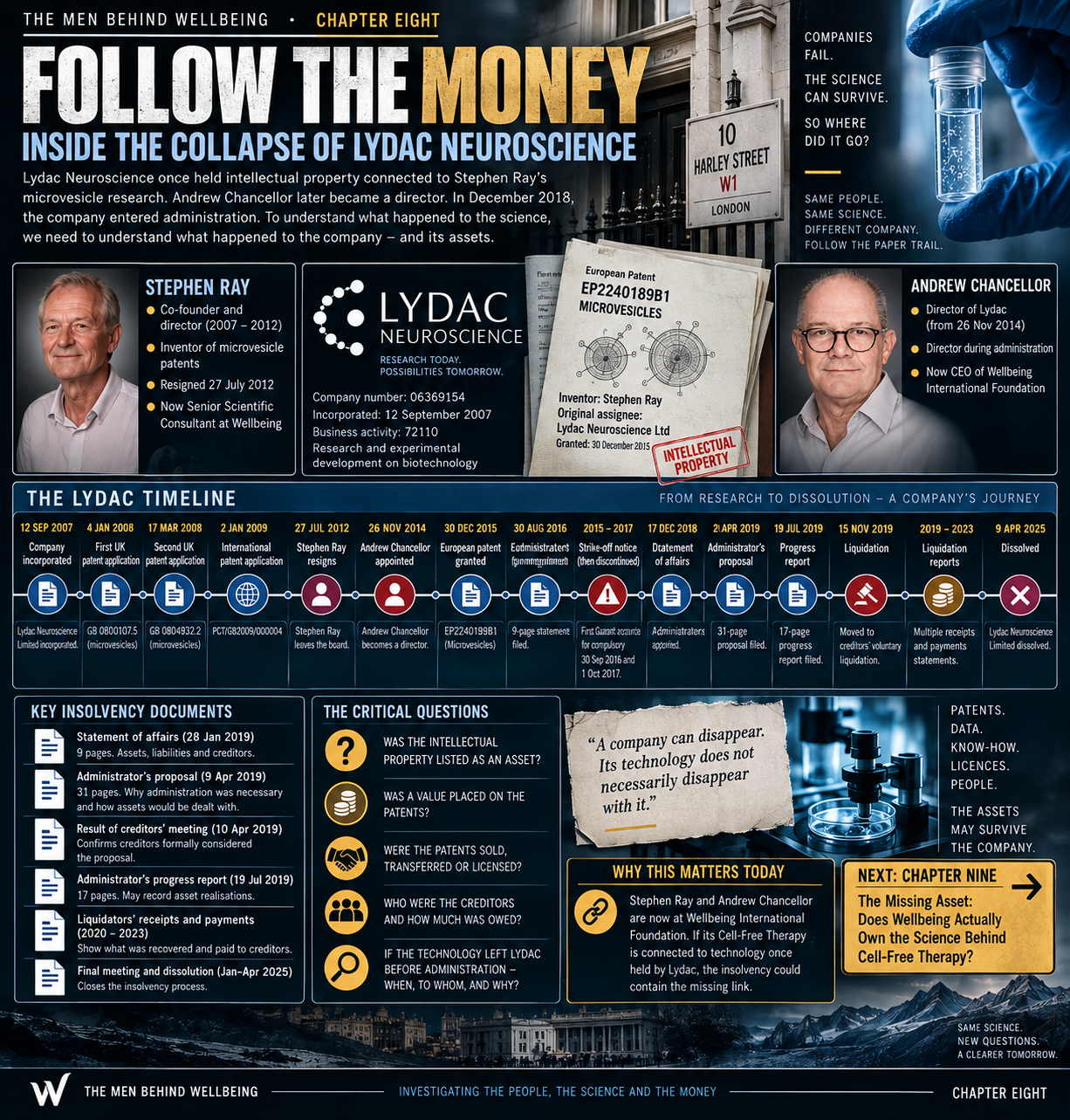
Where is Wellbeing's intellectual property held?
Is it owned directly by the Foundation?
A separate holding company?
A licensing entity?
A research subsidiary?
At present, those relationships are not fully explained within the publicly available information.
Understanding where those assets sit is a key part of understanding the business itself.
Why Transparency Matters
Throughout this investigation I have been careful to distinguish between missing information and evidence of wrongdoing.
They are not the same thing.
A private company is under no obligation to publish every aspect of its corporate affairs.
Equally, when an organisation operates within healthcare, raises private investment and promotes innovative therapies, transparency inevitably becomes more important.
Patients place trust in the treatment.
Investors place trust in the management.
Both groups benefit from clarity.
Transparency does not weaken confidence.
It strengthens it.
The Questions That Remain
Despite months of research, several important questions remain unanswered.
- Which entity ultimately owns the core intellectual property?
- Which company receives patient payments?
- Which legal entity raised the investment announced in 2026?
- How are the various companies connected?
- Where does operational control sit?
- How does the Bermuda headquarters interact with companies in other jurisdictions?
These are not accusations.
They are simply the next stage of responsible due diligence.
Looking Ahead
If this chapter has shown anything, it is that understanding a modern biotechnology company requires more than reading scientific journals or corporate biographies.
It requires understanding the legal architecture behind the organisation.
The companies.
The directors.
The ownership.
The flow of investment.
The movement of intellectual property.
In the next chapter, we begin mapping that architecture in greater detail.
Who owns what?
Who controls what?
And ultimately, who benefits if the business succeeds?
Those answers may prove just as important as the science itself.