WELLBEING INTERNATIONAL FOUNDATION LTD UNDER INVESTIGATION
WELLBEING INTERNATIONAL FOUNDATION LTD UNDER INVESTIGATION
WELLBEING INTERNATIONAL FOUNDATION LTD UNDER INVESTIGATION
WELLBEING INTERNATIONAL FOUNDATION LTD UNDER INVESTIGATION
WELLBEING INTERNATIONAL FOUNDATION LTD UNDER INVESTIGATION
WELLBEING INTERNATIONAL FOUNDATION LTD UNDER INVESTIGATION
WELLBEING INTERNATIONAL FOUNDATION LTD UNDER INVESTIGATION
The Shell Game: How “Wellbeing”-Style Stem-Cell Operators Hide in Plain Sight
They rarely look like criminals at first glance.
The branding is clean. The language is hopeful. The story is “breakthrough science.” The paperwork looks corporate. And the patient—often scared, exhausted, and running out of options—is told the same irresistible line: mainstream medicine has failed you, but we can help.
Behind many questionable stem-cell and “regenerative medicine” outfits sits a business structure that’s designed not for healthcare, but for distance: distance from regulation, distance from accountability, and distance from refunds.
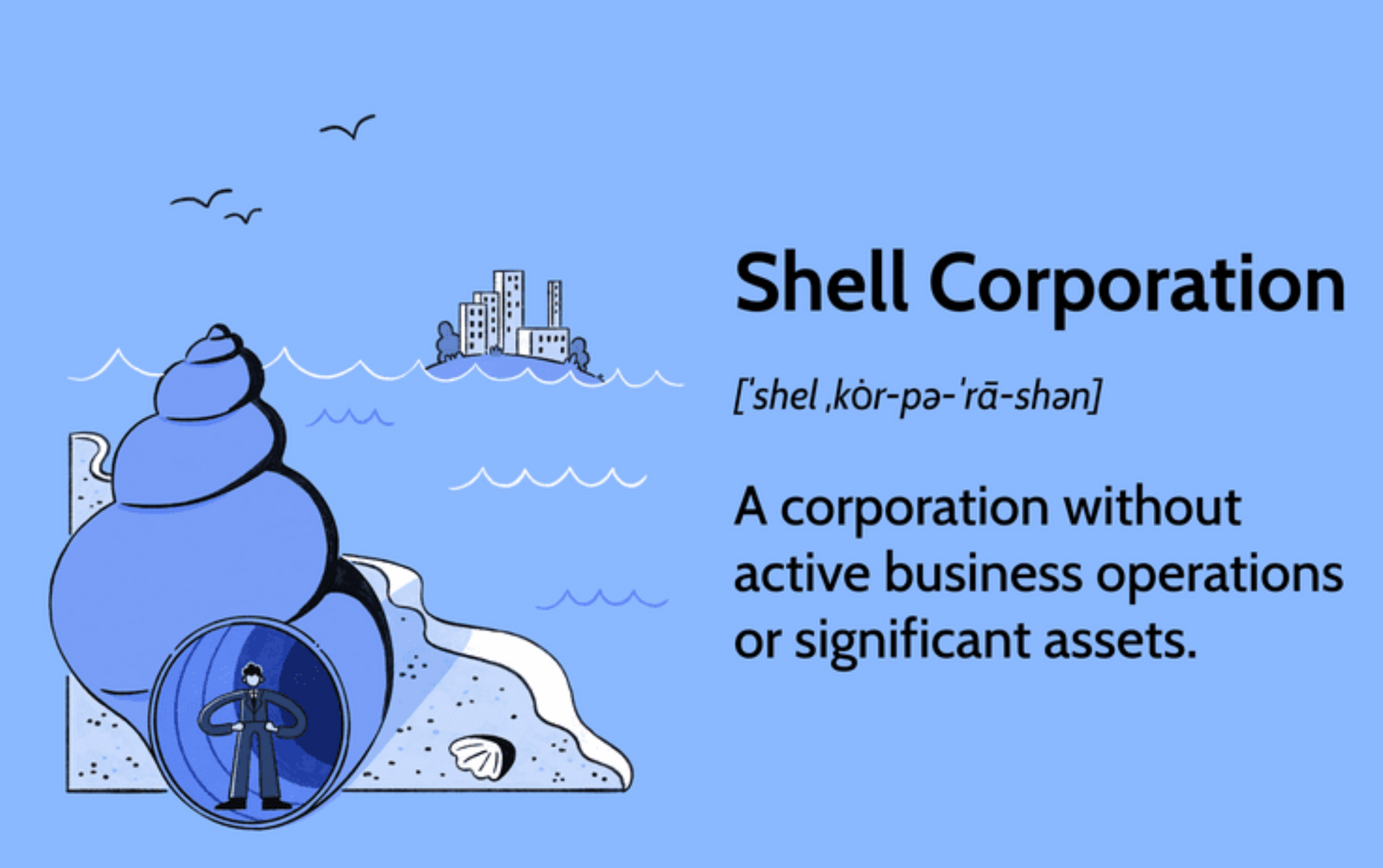
That structure is often what investigators call a shell company.
What a “shell company” actually means (in plain English)
A shell company is a legal business entity that exists on paper but has little or no real operating substance:
- no meaningful staff
- no clinical infrastructure
- no lab capacity
- no clear medical governance
- sometimes no obvious trading history
- sometimes no public-facing premises beyond a mailbox, shared office, or “virtual address”
A shell company can be lawful. Plenty of legitimate businesses use holding companies, special purpose vehicles, or subsidiaries for tax, investment, or asset separation.
The problem is when shells are used as a shield—especially in health-related services where the stakes are high and the consumer is vulnerable.
Why stem-cell “treatment” schemes love shells
If you’re running an honest clinic, you want trust and traceability: transparent clinicians, clear premises, published outcomes, and regulated processes.
If you’re running a high-margin hope business, you want the opposite: movable pieces.
Shell structures help operators:
1) Create instant credibility
A registered company name—especially one with words like Foundation, Institute, International, Research, Wellness, Regenerative—can sound like a serious medical organisation even when it’s just a basic company registration.
A company number, a website, and a “director” can be enough to convince a desperate customer that they’re dealing with something official.
2) Limit liability when things go wrong
When patients complain—about outcomes, side effects, or money—shells make it easier to say:
- “That wasn’t us, that was a partner clinic.”
- “We’re only a consultancy.”
- “We provide introductions, not treatment.”
- “The doctor is independent.”
- “The payment was for logistics, not medical care.”
Translation: responsibility is always somewhere else.
3) Keep the money flowing while the entity stays disposable
A common pattern is to separate the parts of the operation:
- Marketing company (ads, lead capture, testimonials)
- Booking/concierge company (consultations, “patient coordinators”)
- Payment company (invoices, bank accounts, card processing)
- Treatment location (often offshore, or loosely affiliated)
If heat arrives—bad press, chargebacks, regulator interest—the “front” company can be shut down, renamed, or replaced, while the core operation continues under a new label.
4) Make enforcement slow and confusing
Regulators and banks move on paperwork. Shells create paper fog:
- directors who resign and reappear
- addresses that lead to serviced offices
- rapid changes to “persons with significant control”
- brands that don’t match the legal entity taking payment
- contracts that route disputes to another country or arbitration scheme
By the time anyone catches up, the trail is cold—or it’s been intentionally rerouted.
5) Sell hope without making medical promises “on paper”
The public messaging can be carefully written to dodge direct medical claims:
- “may help,” “could support,” “regenerative potential”
- “case studies” instead of trials
- “patient stories” instead of outcomes
- “research-backed” without citing actual peer-reviewed evidence for that treatment for that condition
Meanwhile, the sales call can be far more direct—because phone conversations don’t leave the same searchable evidence as a webpage.
How the “shell clinic” machine typically work
Picture a funnel:
Step 1: Emotional targeting
Ads, Facebook groups, YouTube testimonials, “recovery stories,” and before/after narratives—often aimed at chronic illness communities where conventional care is frustrating or slow.
Step 2: Soft authority
A “medical advisor,” a “professor,” a “research team,” or a “foundation.” Titles are used to create authority vibes even when the actual oversight is unclear.
Step 3: The consult that isn’t really a consult
Patients are “pre-qualified” by coordinators. Genuine informed consent requires risk, alternatives, realistic outcomes, and documented evidence. In questionable operations, it becomes a sales script with a clinical costume.
Step 4: Payment separation
A key tell: the invoice isn’t from a recognisable clinic with a fixed address and named medical lead. It may be:
- a different company name than the brand
- a “wellness” business
- a “consultancy”
- an overseas entity
- a payment link with minimal details
Step 5: Offshore distance (optional but common)
Treatment is routed to a jurisdiction where oversight is weaker, enforcement slower, and patient recourse harder. The marketing stays in the patient’s home country; the “medical act” happens elsewhere.
Why this benefits the operator—financially and legally
Here’s the uncomfortable truth: shells don’t just reduce accountability; they increase profit.
- Lower costs: no real clinical overhead, minimal staffing, outsourced everything
- Higher margins: hope is a premium product
- Lower refund exposure: contractual tricks, jurisdiction hurdles, “non-refundable deposits”
- Higher survivability: when one brand burns, another launches
It’s not medicine as a service. It’s branding and payments, wrapped around a medical-sounding promise.
Red flags that often show up together
Not one of these proves wrongdoing on its own—but clusters matter:
- The brand name doesn’t match the company that takes payment
- A “foundation” that behaves like a sales business
- Vague addresses (mailboxes, shared office suites)
- No named medical director, or hard-to-verify credentials
- Big claims, tiny evidence (or no published outcomes)
- Heavy testimonials, light data
- Pressure tactics (“limited slots,” “act now,” “deposit today”)
- A complex web of “partners” and “affiliates” when you ask who is accountable
- Refund policy that reads like a trap
- Medical claims framed as “education” or “wellness” to dodge regulation
The bottom line
Shell companies are a tool. In legitimate business, they can be ordinary.
In the stem-cell fraud ecosystem, they’re often used for something else: to create the appearance of legitimacy while keeping accountability at arm’s length.
And that’s why your job as an investigator—or a journalist—isn’t just to ask “Do they claim stem cells can treat X?” It’s to ask:
“Who actually takes the money, who controls the process, and who can be held responsible when the promised outcome doesn’t exist?”