Introduction
When I first began looking into Wellbeing International Foundation, my aim was simple.
I wanted to understand one thing.
Does Cell-Free Therapy actually work?
Like many people, I expected the story to centre on regenerative medicine, clinical research, and patient outcomes.
But the deeper I went, the more the focus began to shift.
What initially appeared to be a medical story increasingly revealed another dimension.
This was not only about science.
It was also about business.
This article is not an allegation of misconduct.
Nor is it a challenge to the validity of ongoing research.
Instead, it is an attempt to understand how an emerging medical concept transitions into a commercial structure capable of attracting private capital.
That distinction is important.
Because patients and investors often evaluate the same organisation in very different ways.
Patients want to know whether a treatment is effective.
Investors want to know whether a company can scale.
Those two perspectives are not always supported by the same evidence.
A New Narrative Emerges
Wellbeing International Foundation positions itself as a leader in regenerative medicine and longevity science.
Its public communications emphasise extending healthspan, advancing biological research, and developing innovative therapeutic approaches.
On the surface, this is a familiar and legitimate ambition.
Medical progress depends on organisations willing to fund research and explore new frontiers.
However, as I reviewed more material, a second narrative began to appear alongside the scientific one.
Alongside references to biology and clinical work, there were repeated themes of:
- expansion
- growth
- capital
- investment
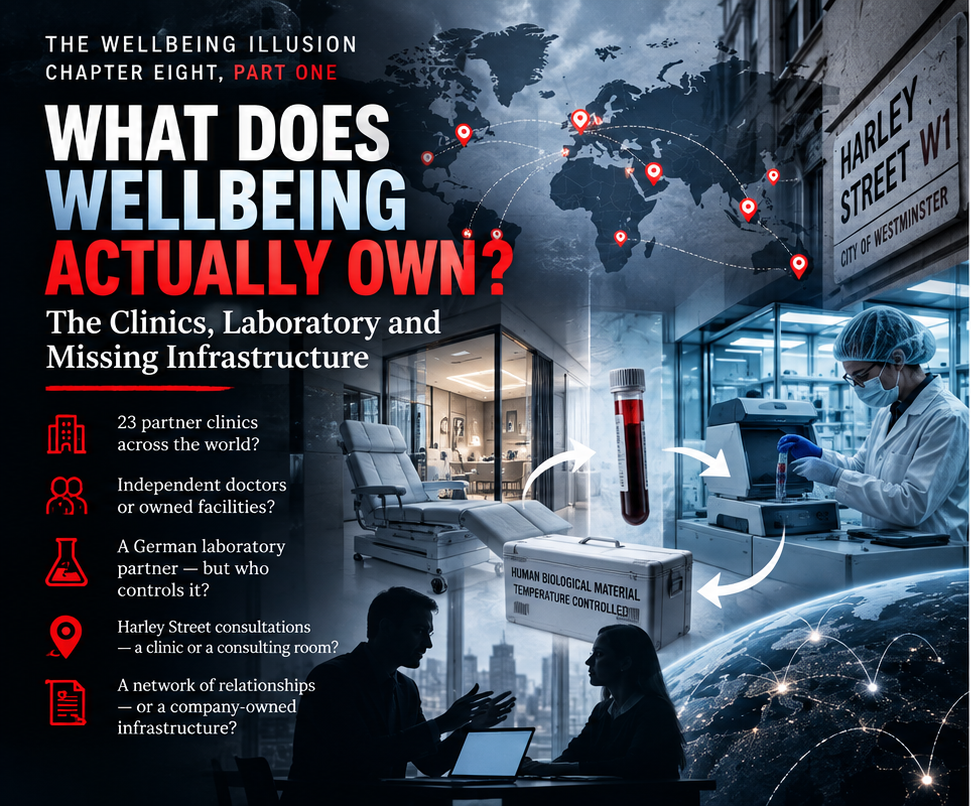
- clinical networks
- commercial partnerships
These are not the language of a laboratory.
They are the language of enterprise.
This is not unusual in itself.
Most biotechnology companies must eventually operate as commercial entities if their research is to reach patients at scale.
The key question is not whether commercialisation exists.
It is whether the scientific progress and the business development are aligned in timing and substance.
The Scientific Milestone
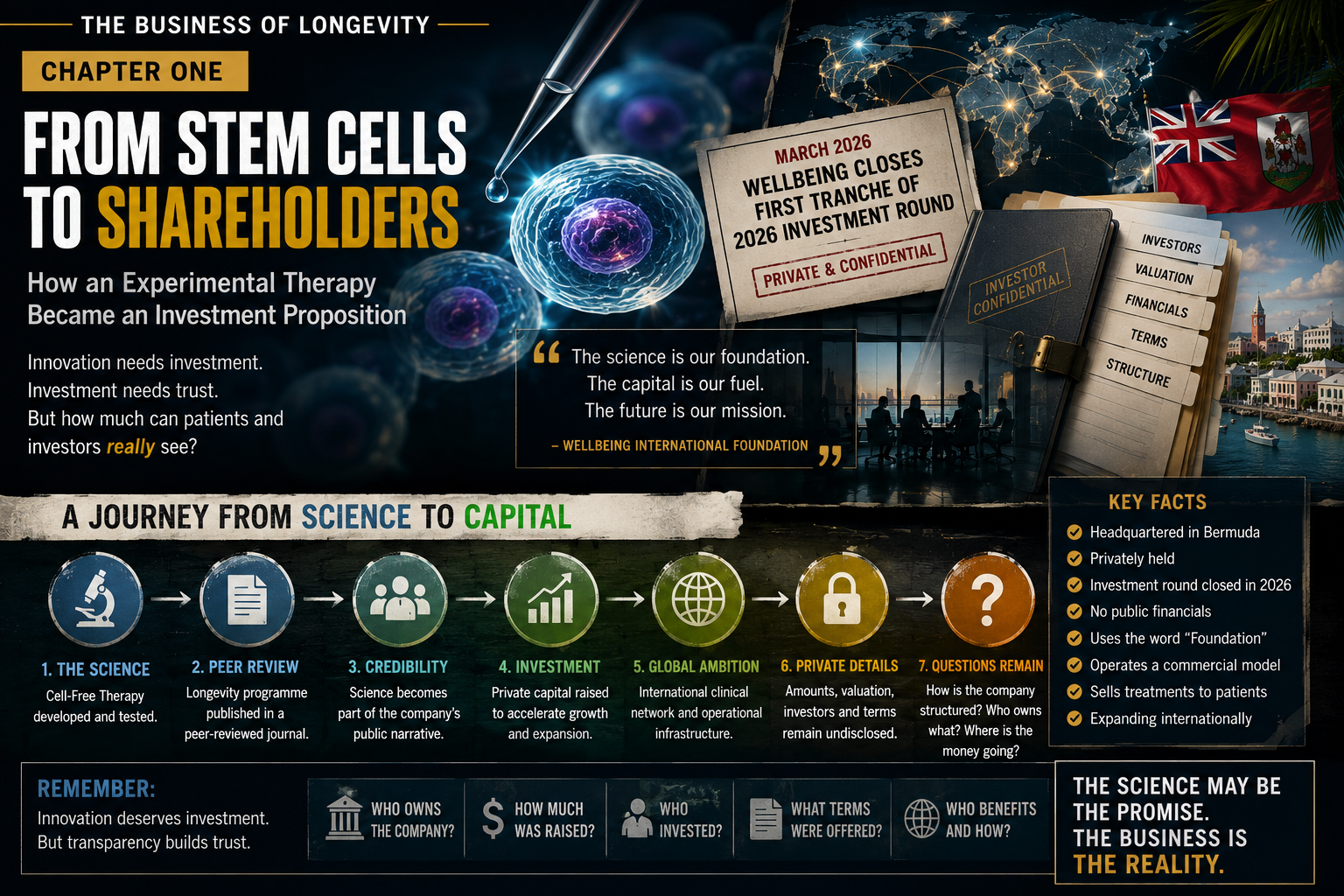
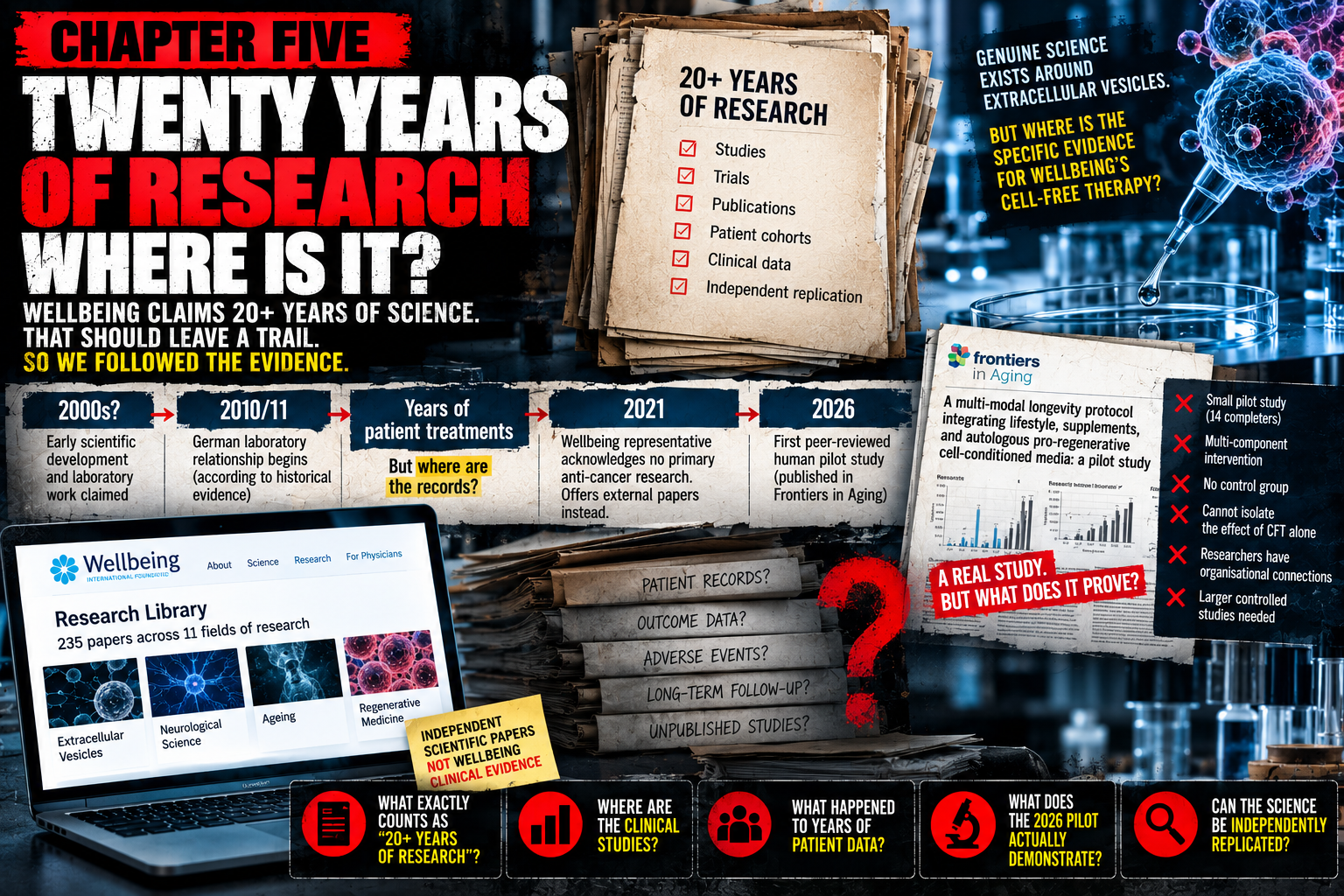
In June 2026, Wellbeing announced that its longevity programme had been published in the peer-reviewed journal Frontiers in Aging.
This was a meaningful milestone.
Peer review remains an important part of scientific validation.
It indicates that independent reviewers considered the work suitable for publication.
However, it does not confirm clinical effectiveness.
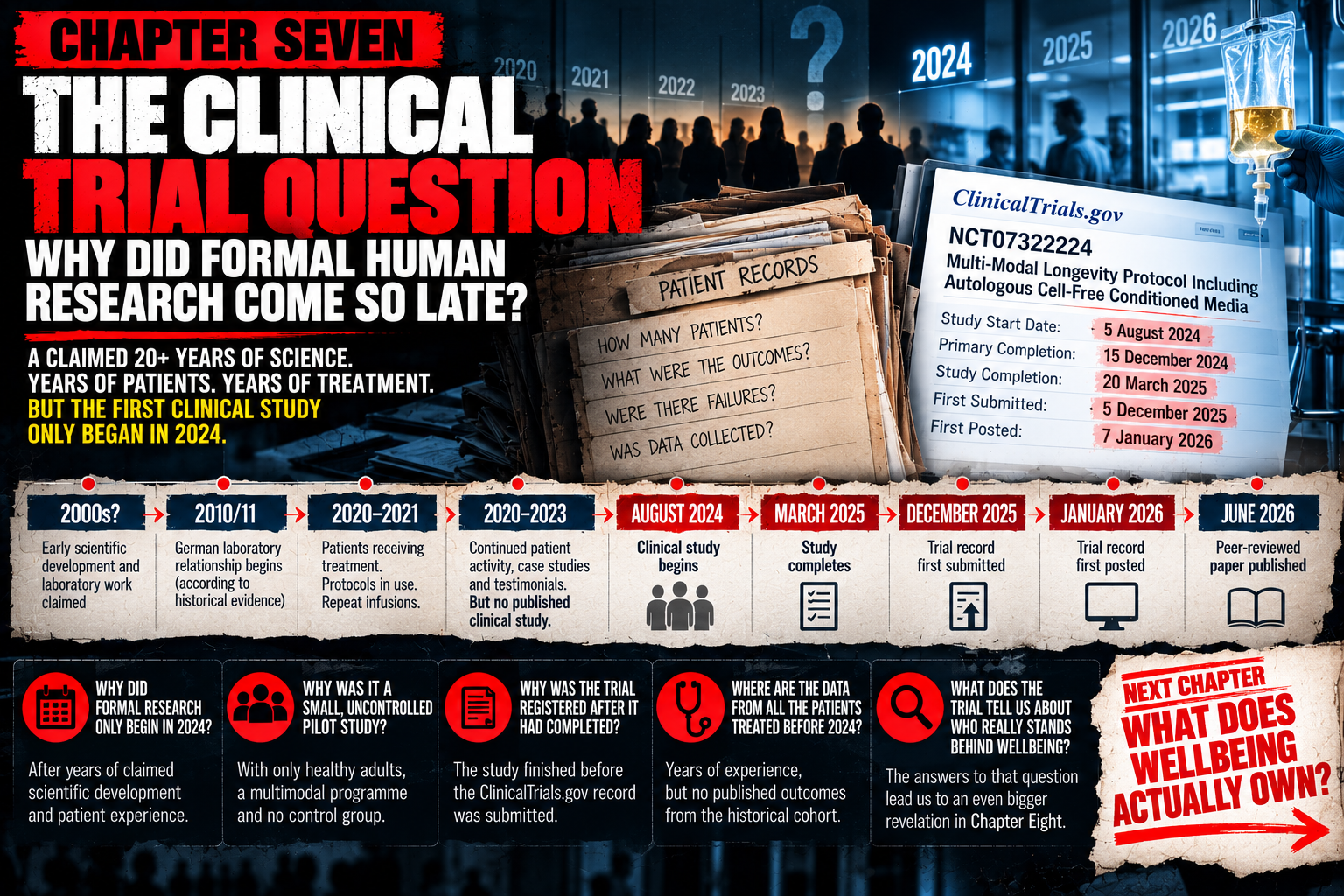
As discussed in the previous article, the study itself was a small pilot involving fourteen participants, no control group, multiple simultaneous interventions, and several acknowledged limitations.
The authors were appropriately cautious in their conclusions.
From a scientific standpoint, the findings were exploratory rather than definitive.
From a commercial standpoint, however, the publication carried a different weight.
It allowed the company to state that its programme had been peer-reviewed.
In a competitive healthcare and longevity market, that distinction carries significant reputational value.
A Different Kind of Announcement
Several months earlier, another update appeared on the company’s website.
It attracted far less public attention.
Unlike the scientific publication, this announcement focused on finance.
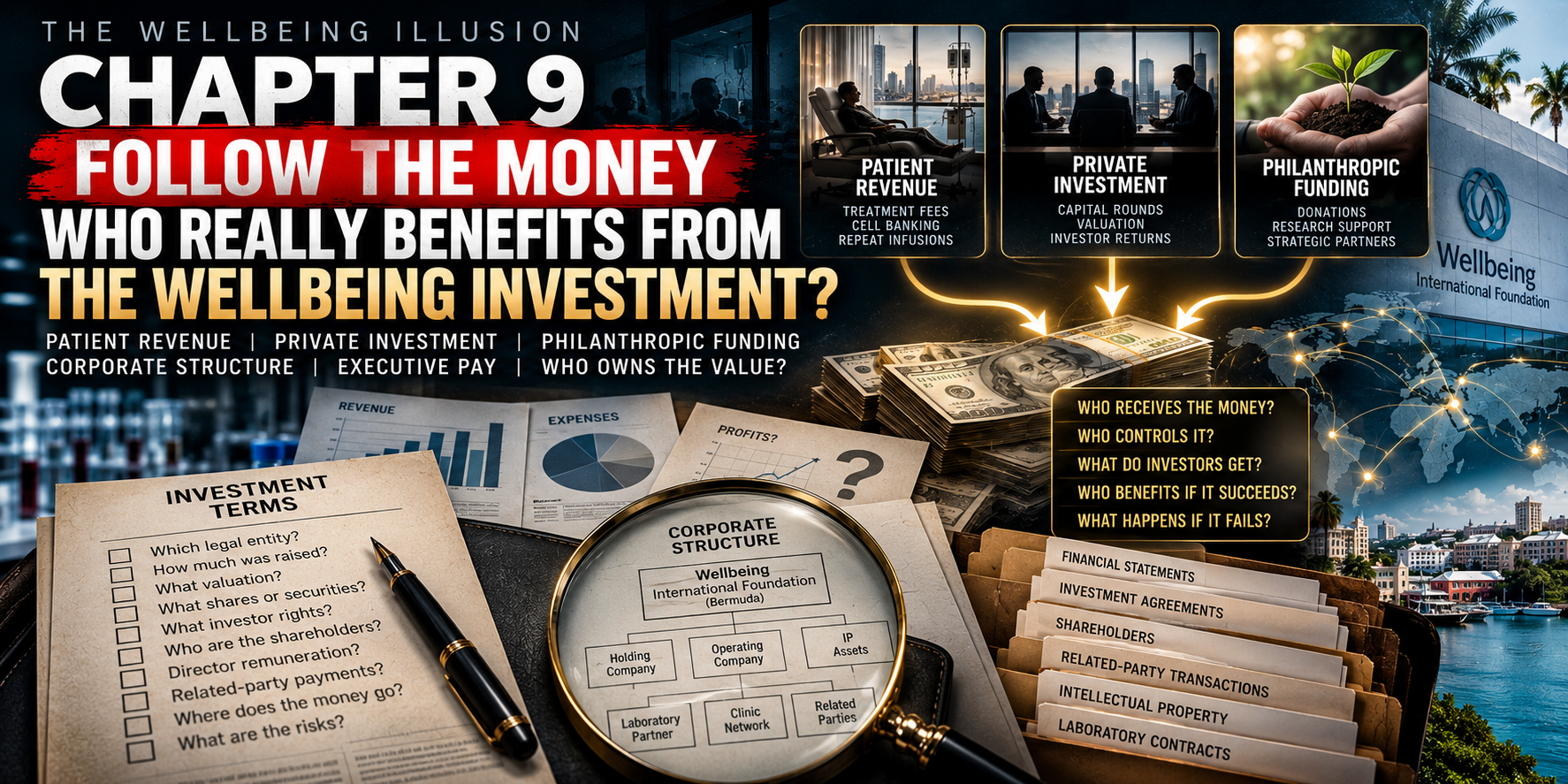
Wellbeing confirmed that it had completed the first tranche of its 2026 investment round.
The statement described strong investor interest and noted that the funds would support research, international expansion, clinical infrastructure, and operational development.
None of this is unusual.
Scientific research is expensive.
Clinical expansion requires capital.
Innovation depends on funding.
However, what stood out was not what was said, but what was not.
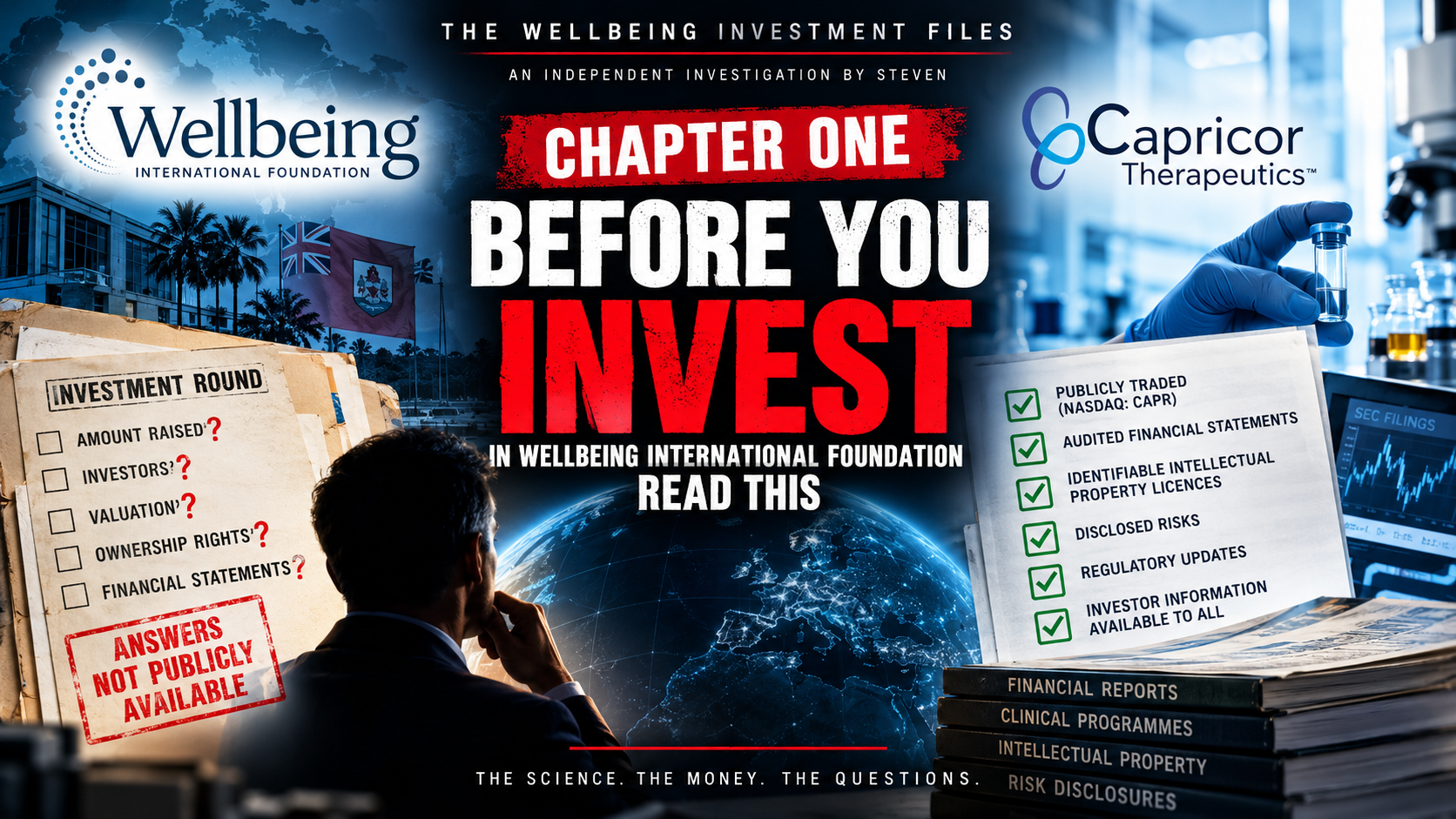
The announcement did not disclose:
- the total amount raised
- the company valuation
- the identity of investors
- the type of securities issued
- the level of equity dilution
- current revenue figures
- audited financial statements
Instead, readers were told that these details remained private.
For a privately held company, this may be entirely standard practice.
But it also limits the ability of external observers to independently assess financial strength and risk.
The Meaning Behind “Foundation”
One of the more interesting aspects of this investigation is the company’s name itself.
The term “Foundation” is commonly associated with charitable organisations, research institutes, or non-profit entities.
There is no legal requirement preventing a commercial company from using the term.
However, names influence perception.
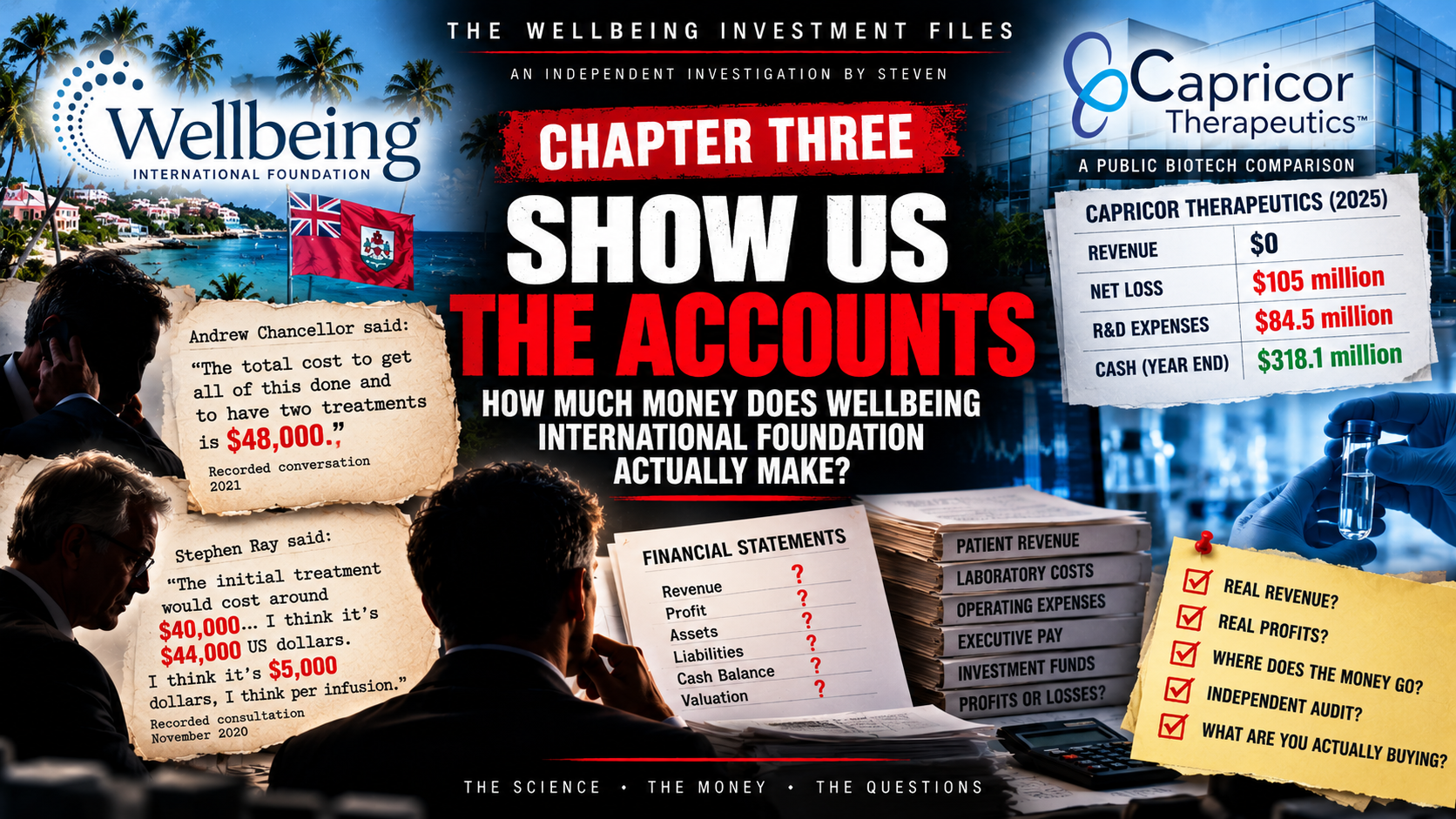
At the same time as presenting itself as a foundation, the organisation also discusses investment rounds, patient revenue, international expansion, and commercial growth.
These concepts are not inherently contradictory.
Many organisations combine research, clinical work, and commercial activity.
Nevertheless, it raises reasonable questions for patients and investors alike about structure.
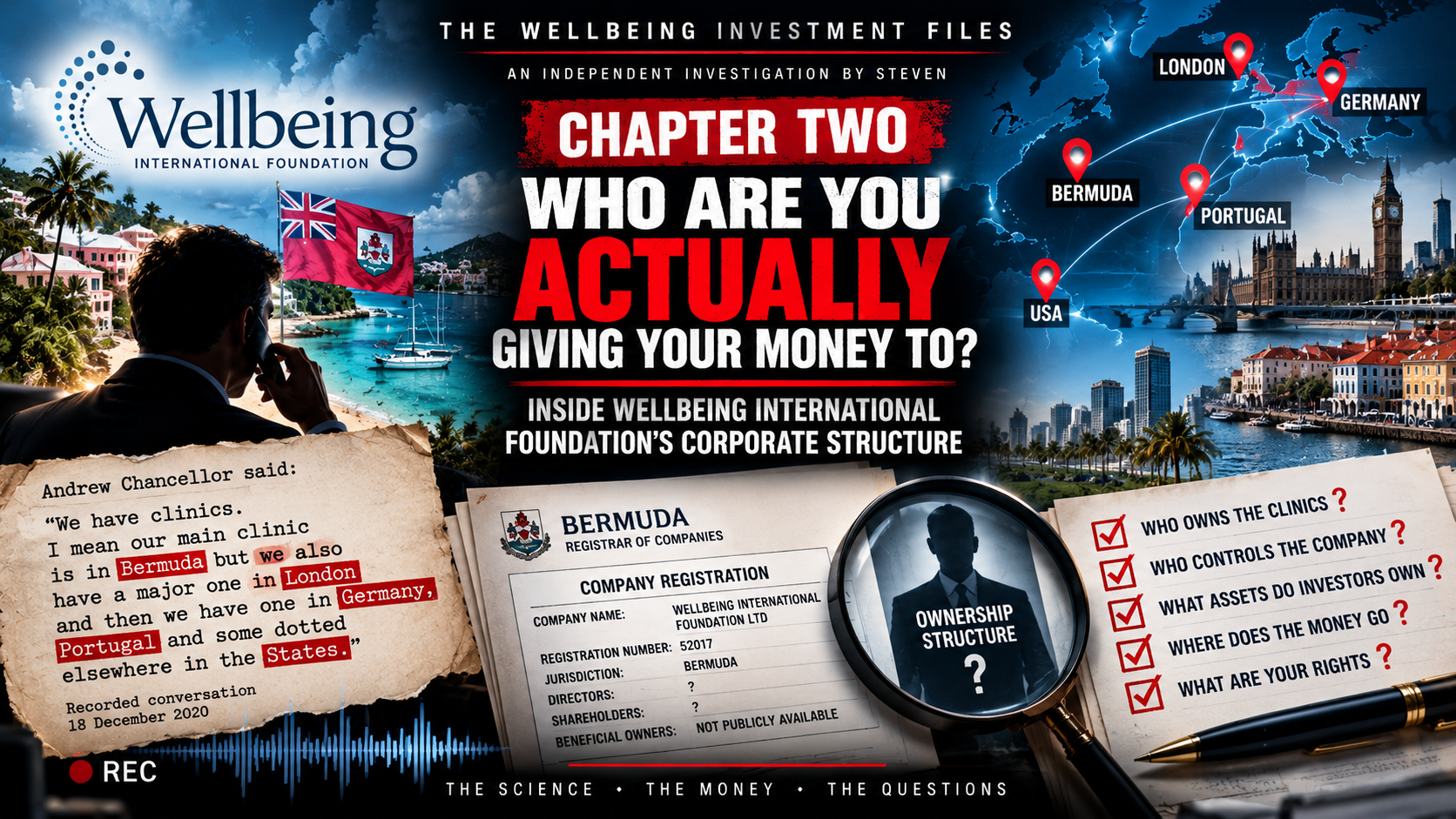
How is the organisation legally organised?
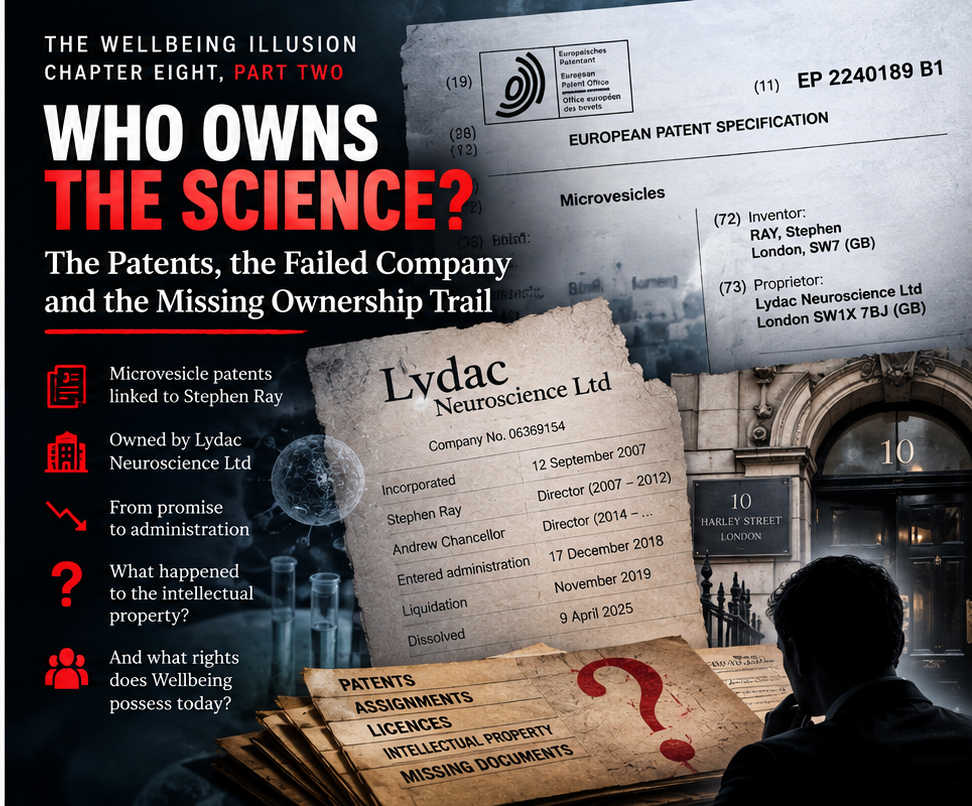
Which entities hold intellectual property?
Where does revenue flow?
How is future growth financed?
These are not accusations.
They are questions of clarity.
Bermuda and Public Disclosure
Another relevant factor is jurisdiction.
Wellbeing states that it is headquartered in Bermuda.
Bermuda is a recognised international financial centre used by many legitimate global companies.
There is nothing unusual in that.
However, privately held companies incorporated in such jurisdictions often disclose less financial information publicly than listed companies in more regulated public markets.
As a result, external observers may have limited access to independently verified financial data.
This does not imply wrongdoing.
It simply means that much of the available information comes directly from company communications rather than public filings.
In such environments, transparency becomes especially important for building trust.
Following the Money
At some point, every scientific programme intersects with financial reality.
Research requires funding.
Facilities require infrastructure.
Teams require salaries.
No meaningful innovation occurs without capital.
The question is therefore not whether money is involved.
It is what that money is being used to support.
Is investment backing a treatment that has already been clinically validated?
Or is it funding the development of a technology still in early-stage evaluation?
These are fundamentally different propositions.
Understanding that difference is essential for anyone evaluating both risk and potential.
Conclusion
This investigation began with a question about stem cells.
It has evolved into a broader examination of how longevity science becomes a commercial enterprise.
The science remains central.
But so too do the structures, disclosures, and financial decisions that surround it.
Innovation requires investment.
Investment requires transparency.
And transparency begins with scrutiny.
In the next chapter, we turn to one of the key individuals behind Wellbeing International Foundation.
His background spans finance, corporate development, and international business.
But as with all investigations, the public narrative is only the surface.
The deeper story lies in the details beneath it.