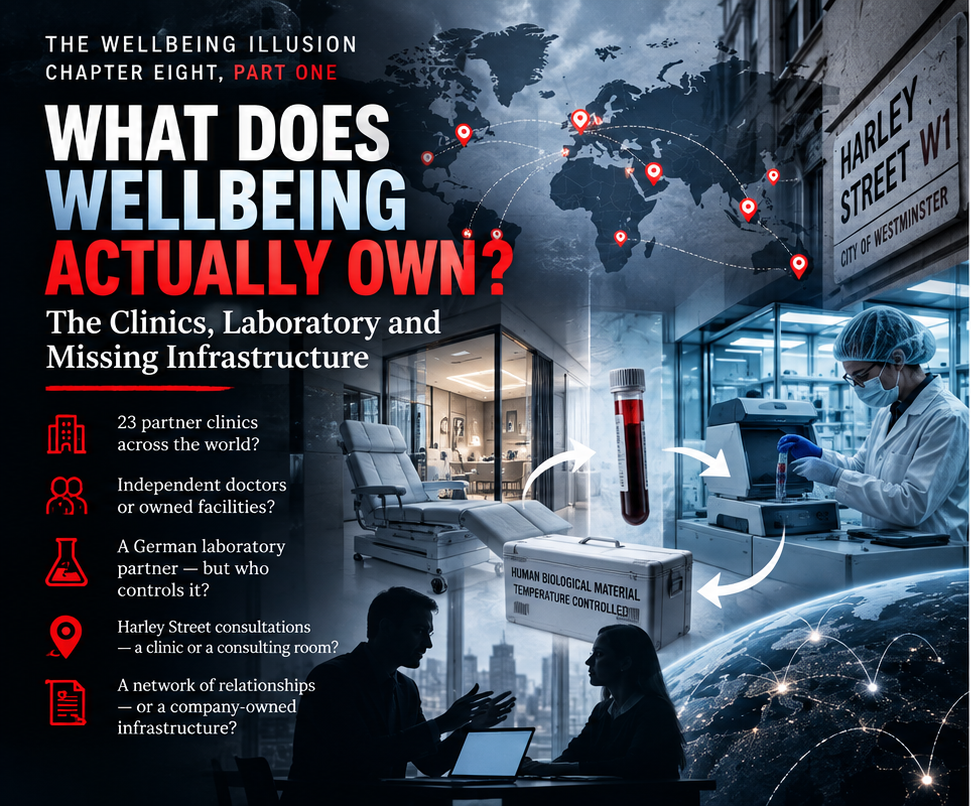
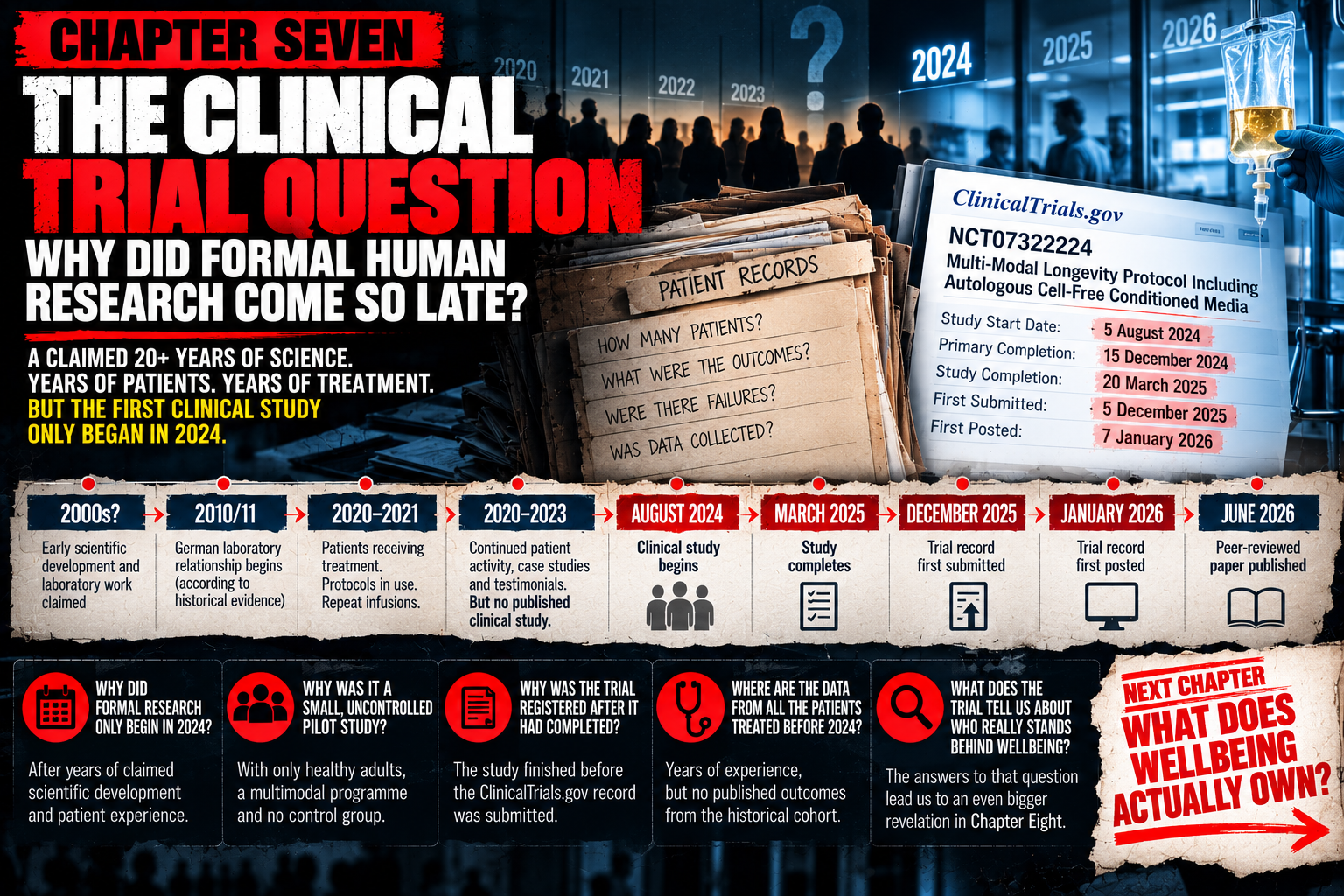
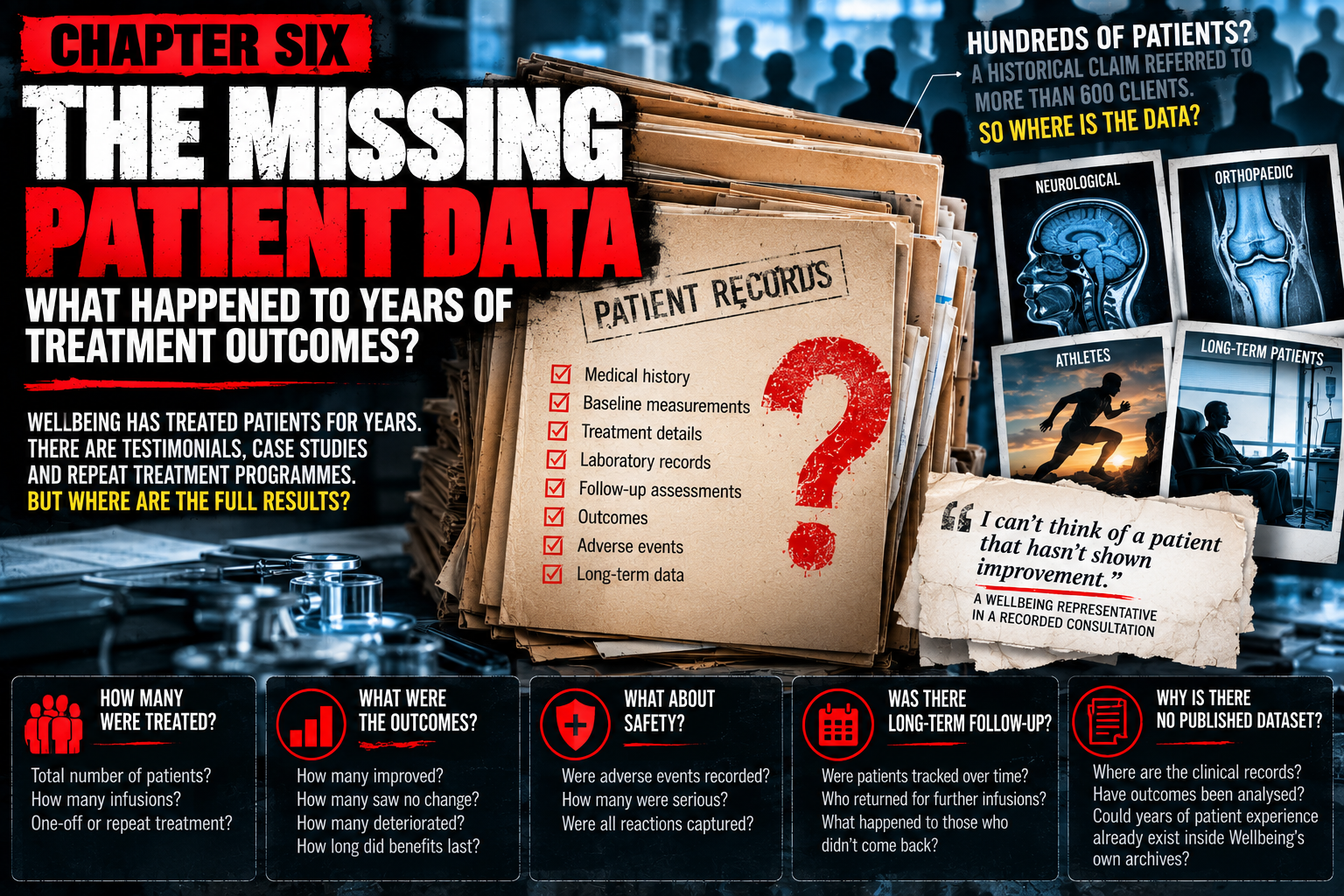
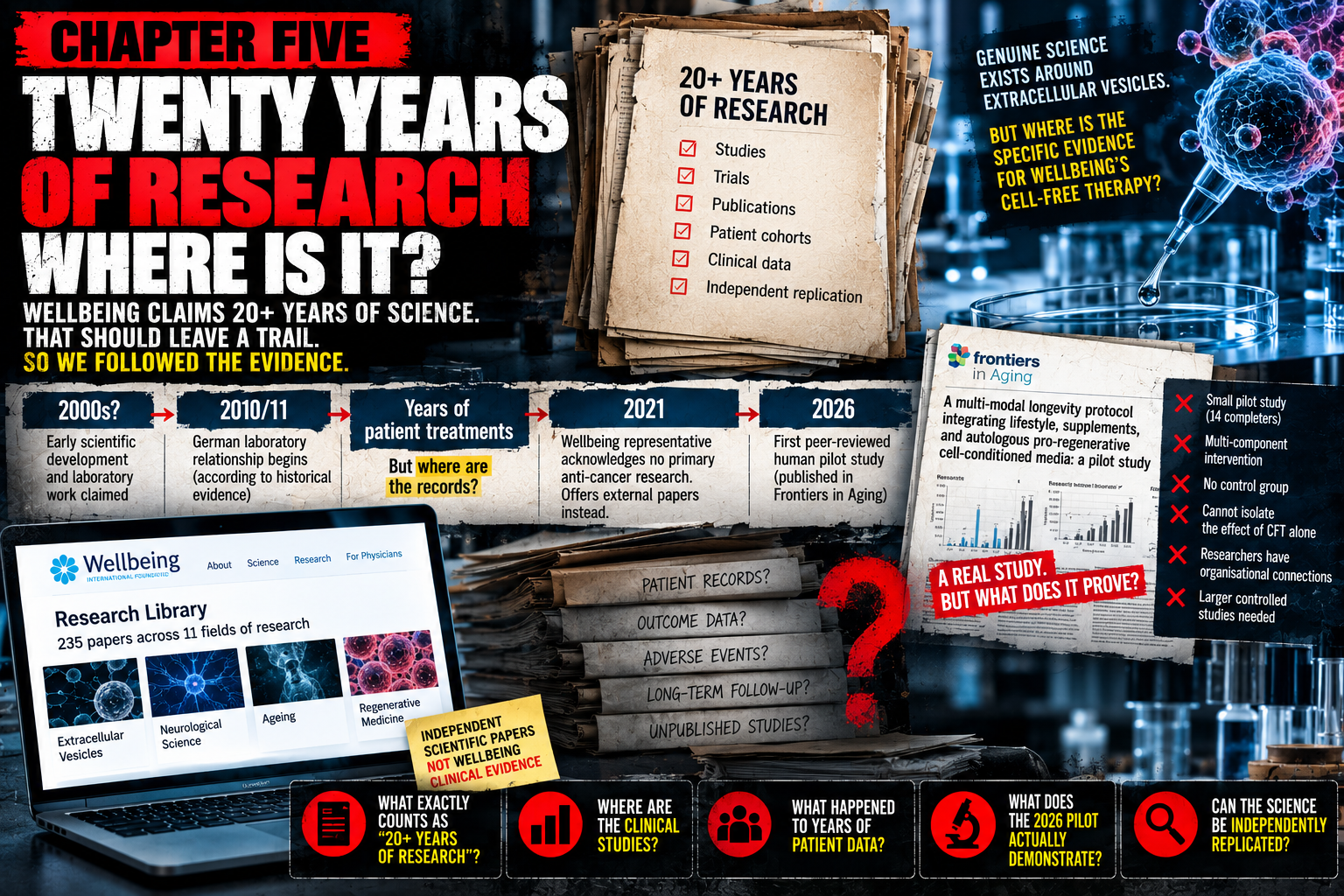
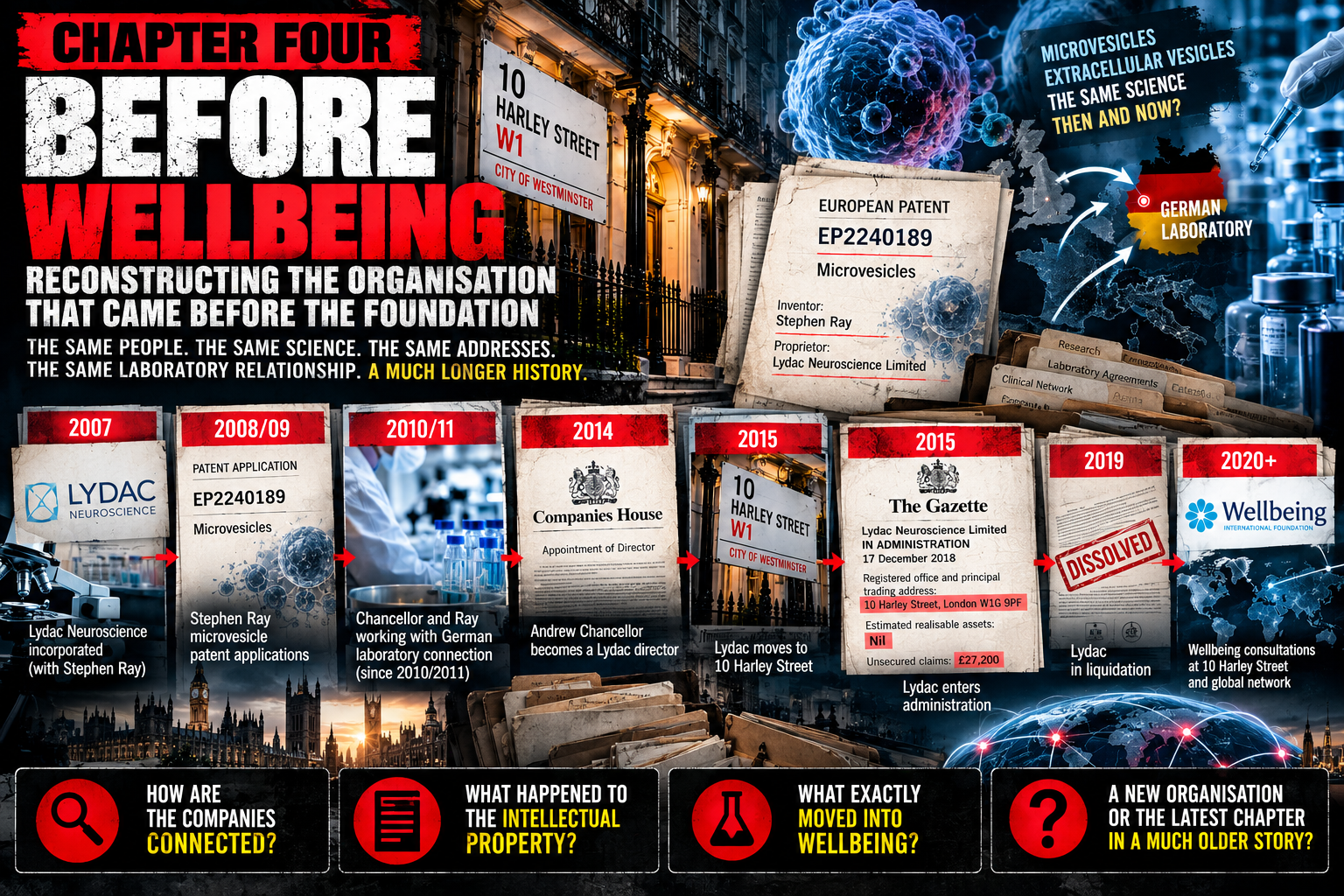
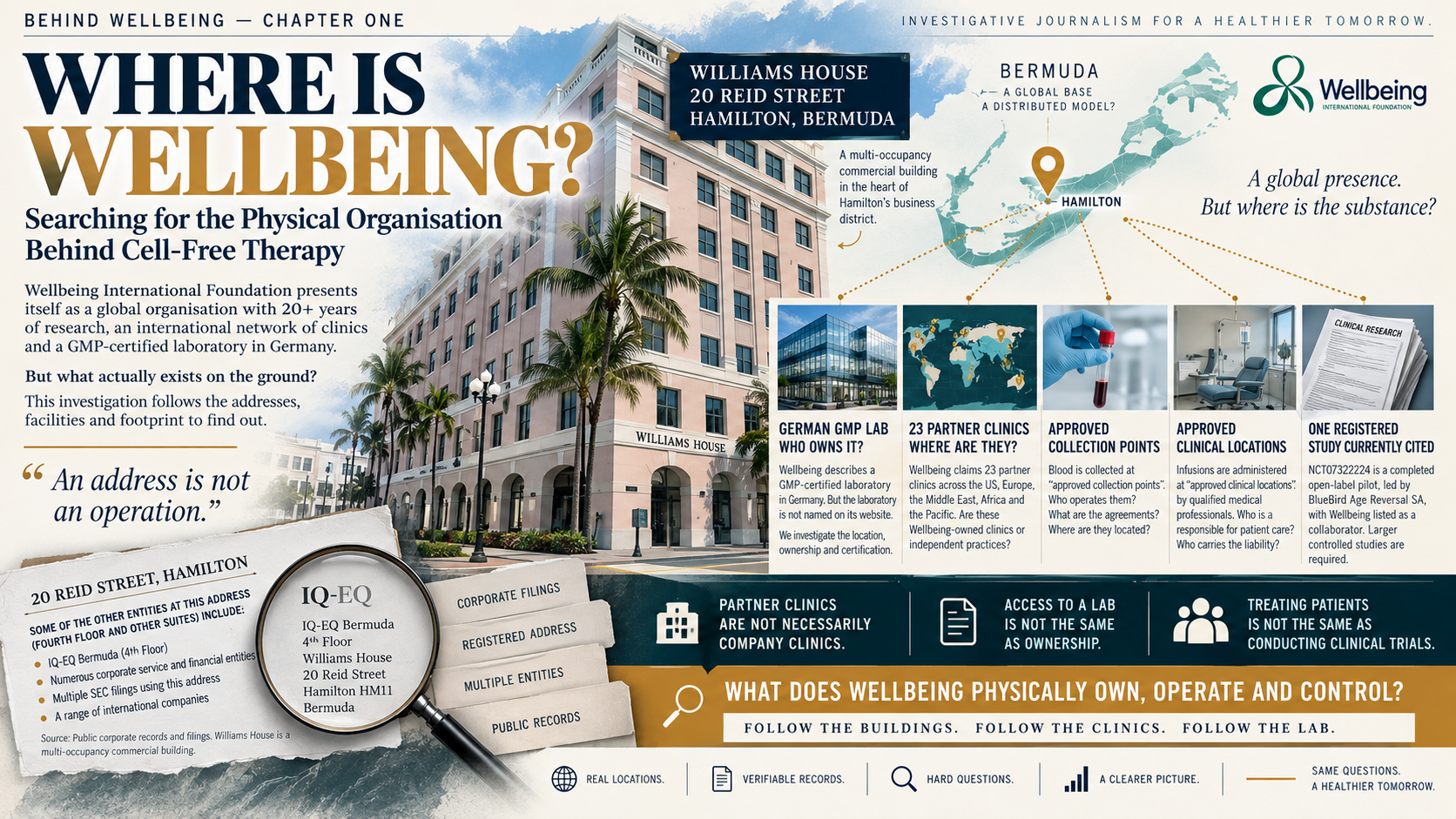
Over the course of this investigation we have examined publicly available company records, reviewed scientific claims, analysed an undercover consultation and explored the importance of published clinical evidence.
Throughout the series we have deliberately avoided telling readers what to think.
Instead, we have asked questions.
Because informed decisions begin with informed questions.
Whether you are considering regenerative medicine, stem cell therapy, extracellular vesicles or any other innovative treatment, the same principles apply.
Before committing your health—and potentially tens of thousands of pounds—we believe every patient deserves clear answers.
Here are the ten questions we believe matter most.
1. Who Am I Actually Paying?
Before transferring any money, ask:
- Which legal company will receive my payment?
- Which country is that company incorporated in?
- Which company appears on my invoice?
- Who signs my contract?
Knowing exactly who you are doing business with is the first step in protecting yourself.
2. Who Decided I Was Suitable?
Ask:
- Who reviewed my medical history?
- Who accepted me for treatment?
- Is there a formal assessment process?
- Are patients ever declined?
Understanding how treatment decisions are made is just as important as understanding the treatment itself.
3. What Published Clinical Evidence Supports This Recommendation?
Request:
- Peer-reviewed human clinical studies.
- Independent publications.
- Long-term outcome data.
- Safety information.
- Published complication rates.
Hope is important.
Evidence is essential.
4. What Are The Risks?
Every medical treatment carries uncertainty.
Ask openly:
- What complications have been recorded?
- How often do they occur?
- What happens if treatment fails?
- What follow-up is provided?
No reputable healthcare provider should be uncomfortable discussing risk.
5. What Alternatives Exist?
A balanced consultation should explain more than one option.
Ask:
- What happens if I do nothing?
- Are there conventional treatments available?
- Why is this treatment recommended instead?
Good decisions are made by comparing choices—not hearing only one.
6. Can I Take Time To Think?
Large financial decisions should never feel rushed.
Ask for time.
Go home.
Read.
Research.
Discuss the information with your family, GP or specialist.
If a treatment is appropriate today, it should still be appropriate after careful consideration.
7. What Happens If I Change My Mind?
Before paying, understand:
- refund policies;
- cancellation rights;
- written terms and conditions;
- dispute procedures.
These questions are easier to ask before payment than afterwards.
8. Who Regulates This Treatment?
Ask:
- Which professional bodies oversee the treatment?
- Which regulations apply?
- What standards are followed?
- Is the clinic independently inspected?
Understanding the regulatory framework provides valuable context.
9. Can I Verify The Information Independently?
Look beyond marketing material.
Search for:
- independent publications;
- clinical trial databases;
- scientific reviews;
- regulatory guidance;
- company records.
Reliable information should be capable of independent verification.
10. Am I Making This Decision Because Of Evidence… Or Hope?
Perhaps the most difficult question of all.
When people are living with chronic illness, pain or life-changing diagnoses, hope becomes incredibly powerful.
Hope is human.
Hope drives innovation.
Hope inspires research.
But hope should never replace informed decision-making.
The strongest decisions are those supported by both optimism and evidence.
The Lesson We Learned
This investigation was never about proving whether a treatment works.
Nor was it about criticising innovation.
Medical progress depends upon researchers who challenge established thinking.
New ideas are essential.
What we learned, however, is that asking better questions often produces better decisions.
Corporate history matters.
Transparency matters.
Clinical evidence matters.
Independent verification matters.
Most importantly…
Patients matter.
A Final Word
Every patient deserves respect.
Every patient deserves honesty.
Every patient deserves the opportunity to ask difficult questions without feeling uncomfortable.
The purpose of this investigation has never been to discourage innovation.
It has been to encourage informed decision-making.
Because when healthcare, hope and significant financial commitments come together, there should never be any hesitation in asking one more question.
Sometimes the most valuable treatment you receive is not an injection, a procedure or a promise.
Sometimes it is the confidence that comes from knowing you asked every question that mattered.
And if this series encourages even one patient to pause, ask those questions and make a better-informed decision, then it has achieved exactly what it set out to do.