When people seek medical treatment, they are not simply buying a service.
They are placing their health—and often their hope—in the hands of an organisation they may know very little about.
That is why trust is one of the most valuable assets any healthcare provider possesses.
Trust is influenced by many factors. Clinical expertise, patient experience, scientific evidence and professional standards all play an important role. Equally important, however, is transparency.
Patients increasingly research healthcare providers online before making contact. They compare treatments, read testimonials, examine websites and try to understand the organisations behind the services being offered.
The information presented publicly often forms a patient's first impression.
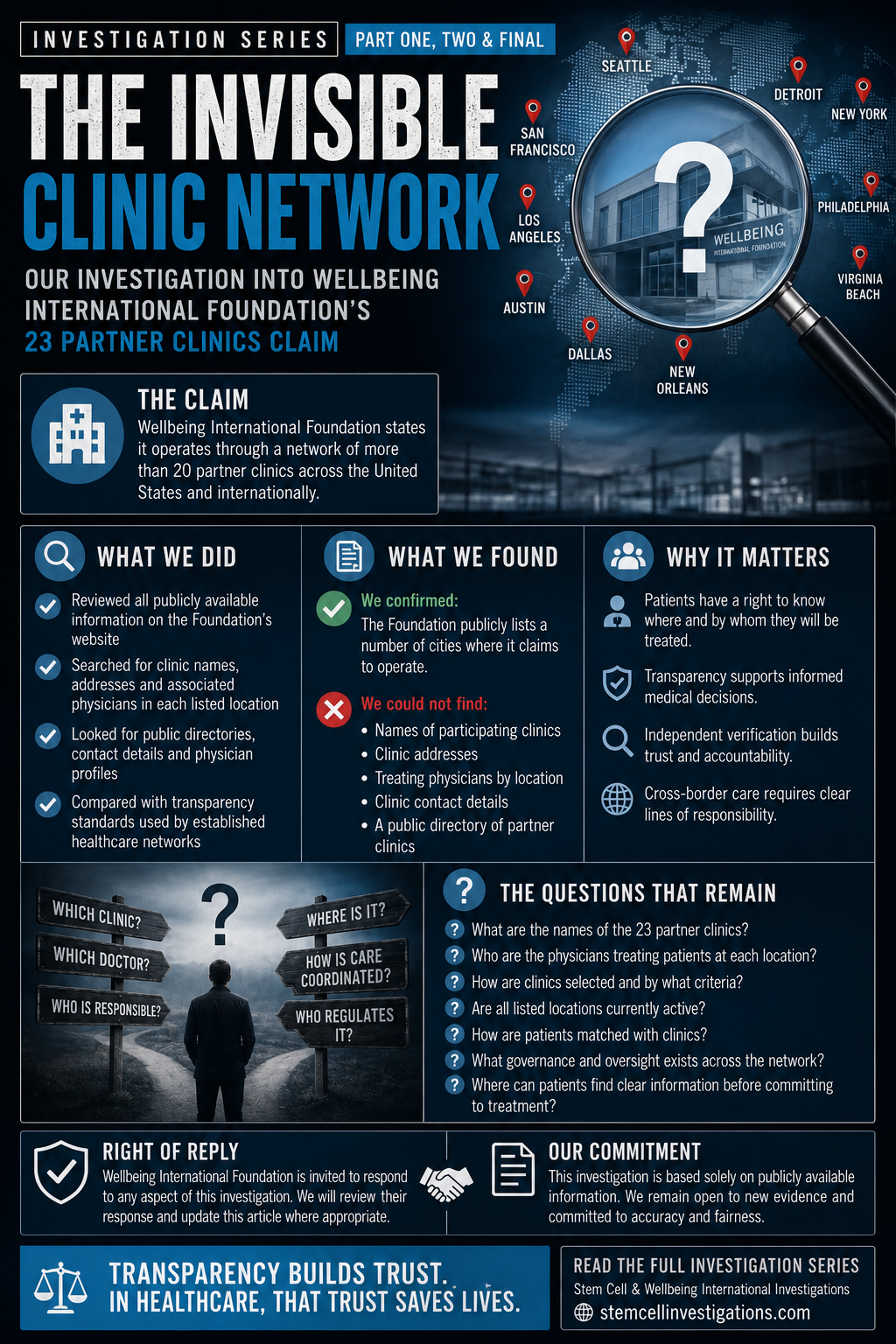
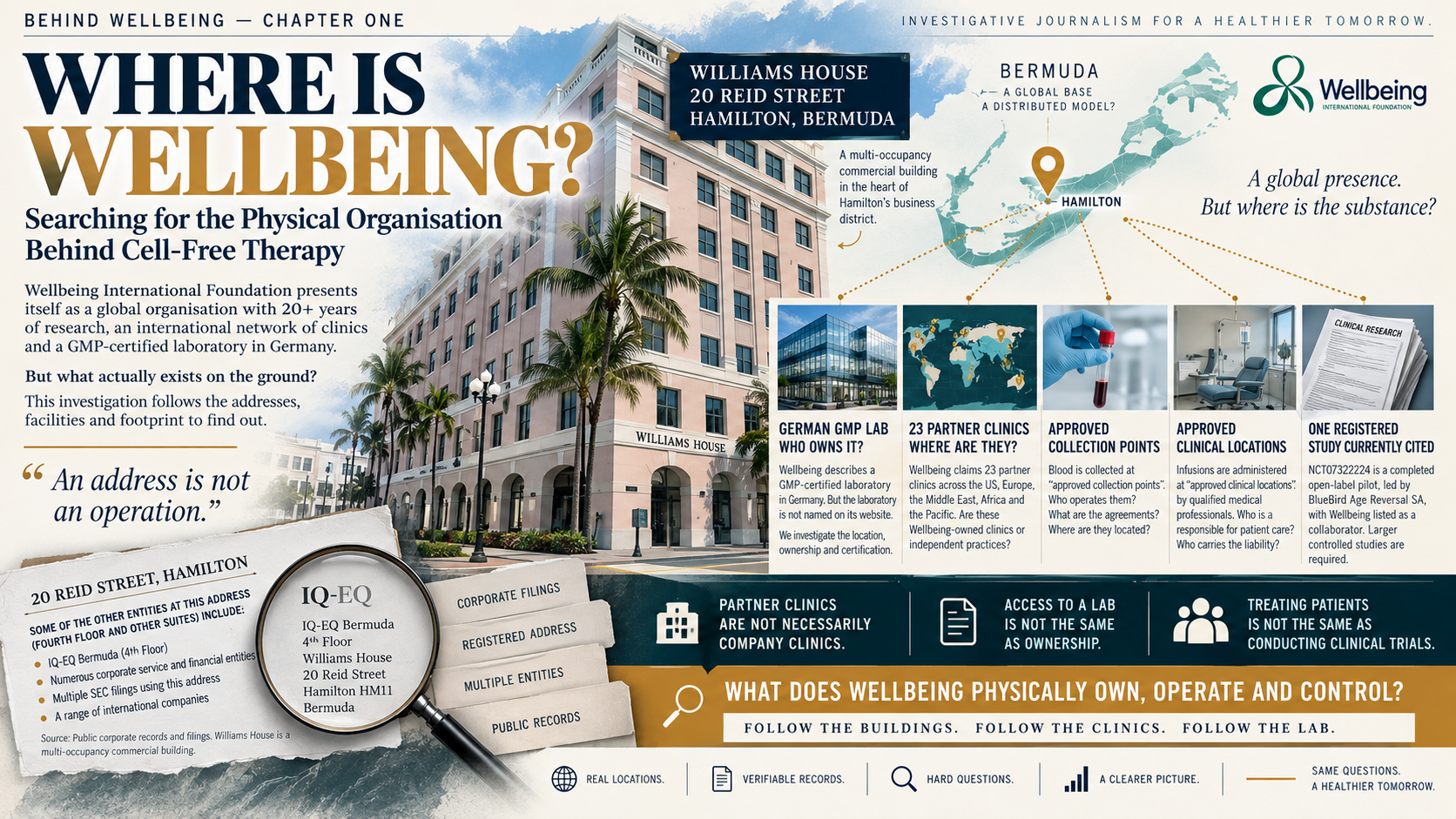
As part of our ongoing investigation into Wellbeing International Foundation, we have explored the organisation's published description of its international partner clinic network and examined what information prospective patients can independently verify before entering the enquiry process.
Our previous articles focused on the visibility of the claimed clinic network and the question of accountability within an international treatment model.
This final article asks a broader question.
How should healthcare organisations communicate their scale, structure and partnerships in a way that supports patient confidence?
First Impressions Matter
Modern healthcare organisations invest significant effort in presenting themselves professionally.
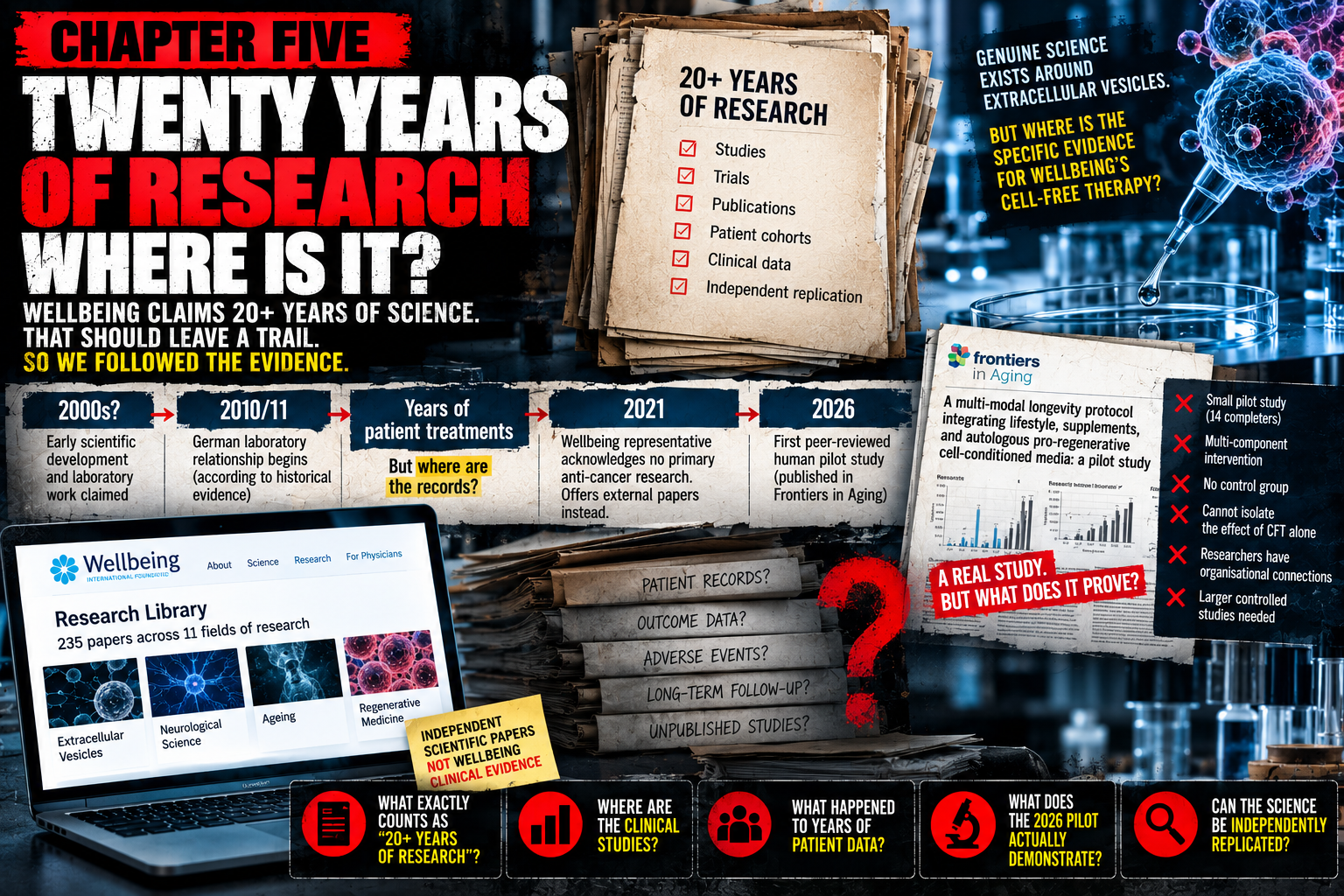
Websites often describe international reach, specialist expertise, research collaborations and partnerships with healthcare professionals.
There is nothing unusual about this.
Patients naturally look for reassurance.
An organisation that appears established, experienced and internationally connected may inspire greater confidence than one providing little public information.
However, confidence is strongest when those public claims can be independently understood and verified.
If a website describes a global network, patients may reasonably expect to see evidence of that network.
If it refers to partner clinics, readers may expect those clinics to be identifiable.
If physicians play a central role, patients may wish to know who those physicians are before making contact.
Transparency transforms broad claims into information that patients can evaluate for themselves.
Scale Versus Visibility
One of the themes emerging from this investigation is the distinction between describing a healthcare network and publicly identifying its individual components.
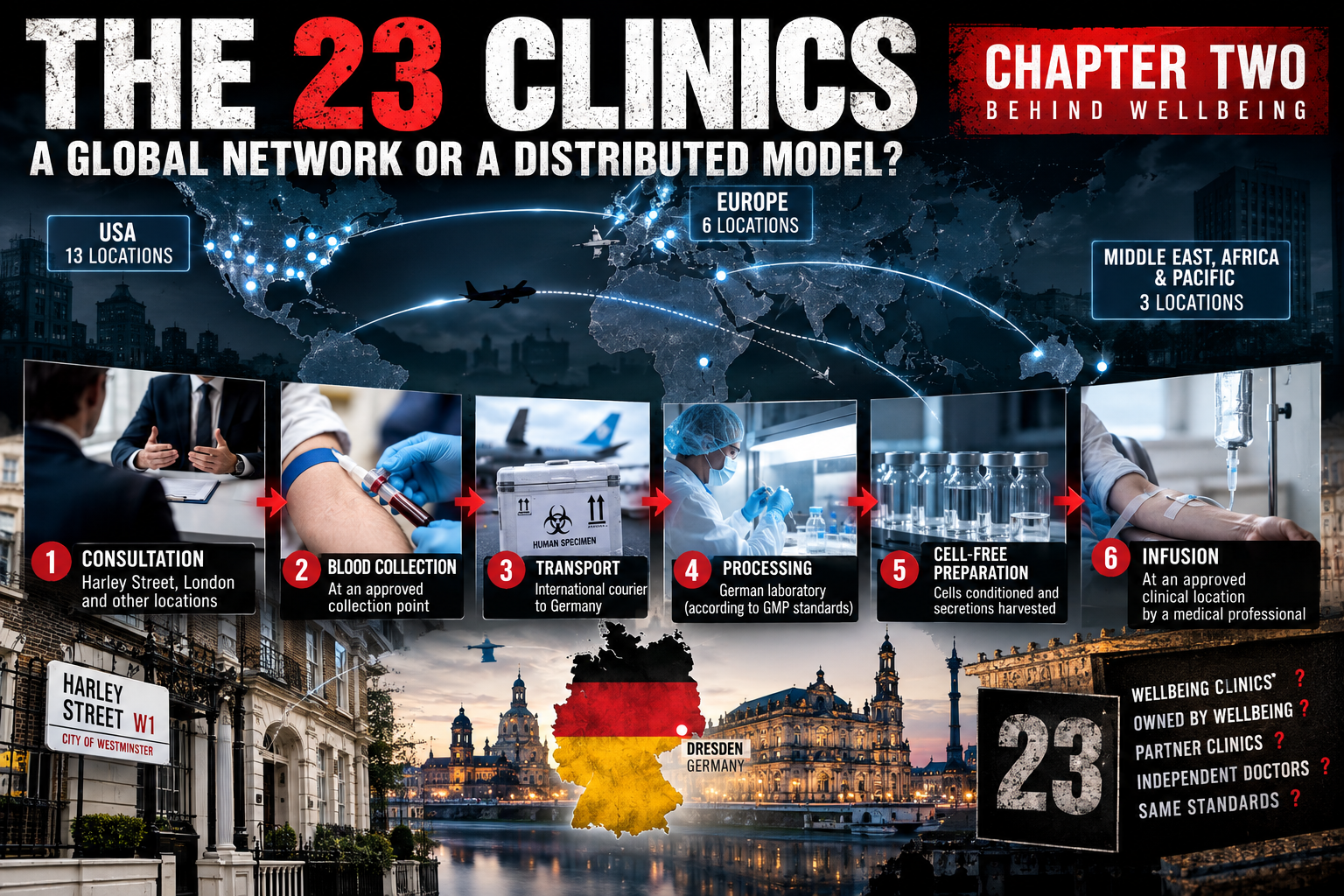
Wellbeing International Foundation presents itself as operating internationally through partner clinics located across several countries.
That description creates an impression of organisational scale.
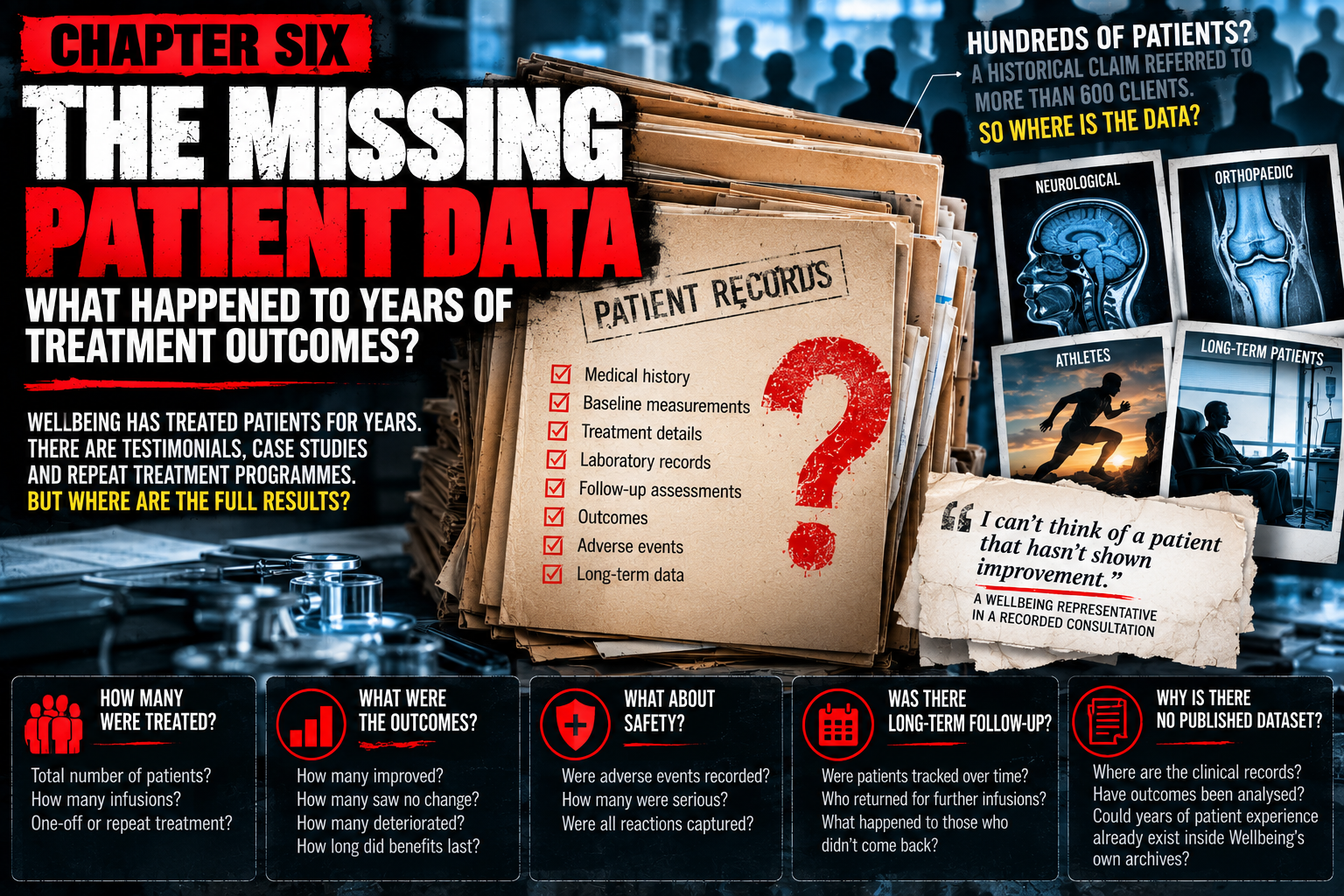
During our review, however, we found comparatively limited publicly available information identifying the individual clinics that make up the network.
This observation should not be interpreted as evidence that those clinics do not exist.
Rather, it illustrates the difference between describing a network and enabling the public to independently understand that network.
Many healthcare providers choose to publish detailed information about each participating location.
Others provide that information only after prospective patients make direct contact.
Both approaches are possible.
The difference lies in the amount of information available before the patient begins their journey.
Transparency Supports Better Decisions
Patients considering private healthcare frequently compare providers.
They ask questions such as:
Where will my treatment take place?
Who are the clinicians?
How long has the clinic operated?
Who regulates the facility?
What happens after treatment?
How is follow-up care organised?
The easier it is to answer those questions, the easier it becomes for patients to make informed decisions.
Transparency benefits not only patients but also healthcare professionals referring patients, journalists examining public claims and researchers studying emerging treatments.
Independent verification is not an obstacle to trust.
It is one of its strongest foundations.
Why Public Information Matters
Healthcare decisions often involve significant financial, emotional and medical considerations.
Some patients travel internationally.
Some spend substantial sums of money.
Others may be exploring treatment after exhausting conventional options.
In each case, reliable information becomes particularly important.
Patients should not have to rely solely on marketing material.
They should be able to examine publicly available information and understand the organisation responsible for their care.
This principle applies broadly across healthcare.
Whether considering a local private clinic or an international medical provider, access to clear information supports better decision-making.
Lessons Beyond One Organisation
Although this investigation has focused on Wellbeing International Foundation, the issues discussed extend well beyond any single organisation.
The questions raised are relevant wherever healthcare is delivered through international partnerships, referral networks or multiple independent providers.
They encourage all healthcare organisations to consider how much information is made available to prospective patients before treatment begins.
Simple measures—such as publishing clinic directories, identifying participating clinicians, explaining organisational structures and outlining patient pathways—can significantly improve transparency.
These practices help patients understand not only the treatment being offered but also the people and organisations responsible for delivering it.
An Invitation for Dialogue
Investigative journalism is most valuable when it encourages constructive discussion rather than confrontation.
Throughout this series, we have sought to distinguish carefully between confirmed facts, observations based on publicly available information and questions that remain open.
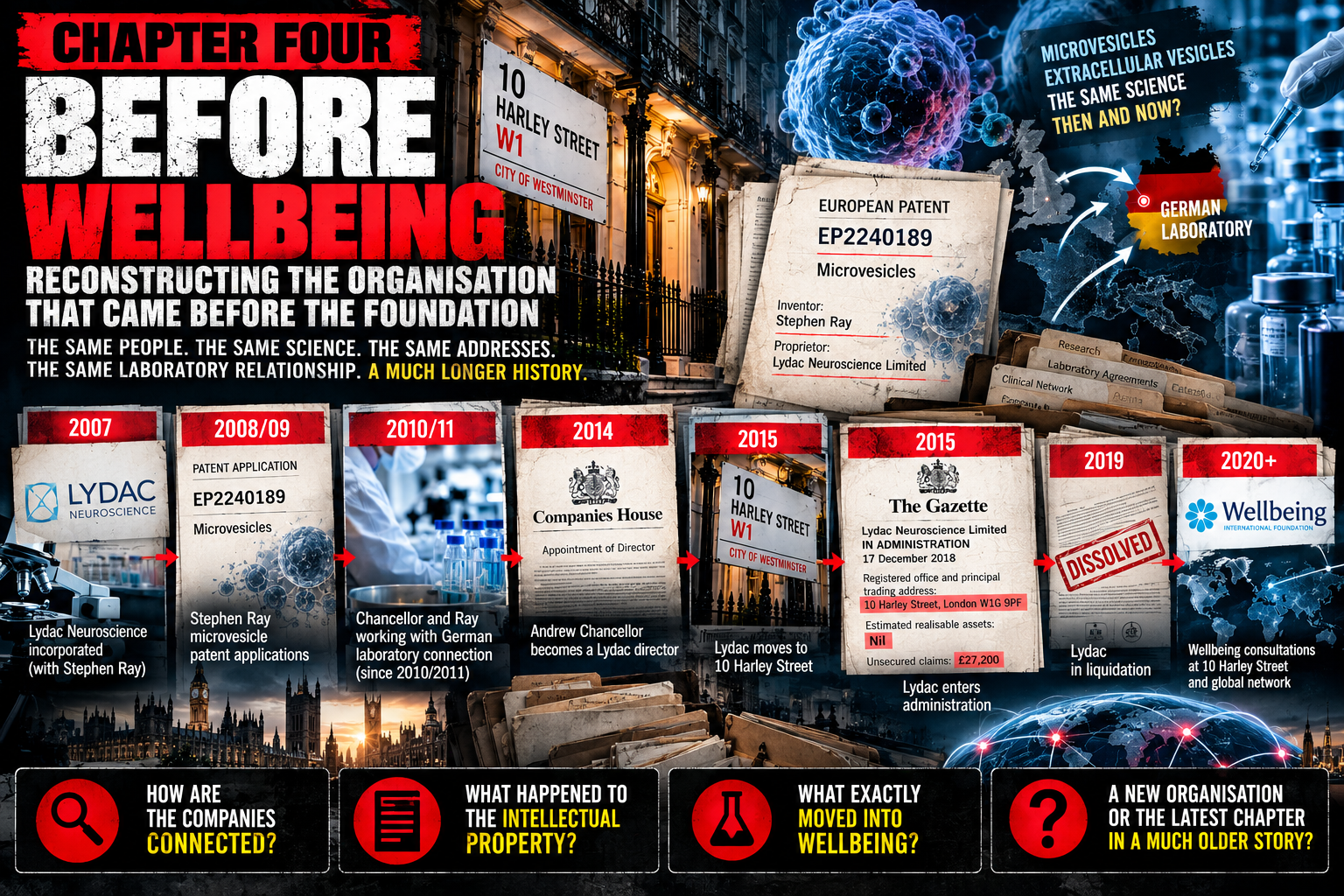
We recognise that organisations may hold information that is not immediately visible on public websites.
For that reason, Wellbeing International Foundation remains welcome to clarify any aspect of its published clinic network, organisational structure or patient pathway.
Constructive engagement benefits everyone, particularly prospective patients seeking accurate information.
Looking Forward
Healthcare continues to evolve rapidly.
New technologies, international collaborations and innovative therapies are creating opportunities that would have seemed impossible only a generation ago.
As these developments continue, transparency will become even more important.
Patients will increasingly expect to understand not only the science behind a treatment but also the organisation delivering it.
Clear communication, accessible information and openness about clinical partnerships help build confidence long before treatment begins.
Innovation and transparency should never compete with one another.
They should work together.
Final Reflection
This investigation began with a simple question about a publicly described partner clinic network.
Along the way, it evolved into something broader.
It became an examination of how healthcare organisations communicate with the people who trust them with their health.
The purpose has never been to discourage innovation or to question individual patient experiences.
Instead, it has been to explore a principle that applies across all areas of healthcare:
When organisations make significant public claims about their reach, partnerships or clinical networks, those claims should be supported by information that patients can understand and, wherever possible, independently verify.
Transparency is not merely good public relations.
It is an essential part of informed healthcare.
Patients deserve clarity.
Clinicians deserve clarity.
The public deserves clarity.
Because when trust is built on openness, everyone benefits.