Healthcare is built on trust.
Whether a patient is undergoing routine treatment or considering an innovative regenerative therapy, one principle remains constant: they should understand who is responsible for every stage of their care.
That responsibility extends beyond the doctor carrying out the procedure. It includes the clinic where treatment takes place, the organisation coordinating the patient's journey, the laboratories involved in processing biological material and, where appropriate, the companies promoting or managing the treatment pathway.
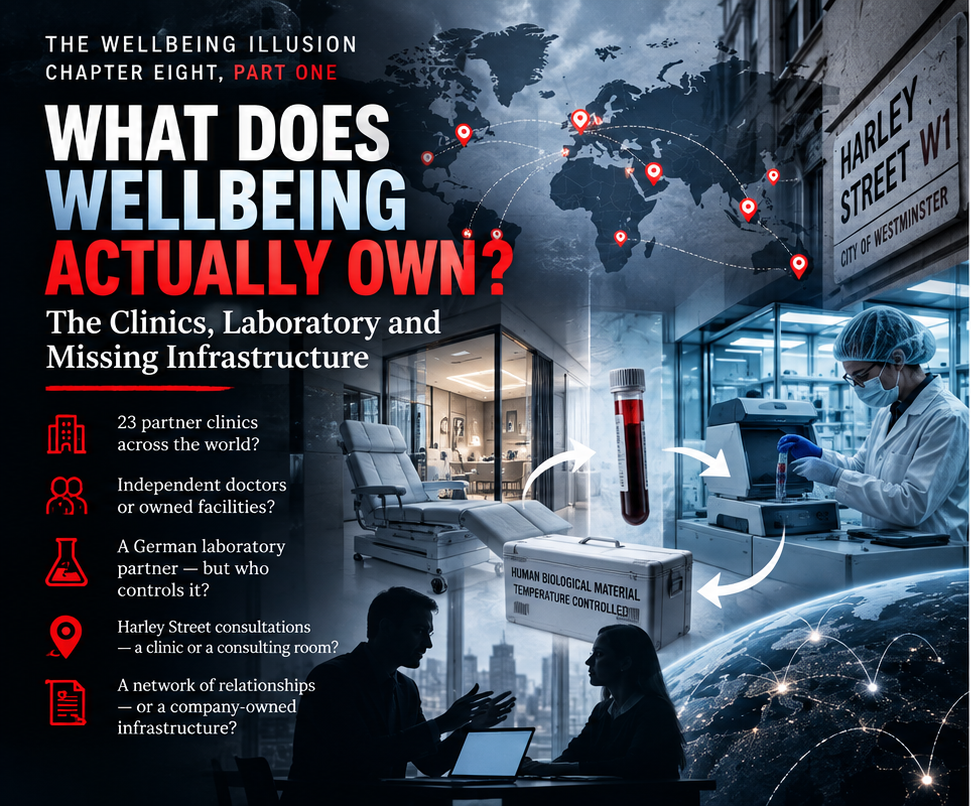
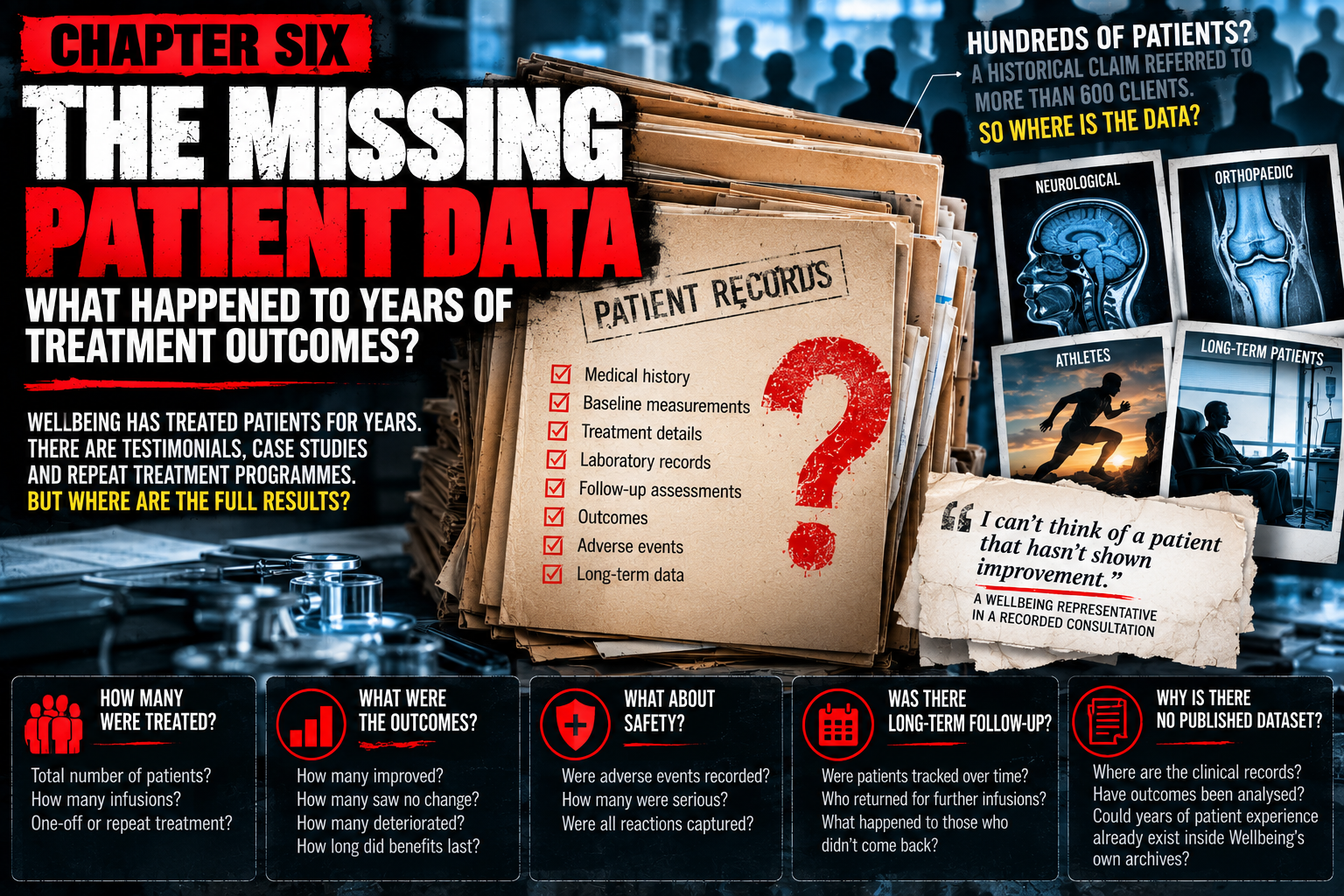
As part of our continuing investigation into Wellbeing International Foundation, we have been examining how the organisation describes its international partner clinic network and what information is available to prospective patients before they begin treatment.
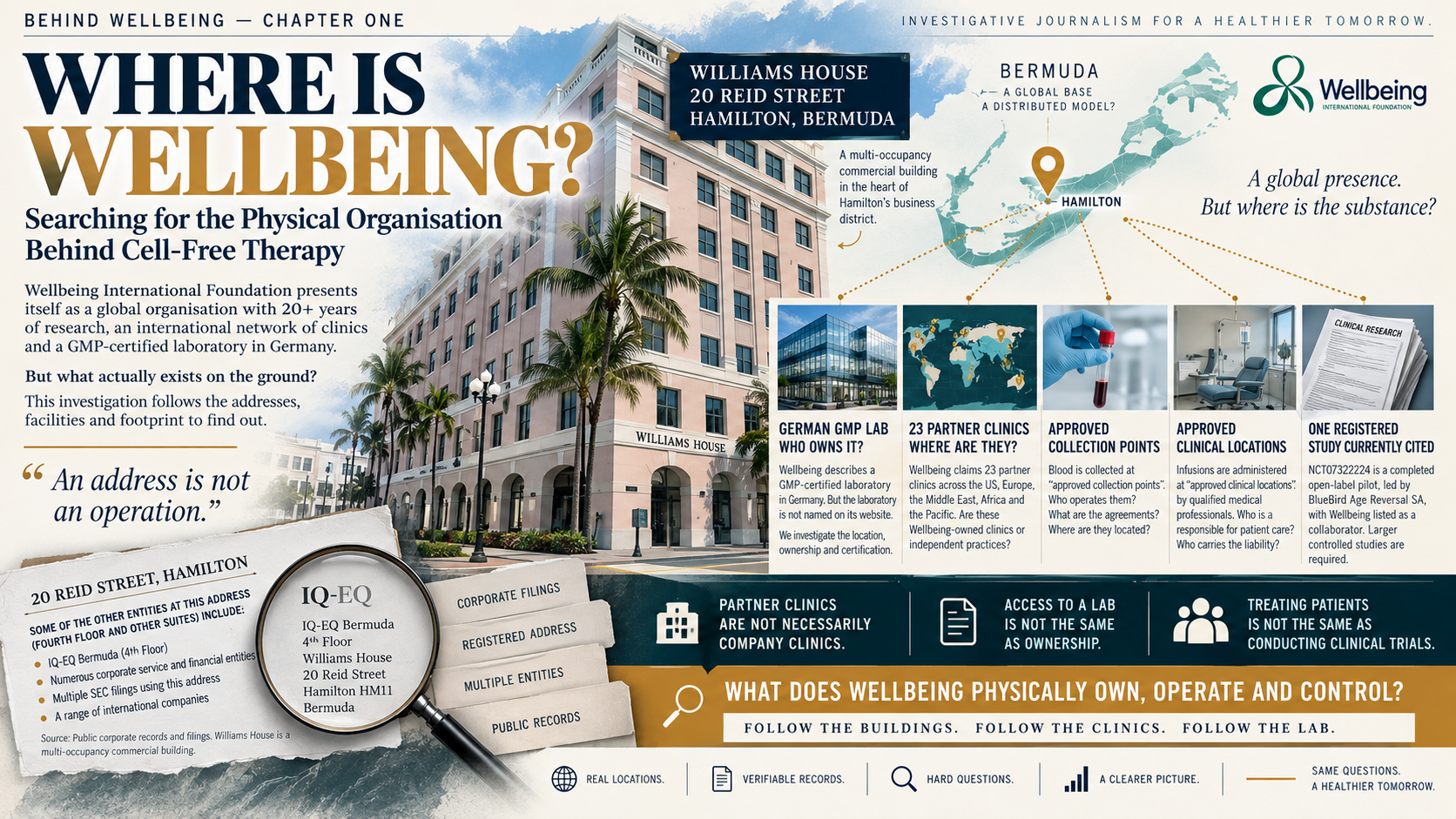
Our first article explored whether the Foundation's publicly described network of partner clinics could be independently identified using publicly available information.
This second investigation examines a different question.
If treatment is delivered through independent partner clinics, who is ultimately responsible for each stage of the patient's care?
It is an important question because accountability is one of the foundations of modern healthcare.
What Is a "Partner Clinic"?
The phrase "partner clinic" appears regularly throughout the Foundation's public material.
At first glance, the meaning seems straightforward.
Most readers are likely to assume it refers to an independent medical clinic working alongside the Foundation to deliver treatment.
However, the term itself can cover a wide range of different relationships.
A partner clinic might be:
- an independently owned private medical practice;
- a specialist healthcare provider;
- a physician operating under their own licence;
- a referral centre;
- a clinic providing consultations only; or
- a location where treatment is administered on behalf of another organisation.
Each of these arrangements carries different legal, clinical and regulatory responsibilities.
Without further explanation, the public cannot know which model applies.
That uncertainty is not unique to one organisation. It is a common issue whenever healthcare involves multiple independent parties operating across different countries.
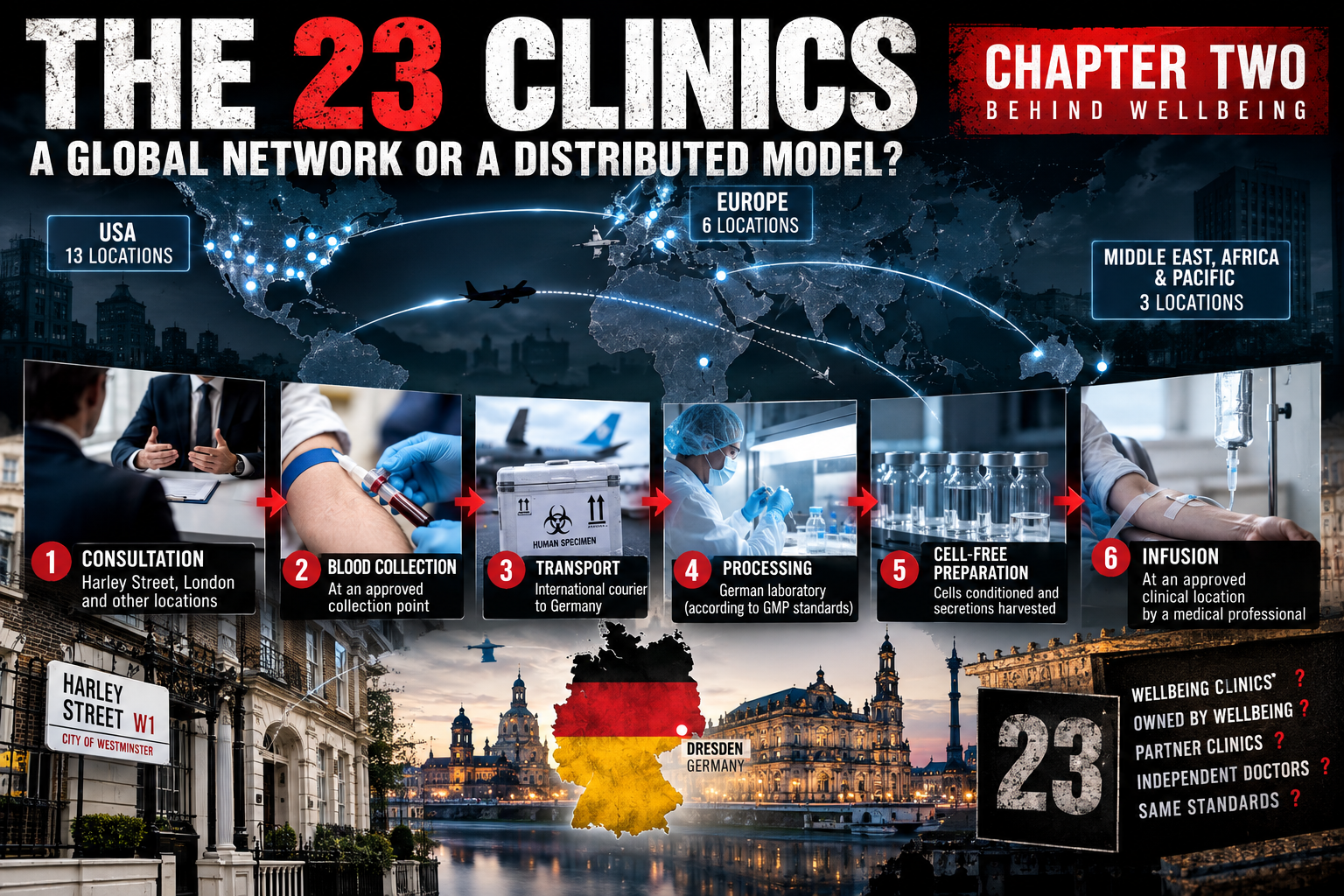
The Patient Journey
To understand why this matters, consider a typical international treatment pathway.
A patient may first contact a healthcare organisation through its website.
Medical records are reviewed.
Consultations may take place remotely.
Blood or other biological material may be collected in one country.
That material may then be transported elsewhere for laboratory processing.
Once complete, treatment may be administered in a different clinic by another medical professional.
Several organisations may therefore play a role in a single patient's treatment.
Each has responsibilities.
Understanding where one responsibility ends and another begins is an important part of informed decision-making.
Questions Patients Naturally Ask
Patients considering international healthcare commonly ask practical questions.
Who is my treating doctor?
Where is my treatment taking place?
Who employs the doctor?
Which organisation carries professional indemnity?
Who do I contact after treatment?
If complications arise, which organisation is responsible for follow-up care?
Where should concerns or complaints be directed?
These are not confrontational questions.
They are sensible questions that help patients understand how their care is organised.
Most healthcare providers expect them.
Why Organisational Transparency Matters
Transparency benefits everyone involved in healthcare.
Patients gain confidence by understanding who will be treating them.
Doctors can better explain referral pathways.
Healthcare professionals can communicate more effectively with one another.
Researchers and journalists can independently verify public information.
Regulators can better understand organisational structures where necessary.
Transparency is therefore not simply about marketing.
It is about helping people make informed choices.
Cross-Border Healthcare Brings Additional Complexity
International healthcare often involves more than one jurisdiction.
Different countries have different professional regulators, healthcare laws, licensing systems and complaint procedures.
When several organisations work together across borders, understanding who performs each role becomes increasingly important.
Patients may reasonably wish to know:
Who collected my biological material?
Where was it processed?
Who verified its quality?
Who administered the treatment?
Who is responsible for my ongoing care?
These are ordinary questions whenever treatment extends beyond a single healthcare provider.
What We Were Able to Establish
From the publicly available material reviewed during this investigation, it is clear that Wellbeing International Foundation describes an international treatment model involving partner clinics and laboratory processing.
The Foundation also presents itself as working with healthcare professionals in multiple locations.
These are statements reflected within its own published material.
What was less clear from the information reviewed was the detailed structure of those individual clinical relationships.
For example, we did not identify a publicly available explanation describing the specific role of each partner clinic within the overall treatment pathway.
That observation does not mean such information is unavailable elsewhere.
It simply means it was not readily identifiable within the publicly accessible material examined for this investigation.
Opportunities for Greater Clarity
Many of the questions raised throughout this article could be addressed through greater public transparency.
For example, healthcare organisations operating international networks may choose to publish:
- participating clinic names;
- clinic addresses;
- lead physicians;
- the role each clinic performs;
- information explaining how patients are allocated to clinics;
- governance arrangements;
- follow-up care pathways.
Providing this information helps prospective patients understand how care is organised before making significant healthcare decisions.
It also supports independent verification of publicly described clinical networks.
Why This Discussion Matters
This investigation is not about criticising innovation.
Healthcare continues to evolve, and new therapies often involve collaboration between clinicians, laboratories and specialist organisations.
That collaboration is not, in itself, unusual.
What matters is that patients understand the structure behind the treatment they are considering.
Knowing who performs each stage of care, where treatment takes place and which organisation is responsible helps patients make informed decisions with confidence.
Transparency does not weaken healthcare.
It strengthens it.
Final Thoughts
International healthcare is becoming increasingly common.
As treatment models become more sophisticated, involving multiple organisations and cross-border collaboration, transparency becomes even more important.
Patients should be able to understand not only the treatment itself but also the network of organisations responsible for delivering it.
Innovation builds hope.
Accountability builds trust.
And trust remains one of the most valuable medicines any healthcare organisation can offer.