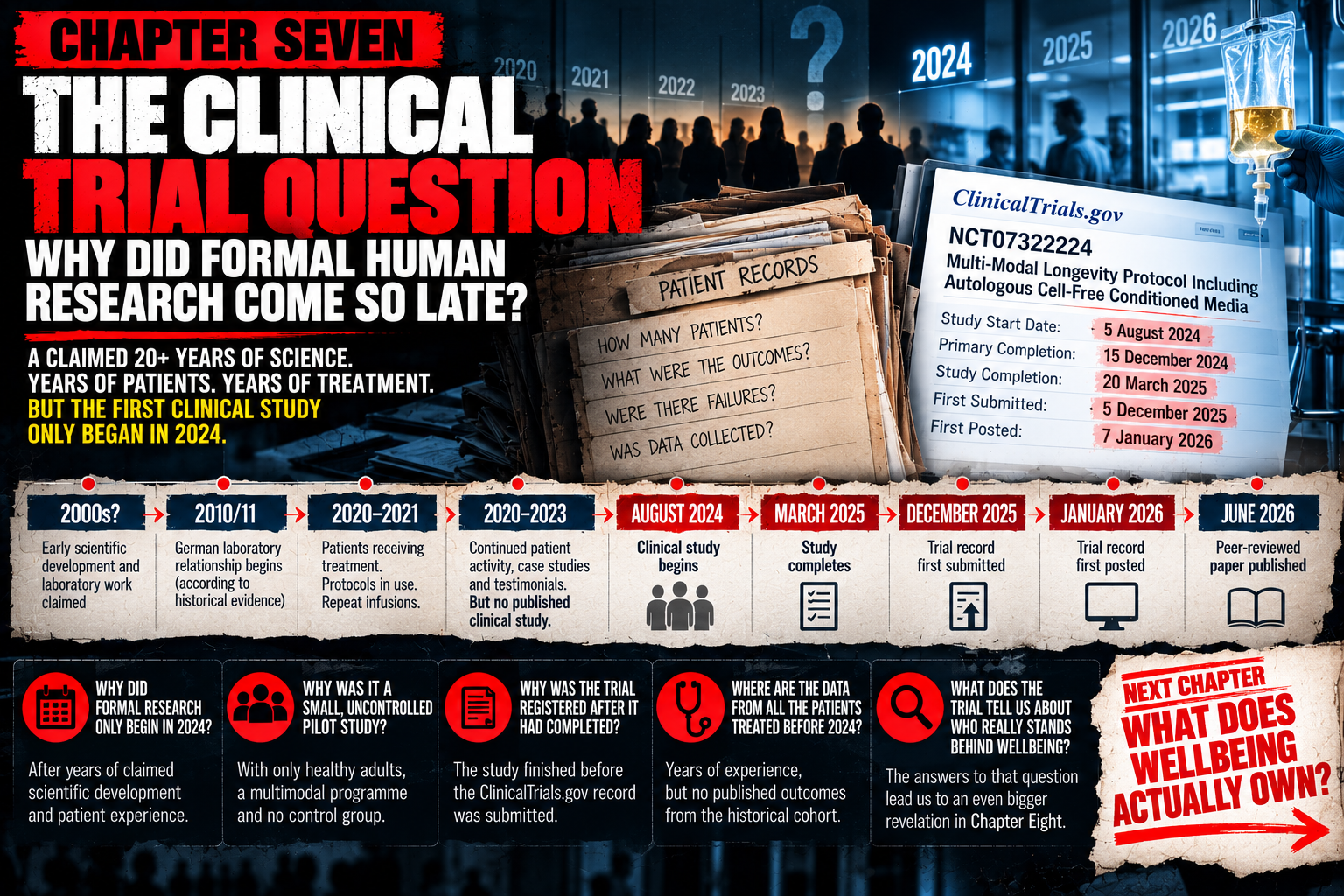
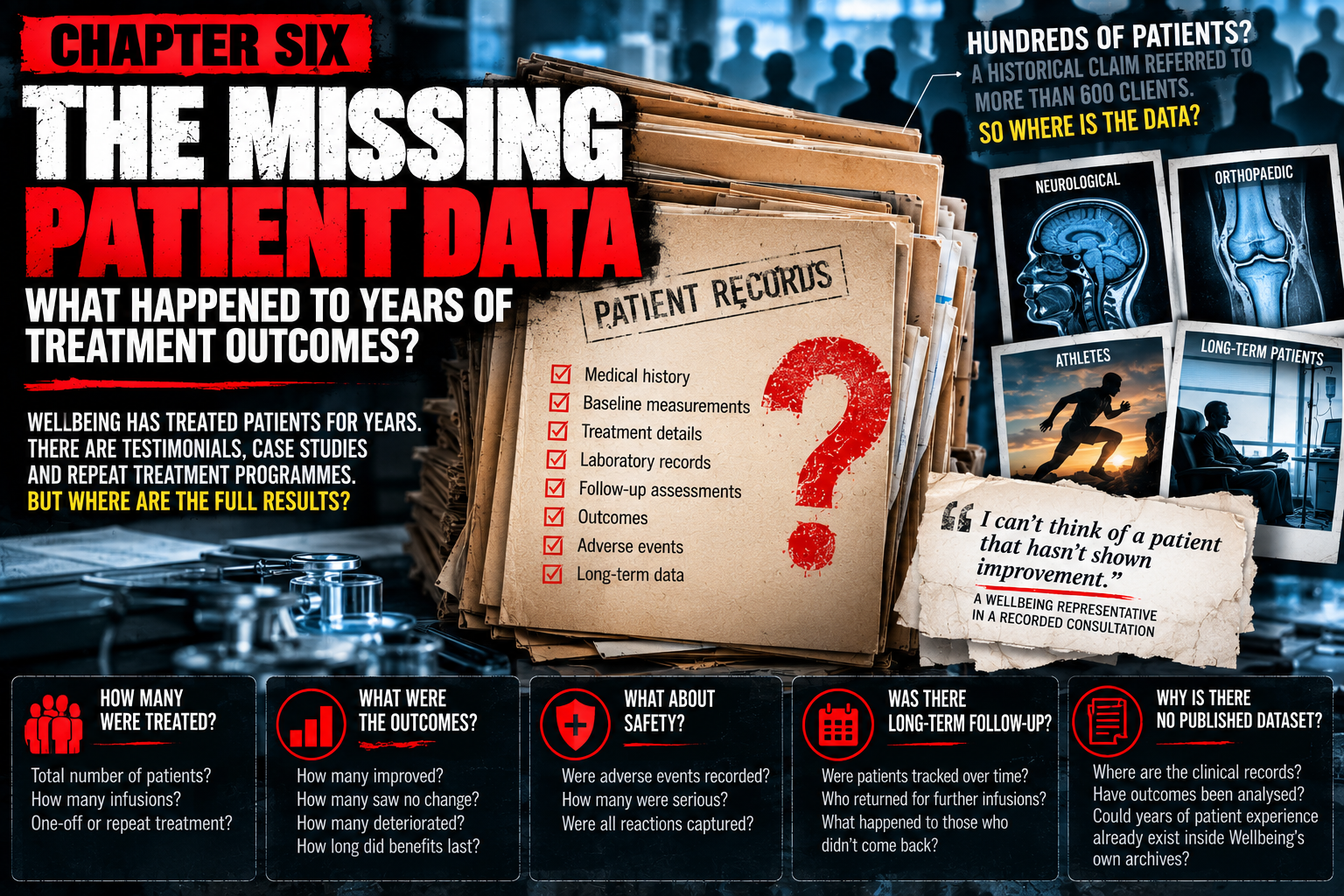
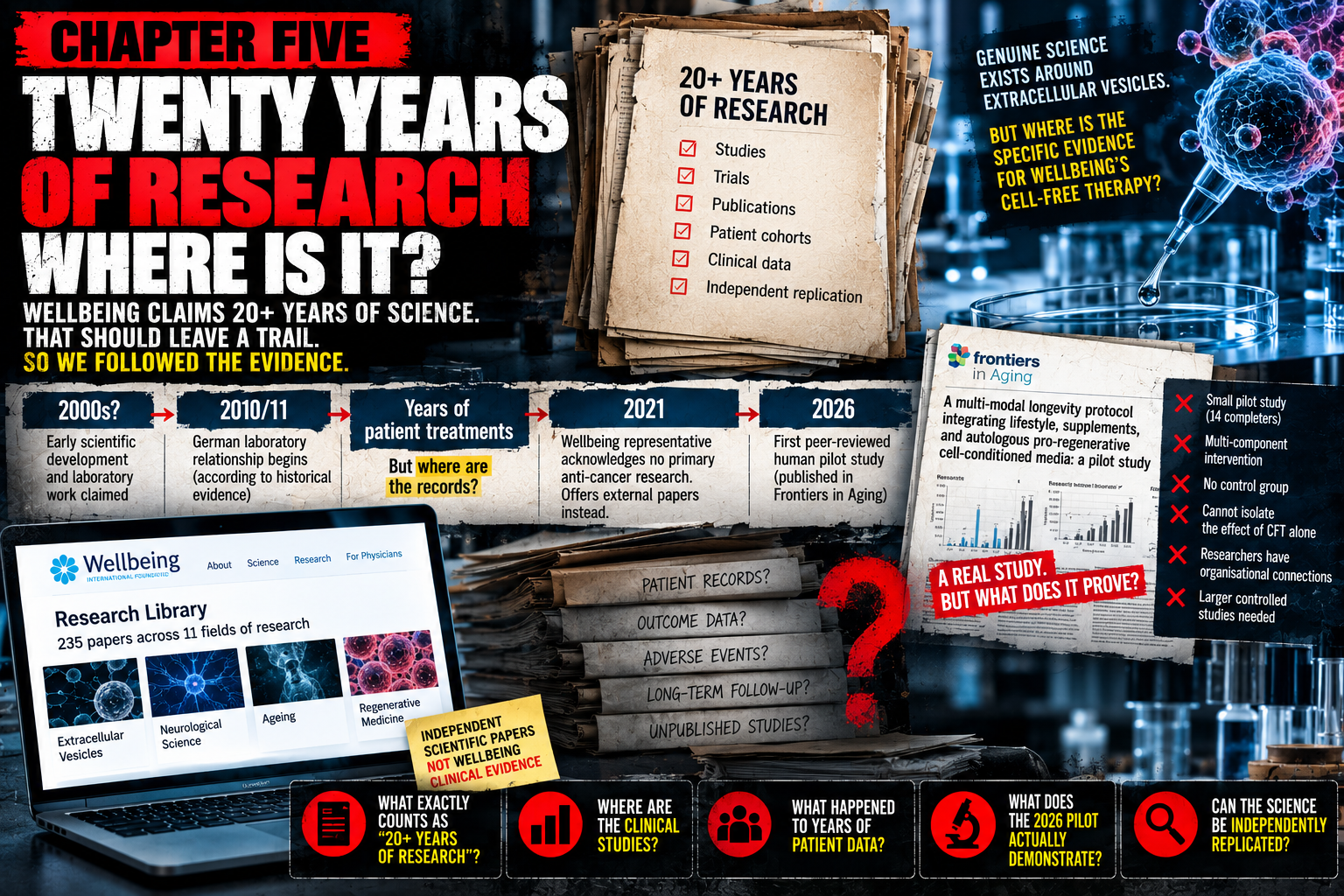
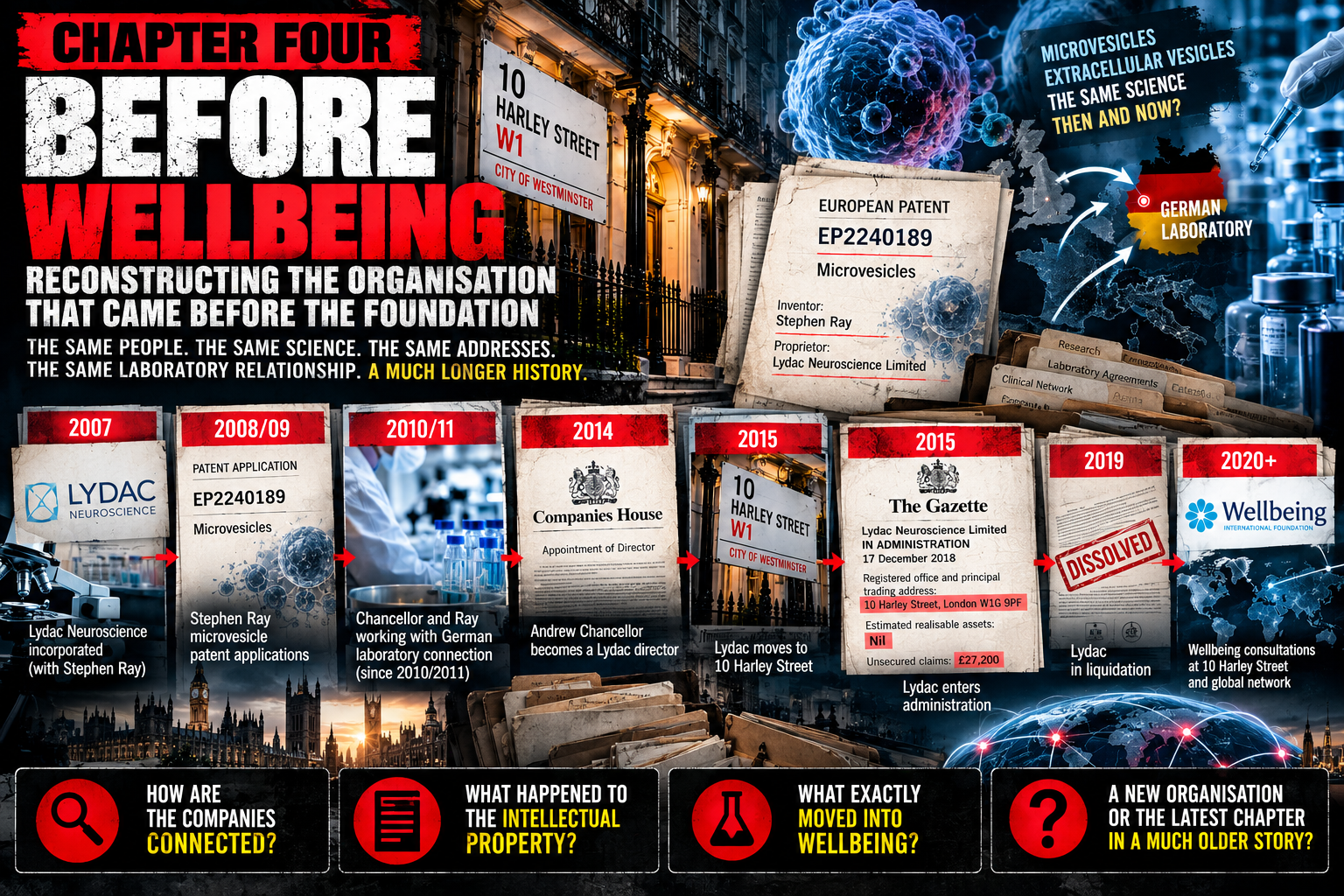
Three articles.
Hundreds of pages of research.
Public records.
Corporate databases.
Professional profiles.
Company websites.
Legal documents.
What began as a simple investigation into one international regenerative medicine provider quickly became something much bigger.
It became an investigation into transparency.
Not whether regenerative medicine works.
Not whether patients improve.
Not whether companies have good intentions.
Instead, we found ourselves asking a much simpler question.
Who exactly is standing behind Wellbeing International Foundation Ltd. asking patients to place their trust—and often tens of thousands of pounds—in their hands?
The investigation changed direction
When we first began our research, we expected to spend most of our time examining treatments.
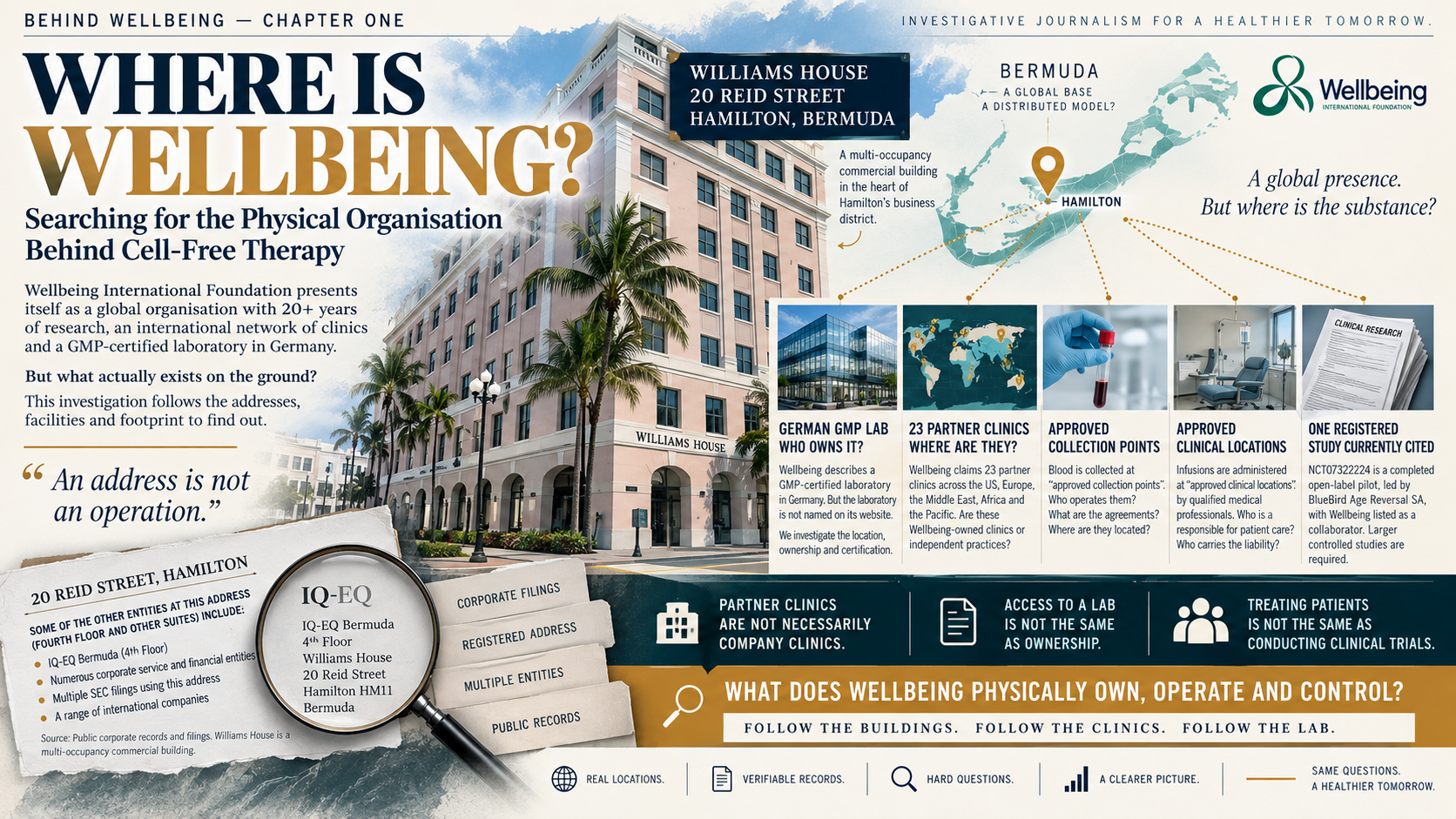
Instead, we spent far more time trying to understand corporate structures.
Legal entities.
Jurisdictions.
Responsibilities.
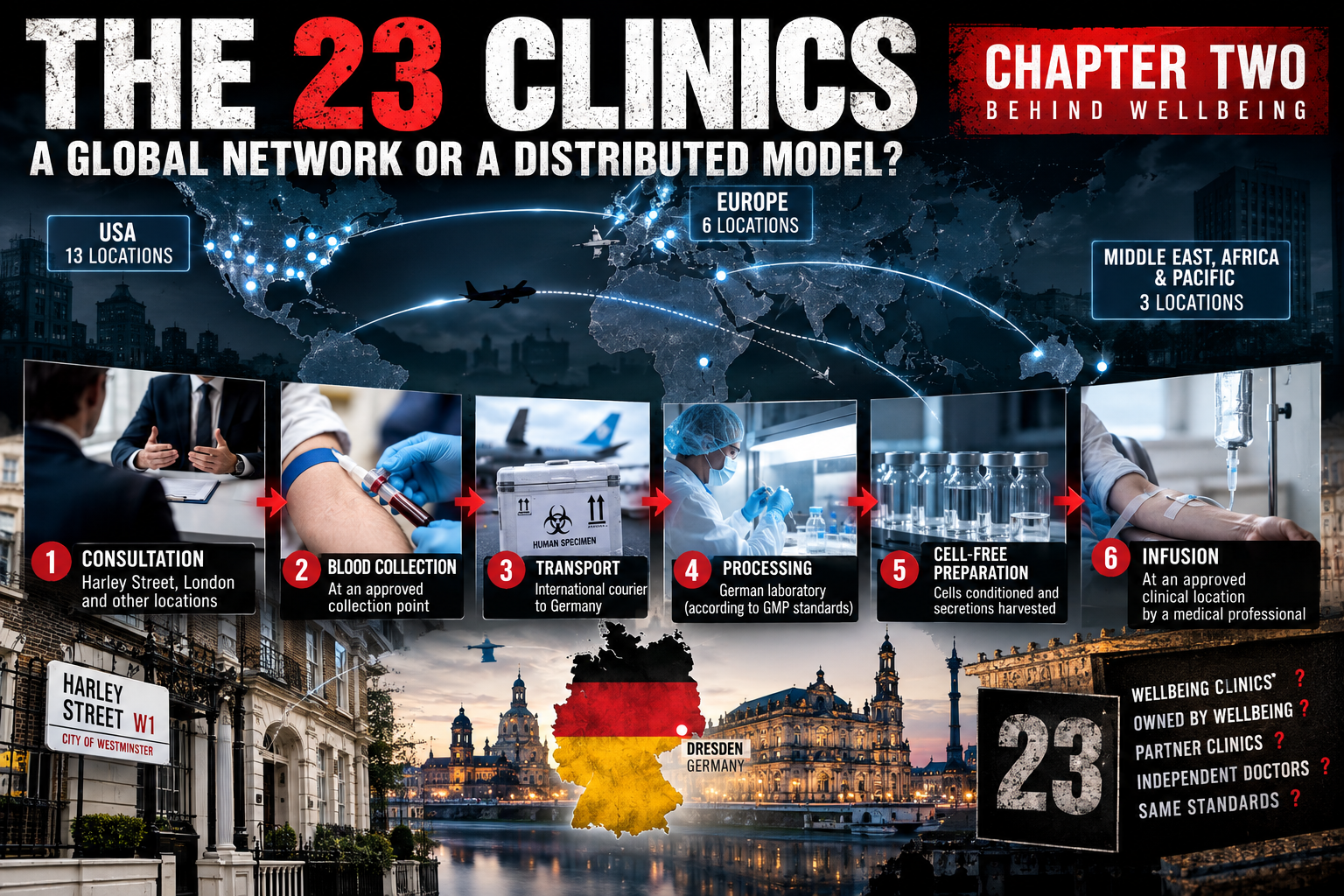
Relationships between clinics, laboratories and management companies.
The more we looked, the more we realised something important.
Patients rarely investigate the company behind the treatment.
Most investigate the treatment itself.
Why that matters
Healthcare is built on trust.
Patients trust doctors.
They trust clinics.
They trust websites.
They trust testimonials.
But trust becomes even stronger when it is supported by transparency.
Understanding who you are dealing with is not a sign of scepticism.
It is part of making an informed decision.
The ability to identify the legal entity providing the service, understand where it is based, and know which laws govern the relationship should never be viewed as an inconvenience.
It should be considered part of responsible healthcare.
We found questions—not conclusions
Throughout this series, we deliberately resisted the temptation to jump to conclusions.
Investigations should never begin with an outcome already decided.
Instead, they should begin with evidence.
Where we found evidence, we reported it.
Where we found uncertainty, we explained it.
Where questions remained unanswered, we asked them openly.
That approach matters.
Because unanswered questions are not proof of wrongdoing.
Equally, unanswered questions deserve thoughtful answers when patients are making significant medical and financial decisions.
The importance of independent verification
Modern healthcare organisations often operate internationally.
They may work with partner clinics.
Independent laboratories.
Consultants.
Medical specialists.
Administrative companies.
Marketing organisations.
There is nothing inherently unusual about any of those arrangements.
The important question is whether patients can clearly understand how those pieces fit together.
Transparency is not about satisfying journalists.
It is about giving patients confidence that they fully understand who they are trusting.
But this investigation has uncovered something much bigger…
As we assembled the evidence for this series, another story slowly began to emerge.
One that we hadn't originally intended to investigate.
It isn't about one company.
It isn't even about one clinic.
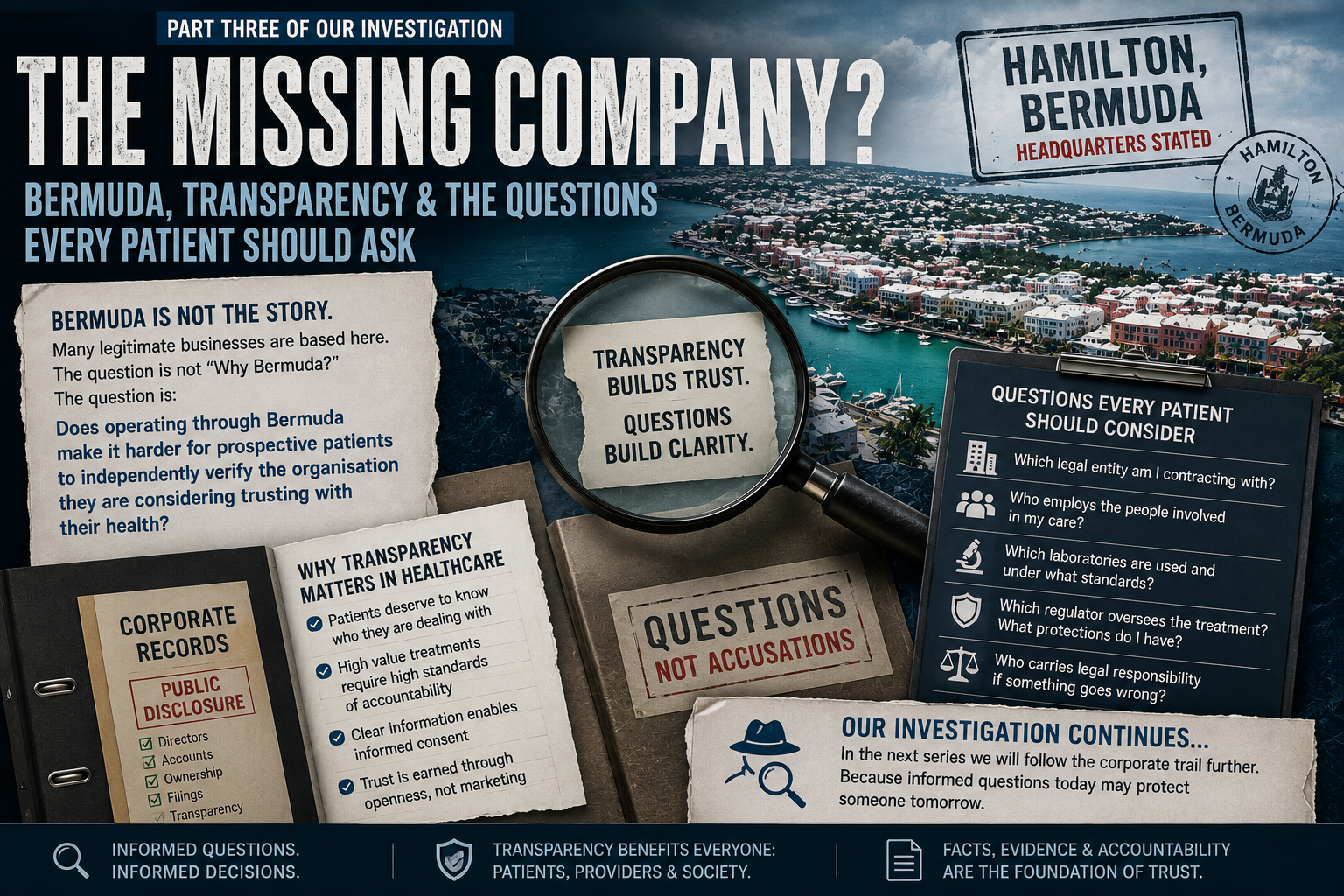
It's about how modern international healthcare businesses are structured—and how difficult it can sometimes be for an ordinary patient to follow the corporate trail from a website to the legal entity ultimately responsible for their care.
That journey deserves closer examination.
And that's exactly where our investigation now turns.
Coming Next: Following the Corporate Trail
Over the coming weeks, we'll begin a new investigation into
Wellbeing International Foundation Ltd.
This time, we'll go beyond websites and marketing material.
We'll follow the paperwork.
The contracts.
The invoices.
The consultations.
The legal entities.
The laboratories.
And the people behind them.
Among the questions we'll be investigating are:
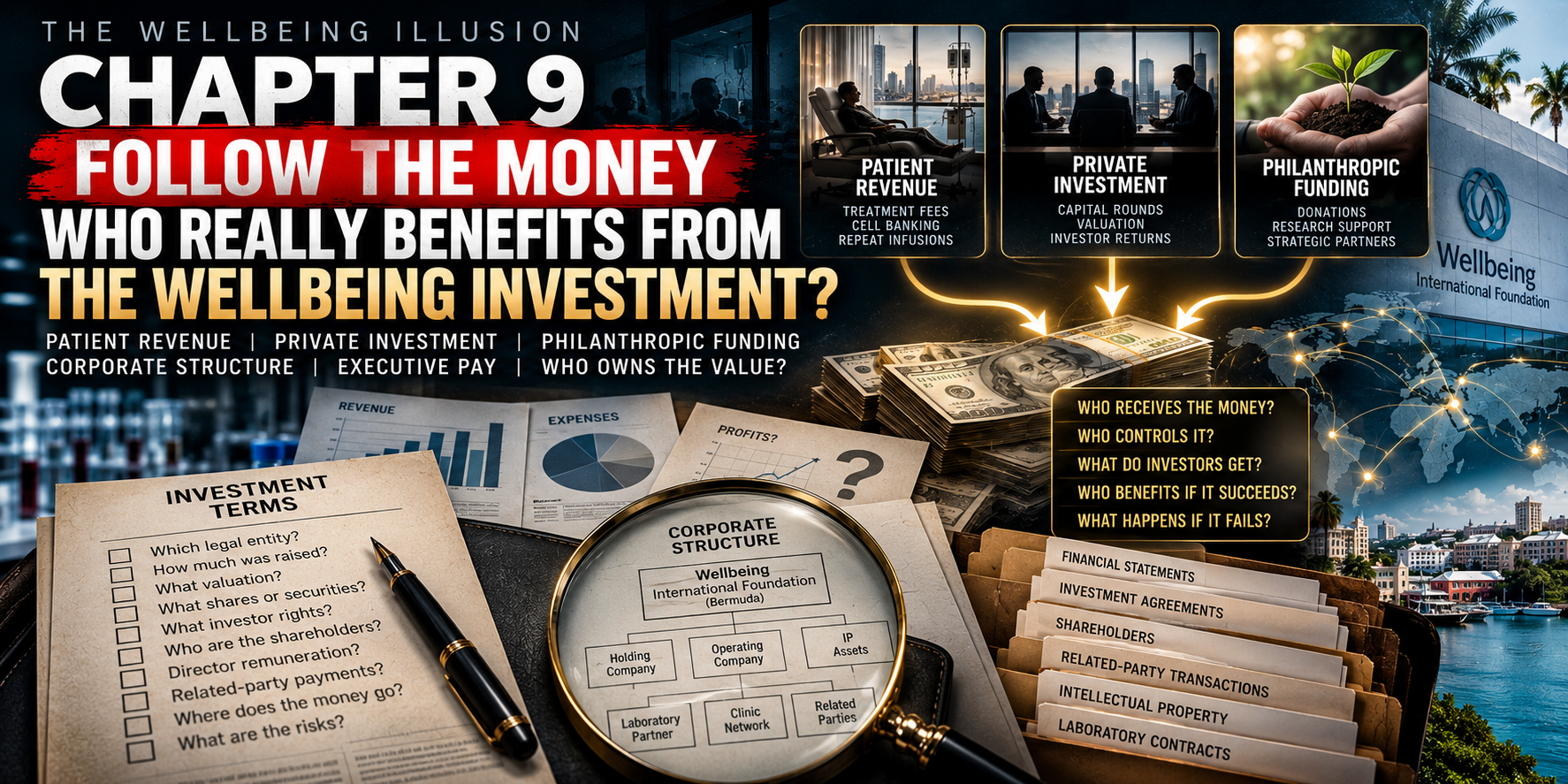
- Which legal company actually contracts with patients?
- Which organisation receives payment?
- Which entity carries legal responsibility?
- Who employs the people involved in patient care?
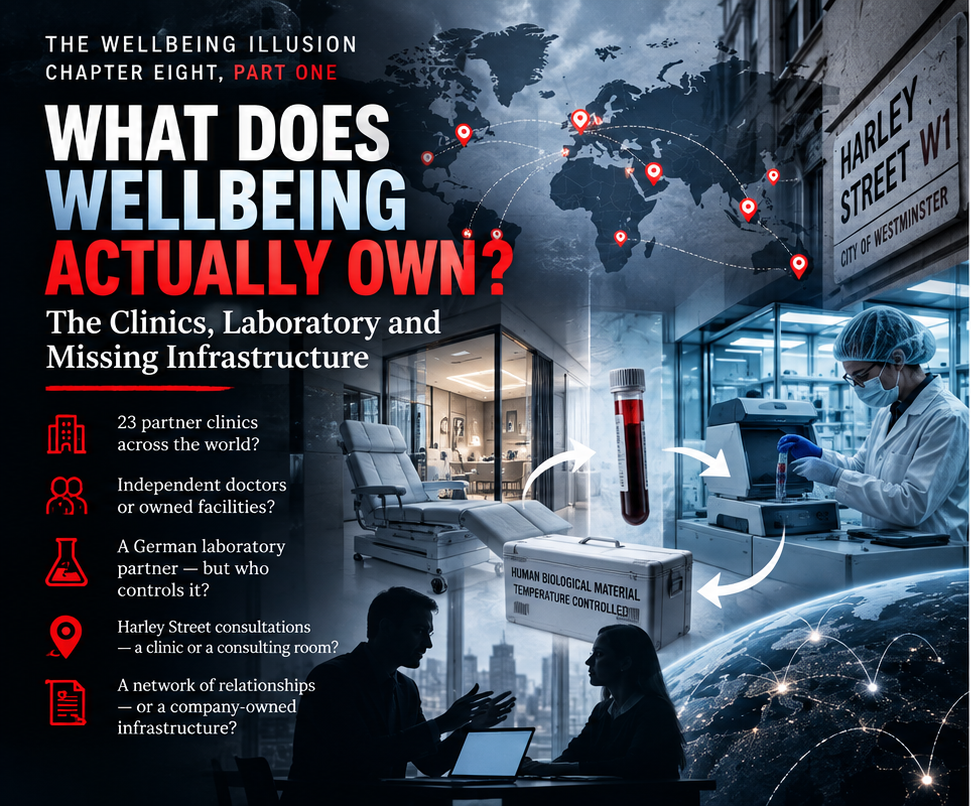
- How are international partnerships structured?
- Which laboratories provide the products or services?
- What regulatory oversight exists at each stage of the patient journey?
- What protections are available if treatment does not go as planned?
And perhaps the biggest question of all:
Can an ordinary patient easily discover these answers before committing their health and their life savings?
A new direction
The next stage of this investigation will be different.
We'll move beyond public records.
We'll examine first-hand experiences.
We'll analyse contracts and documentation.
We'll compare what patients are told with what can be independently verified.
Most importantly, we'll continue applying the same principle that guided this entire series:
Follow the evidence.
Not assumptions.
Not speculation.
Evidence.
Because in healthcare, informed decisions begin with informed questions.
And sometimes, the most important discoveries aren't the answers we find—
They're the questions we realise still need asking.
Our investigation is only just beginning.