Will it help me?
They read testimonials.
They watch videos.
They speak to consultants.
They search online for stories from other patients.
But there is another area that deserves just as much attention.
The business behind the treatment.
Looking Beyond the Science
Imagine you're about to invest £30,000, £40,000 or even more in a treatment that offers hope for a serious medical condition.
Most people would naturally want to understand:
- How the treatment works.
- Who developed it.
- What previous patients experienced.
But there are other questions that are just as important.
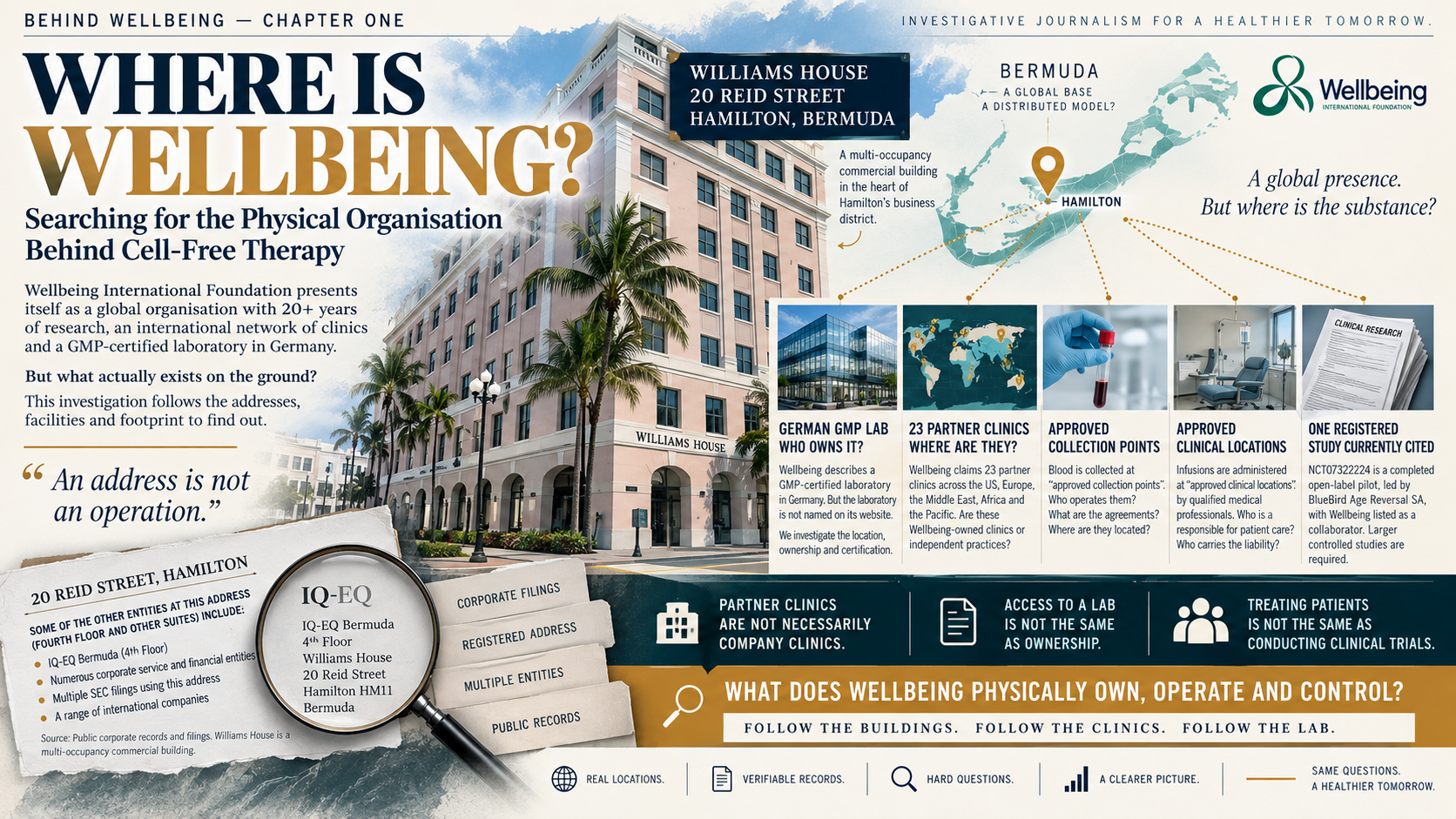
Who owns the company?
Which legal entity are you actually contracting with?
Where is that company based?
Which country's laws protect you if something goes wrong?
These are not questions of science.
They are questions of consumer protection.
Public Records Tell Their Own Story
One of the simplest due diligence checks anyone can carry out is to review publicly available corporate records.
In the UK, Companies House provides information on directors, company status, filing history and corporate changes.
Those records do not tell you whether a treatment works.
Nor do they tell you whether a business is trustworthy.
What they do provide is valuable background information that helps consumers understand the history of the organisation they are considering doing business with.
A Corporate History Is Not a Verdict
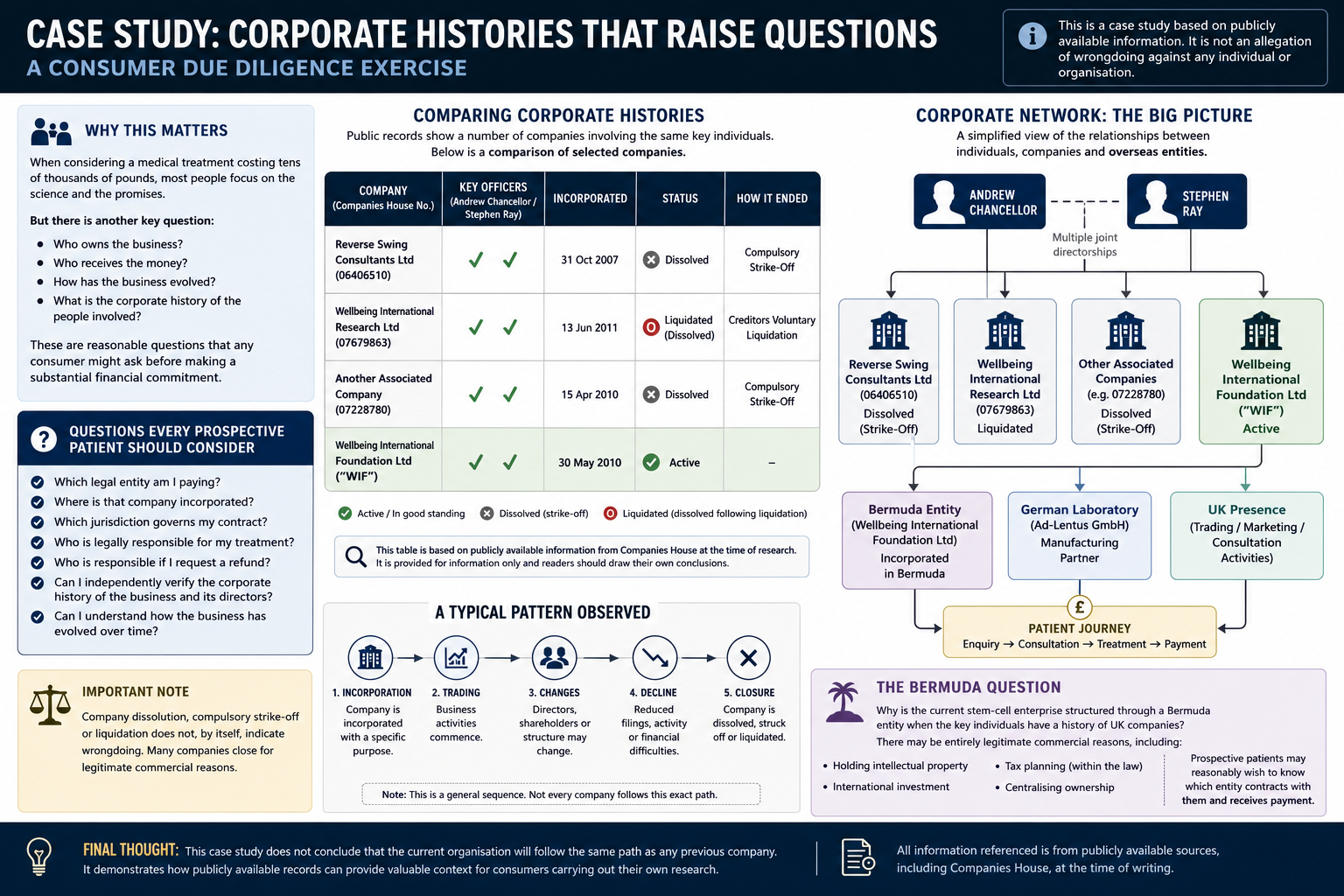
During our own research into companies operating in the regenerative medicine sector, we found that some key individuals had been associated with multiple businesses over a number of years.
Some of those companies remain active.
Others have been dissolved.
Some have been subject to compulsory strike-off procedures.
One entered liquidation before being dissolved.
It is important to be absolutely clear.
None of those facts, taken individually, demonstrate wrongdoing.
Companies close every day for perfectly legitimate commercial reasons.
Entrepreneurs often establish and close companies throughout their careers.
Public records simply provide context.
Why Context Matters
If you were buying a £40,000 car, you would probably research the dealer.
If you were investing £40,000 into a business, you would likely review its financial background.
Medical treatment deserves no less careful consideration.
Understanding the corporate history of a business is not about suspicion.
It is about making informed decisions.
Questions Worth Asking
Before making any significant financial commitment, consider asking:
- Which company am I paying?
- Which legal entity signs my contract?
- Where is that company incorporated?
- Which country's legal system applies?
- Who carries responsibility if I need to make a complaint?
- Can I independently verify the business history of the organisation?
Any reputable organisation should understand why patients ask these questions.
Transparency Builds Confidence
Good businesses have nothing to fear from informed customers.
In fact, transparency often strengthens trust.
When organisations openly explain their structure, ownership and responsibilities, prospective patients are able to make decisions with greater confidence.
That benefits everyone involved.
Due Diligence Is Not Distrust
One of the biggest misconceptions is that asking questions means you don't trust a business.
The opposite is true.
Responsible consumers ask questions because they are making responsible decisions.
Whether you are buying a home, investing your savings or considering an innovative medical treatment, understanding who you are dealing with is simply good practice.
Final Thoughts
Hope is an important part of medicine.
Innovation drives healthcare forward.
But neither should replace careful research.
Before making any life-changing financial decision, take the time to understand not only the treatment itself, but also the organisation offering it.
The answers you receive may give you greater confidence.
And if they raise further questions, those questions deserve to be answered before any commitment is made.
An informed patient is not a difficult patient.
An informed patient is a protected patient.