Twenty Years of Science — But Where Is the Evidence Trail?
The Wellbeing Illusion — Chapter Five
There is a phrase that appears repeatedly around Wellbeing International Foundation's scientific story:
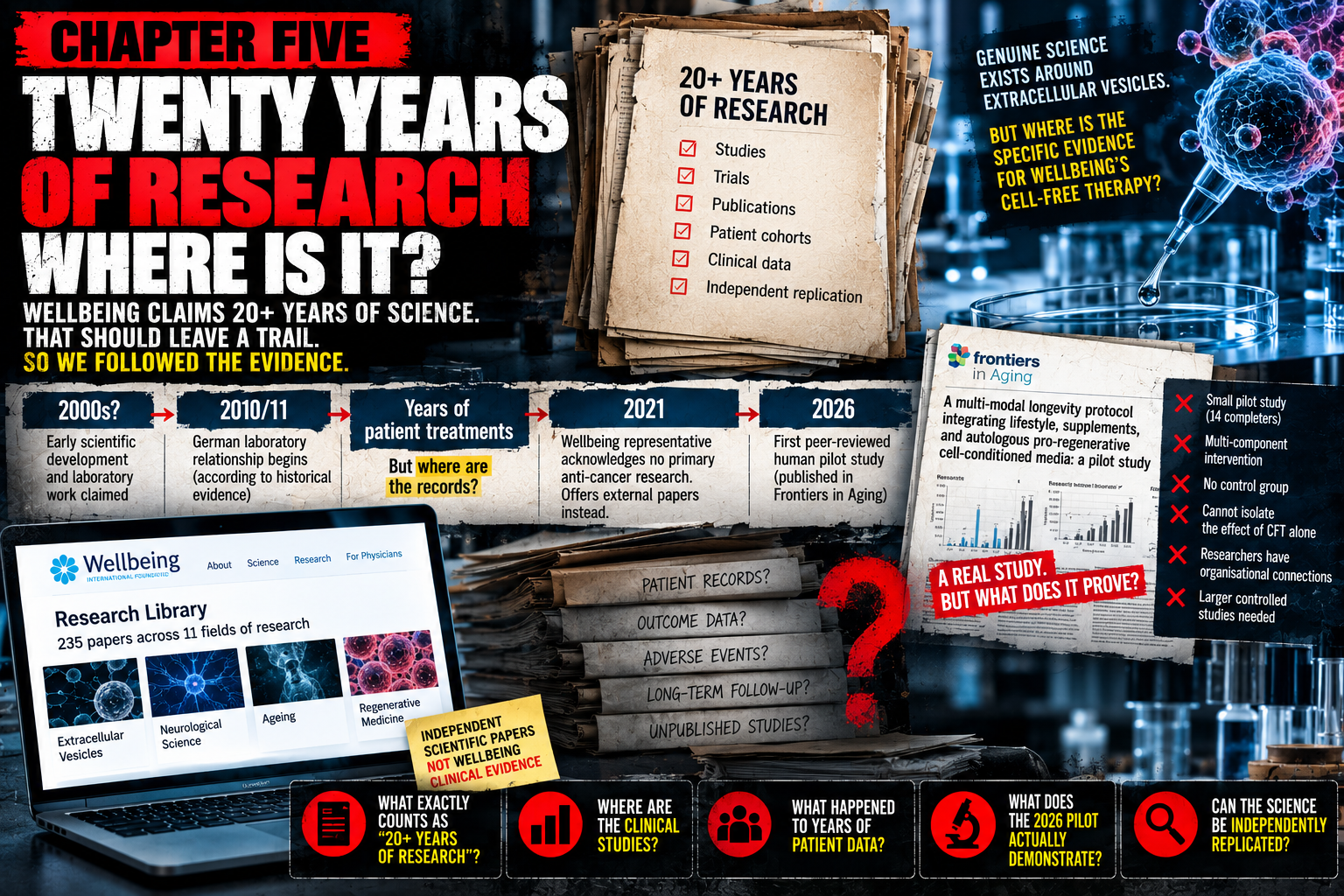
More than twenty years of research.
It is a powerful statement.
For a prospective patient, twenty years suggests maturity.
For a doctor, it suggests an established body of evidence.
And for a potential investor, it can suggest that the underlying science has been developed and tested over a substantial period.
But there is another way of looking at twenty years of research.
Twenty years should leave twenty years of footprints.
Publications.
Clinical studies.
Research programmes.
Patient cohorts.
Laboratory results.
Conference presentations.
Protocols.
Collaborating institutions.
Outcome data.
Safety data.
And eventually, independent researchers attempting to reproduce the findings.
So we decided to stop looking at the number.
And start looking for the footprints.
What we found is much more complicated.
Because there is unquestionably real science surrounding extracellular vesicles, conditioned media and cellular signalling.
There is also evidence that the scientific relationships surrounding Wellbeing's technology stretch back many years.
And now, in 2026, there is a genuine peer-reviewed human pilot study.
But those three things are not necessarily the same as twenty years of clinical evidence for Wellbeing's Cell-Free Therapy.
That distinction is where this investigation begins.
What Does “Twenty Years of Research” Actually Mean?
This sounds like a simple question.
It isn't.
Research can mean many different things.
It can mean laboratory experiments.
Protocol development.
Studying published papers.
Developing methods for processing biological material.
Observing patients.
Treating patients.
Animal studies.
Human studies.
Clinical trials.
Or formal controlled research designed to determine whether an intervention actually works.
All of those activities may legitimately form part of scientific development.
But they do not carry the same evidential weight.
A scientist spending twenty years studying extracellular vesicles is not the same thing as Cell-Free Therapy undergoing twenty years of clinical trials.
A laboratory developing protocols for twenty years is not the same thing as twenty years of human efficacy data.
And treating patients for twenty years does not automatically create twenty years of clinical research.
This distinction becomes particularly important when we look at Wellbeing's scientific material today.
There Is a Huge Amount of Science Around Extracellular Vesicles
This point should be acknowledged immediately.
Extracellular vesicles are not some invented biological concept.
They are the subject of extensive international scientific research.
Researchers around the world are investigating their role in cellular communication, inflammation, regeneration, ageing, neurological disease and many other biological processes.
Wellbeing has assembled a substantial Research Library containing scientific papers across related fields.
That is useful.
But there is a crucial distinction.
Most of that scientific literature was not produced by Wellbeing.
It is research conducted by universities, hospitals, laboratories and scientists around the world.
That literature can help explain the biological rationale behind an intervention.
It does not automatically demonstrate that Wellbeing's particular preparation works clinically.
Imagine a company developing a new cancer drug.
There may be 50,000 scientific papers explaining cancer biology.
Those papers do not prove that company's drug works.
The drug requires evidence of its own.
The same principle applies here.
The real question isn't:
Is there scientific literature about extracellular vesicles?
There clearly is.
The question is:
Where is the historical research specifically demonstrating what Wellbeing's intervention does in humans?
Our Covert Investigation Asked That Question Years Ago
This is where our confidential archive becomes important.
Years before the publication of Wellbeing's current pilot study, investigators posing as prospective patients were already asking the organisation about the evidence behind what was being offered.
Their identities will remain confidential.
But the recorded answers provide a rare historical snapshot of the scientific position at the time.
During one recorded conversation in 2021, a prospective patient questioned a senior member of Wellbeing's scientific team about evidence relating to cancer.
The answer was remarkably candid.
The representative explained that the biological secretions had originally been developed around regeneration and tissue repair.
Then came an important admission.
There had been:
“never any primary research, original research on anti-cancer effects.”
Instead, he referred to a limited number of scientific papers elsewhere suggesting possible effects and characterised that evidence as preliminary.
When directly asked whether the intervention cured cancer, his answer was:
“no, in my opinion.”
He also explained that cancer was not something the organisation specialised in.
That is an important historical conversation.
And in fairness to the scientific representative, it was a considerably more cautious answer than simply promising a desperate patient that the intervention would work.
But scientifically, it tells us something else.
When specifically challenged about research in that area, the evidence being discussed wasn't a Wellbeing clinical trial.
It was scientific literature produced elsewhere.
That distinction is fundamental.
Another Recording Told Us Something Different
In another recorded encounter, the scientific basis of the intervention was challenged more directly.
Why did they believe it worked?
The response was:
“Based on the research we've actually done.”
That statement immediately interested us.
Because it implies the existence of a separate body of internal research.
The representative described a technology that had evolved over years.
Earlier work had involved cells obtained from fat.
Later development moved towards the blood-derived approach associated with the intervention today.
That supports something we have increasingly discovered throughout this investigation.
The scientific story behind Wellbeing appears to be genuinely old.
There were earlier technologies.
There were laboratory experiments.
There were evolving protocols.
There were patients.
There were relationships with scientists and laboratories.
There appears to have been a gradual transition from earlier cell-based techniques towards what would eventually become the modern cell-free proposition.
But that creates another question.
Where is the research generated during that evolution?
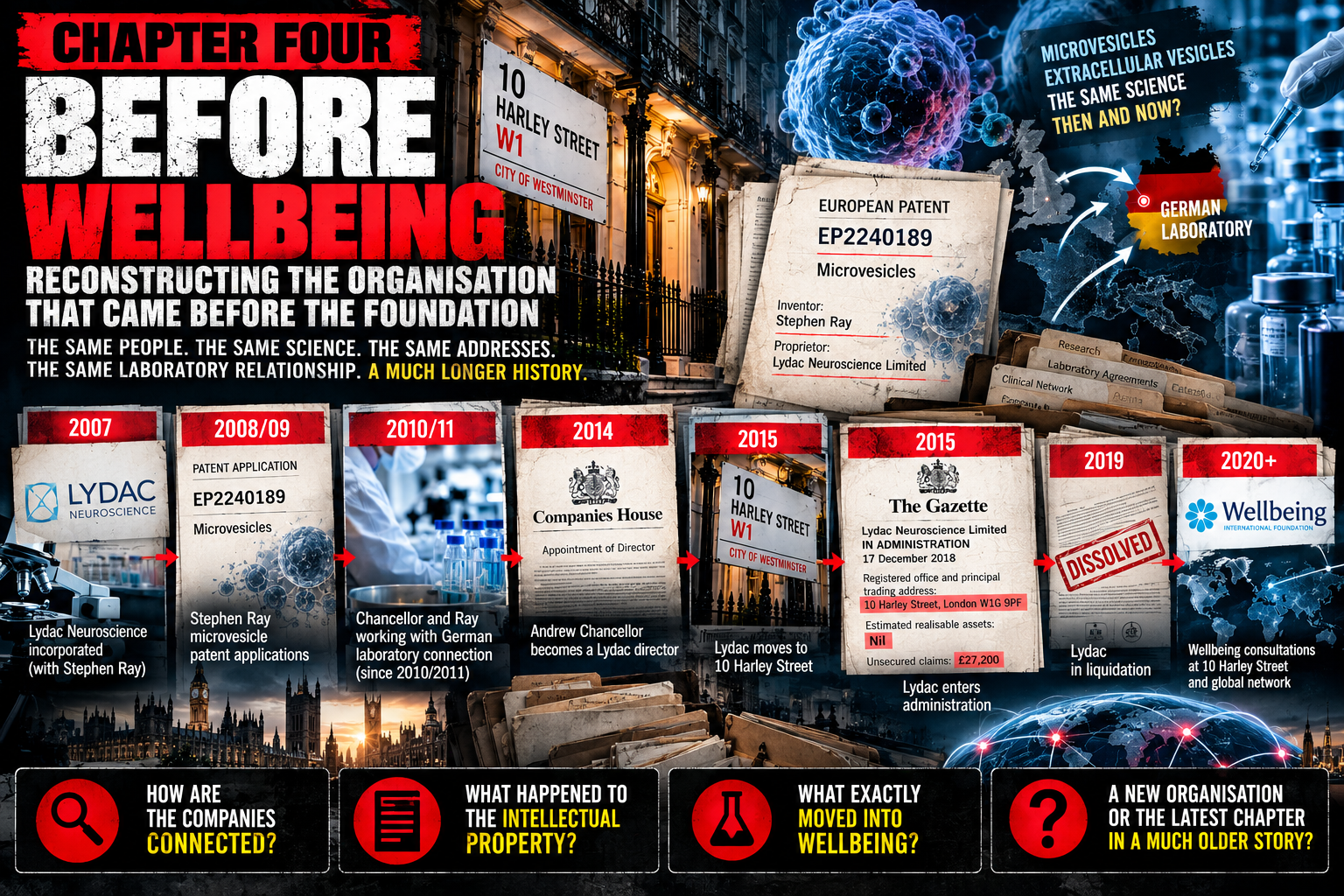
The German Laboratory Takes Us Back More Than a Decade
Our covert material provides another piece of the historical puzzle.
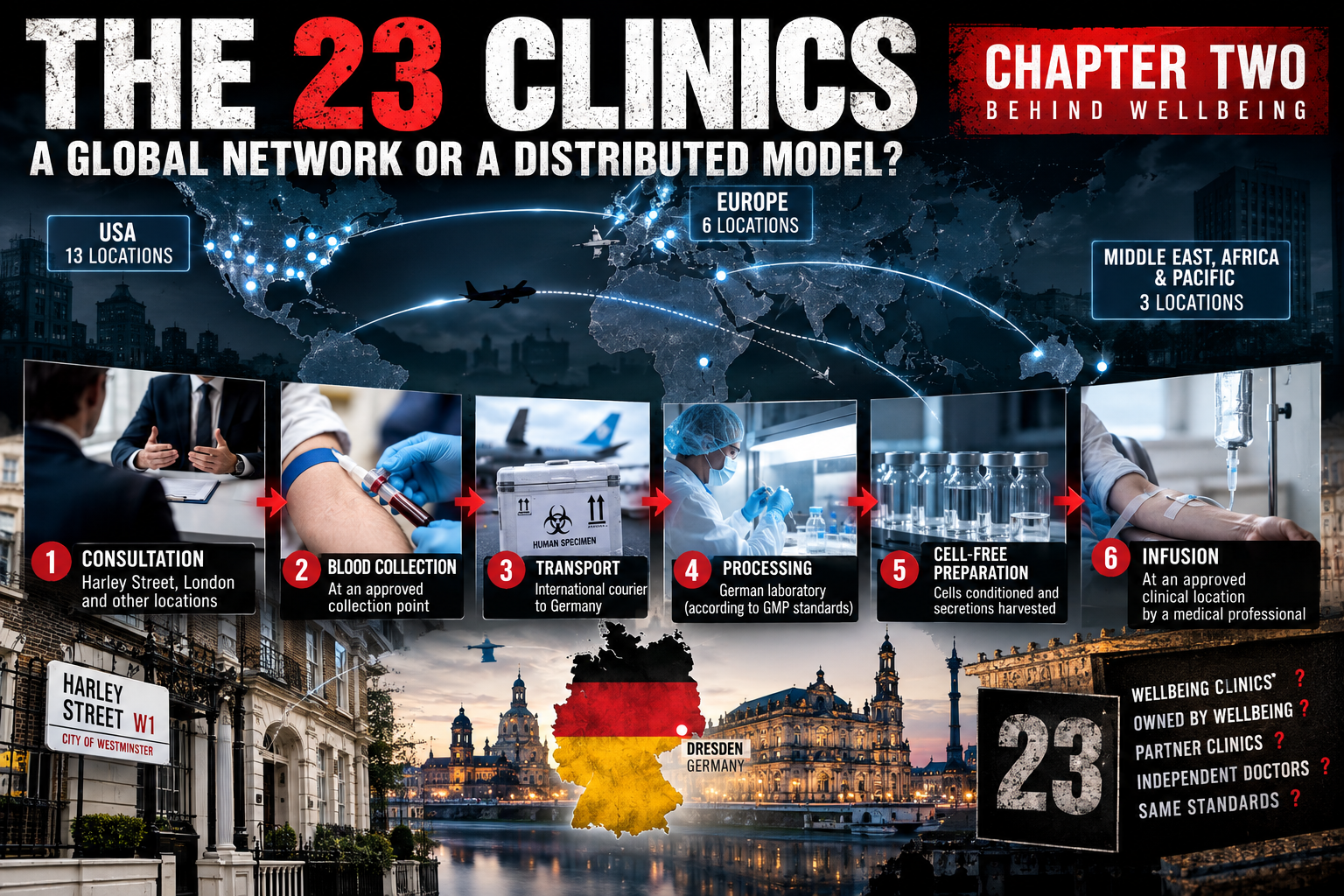
During a recorded discussion in 2021, a senior Wellbeing representative described a relationship with the German laboratory connection stretching back to approximately 2010 or 2011.
The laboratory representative remembered the collaboration potentially beginning even earlier.
The Wellbeing representative described its senior scientific figure as central to the development of the protocols.
His words were clear:
“Steve designs all the protocols that we use.”
The German laboratory representative then said:
“We carry out the protocols of Wellbeing International.”
He described his responsibilities as including quality control and process control.
This matters.
It provides evidence of a long-running scientific and laboratory relationship.
It supports the idea that the technology didn't suddenly appear in 2024 or 2026.
Something was being developed.
Something was being processed.
Protocols existed.
Laboratory relationships existed.
And people were apparently receiving versions of the intervention.
But once again:
scientific history is not automatically clinical evidence.
A Protocol Is Not Proof
This distinction is easy to lose.
A laboratory can perfect a method of producing something.
That demonstrates manufacturing capability.
It doesn't establish that the finished preparation produces a meaningful clinical benefit.
A scientist can develop a sophisticated biological theory.
That demonstrates scientific reasoning.
It doesn't prove the intervention works in humans.
Patients can receive an intervention.
That demonstrates clinical experience.
It doesn't establish efficacy.
And patients can report improvements.
Those experiences can be genuine and important.
But testimonials cannot determine whether the intervention caused the improvement.
That requires structured research.
Which brings us back to those twenty years.
Where Is the Research Timeline?
If the scientific programme really extends across more than two decades, it should be possible to reconstruct it.
Not necessarily perfectly.
But enough to understand what happened.
What was being researched twenty years ago?
What experiments were performed?
What were the results?
What happened around 2010?
What role did the German laboratory play?
When were the first human patients treated?
What exactly were they receiving?
When did the intervention change from earlier cell-based approaches to conditioned media?
How many people received each version?
Were outcomes systematically recorded?
Were unsuccessful outcomes recorded?
Were adverse events documented?
When was the first prospective human study?
When was the first controlled study?
When was the first peer-reviewed clinical publication?
Those questions are not attacks.
They are how a scientific development history is established.
Yet the public material currently available does not allow us to reconstruct a complete twenty-year clinical research programme for the intervention now described as Cell-Free Therapy.
That does not prove the research didn't happen.
It means we have not yet found the public evidence trail showing what it consisted of.
Then Something Important Happened in 2026
This investigation also has to acknowledge when the evidence changes.
And in 2026, it did.
On 25 June 2026, Frontiers in Aging published:
A multi-modal longevity protocol integrating lifestyle, supplements, and autologous pro-regenerative cell-conditioned media: a pilot study.
Read the study in Frontiers in Aging
This is important.
It is original research.
It is peer reviewed.
And it involves an autologous conditioned-media intervention associated with Wellbeing.
Sixteen healthy adults aged 46 to 72 entered the study.
Fourteen completed it.
The programme lasted 17 weeks.
Participants received a multimodal intervention combining lifestyle optimisation, targeted supplementation and two intravenous infusions of autologous pro-regenerative cell-derived conditioned media.
The researchers reported reductions in two measures of biological age, alongside changes in some biomarkers. No adverse events were reported during the study. Frontiers
This is real evidence.
But understanding what it proves — and what it doesn't — is critical.
The Study Wasn't Testing Cell-Free Therapy Alone
This is the first major limitation.
Participants weren't simply given the conditioned-media preparation.
They were simultaneously placed on an extensive health programme.
That included dietary intervention.
Physical-activity guidance.
Sleep optimisation.
Intermittent fasting.
Individual coaching.
And a substantial supplement programme including NMN, collagen peptides, glycine, N-acetylcysteine, creatine, taurine, curcumin, CoQ10 and nucleotides.
They also received the biological intervention. Frontiers
So when biological-age measurements changed, there was an obvious problem.
Which intervention caused the change?
The diet?
Exercise?
Fasting?
Improved sleep?
Supplements?
Conditioned media?
Or some combination of them?
The study cannot answer that.
Importantly, the researchers themselves acknowledge this.
They state that because the intervention was multimodal, the study cannot isolate the contribution of each individual component. Frontiers
That is an important limitation.
There Was No Control Group
There is another.
The study was:
single-arm;
open-label;
and had no control or sham comparator.
Everyone knew they were participating.
Everyone received the programme.
There was no equivalent group receiving lifestyle changes and supplements without the conditioned-media infusion.
There was no group receiving the infusion without the lifestyle programme.
And there was no placebo-infusion group.
The authors explicitly acknowledge that without randomized comparison, the changes could potentially reflect factors including regression to the mean, expectancy, behavioural changes associated with participating in a study or other influences unrelated to a specific component of the programme. Frontiers
That doesn't make the study worthless.
It makes it what the title says it is:
a pilot study.
Fourteen People Are a Beginning, Not a Conclusion
Pilot studies are supposed to be exploratory.
They help researchers determine whether something interesting may be happening.
They can identify possible signals.
They can reveal unexpected problems.
They can help design the next study.
But fourteen completers cannot establish that Cell-Free Therapy reverses ageing.
They cannot establish efficacy for neurological disease.
They cannot establish tissue regeneration across multiple conditions.
And because the study combined so many interventions, it cannot determine how much of the observed change was caused by the conditioned-media component.
The authors themselves describe their findings as hypothesis-generating and call for larger randomized, controlled studies. Frontiers
That is exactly what should happen next.
The Results Were Interesting — But They Were Not Uniform
There is another finding that deserves attention.
The participants did not all respond identically.
The researchers identified substantial variation in epigenetic-age response.
A larger-response subgroup showed an average reduction of around 5.1 years.
The smaller/no-response subgroup showed an average reduction of only around 0.2 years. Frontiers
That is scientifically interesting.
It also demonstrates why individual testimonials can be so misleading.
People respond differently.
One dramatic response doesn't tell us what the next patient should expect.
And that is precisely why larger cohorts, controls and proper denominators matter.
The Researchers Themselves Recognise What Comes Next
The discussion section of the paper is important.
The researchers acknowledge the absence of a control group.
They acknowledge the small sample size.
They acknowledge the open-label design.
They acknowledge that the multimodal intervention prevents the effect of individual components from being separated.
And they call for larger randomized, double-blind clinical trials with multiple study arms. Frontiers
That is how science should progress.
The pilot asks a question.
A larger trial attempts to answer it.
This Wasn't Independent Confirmation
There is another distinction worth making.
The study was peer reviewed.
But peer review and independent replication are different things.
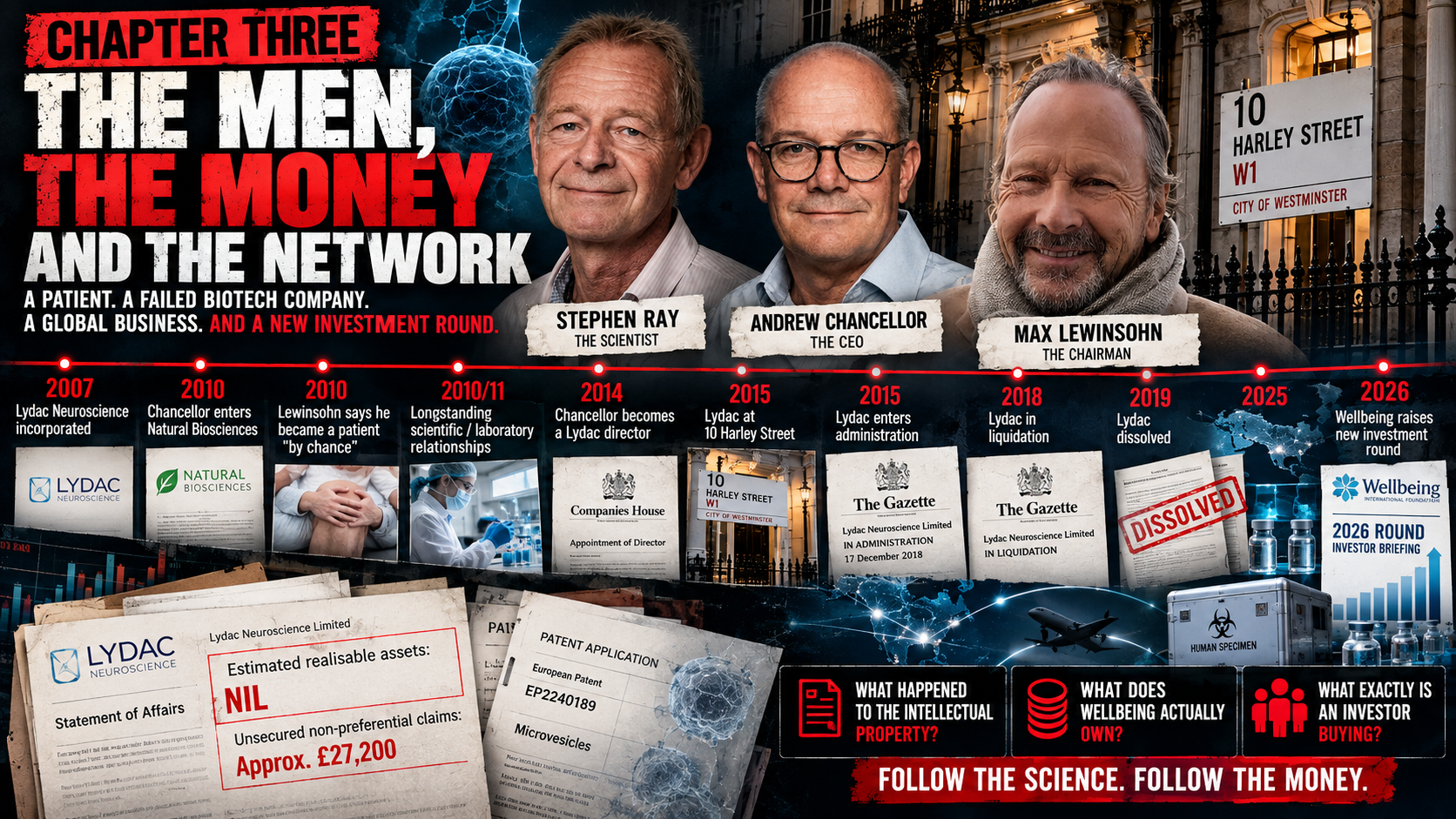
The paper states that two authors were employed by Wellbeing International Foundation and three were employed by xLongevity. Frontiers
That does not invalidate the research.
Companies and researchers connected with technologies routinely conduct legitimate studies of their own products and interventions.
The relationships are disclosed in the paper.
But it means the study is not independent replication.
Independent confirmation would require researchers outside the organisations involved to reproduce the findings.
That remains an important future step.
The Study Contains Another Important Clue
The paper describes how the conditioned media were produced.
It says preparations were produced individually by an independent internationally accredited facility using a standardized, batch-controlled workflow.
It describes chain-of-identity and chain-of-custody records, processing documentation, extracellular-vesicle output measurements, acceptance criteria, deviation handling and retained samples for confirmatory testing. Frontiers
That is precisely the sort of documentation we have been looking for.
It shows that detailed data can exist around the manufacturing process.
Which immediately raises another question.
If this level of documentation exists for the 2024–25 pilot, what documentation exists for the many years of patients who apparently came before it?
The Historical Patients Become More Important
Our covert archive demonstrates that prospective patients were discussing treatment years before this pilot.
Historical conversations discussed repeat infusions.
Laboratory processing.
Medical conditions.
Expected outcomes.
Stored biological material.
And years of accumulated experience.
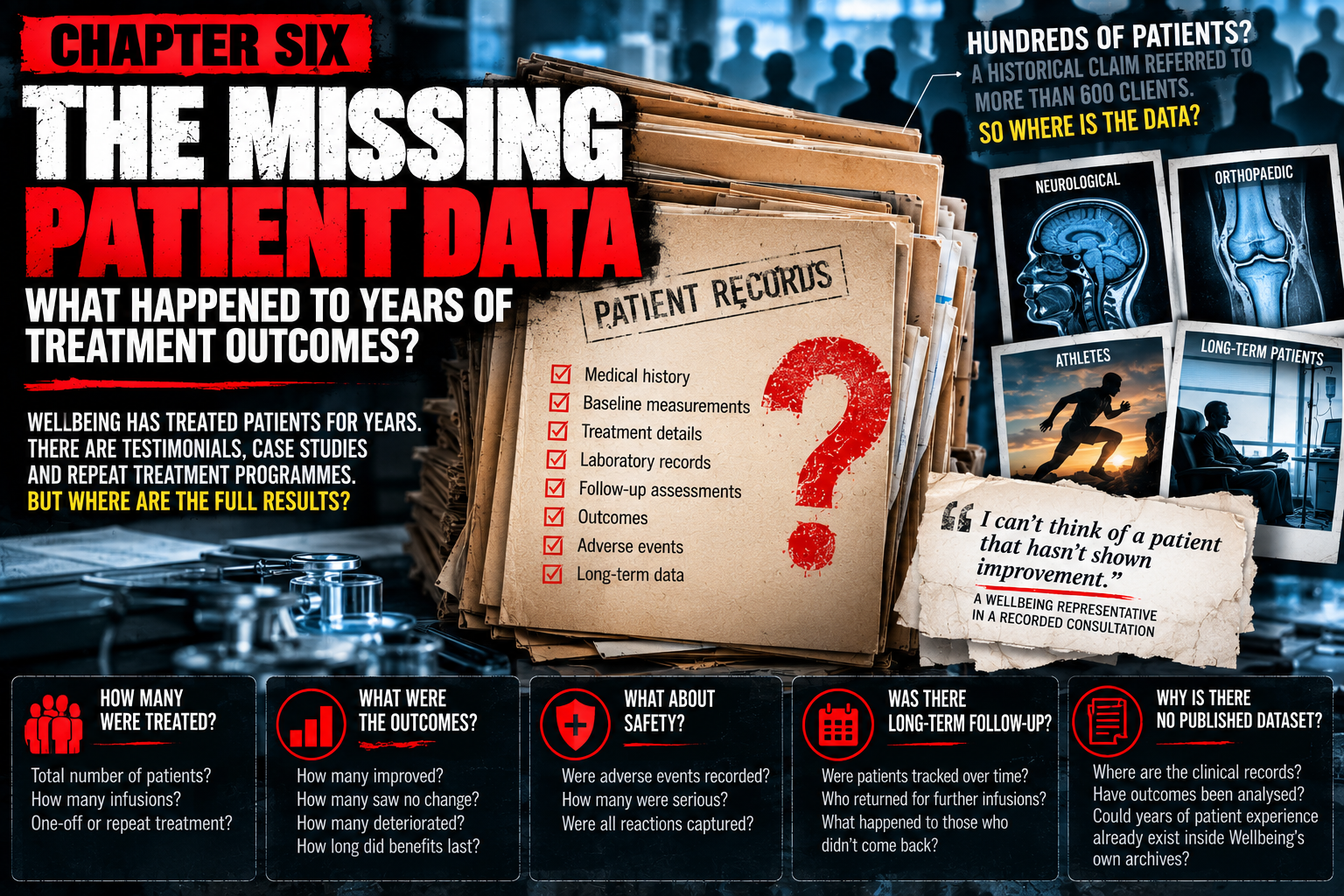
So where is the data from those people?
Were they systematically followed?
Were baseline measurements taken?
Were objective outcomes recorded?
Were adverse events captured?
Were non-responders recorded?
Did anybody analyse the entire patient population?
If so, that historical dataset could be extremely valuable.
If not, decades of patient experience may have generated remarkably little scientifically usable evidence.
Testimonials Cannot Fill That Gap
Wellbeing has published compelling patient stories.
Some involve professional athletes.
Others involve people confronting serious health problems.
Their experiences deserve to be heard.
But testimonials cannot answer the central scientific question.
A patient saying:
“I improved.”
is fundamentally different from researchers being able to say:
“Out of 300 comparable patients, this percentage improved by this predefined measurement, this percentage experienced no measurable change, this percentage deteriorated, and these adverse events occurred.”
The first is a story.
The second is data.
Both may matter.
But they are not interchangeable.
There Is Potentially an Extraordinary Dataset Somewhere
This may ultimately become one of the most important findings of this entire investigation.
Suppose Wellbeing and the organisations around it really have treated substantial numbers of people over many years.
Suppose detailed laboratory records exist.
Suppose patient histories were collected.
Suppose biological material was banked.
Suppose repeat infusions were documented.
Suppose outcomes were followed.
Then somewhere inside this network may exist a remarkable body of real-world evidence.
It could potentially show which patients appeared to respond.
Which didn't.
How long effects lasted.
Whether outcomes changed as protocols evolved.
Whether particular biomarkers predicted response.
Whether repeat infusions produced different results.
And what adverse events occurred across the entire historical population.
That wouldn't replace randomized trials.
But it could provide important evidence.
The question is whether the data exist in a form capable of being analysed.
This Is Where “Twenty Years” Becomes Testable
Twenty years is no longer simply a marketing phrase once records exist.
It becomes something that can be audited.
Show the development timeline.
Show the protocols.
Show the patient cohorts.
Show the research programmes.
Show the outcome data.
Show the safety records.
Show the unsuccessful cases.
Show the publications.
Show how the intervention changed.
Show why it changed.
And show which scientific findings caused those changes.
That would allow outsiders to distinguish between:
twenty years of scientific history
and
twenty years of evidence for Cell-Free Therapy.
They are not necessarily the same thing.
The Evidence Has Moved Forward
It would be unfair to finish this chapter without acknowledging that.
There is now a genuine peer-reviewed pilot.
The methodology is described.
The limitations are openly discussed.
The researchers report no adverse events in the study.
The data produced interesting biological-age signals.
And the authors themselves call for substantially stronger trials.
That is progress.
But it also exposes the historical gap more clearly.
Because the first question is no longer:
Is there any published human research?
There is.
The question has become:
Why does the formal published evidence appear so recent when the scientific and patient story is said to be so old?
And that is where this investigation goes next.
Twenty Years Should Leave Twenty Years of Footprints
There is genuine science surrounding extracellular vesicles.
There is evidence of longstanding scientific and laboratory relationships.
There is historical evidence of protocol development.
There were patients.
And there is now a genuine peer-reviewed pilot study.
None of those facts should be dismissed.
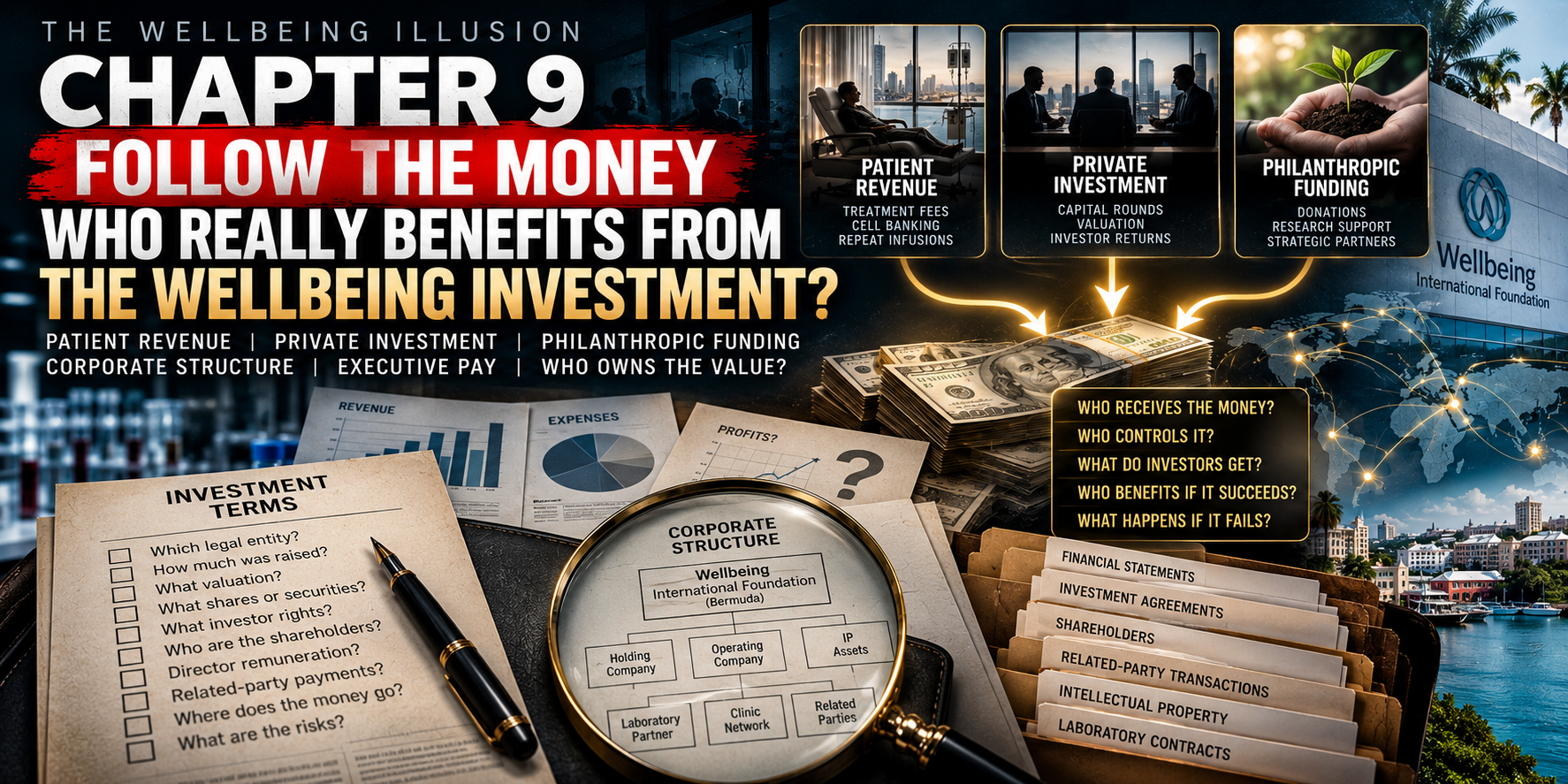
But neither should they be combined into something they do not necessarily establish.
Independent research into extracellular vesicles is not automatically research into Wellbeing's CFT.
Laboratory development is not a clinical trial.
Patient experience is not controlled evidence.
A testimonial is not an outcome dataset.
And one small multimodal pilot published in 2026 cannot, by itself, explain a scientific history extending more than twenty years.
The strongest evidence Wellbeing could produce now would therefore be remarkably simple.
Not another celebrity testimonial.
Not another library of papers written by other scientists.
Not another explanation of extracellular-vesicle biology.
The historical research itself.
Because after more than twenty years, the question should no longer be whether the science exists somewhere.
It should be possible to follow it.
Year by year.
Study by study.
Patient by patient.
Result by result.
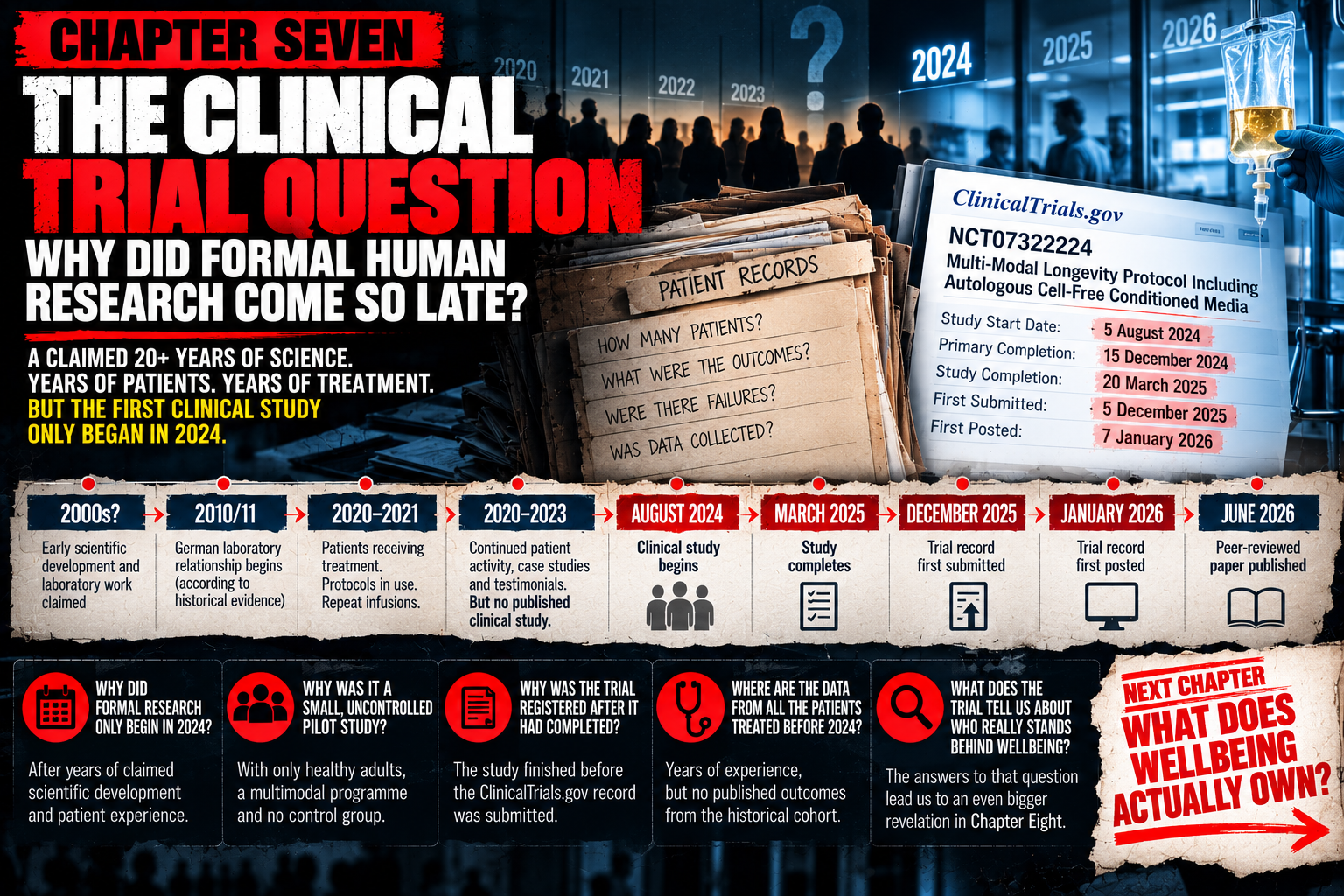
And once we began putting dates against that history, another problem emerged.
The patients appear much earlier than the formal clinical research.
And that changes the investigation completely.
Next: Chapter Six — Before the Trial: What Happened to Years of Patient Outcomes?
People were apparently receiving versions of the intervention long before the recent peer-reviewed pilot. So in Chapter Six we stop following scientific papers and start following the patients. How many were treated? What happened to them? Were failures recorded alongside successes? Were adverse events systematically captured? And after years of treatment, does a comprehensive patient dataset exist somewhere that the public has never seen?
Recent Posts