Most investigations begin with a single thread.
A website that doesn't quite add up.
A claim that seems difficult to verify.
A company structure that appears more complicated than it needs to be.
Or simply a nagging feeling that there is more to the story than first meets the eye.
Our investigation into Wellbeing International Foundation began much the same way.
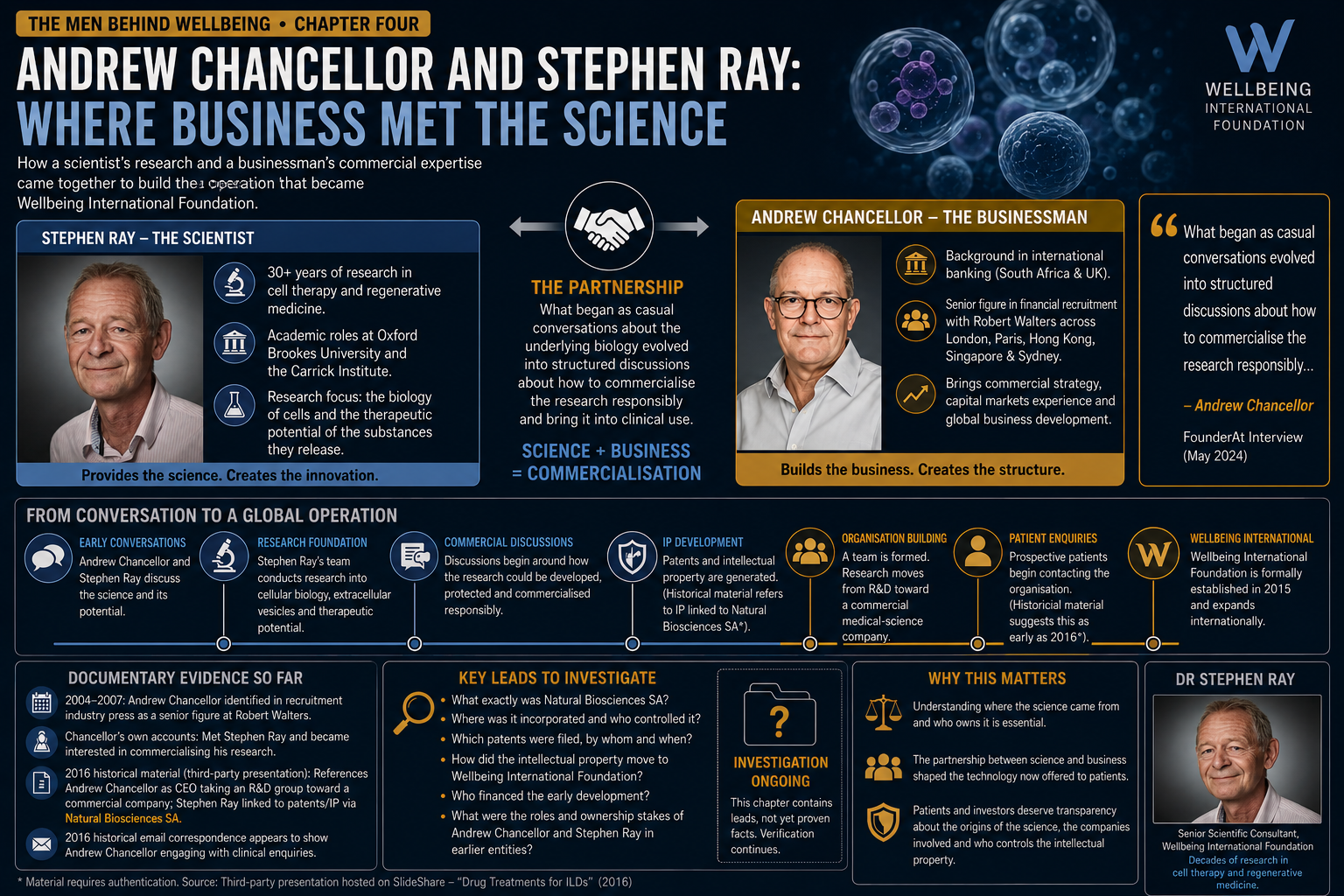
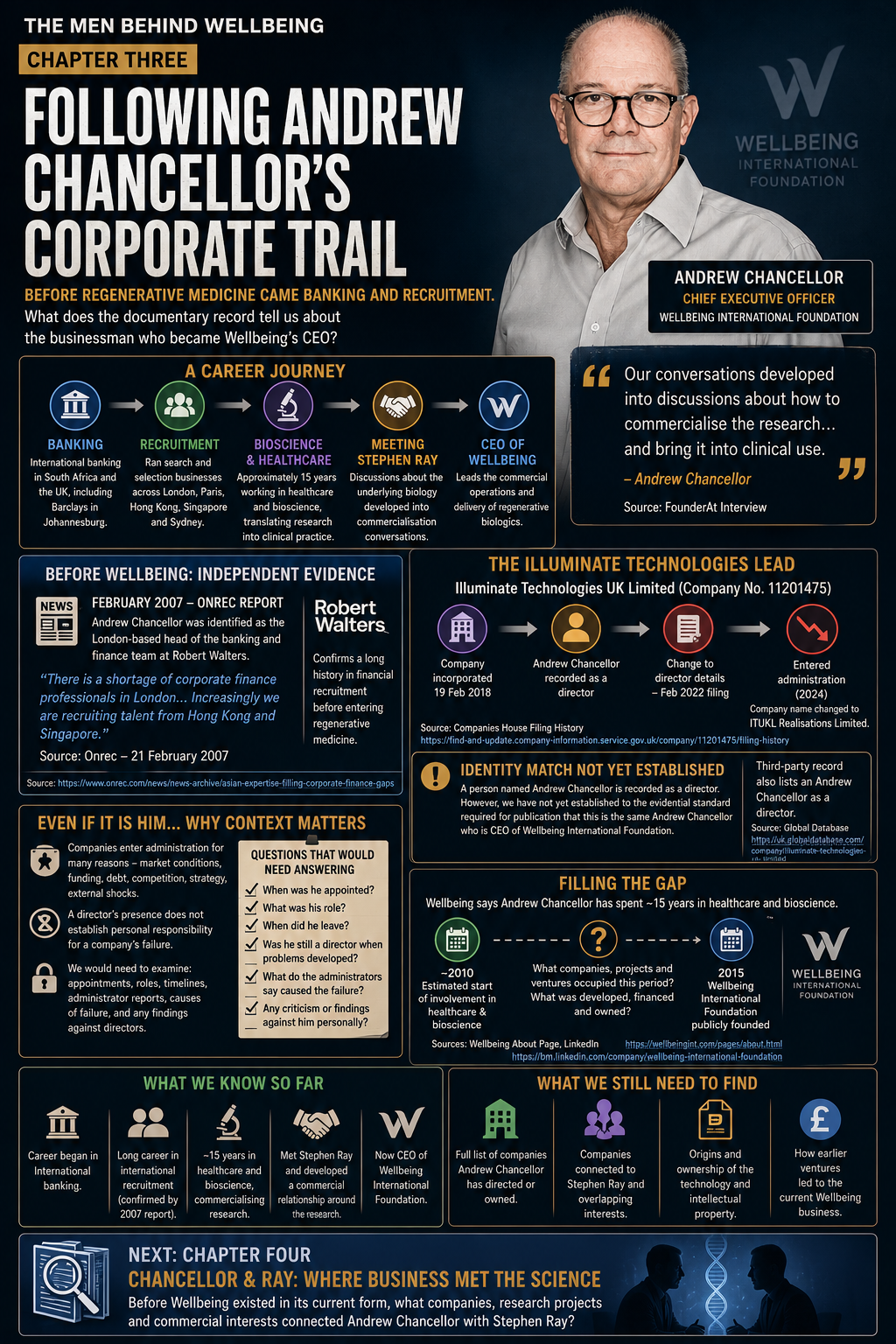
At first, the focus was straightforward. We wanted to understand the company behind the marketing. We wanted to know who was operating it, where it was operating from, and how it presented itself to patients seeking treatment. Like any investigation, the process started with documents, corporate records, addresses and publicly available information.
What we did not expect was to discover that another investigation, conducted entirely independently and from a completely different starting point, would end up arriving at many of the same questions.
That investigation, published by a newspaper following undercover work and expert analysis, focused primarily on the therapies being promoted and the claims being made to potential patients. Covert recordings, scientific experts and legal opinions all formed part of a detailed examination of how regenerative medicine treatments were being presented and marketed.
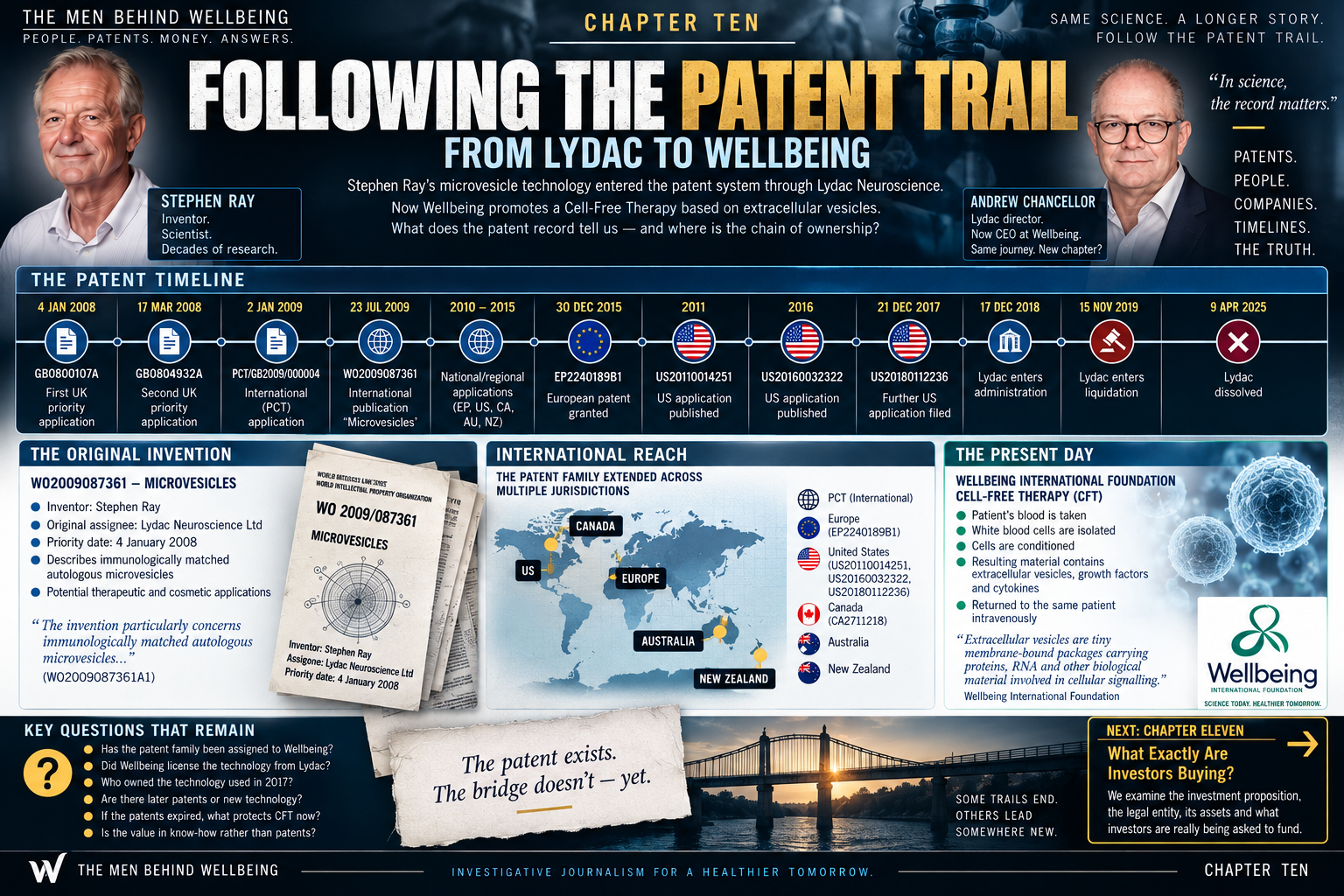
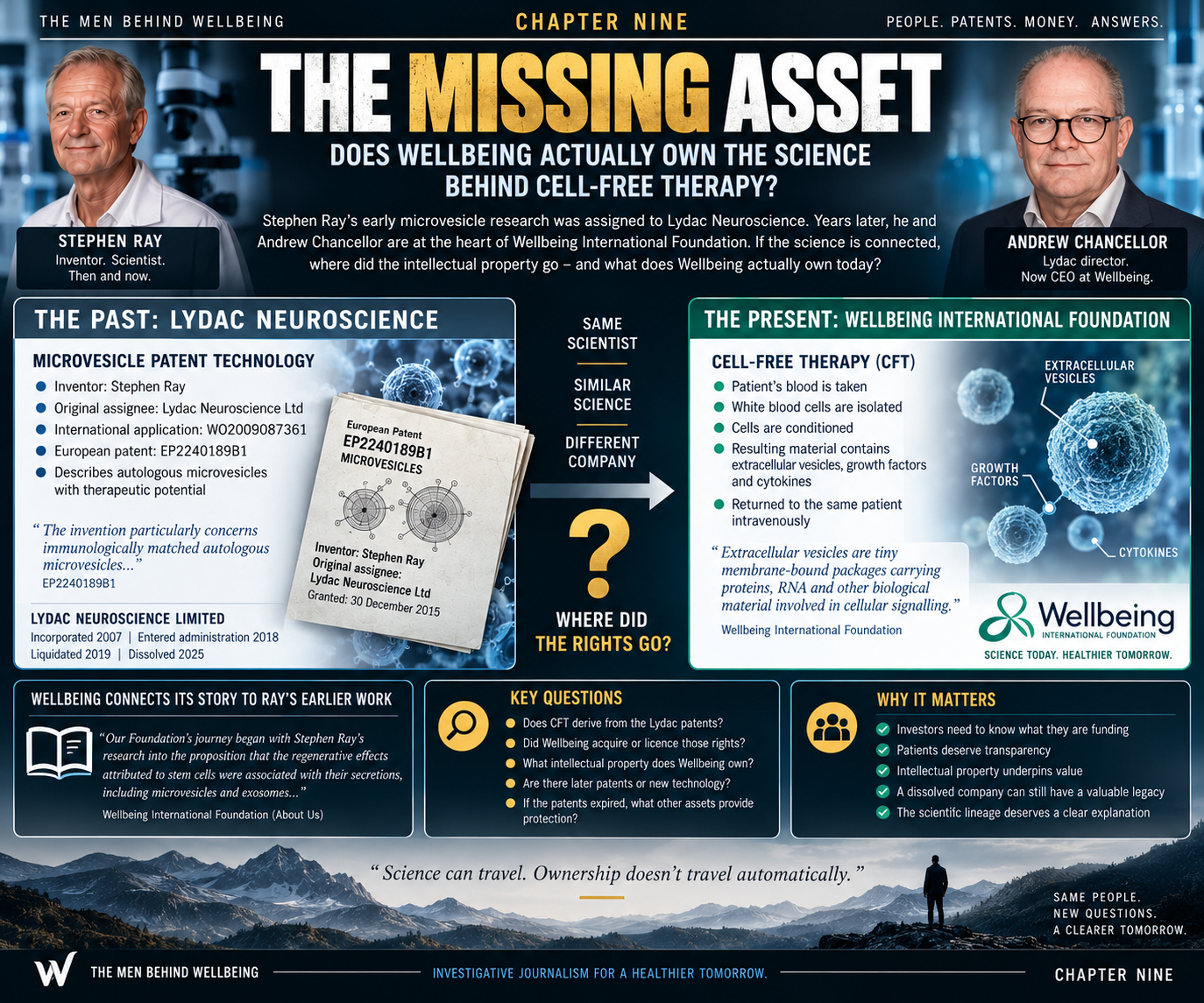
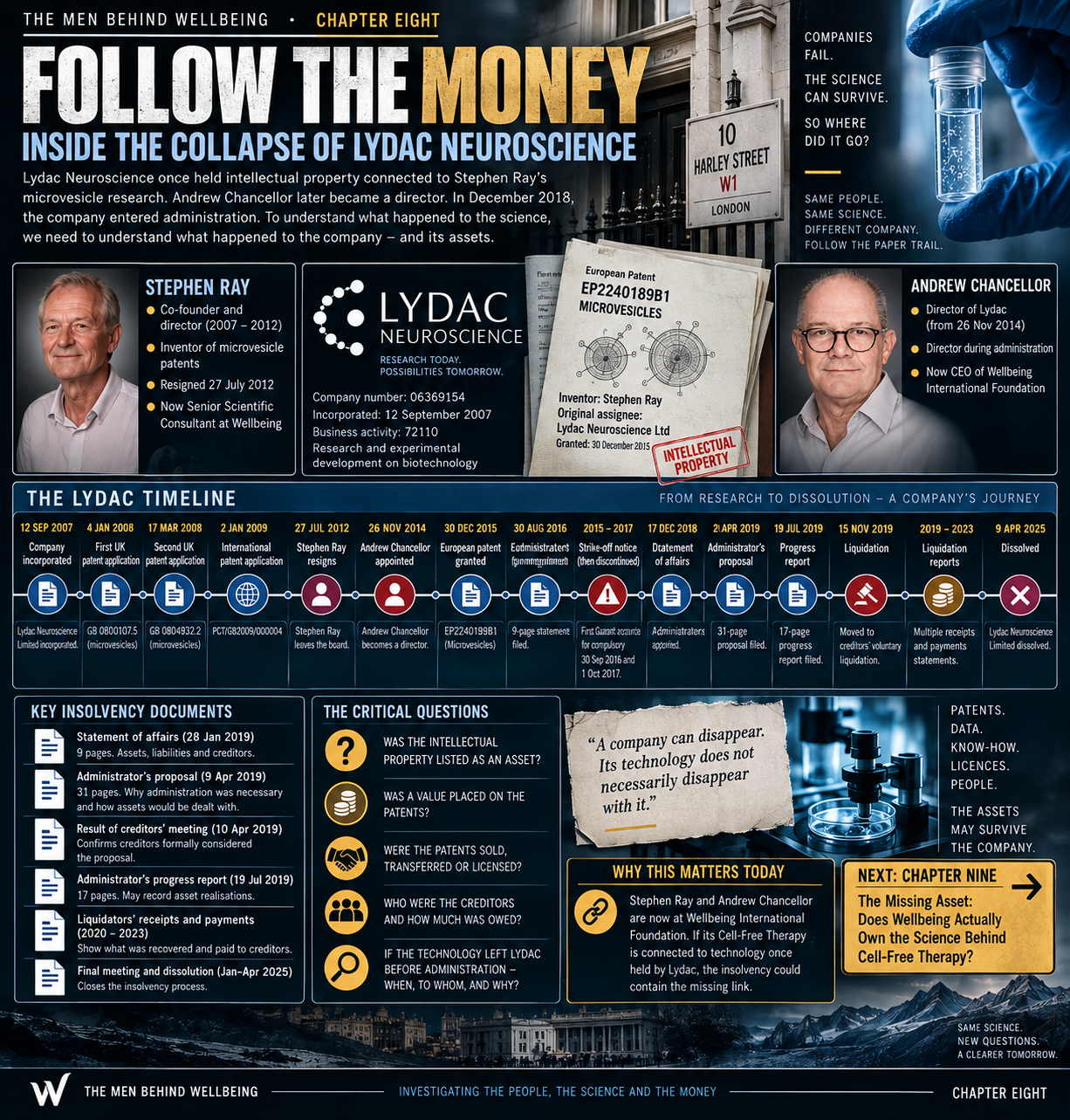
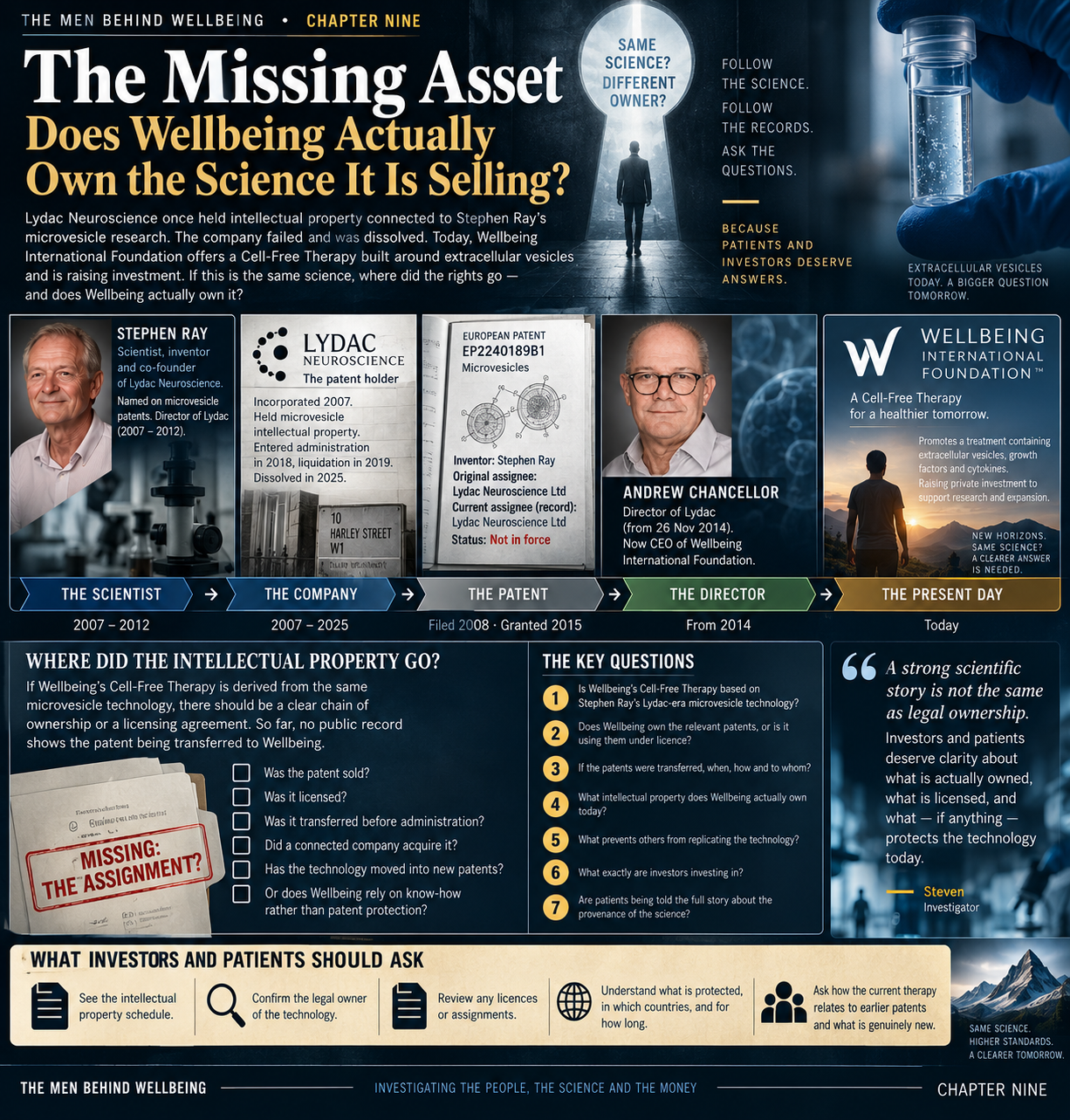
While their investigation concentrated on the science, ours followed the paper trail.
Yet despite approaching the subject from different directions, both investigations appeared to encounter remarkably similar concerns.
The newspaper investigation examined claims surrounding extracellular vesicles and other regenerative medicine concepts, alongside statements suggesting potential benefits for conditions such as Parkinson's disease and Multiple Sclerosis. Experts interviewed as part of that investigation questioned whether sufficient scientific evidence existed to support some of the claims being made and expressed concern about the difficulties patients face when attempting to distinguish between emerging science and established medical treatment.
Meanwhile, our own investigation was uncovering a different set of questions.
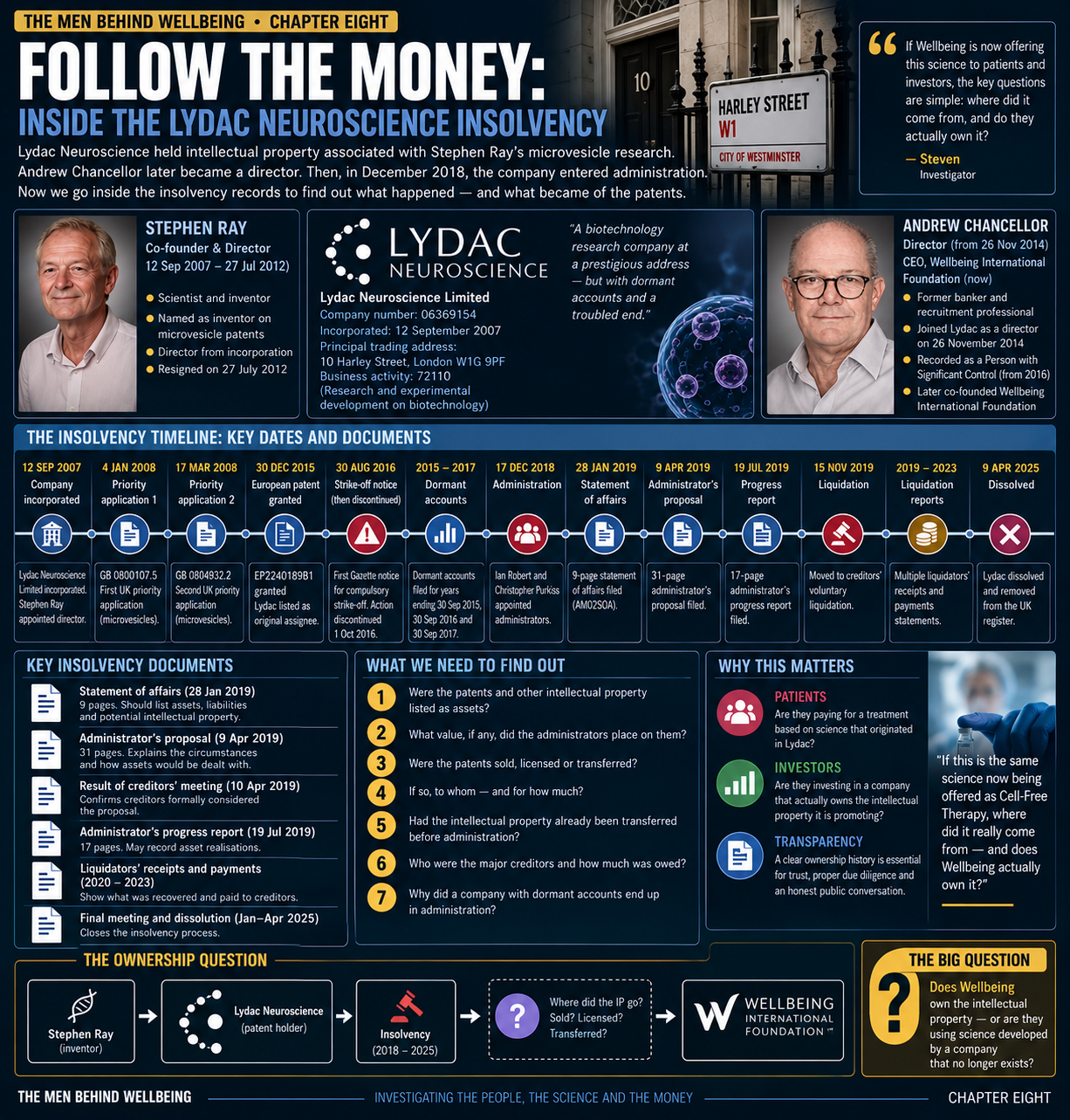
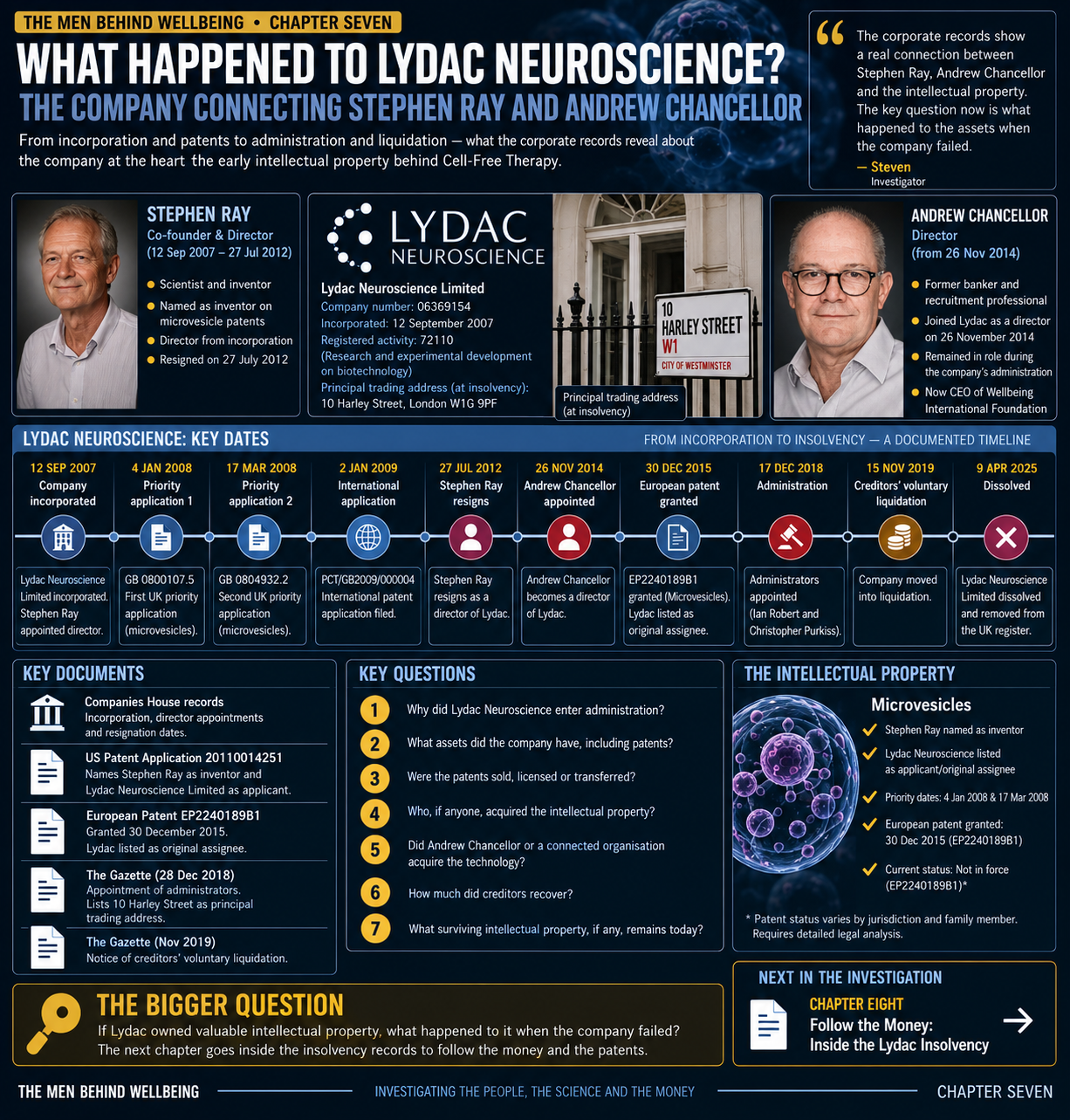
As we examined the company's corporate structure and operational footprint, we found ourselves looking closely at locations used within promotional material and public-facing communications. One address linked to the organisation appeared to be a multi-occupancy serviced office facility rather than a dedicated treatment centre. Another, located on London's prestigious Harley Street, appeared to function primarily as a consulting address rather than a specialist regenerative medicine facility operated directly by the company.
These observations do not, in themselves, imply misconduct.
Many legitimate businesses operate from serviced offices and consulting suites. Such arrangements are common and entirely lawful.
However, when a company promotes advanced therapies that can cost patients substantial sums of money, questions naturally arise regarding the scale and nature of the infrastructure supporting those treatments.
Patients are entitled to understand who is providing the treatment, where it originates, how it is delivered and who ultimately bears responsibility for the process.
Those questions become increasingly important when operations appear to span multiple jurisdictions and involve a network of different entities, locations and service providers.
What struck us most throughout the investigation was the recurring gap between what patients are told and what they can independently verify.
Promotional material frequently references sophisticated concepts such as extracellular vesicles, secretomes, regenerative signalling and cellular communication. To scientists, these terms describe areas of ongoing research and investigation. To the average patient, however, such language can be difficult to interpret and even harder to challenge.
Most people do not possess a background in molecular biology or regenerative medicine. They are forced to place trust in those presenting the information to them.
That trust carries an enormous responsibility.
It also creates a simple but important question.
Can the claims being made be supported by robust and independently verifiable clinical evidence?
It is a question that appeared repeatedly throughout both investigations.
The newspaper investigation approached it through scientific scrutiny.
Our investigation approached it through transparency and accountability.
Yet both ultimately arrived at the same destination.
A growing list of unanswered questions.
Perhaps that is what makes the overlap between these investigations so significant.
Not that two groups reached identical conclusions.
But that two entirely separate investigations, working independently and examining different aspects of the same organisation, found themselves asking many of the same things.
Questions about evidence.
Questions about transparency.
Questions about accountability.
Questions about oversight.
And questions about whether vulnerable patients are always being given the full picture before making life-changing decisions.
As regenerative medicine continues to grow as a global industry, these questions are unlikely to disappear.
Indeed, they are becoming more relevant with each passing year.
Patients facing serious illness deserve clear information, realistic expectations and complete transparency. They deserve to understand not only what is being offered, but also the evidence supporting it and the organisations standing behind it.
That should not be controversial.
It should be the foundation upon which trust is built.
Because while hope can be powerful, hope alone is not enough.
Patients deserve answers.
And until those answers are provided, the questions will continue to be asked.