When Promising Science Meets the FDA: The Biotechnology Warning Every Wellbeing Investor Should Understand
THE WELLBEING INVESTMENT FILES — CHAPTER FIVE
How a sophisticated American biotechnology company reached advanced clinical trials, faced regulatory resistance and demonstrated why medical innovation does not guarantee commercial success
Imagine spending years developing a medical treatment.
Your scientists have produced encouraging research.
You have established manufacturing facilities, secured commercial partnerships and attracted substantial investment.
Your treatment has reached a large clinical trial.
The results suggest that patients may benefit.
Then the regulator examines the evidence.
And the answer is not the one you expected.
This is the situation that Capricor Therapeutics, an American biotechnology company, has faced during the development of Deramiocel, its experimental treatment for Duchenne muscular dystrophy.
Capricor is not an obscure operation making unsupported claims about a miracle cure.
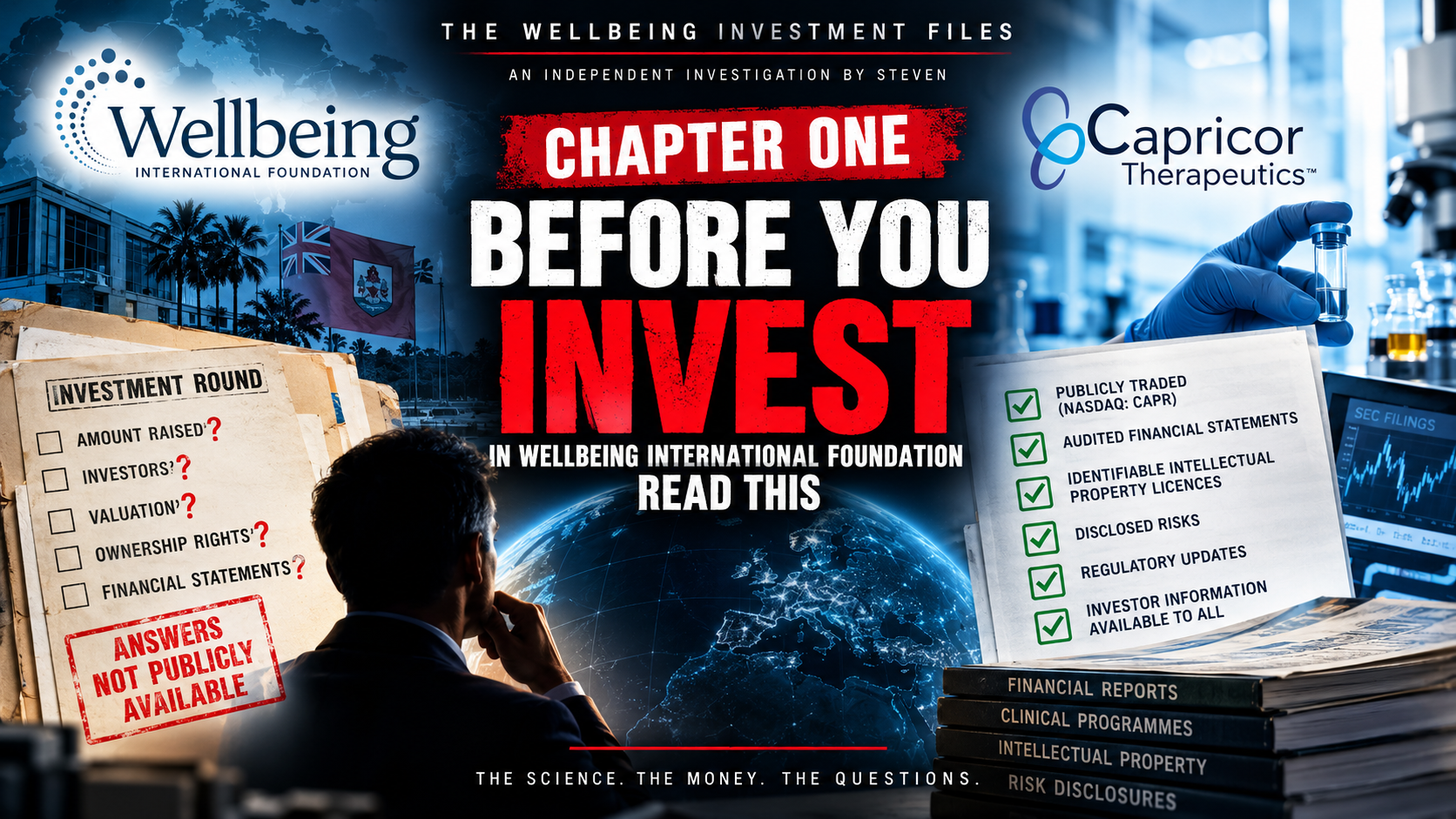
It is a Nasdaq-listed biotechnology company with publicly documented research programmes, clinical trials, regulatory submissions and financial disclosures.
Yet despite years of work, its lead treatment encountered significant obstacles on the road to approval.
In July 2025, the United States Food and Drug Administration issued a Complete Response Letter, declining to approve the application in its submitted form.
One year later, an FDA advisory committee considered evidence concerning the treatment's effectiveness for cardiac complications of Duchenne muscular dystrophy.
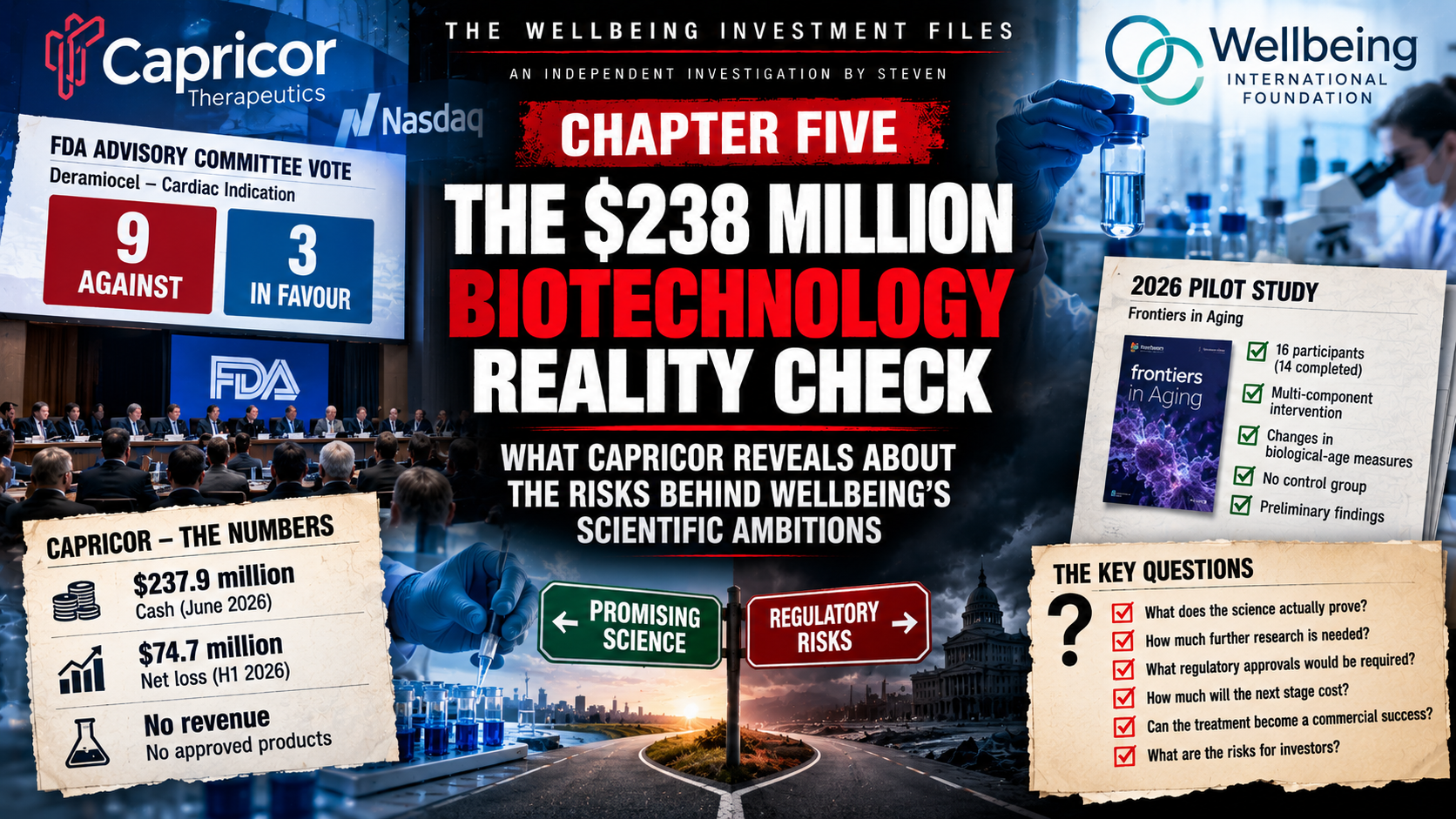
The vote was nine against and three in favour of finding the evidence sufficient.
That was not the final FDA decision.
It was also not a verdict on every potential benefit of the treatment.
But it demonstrated how demanding the regulatory process can become.
For anyone considering investing in Wellbeing International Foundation, the Capricor experience provides a valuable lesson.
Promising science is not the same as a commercially established medical treatment.
And the journey between those two positions can be far more difficult than an investment presentation suggests.
Why Capricor Is Worth Examining
Capricor develops biological therapies for serious diseases.
Its lead programme, Deramiocel, involves donor-derived cardiosphere-derived cells.
The treatment is being investigated for Duchenne muscular dystrophy, a progressive genetic condition that causes severe muscle weakness and can affect the heart.
Capricor also has a separate exosome-related technology platform.
These technologies should not be confused.
Deramiocel is a cell-based therapy.
Capricor's exosome programme involves extracellular vesicles being explored for other therapeutic applications.
Wellbeing's Cell-Free Therapy is different again.
The companies are not developing identical products.
They do not necessarily operate under identical regulatory pathways.
And evidence supporting one company's technology cannot automatically be transferred to another.
The comparison is valuable for a different reason.
Capricor provides a publicly documented example of the challenges involved in moving an experimental biological treatment through advanced clinical development.
Its experience shows what happens when scientific optimism meets regulatory scrutiny.
The First Obstacle: Scientific Plausibility Is Not Clinical Proof
A treatment can have a convincing biological explanation.
Scientists may identify mechanisms suggesting that it could help repair damaged tissue, regulate inflammation or influence cellular communication.
Laboratory experiments may support those ideas.
Early studies may produce encouraging observations.
But biological plausibility does not establish clinical effectiveness.
Human biology is complicated.
A process that appears promising in laboratory conditions may behave differently inside the body.
A treatment may affect measurable biomarkers without producing a meaningful improvement in health.
And an effect observed in a small group of patients may disappear when tested in a larger, controlled trial.
This is why medical development proceeds through stages.
Early research explores mechanisms and feasibility.
Initial human studies investigate safety, dosing and preliminary effects.
Larger studies may then attempt to establish whether the treatment produces clinically meaningful benefits.
Each stage introduces new opportunities for success.
And new possibilities for failure.
For investors, this creates a fundamental problem.
The scientific story can become commercially exciting long before the most important clinical questions have been answered.
Capricor's Difficult Regulatory Journey
Capricor's Deramiocel programme illustrates this challenge.
The company conducted clinical studies examining the treatment's potential effects in Duchenne muscular dystrophy.
Its development programme progressed to Phase 3 research.
That is a substantial milestone.
A Phase 3 trial generally involves a more rigorous assessment of effectiveness and safety than early exploratory research.
It often represents one of the final major clinical stages before an application for marketing approval.
But reaching Phase 3 does not guarantee success.
In July 2025, the FDA issued a Complete Response Letter concerning Capricor's application.
The agency concluded that the submitted evidence had not satisfied the statutory requirement for substantial evidence of effectiveness.
Additional clinical data were requested.
The company subsequently supplied further information, including results from its Phase 3 HOPE-3 study.
The FDA accepted the response for review.
However, the regulatory difficulties did not immediately disappear.
In July 2026, an advisory committee considered the evidence for effectiveness in cardiomyopathy associated with Duchenne muscular dystrophy.
The committee voted 9–3 against the evidence being sufficient for that indication.
The vote was advisory.
The FDA was not legally required to follow it.
And the question under consideration did not cover every aspect of Deramiocel's development.
Nevertheless, the result demonstrated that significant questions remained.
A Positive Clinical Trial Can Still Leave Questions
Capricor's Phase 3 HOPE-3 study enrolled 106 participants.
It was randomised, double-blind and placebo-controlled.
These design features are important because they help researchers distinguish treatment effects from other influences.
The study examined upper-limb function and cardiac outcomes.
The published results indicated that Deramiocel met its primary endpoint concerning upper-limb function.
That was an encouraging finding.
But the cardiac results became more complicated.
A statistical issue identified during preparation of the scientific publication led to a revised analysis of one cardiac endpoint.
The revised overall result no longer met the conventional threshold for statistical significance.
Other analyses remained supportive.
The treatment therefore had evidence suggesting benefit in one area while facing uncertainty in another.
That is not unusual in medical research.
A therapy may improve one outcome without demonstrating a sufficiently clear effect on another.
The challenge for regulators is determining whether the available evidence supports the specific medical use being requested.
For investors, the lesson is that a positive headline from a clinical trial may not tell the complete story.
The underlying endpoints, statistical methods and regulatory context matter.
What an FDA Setback Actually Means
A regulatory setback is not necessarily evidence that a treatment is ineffective.
Nor does it mean the company has acted improperly.
A regulator may request additional evidence because the existing studies are too small, the endpoints are insufficiently persuasive or the proposed indication is not adequately supported.
A company may then conduct further studies.
It may revise its application.
Or it may pursue a narrower indication supported by stronger evidence.
Capricor continued working with the FDA following its regulatory difficulties.
By October 2026, the company's application was proceeding toward a target action date of 22 November 2026.
The outcome remained uncertain at the time of writing.
This uncertainty is a normal feature of biotechnology development.
But it can be financially significant.
Every delay may extend the period during which the company must fund research, manufacturing preparation and regulatory work without the expected commercial revenue.
Why Regulatory Approval Is Not Just a Scientific Question
Regulators do not simply ask whether a treatment has an interesting biological mechanism.
They examine whether the evidence supports the proposed use.
They also consider manufacturing quality, product consistency and safety.
For complex biological products, these issues can be particularly demanding.
A treatment may involve living cells, biological secretions or other materials whose characteristics depend upon manufacturing conditions.
The final product must be sufficiently well characterised.
The process must be controlled.
Quality testing must be appropriate.
And the company must demonstrate that the product can be manufactured consistently.
Even if the clinical results are encouraging, manufacturing questions can create delays.
This is one reason biotechnology development can be expensive.
The company is not merely funding scientific experiments.
It is building the systems needed to produce a medical product reliably.
The Manufacturing Problem Investors Often Overlook
Consider the difference between making a biological preparation for a small research study and producing it for a much larger population.
A small programme may rely upon highly experienced laboratory staff working with limited numbers of samples.
Commercial expansion may require greater production capacity.
It may require new equipment.
It may require additional facilities.
And it may require further process validation.
Changes to manufacturing methods can affect the characteristics of biological products.
That means expansion is not always as simple as increasing the number of production batches.
A company may need to demonstrate that material produced at the larger scale remains comparable to the product used in clinical studies.
For a treatment involving patient-specific biological material, the logistics can be even more complex.
Each patient's material may require individual handling and traceability.
These are not insurmountable challenges.
But they are real commercial considerations.
A business model that works for a small number of treatments may not automatically scale into a large international operation.
What This Means for Wellbeing's Cell-Free Therapy
Wellbeing describes a treatment involving biological material derived from a patient's own cells.
Its public explanations refer to cell conditioning and the production of signalling substances, including extracellular vesicles and growth factors.
The company has also published scientific research associated with its longevity programme.
These activities provide a basis for examining its scientific development.
But they do not establish that every proposed medical use has been clinically validated or approved.
The relevant regulatory requirements depend upon the nature of the preparation, its manufacturing process, intended use and jurisdiction.
Different countries may classify biological products differently.
A treatment that can be provided under one legal framework may face different requirements elsewhere.
It would therefore be inappropriate to assume that Wellbeing's programme must follow precisely the same FDA pathway as Capricor's Deramiocel.
Equally, it would be inappropriate to assume that biological treatments are exempt from demanding regulatory requirements simply because they are derived from a patient's own material.
The correct questions concern the actual product and its intended medical claims.
The Difference Between Offering a Treatment and Proving It Works
This is an important distinction.
A company may have the practical ability to provide a medical intervention.
It may have clinicians willing to administer it.
It may have a laboratory capable of preparing the biological material.
And patients may be willing to pay for the service.
But those facts do not independently establish clinical effectiveness.
A treatment's commercial availability and its scientific validation are separate questions.
The distinction is especially important when discussing emerging medical technologies.
Some interventions may be offered in particular jurisdictions before large confirmatory trials have been completed.
That does not automatically establish wrongdoing.
The legality depends upon the applicable rules and circumstances.
But the availability of a treatment should not be confused with evidence that it produces the benefits claimed.
For patients, the difference affects informed medical decisions.
For investors, it affects the credibility of future growth assumptions.
The Real Meaning of a Peer-Reviewed Publication
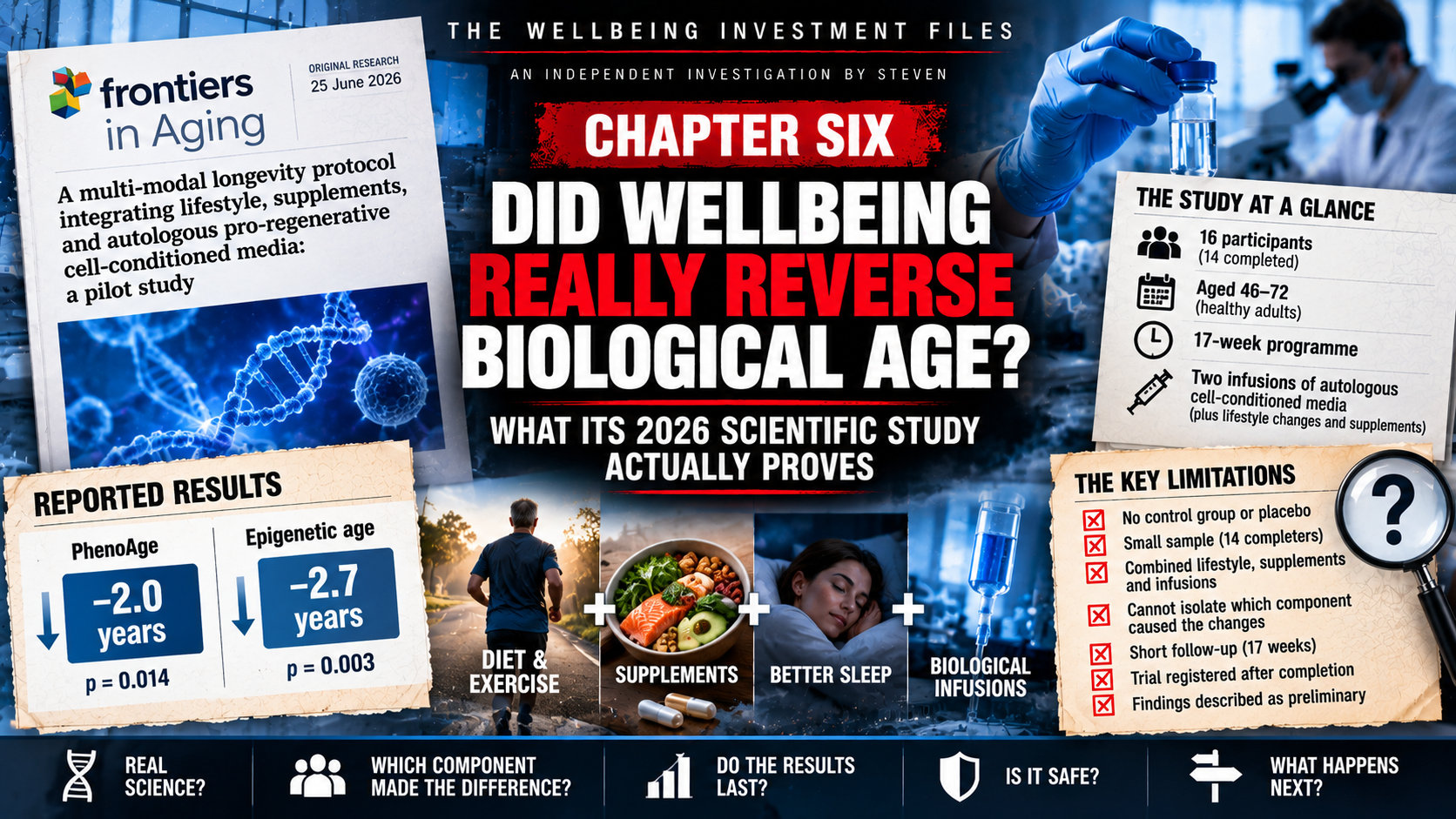
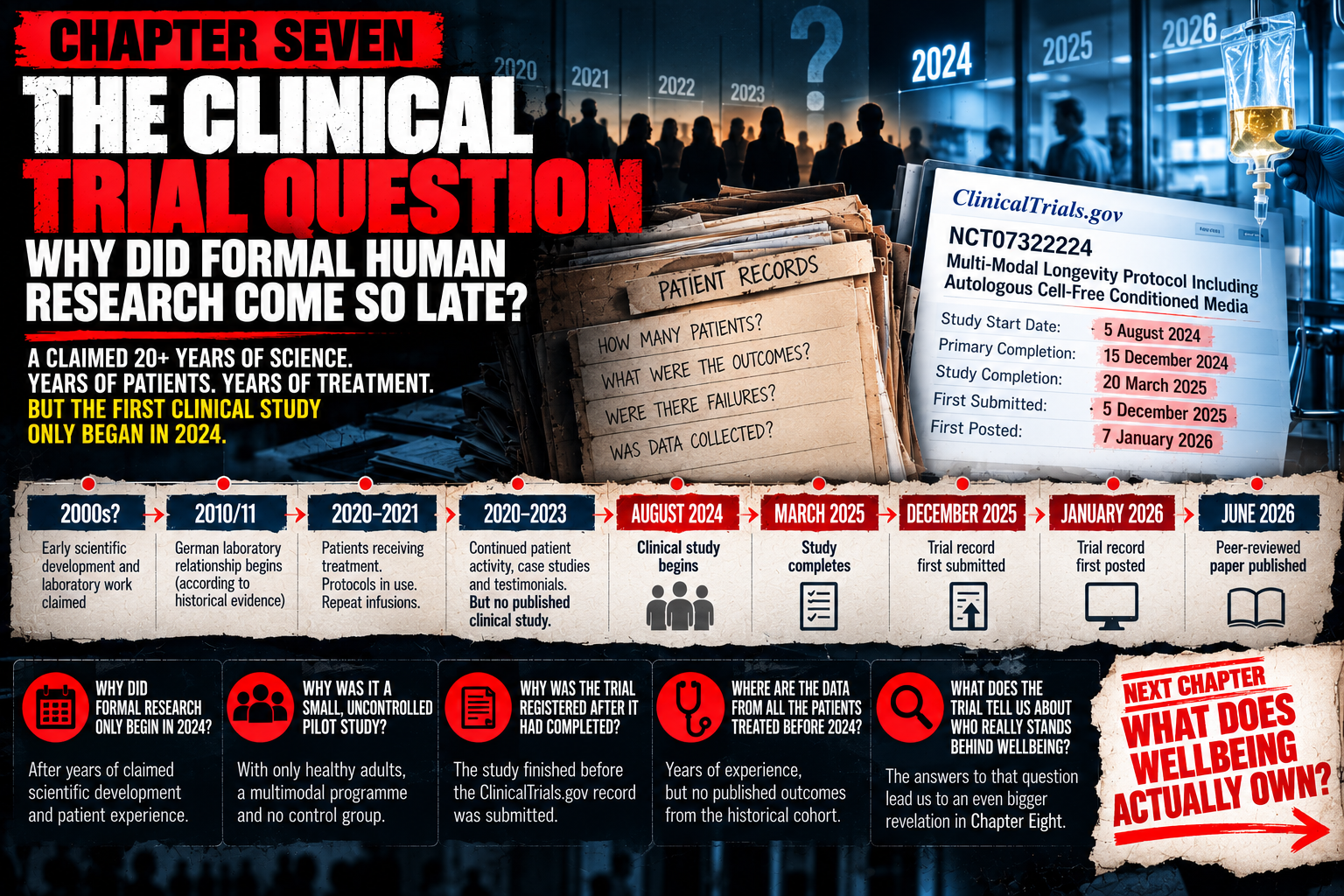
Wellbeing's 2026 longevity research appeared in the peer-reviewed journal Frontiers in Aging.
The study involved 16 enrolled participants, with 14 completing the programme.
It examined a combination of lifestyle optimisation, supplements and biological infusions over 17 weeks.
The researchers reported changes in biological-age measurements.
These observations may justify further research.
But the study was not a randomised placebo-controlled trial.
It did not isolate the effect of the biological infusion from the other interventions.
And it did not establish that participants would live longer or experience fewer age-related diseases.
That does not make the research meaningless.
It places it within the appropriate stage of scientific development.
A pilot study can help identify promising questions.
A larger controlled trial can then test those questions more rigorously.
The danger arises when preliminary findings are interpreted as though they have already settled the clinical issues.
Why the Stage of Development Matters to Investors
Biotechnology businesses may be valued partly upon future expectations.
A treatment could potentially address a large medical market.
A scientific discovery could lead to multiple applications.
And a successful clinical programme could create substantial commercial opportunities.
But those possibilities must be weighed against the probability of reaching the necessary milestones.
A company at an early exploratory stage faces different risks from one with a successful Phase 3 trial.
A company awaiting regulatory approval faces different risks from one already selling an approved treatment.
And a company with established commercial revenue faces different risks from one dependent upon continued fundraising.
These distinctions are essential when comparing biotechnology investments.
Two companies may both describe innovative biological technologies.
But their evidence, regulatory positions and commercial maturity may be entirely different.
The presence of similar scientific terminology does not make their investment prospects equivalent.
The Financial Consequences of Scientific Uncertainty
Capricor's public filings illustrate how substantial the costs of development can become.
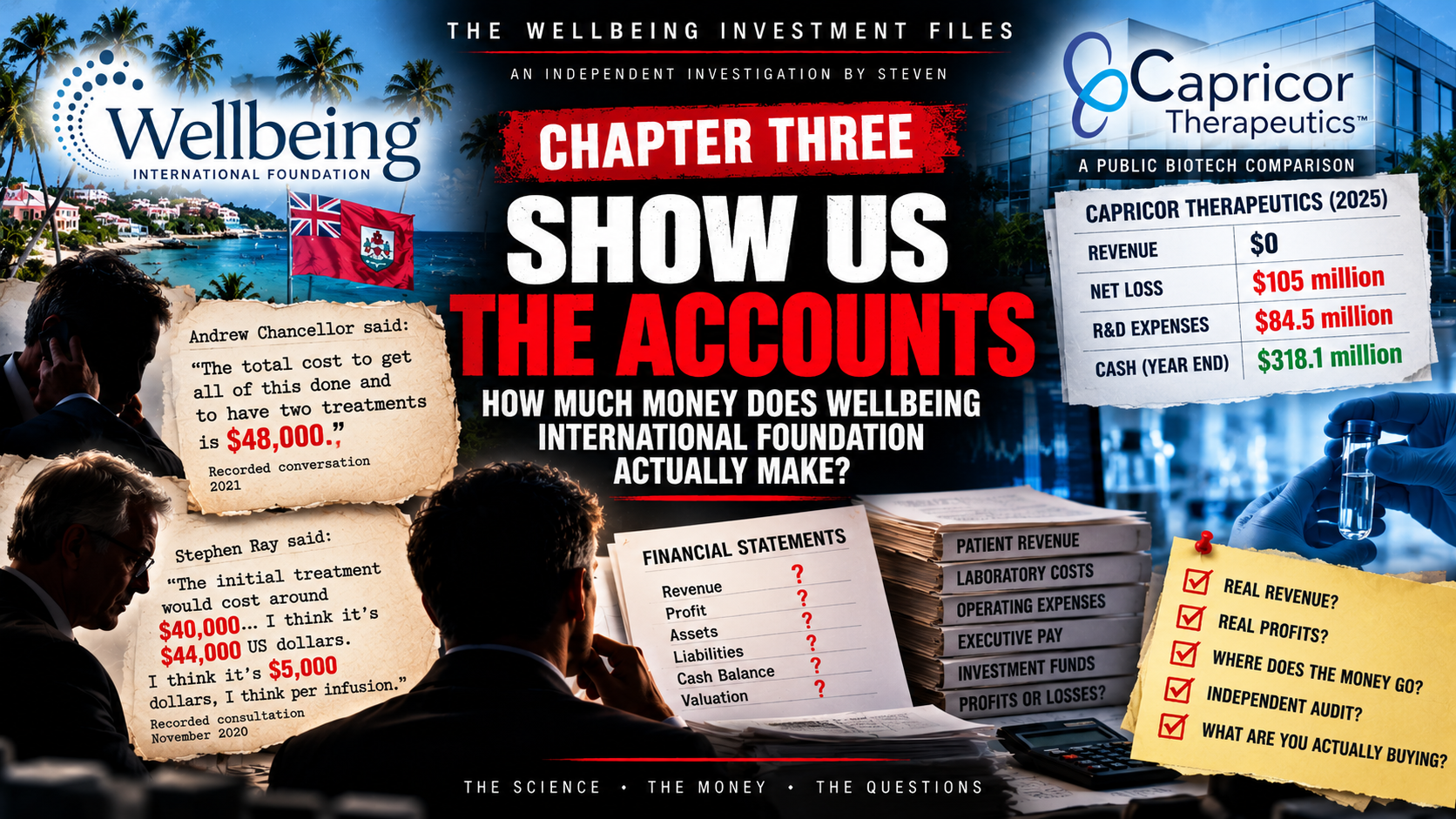
At the end of June 2026, the company reported approximately $237.9 million in cash, cash equivalents and marketable securities.
It also reported a net loss of approximately $74.7 million for the first six months of the year.
Those figures demonstrate the financial demands associated with advanced biotechnology development.
They do not mean that every biotechnology company must spend comparable amounts.
Development costs vary enormously according to the product, clinical indication, regulatory pathway and scale of operations.
But the underlying lesson remains relevant.
Scientific uncertainty can translate into financial uncertainty.
A delayed trial may require additional funding.
A manufacturing problem may increase expenditure.
A regulatory request may extend the development timetable.
And an unsuccessful study may force a company to reconsider its commercial strategy.
For investors, the risk is not simply that the science might fail.
It is that the company may need substantially more capital before the scientific question can be resolved.
The Problem of Moving Targets
There is another difficulty in evaluating biotechnology investments.
Development milestones can change.
A company may initially expect to complete a study within a particular period.
Recruitment may take longer than anticipated.
Regulators may request additional information.
Manufacturing preparations may be delayed.
Or the results may indicate that further research is necessary.
These changes are not automatically signs of poor management.
They can arise from the inherent uncertainty of medical development.
But they matter to investors because the commercial timetable may depend upon them.
If expected revenue is delayed by several years, the value of future cash flows may change substantially.
Additional fundraising may also dilute existing shareholders.
A credible investment assessment should therefore consider more than the most optimistic development scenario.
It should examine what happens if the programme takes longer, costs more or produces less favourable results than expected.
When the Science Changes, the Business Model May Change
Capricor's experience provides a useful example.
Following regulatory difficulties concerning its proposed cardiac indication, the company continued pursuing a strategy focused upon upper-limb function.
That reflects the importance of aligning a proposed medical use with the evidence available.
But changes in indication can also affect the commercial opportunity.
A treatment approved for a narrower patient population may have a different market from one approved for a broader population.
Additional trials may be required to expand its use.
Pricing and reimbursement may become important.
And commercial partnerships may need to be adjusted.
These issues can arise even when the underlying treatment remains scientifically promising.
For Wellbeing, the equivalent question is how its scientific development plans relate to the specific services and applications it intends to commercialise.
A broad claim about longevity is not the same as evidence supporting a defined clinical indication.
Investors should understand precisely which claims are being investigated and what evidence would be needed to support them.
Why a Commercial Partner Does Not Eliminate Risk
Capricor has entered into commercial and licensing relationships with other organisations.
Such partnerships can provide expertise, funding and access to distribution networks.
But they do not eliminate scientific or regulatory uncertainty.
A partner may commit resources based upon anticipated milestones.
If those milestones are delayed, commercial arrangements may become more complicated.
Contractual disputes can also arise.
Capricor has publicly disclosed litigation connected with its commercial relationships and intellectual-property matters.
Those proceedings are contested.
Their existence does not establish wrongdoing.
But they demonstrate that a biotechnology business can face legal and commercial challenges even after securing sophisticated partners.
For investors, a partnership announcement is therefore only part of the picture.
The actual contractual obligations, milestones and termination rights matter.
The Question of Commercial Readiness
There is a temptation to divide biotechnology companies into two simple categories.
Those with promising science.
And those without it.
In reality, commercial readiness involves several separate questions.
Has the treatment demonstrated meaningful clinical benefit?
Can it be manufactured consistently?
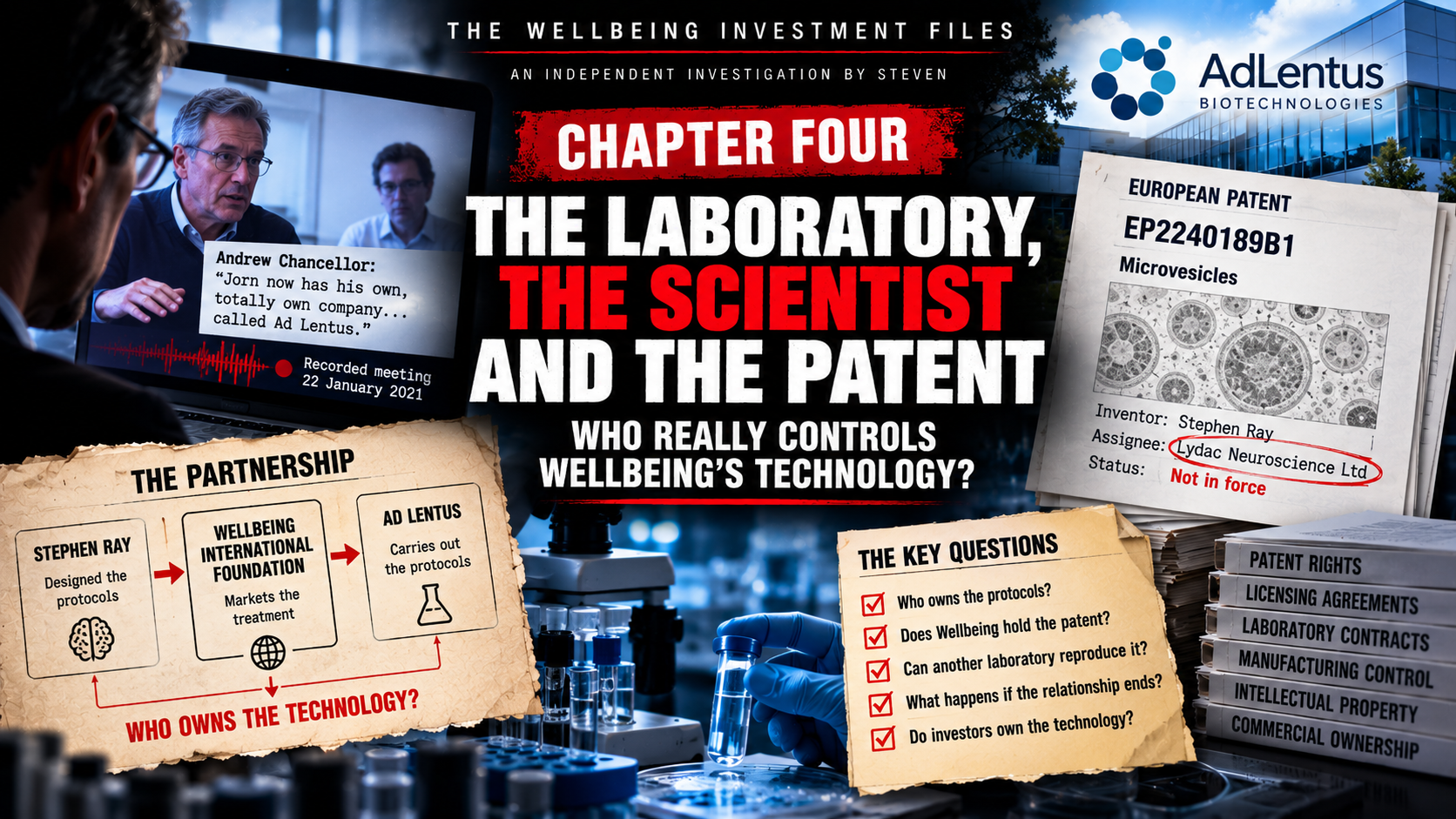
Does the company have the legal rights needed to use the technology?
What regulatory approvals are required?
Can the treatment be delivered at a sustainable cost?
Is there a realistic market?
And can the business fund the journey to commercialisation?
A company may be strong in some areas and weak in others.
It may have impressive scientific expertise but limited financial resources.
It may possess valuable intellectual property but lack confirmatory clinical evidence.
Or it may have encouraging clinical results while facing manufacturing or regulatory difficulties.
These are different forms of risk.
They should be examined separately.
What Wellbeing Investors Should Be Looking For
The central issue is not whether Wellbeing has a scientific history.
It does.
Nor is it whether the company has published research.
It has.
The more important question is how those activities translate into a credible development programme.
What specific clinical outcomes is the organisation attempting to demonstrate?
What research would be needed to establish those outcomes?
What regulatory framework applies to the intended uses?
What manufacturing capabilities are required?
And how will the company fund each stage?
A clear development plan should identify milestones that can be independently assessed.
It should also explain the risks that could prevent those milestones from being achieved.
This is particularly important when an investment is presented as an opportunity to participate in the future growth of a medical technology.
The future value depends upon what happens next.
Not simply upon what has happened before.
The Lesson From Capricor Is Not That Biotechnology Fails
It would be misleading to use Capricor's regulatory difficulties as evidence that experimental biological therapies are inherently unsuccessful.
Medical innovation is difficult.
Regulatory setbacks are part of the development landscape.
And companies sometimes overcome those setbacks through additional research.
Capricor's programme has generated evidence of potential clinical benefit.
Its continued development reflects the possibility that further regulatory progress may be achieved.
But its experience demonstrates why investment risk remains substantial even when the scientific programme is advanced.
That is the lesson relevant to Wellbeing.
The existence of promising biological research should encourage careful investigation.
It should not replace it.
Our Finding
Capricor Therapeutics provides a documented example of the complexity of bringing an experimental biological treatment toward commercial approval.
The company has conducted advanced clinical trials.
It has developed manufacturing capabilities.
It has secured commercial relationships.
And it has attracted substantial investment.
Yet its lead programme has faced regulatory setbacks and continued uncertainty.
This does not establish anything about the effectiveness of Wellbeing's different treatment.
Nor does it mean Wellbeing must follow an identical regulatory pathway.
But it demonstrates that scientific progress and commercial success are separate achievements.
For Wellbeing's prospective investors, the key issue is understanding where its own technology stands on that journey.
A published pilot study is a meaningful research milestone.
It is not equivalent to a successful confirmatory clinical trial.
A functioning laboratory process is important.
It is not automatically evidence of commercial scalability.
And a treatment being offered to patients does not, by itself, establish that every claimed benefit has been clinically demonstrated.
Those distinctions are fundamental to responsible biotechnology investment.
The Question That Should Come Before Any Investment Decision
There is one question that every prospective investor should ask before becoming excited about the commercial potential of an experimental treatment.
What evidence must still be produced before the business can achieve the future being described?
That question leads to others.
How long might the research take?
How much could it cost?
What happens if the next trial produces disappointing results?
Could regulators require further evidence?
And what happens to the investment if the commercial timetable changes?
These are not pessimistic questions.
They are the questions that distinguish scientific enthusiasm from investment analysis.
Capricor's experience demonstrates that even a sophisticated biotechnology company can face difficult answers.
Wellbeing's own development programme deserves the same level of scrutiny.
Because a scientific discovery may be remarkable.
A laboratory process may be innovative.
And a medical treatment may hold genuine potential.
But none of those things guarantees that a company will successfully bring the technology to market.
Science creates possibilities.
Clinical trials test them.
Regulators examine the evidence.
Manufacturing determines whether the product can be delivered consistently.
And the market ultimately determines whether the business can succeed.
For investors, understanding the difference between those stages may be more valuable than any optimistic projection of future returns.
NEXT INVESTIGATION — CHAPTER SIX
Did Wellbeing Really Reverse Biological Age? What Its 2026 Scientific Study Actually Proves
We examine the published longevity study in detail.
Sixteen participants enrolled.
Fourteen completed the programme.
Researchers reported reductions in biological-age measurements.
But the participants also changed their lifestyles, took supplements and received biological infusions.
Without a control group, can the study establish which component produced the observed changes?
The next investigation examines the evidence, the statistical results and the limitations that matter most.
Public sources and further reading
- Capricor Therapeutics — SEC Filings
- Capricor Therapeutics — 2025 Annual Report
- Capricor Therapeutics — Company News
- Wellbeing-Associated Longevity Pilot — Frontiers in Aging
Editorial note: This article uses Capricor Therapeutics as a documented example of biotechnology development risk. Its treatments and regulatory position are not equivalent to those of Wellbeing International Foundation. The article does not allege wrongdoing by either organisation. The regulatory status described reflects information available as of October 2026, before the FDA's scheduled November decision concerning Deramiocel.
Recent Posts