The Longevity Experiment: Did Wellbeing Discover an Anti-Ageing Breakthrough — or Measure the Benefits of a Healthier Lifestyle?
THE WELLBEING INVESTMENT FILES — CHAPTER SIX
A scientific investigation into Wellbeing International Foundation's 2026 research, the promise of biological-age reversal and the crucial difference between an encouraging experiment and a proven medical treatment.
Fourteen people completed a longevity experiment.
They changed their diets.
They exercised.
They improved their sleeping habits.
They took nutritional supplements.
And they received two infusions of an experimental biological preparation.
Seventeen weeks after the programme began, researchers reported something potentially remarkable.
According to two different biological-age measurements, the participants appeared to have become biologically younger.
One measurement suggested an average reduction of two years.
Another suggested a reduction of 2.7 years.
The findings were published in a peer-reviewed scientific journal in June 2026.
For a world increasingly fascinated by longevity medicine, the results were undoubtedly interesting.
But there was a problem.
The experiment had changed so many things at once that nobody could reliably determine which intervention had produced the results.
And that uncertainty sits at the centre of an important investigation into Wellbeing International Foundation.
The organisation promotes a specialist biological treatment known as Cell-Free Therapy.
Its scientific programme involves substances released by cells, including extracellular vesicles and other signalling molecules.
The 2026 publication provided an opportunity to examine whether this approach might contribute to measurable changes associated with ageing.
But did the experiment actually establish that the biological treatment worked?
Or did it demonstrate something less dramatic: that a group of motivated adults experienced favourable changes while following an intensive health-improvement programme?
The difference is not merely scientific. It could be central to how patients, investors and the wider public interpret Wellbeing's research.
The Experiment Behind the Headlines
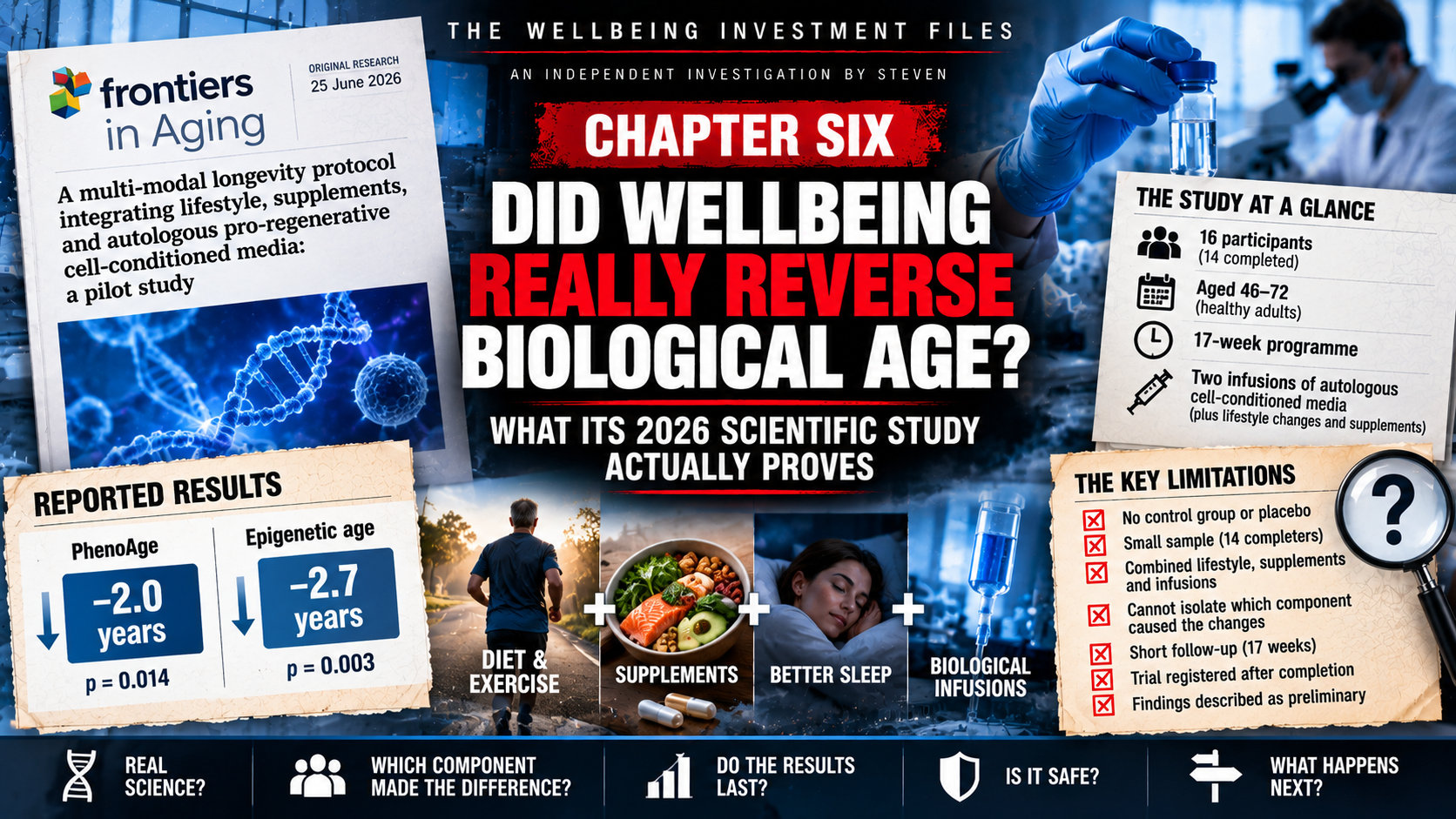
The study appeared in Frontiers in Aging on 25 June 2026.
Its title was:
A multi-modal longevity protocol integrating lifestyle, supplements, and autologous pro-regenerative cell-conditioned media: a pilot study.
The publication was associated with researchers affiliated with Wellbeing International Foundation and xLongevity.
It was a genuine peer-reviewed scientific paper.
That fact deserves recognition.
Publishing research allows other scientists to examine the methodology, results and conclusions.
It creates a public record that can be challenged, replicated or developed through further investigation.
But publication is not the same as proof.
Scientific journals publish exploratory research because early findings can be useful even when they are not conclusive.
A pilot study may reveal an interesting biological signal.
It may demonstrate that a research programme is feasible.
Or it may identify questions worth investigating in a larger trial.
What it generally cannot do, particularly without a comparison group, is establish the effectiveness of a specific intervention with the confidence expected from a well-designed confirmatory trial.
That distinction is particularly important in longevity medicine.
What Does It Mean to Become Biologically Younger?
Human beings have a chronological age.
That is the number of years since birth.
A person who is 60 years old remains chronologically 60 regardless of how healthy they become.
Biological-age measurements attempt to estimate something different.
They examine biological characteristics associated with ageing and use statistical models to estimate an individual's physiological or molecular ageing profile.
Some models rely upon blood biomarkers.
Others examine patterns of DNA methylation, chemical modifications involved in regulating gene activity.
Researchers hope these measurements may help explain why people of the same chronological age can have different health profiles.
But biological-age measurements are not literal clocks counting down the remaining years of someone's life.
A reported reduction of two biological years does not mean that two years have been added to a person's lifespan.
It does not automatically mean that age-related diseases have been prevented.
And it does not demonstrate that every organ in the body has become younger.
The measurements may be useful research tools.
Their interpretation depends upon the particular model, its validation and the clinical context.
This is why the phrase age reversal requires careful examination.
It can describe a change in a statistical estimate without establishing that human ageing itself has been reversed.
Who Took Part?
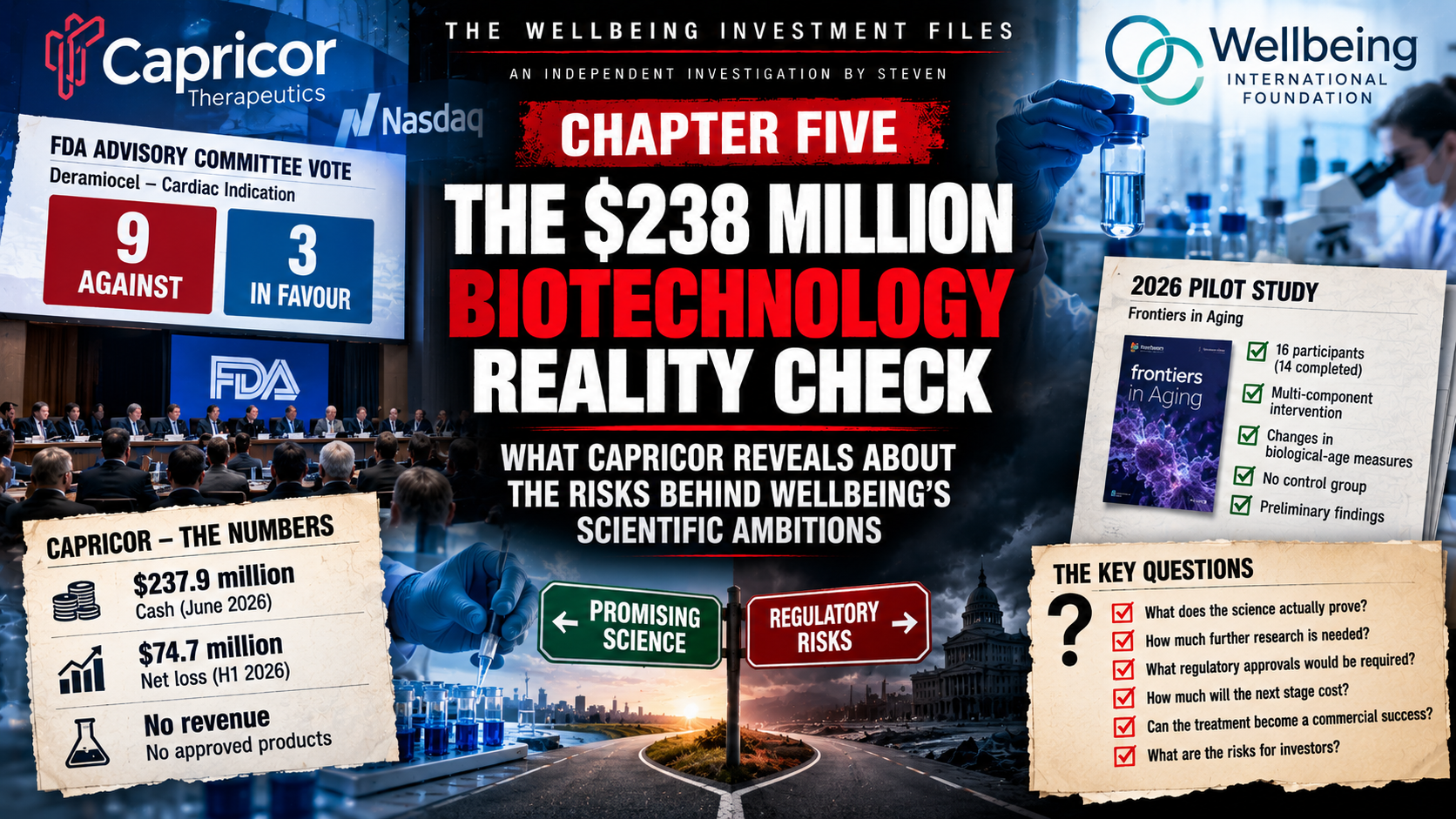
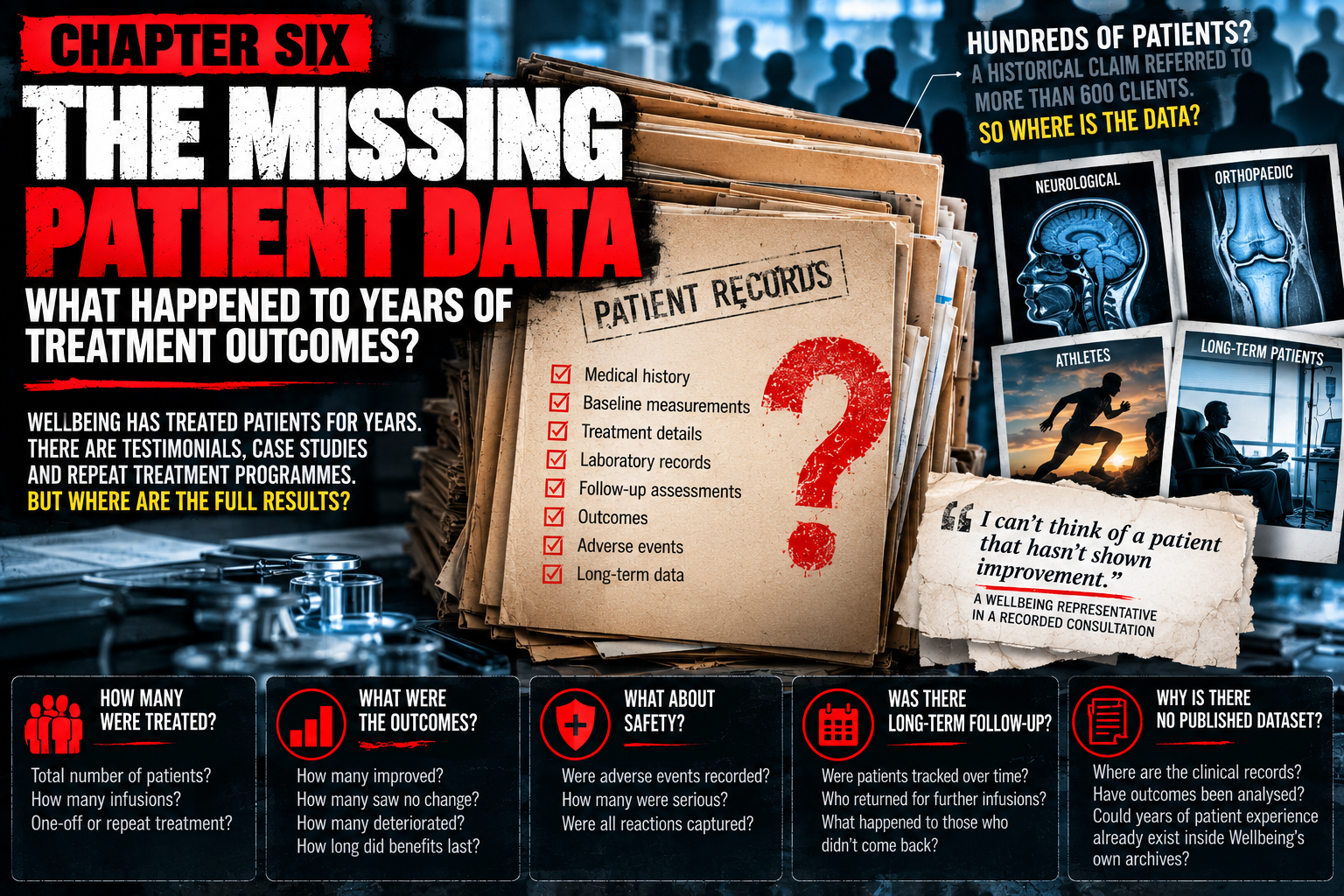
The experiment began with 16 volunteers.
They were healthy adults between 46 and 72 years old.
Two participants did not complete the programme, leaving 14 in the final analysis.
The average age was approximately 59 years.
The group contained seven men and seven women.
The participants were generally healthy.
They were not selected because they were suffering from advanced degenerative diseases or severe medical conditions.
That matters.
A study involving healthy volunteers cannot automatically establish that the same intervention would benefit people with significant illness.
Nor can a result observed in 14 individuals be assumed to apply to millions of potential patients.
Small studies can provide useful early observations.
But they are particularly vulnerable to random variation and the influence of individual participants.
If two or three people experience unusually large changes, the group average may shift substantially.
Larger studies are needed to determine whether the findings are reproducible.
The Health Programme Was Extensive
One of the most important features of the research was the intensity of the lifestyle programme.
Participants were encouraged to improve their diets, increase physical activity and establish healthier daily routines.
The nutritional guidance emphasised whole foods, adequate protein and reduced consumption of simple carbohydrates.
Intermittent fasting was recommended.
Participants were encouraged to increase walking and undertake regular resistance training.
Sleep hygiene was also addressed.
The programme included guidance concerning morning light exposure and reducing blue-light exposure in the evening.
Participants received coaching and ongoing support.
This was not a passive experiment in which volunteers simply attended a clinic twice for an infusion.
It was an organised health-improvement programme involving multiple changes to everyday behaviour.
That is important because lifestyle changes can influence many of the biological measurements used in ageing research.
Exercise can affect metabolic health.
Dietary changes can influence blood glucose and inflammatory markers.
Sleep improvements may affect physiological regulation.
And weight changes can alter several laboratory measurements.
Consequently, improvements observed during the programme cannot automatically be attributed to the experimental biological treatment.
The Supplement Question
The researchers also provided a substantial nutritional supplement regimen.
The published methods included nicotinamide mononucleotide, commonly known as NMN.
Other supplements included collagen peptides, GlyNAC, creatine, taurine, curcumin, coenzyme Q10 and nucleotides.
These substances have attracted varying degrees of scientific interest in relation to metabolism, oxidative stress, muscle function and biological processes associated with ageing.
But their inclusion complicates the interpretation of the experiment.
Participants were not simply receiving a biological infusion.
They were receiving several supplements alongside lifestyle guidance and coaching.
If biological-age measurements improved, any of those interventions could potentially have contributed.
Some effects may have resulted from interactions between them.
Others may have reflected ordinary biological variation.
The study did not include separate groups designed to distinguish these possibilities.
There was no lifestyle-only comparison group.
No supplement-only group.
And no group receiving the biological infusion without the other interventions.
That makes the contribution of each component impossible to determine from the study alone.
The Experimental Treatment at the Centre of the Investigation
The most distinctive element of the programme involved an experimental preparation described as autologous pro-regenerative cell-conditioned media.
The term autologous indicates that the starting biological material came from the participant receiving the preparation.
Blood was collected.
A selected cellular fraction was processed.
The cells underwent laboratory conditioning designed to stimulate the release of biological signalling substances.
The resulting material contained components including extracellular vesicles, cytokines and growth factors.
The preparation was then administered intravenously.
Participants received two infusions.
One occurred during Week 3.
The other took place during Week 10.
The programme concluded with final assessments in Week 17.
The biological rationale is scientifically interesting.
Cells communicate through numerous chemical and molecular signals.
Extracellular vesicles can carry biological material and participate in cellular communication.
Researchers around the world are investigating whether these mechanisms can be harnessed for therapeutic purposes.
But an interesting biological mechanism does not establish that administering a particular preparation produces a meaningful clinical benefit.
That must be demonstrated through appropriately designed studies.
The Missing Comparison
Imagine two groups of people.
Both receive the same diet plan.
Both undertake the same exercise programme.
Both receive the same supplements.
Both are supported by the same health coaches.
But only one group receives the experimental biological infusion.
If the group receiving the infusion experiences a greater improvement, researchers may begin to investigate whether the biological preparation contributed to that difference.
That would not automatically settle every question.
But it would provide stronger evidence than observing changes in a single group receiving all interventions together.
The Wellbeing-associated study did not include that comparison.
Everyone received the combined programme.
There was no placebo group.
There was no random allocation to different interventions.
And participants knew they were receiving the programme.
This is known as a single-arm, open-label study.
Such designs can be useful for early exploration.
But they are limited when the objective is to establish cause and effect.
Without a comparison group, the study cannot tell us what would have happened to similar participants who followed the same health programme without the infusion.
That missing information is central to interpreting the findings.
The Reported Two-Year Reduction
The researchers used a biological-age model known as PhenoAge.
This model incorporates chronological age and several clinical laboratory measurements.
It produces an estimate associated with physiological ageing.
After the 17-week programme, the researchers reported an average reduction of approximately two years.
The statistical analysis produced a p-value of 0.014.
That result suggests that the observed before-and-after change was unlikely under the particular statistical null hypothesis tested.
But it does not establish why the change occurred.
The measurement could have been influenced by lifestyle improvements.
It could have reflected changes associated with supplements.
The infusion might have contributed.
Or several factors may have acted together.
The study design cannot separate these possibilities.
Nor does a two-year reduction in a PhenoAge estimate demonstrate that participants gained two additional years of life.
It is a change in a calculated biological-age measure.
That is a meaningful distinction.
The More Dramatic Epigenetic Result
The second principal measure examined epigenetic age.
This approach uses patterns of DNA methylation to estimate aspects of biological ageing.
The researchers reported an average reduction of approximately 2.7 years.
The associated p-value was 0.003.
The result was statistically significant in the study's before-and-after analysis.
But the same methodological problem remained.
The researchers could not determine which component of the combined programme produced the change.
The study also did not establish whether the reduction would persist.
Would the biological-age estimate remain lower six months later?
Would it remain lower after a year?
Would participants experience measurable improvements in physical function or health outcomes?
Would they develop fewer age-related diseases?
The published pilot did not answer those questions.
They require further research.
The Participants Did Not All Respond the Same Way
One particularly interesting aspect of the study was the variation between participants.
The researchers conducted an exploratory analysis that identified different patterns of response.
One subgroup showed a relatively large average reduction in epigenetic-age estimates.
Another showed little or no reduction.
That variation matters.
If the intervention genuinely produces a biological effect, understanding why individuals respond differently could become an important research question.
Age, metabolic health, baseline biomarkers or other characteristics might influence the results.
But this study was too small to establish reliable predictors of response.
Subgroup analyses involving only a handful of participants can produce unstable findings.
An apparent pattern may disappear when examined in a larger population.
The results should therefore be regarded as potential research leads rather than established rules for selecting patients.
An Unexpected Clue in the Blood Tests
The researchers also identified an association involving baseline iron levels.
Participants with lower initial serum iron tended to show larger changes in epigenetic-age estimates.
The reported correlation was approximately 0.64.
That is an interesting exploratory observation.
But correlation does not establish causation.
The result does not mean that lowering iron levels would improve the treatment's effectiveness.
Nor does it establish that people with low iron should receive the intervention.
Iron is an essential nutrient, and abnormal iron levels can have important medical consequences.
The finding may justify further scientific investigation.
It should not be converted into treatment advice.
This example illustrates the difference between identifying a possible biological relationship and demonstrating a clinically useful intervention.
Could the Measurements Have Changed Without the Treatment?
Yes.
That possibility cannot be excluded by the study.
Biological measurements vary over time.
Dietary changes, exercise, weight changes, illness, sleep and other factors may influence laboratory results.
Measurement variability can also contribute.
In some circumstances, people selected for a study because of particular baseline characteristics may show movement toward more typical values when retested.
Researchers refer to this statistical phenomenon as regression to the mean.
A controlled study helps distinguish intervention effects from these other influences.
Without a control group, it is difficult to know how much of the observed change would have occurred anyway.
That does not mean the results were meaningless.
It means they cannot be interpreted as definitive evidence of the biological infusion's effectiveness.
The Problem With Multiple Measurements
The study examined more than biological age.
Researchers also measured numerous clinical biomarkers.
These included markers associated with metabolic health, liver function, inflammation and other physiological processes.
Some measurements changed during the programme.
Others did not.
The researchers acknowledged that the exploratory biomarker analyses were not adjusted for multiple statistical comparisons.
This is relevant because testing many outcomes increases the possibility of finding apparently significant results by chance.
A single statistically significant result can be meaningful.
But its interpretation depends upon the study design, the number of comparisons and whether the outcome was specified in advance.
The authors treated these additional findings as exploratory.
That is the appropriate context in which they should be discussed.
What Did the Study Tell Us About Safety?
The researchers reported no adverse events during the study.
That is encouraging within the limited population examined.
But the sample was very small.
Fourteen participants completed the programme.
The final assessment took place seven weeks after the second infusion.
A study of this size cannot reliably detect rare adverse effects.
It also provides limited information about complications that might emerge months or years later.
The absence of reported adverse events should therefore not be interpreted as proof that the treatment is universally safe.
Larger studies and longer follow-up would be required to evaluate the safety profile more thoroughly.
The same principle applies to many experimental medical interventions.
Early tolerability findings can be encouraging.
They do not eliminate the need for further investigation.
A Detail Hidden in the Trial Timeline
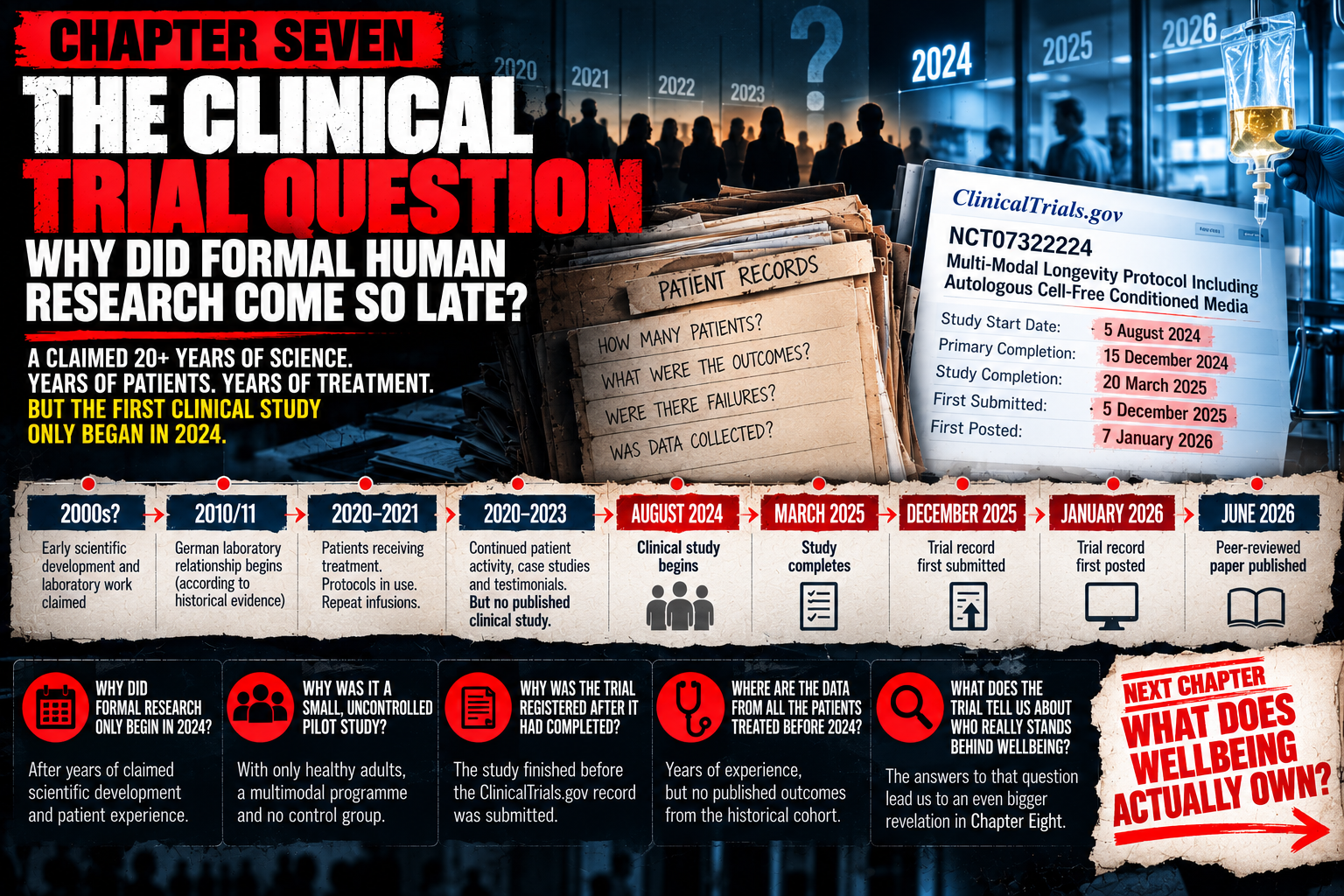
The study was associated with a ClinicalTrials.gov registration.
The public record identifies the trial as NCT07322224.
It names BlueBird Age Reversal SA as the sponsor, with Wellbeing International Foundation and xLongevity identified as collaborators.
The reported study period ran from August 2024 to March 2025.
However, the trial record was first publicly posted in January 2026.
That was after the reported study had finished.
This is known as retrospective registration.
It does not automatically establish misconduct or invalidate the results.
But it is relevant to research transparency.
Prospective registration allows readers to examine the planned study design and outcomes before researchers know the results.
That helps reduce uncertainty about whether endpoints or analyses were changed after the data became available.
When a study is registered retrospectively, that independent comparison becomes more difficult.
The timing should therefore be considered when assessing the strength of the evidence.
It is not proof that the findings are incorrect.
It is a limitation affecting how confidently they can be interpreted.
Why the Study's Own Language Matters
Scientific papers often contain qualifications that are lost when their findings are summarised for a general audience.
The Wellbeing-associated publication acknowledged important limitations.
The study was small.
It was uncontrolled.
It combined several interventions.
And the results required confirmation through larger controlled research.
These qualifications are not minor footnotes.
They define what the experiment can reasonably demonstrate.
A cautious scientific conclusion might be that a multi-component longevity programme was associated with favourable changes in certain biological-age estimates.
A much stronger claim would be that the experimental biological infusion reversed human ageing.
The published design does not establish that stronger conclusion.
The distinction matters because the second claim attributes a specific effect to a specific treatment.
The study was not designed to isolate that effect.
What Would a Convincing Follow-Up Trial Need to Show?
A stronger investigation would need to address the unanswered questions directly.
It would require a larger participant population.
The research plan should be specified before the trial begins.
The primary outcome should be clearly defined.
A randomised comparison group would help establish whether the biological preparation adds benefit beyond lifestyle changes and supplements.
Appropriate blinding could reduce bias.
Longer follow-up would help determine whether observed changes persist.
Researchers would also need to examine clinically meaningful outcomes.
Biological-age estimates may be useful research markers.
But evidence of improved health, reduced disease risk or better physical function would provide a more direct indication of medical benefit.
Independent replication would strengthen confidence.
And a more extensive safety assessment would be necessary before broad conclusions could be drawn about routine use.
These are not demands for perfection.
They are the normal questions that follow an encouraging exploratory study.
Why This Matters Beyond the Laboratory
Longevity medicine is becoming increasingly commercialised.
Consumers are interested in treatments that promise to slow ageing.
Investors are attracted by the possibility of a growing market.
And biotechnology companies are investigating numerous approaches to age-related disease and biological decline.
Some of this research may eventually produce important medical advances.
But the commercial excitement can move faster than the evidence.
A small study may generate an impressive headline.
A biological-age measurement may be interpreted as a dramatic reversal of ageing.
And preliminary findings may become part of a much broader commercial narrative.
That is why careful interpretation matters.
The question is not whether longevity research should continue.
It should.
The question is whether the claims being made are proportionate to the evidence available.
What Can We Fairly Conclude About Wellbeing?
The published 2026 study represents a genuine scientific investigation.
It involved a structured intervention and reported measurable changes in biological-age estimates.
The findings may justify further research.
They should not be dismissed simply because the study was small.
But the experiment did not establish that Wellbeing's biological infusion independently caused those changes.
It did not demonstrate an extension of human lifespan.
It did not establish long-term protection against age-related disease.
And it did not provide a definitive assessment of long-term safety.
Those conclusions follow from the design and scope of the research.
They are not allegations of scientific dishonesty.
The study's authors themselves recognised important limitations.
The appropriate response is therefore neither to dismiss the work nor to exaggerate it.
It is to examine what the results genuinely support.
Our Finding
The most striking feature of Wellbeing's longevity study is not the reported reduction in biological age.
It is the uncertainty surrounding the cause of that reduction.
Fourteen participants completed a programme involving multiple lifestyle changes, supplements and experimental biological infusions.
Researchers reported favourable changes in two biological-age estimates.
But there was no control group.
There was no way to isolate the contribution of the infusion.
And there was insufficient follow-up to establish whether the changes would persist or translate into meaningful long-term health benefits.
The results are preliminary.
They are scientifically interesting.
But they do not establish that Cell-Free Therapy reverses human ageing.
That distinction should be clear to anyone considering the treatment or evaluating the scientific claims associated with it.
The Question Nobody Can Yet Answer
There is a simple experiment that would help resolve the central uncertainty.
Give two comparable groups the same diet, exercise programme, supplements and health coaching.
Administer the experimental biological preparation to one group.
Use an appropriate control intervention for the other.
Then examine whether the group receiving the active preparation experiences a greater benefit.
That would provide stronger evidence about the infusion's specific contribution.
The 2026 pilot did not perform that comparison.
Until such evidence is available, the question remains unanswered.
Did the participants become biologically younger because of Wellbeing's Cell-Free Therapy?
Perhaps the preparation contributed.
Perhaps the lifestyle programme was responsible for much of the change.
Perhaps several interventions worked together.
The current study cannot distinguish between those explanations.
And that is the most important conclusion of this investigation.
Not that the research is worthless.
Not that the treatment cannot work.
But that the evidence does not yet demonstrate what some readers may assume from the headline results.
The participants changed their lifestyles.
They took supplements.
They received experimental infusions.
Their biological-age estimates changed.
But the study cannot tell us which intervention made the difference.
For a scientific programme seeking to establish a new approach to longevity, that is the question future research must answer.
And until it does, the difference between an encouraging observation and a proven treatment must remain clear.
NEXT INVESTIGATION — CHAPTER SEVEN
The Safety Gap: What Happens When an Experimental Biological Treatment Moves Beyond a Small Study?
Wellbeing's 2026 pilot reported no adverse events among its 14 completers.
But what does that tell us about the risks of treating hundreds or thousands of people?
We examine the limitations of small safety studies, the challenges of manufacturing biological preparations consistently and the questions patients should ask before receiving an experimental infusion.
Because a treatment that appears well tolerated in a small research programme may still have important unanswered safety questions.
Sources and further reading
- Frontiers in Aging — Original Research, June 2026
- ClinicalTrials.gov — NCT07322224
- Frontiers — Peer Review Process
Editorial note: This article examines the published scientific research and its methodological limitations. It does not allege research misconduct or fraud. The reported biological-age changes are described as observations within an exploratory study, not proof of extended lifespan or the independent effectiveness of Cell-Free Therapy. The article is not medical advice.
Recent Posts