In the world of regenerative medicine, image is everything.
Patients researching advanced therapies often look for reassurance before committing to expensive treatments. They want to see laboratories, clinics, medical professionals, scientific expertise, and an organisation that appears large enough to inspire confidence.
For many prospective patients, Wellbeing International Foundation appears to tick all of those boxes.
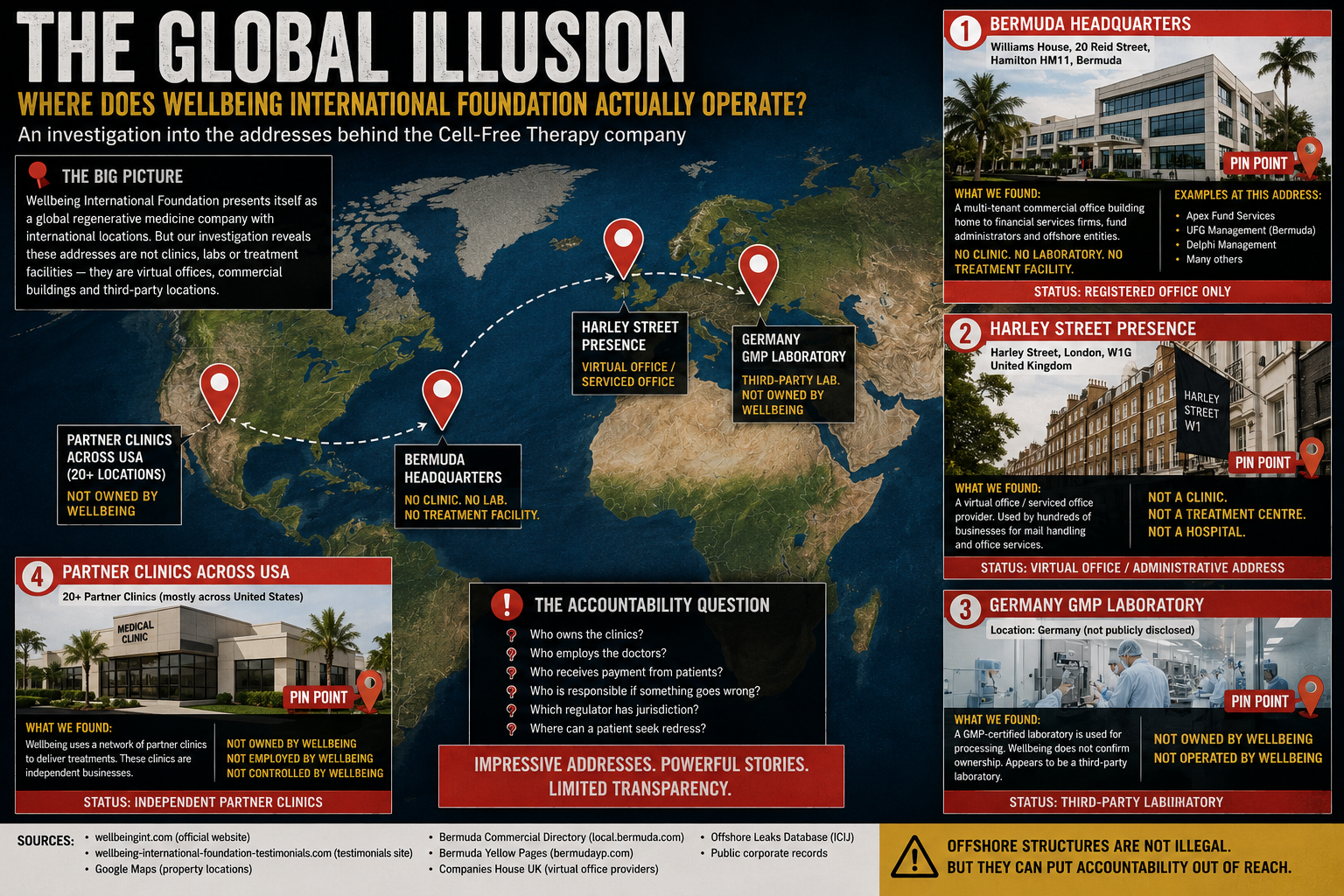
The company promotes Cell-Free Therapy (CFT), references a Bermuda headquarters, highlights a German laboratory, maintains a presence associated with Harley Street in London, and claims access to a network of partner clinics across multiple countries.
On paper, it presents the image of a global regenerative medicine organisation.
But when we began examining the infrastructure behind the marketing, a different picture started to emerge.
Looking Beyond the Marketing
Most patients do not investigate corporate structures.
They see an international organisation and naturally assume that the company owns clinics, employs medical professionals, operates treatment facilities, and controls the infrastructure being promoted.
However, our investigation found surprisingly little evidence that Wellbeing International Foundation directly owns the facilities associated with its public image.
Instead, the organisation appears to rely heavily on a combination of offshore registration, partner clinics, third-party laboratories, and external treatment locations.
That distinction is important.
Because there is a significant difference between operating a healthcare network and marketing services delivered through a network of independent partners.
The Bermuda Headquarters
Wellbeing International Foundation publicly lists its headquarters as:
Williams House
20 Reid Street
Hamilton HM11
Bermuda.
At first glance, this sounds impressive.
The reality appears less straightforward.
Williams House is a commercial office building located in Hamilton's financial district. Public business directories show the address being used by numerous fund administrators, investment firms, insurance companies, corporate service providers, and offshore entities.
What we did not find was evidence that the building contains:
- A medical clinic
- A treatment centre
- A biotechnology laboratory
- An infusion facility
- A patient consultation centre
Based on publicly available information, Williams House appears to function as a commercial office address rather than a medical facility.
This raises an obvious question.
If the headquarters is not a clinic and not a laboratory, what operational activity actually occurs there?
Why Bermuda?
Bermuda has long been known as one of the world's leading offshore financial centres.
Thousands of international companies are registered there, attracted by regulatory structures, tax advantages, and international business services.
Operating from Bermuda is not illegal.
Many legitimate companies are based there.
However, when an organisation is marketing medical-related services, patients are entitled to understand why an offshore jurisdiction has been selected and what practical operations are being carried out from that location.
The more important question may not be why Wellbeing is registered in Bermuda.
The more important question is what Wellbeing actually does there.
The German Laboratory
Wellbeing's website refers to a GMP-certified laboratory in Germany.
This laboratory appears central to the Cell-Free Therapy process.
Yet public information does not clearly establish whether the laboratory is:
- Owned by Wellbeing International Foundation
- Operated by Wellbeing International Foundation
- Controlled by Wellbeing International Foundation
- Or simply contracted by Wellbeing International Foundation
That distinction matters enormously.
A company that owns and operates a laboratory has direct responsibility for quality control, staffing, compliance, and processing.
A company that uses a third-party laboratory operates under a very different model.
Patients deserve to know which model applies.
The Harley Street Effect
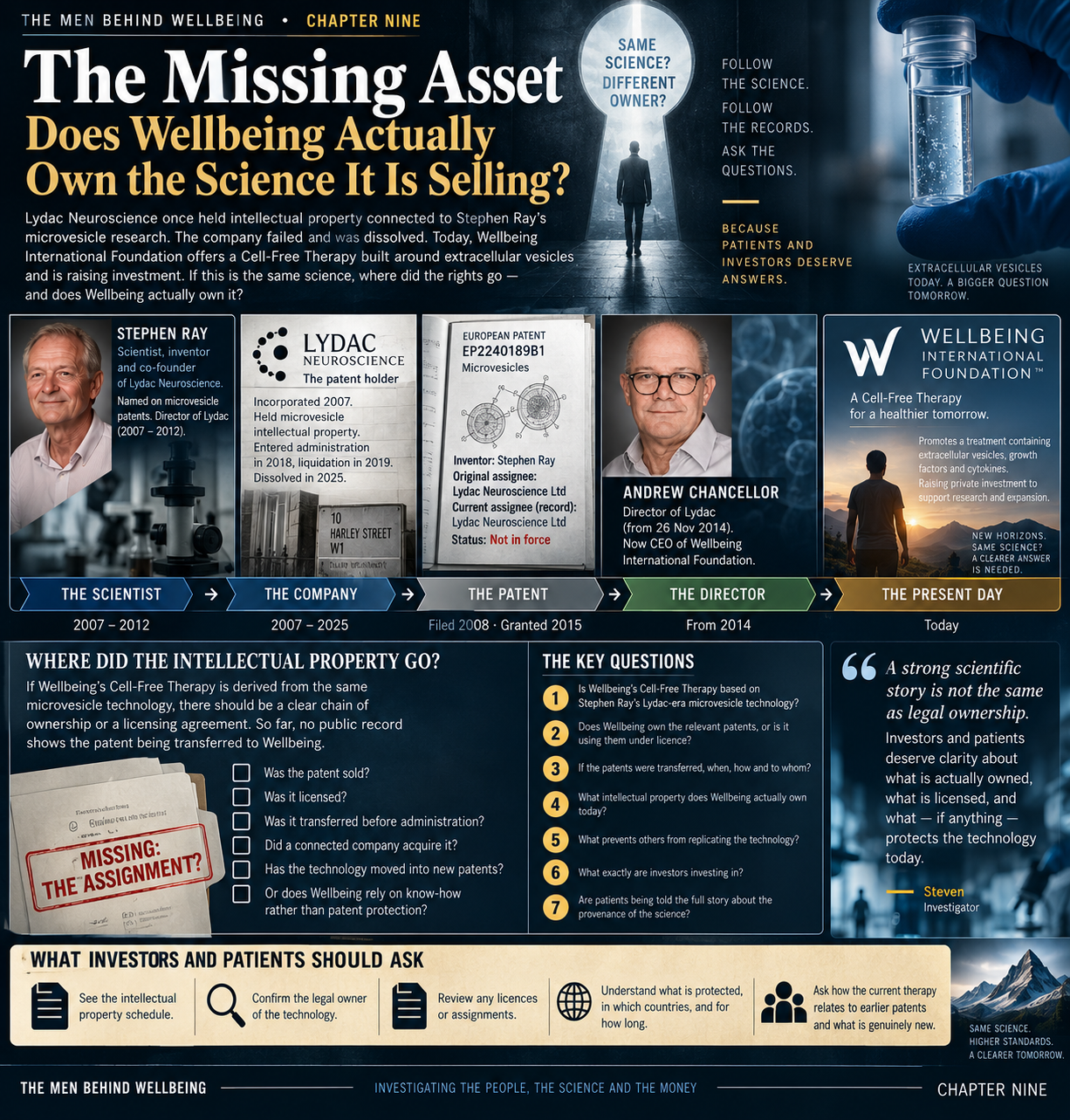
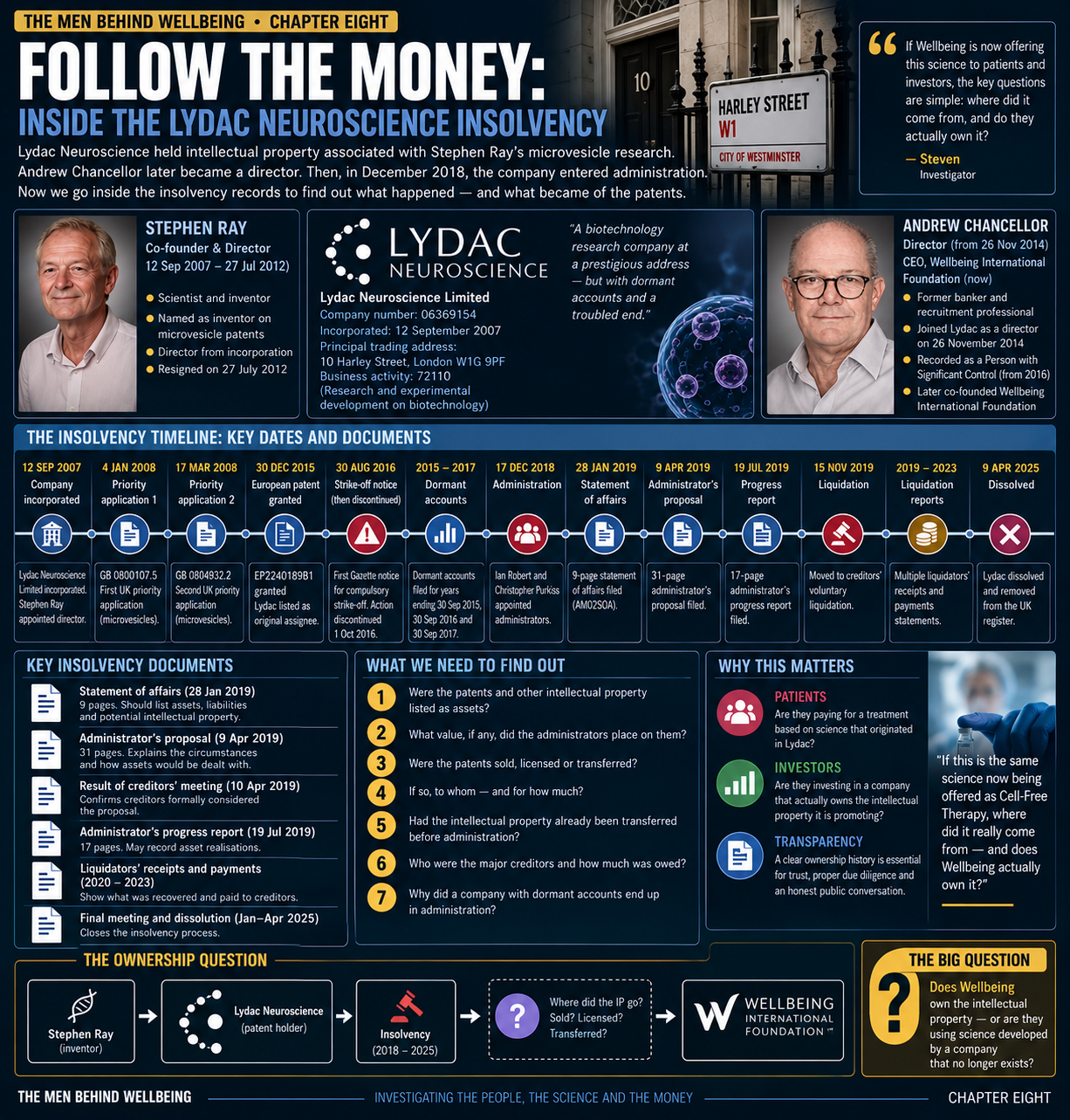
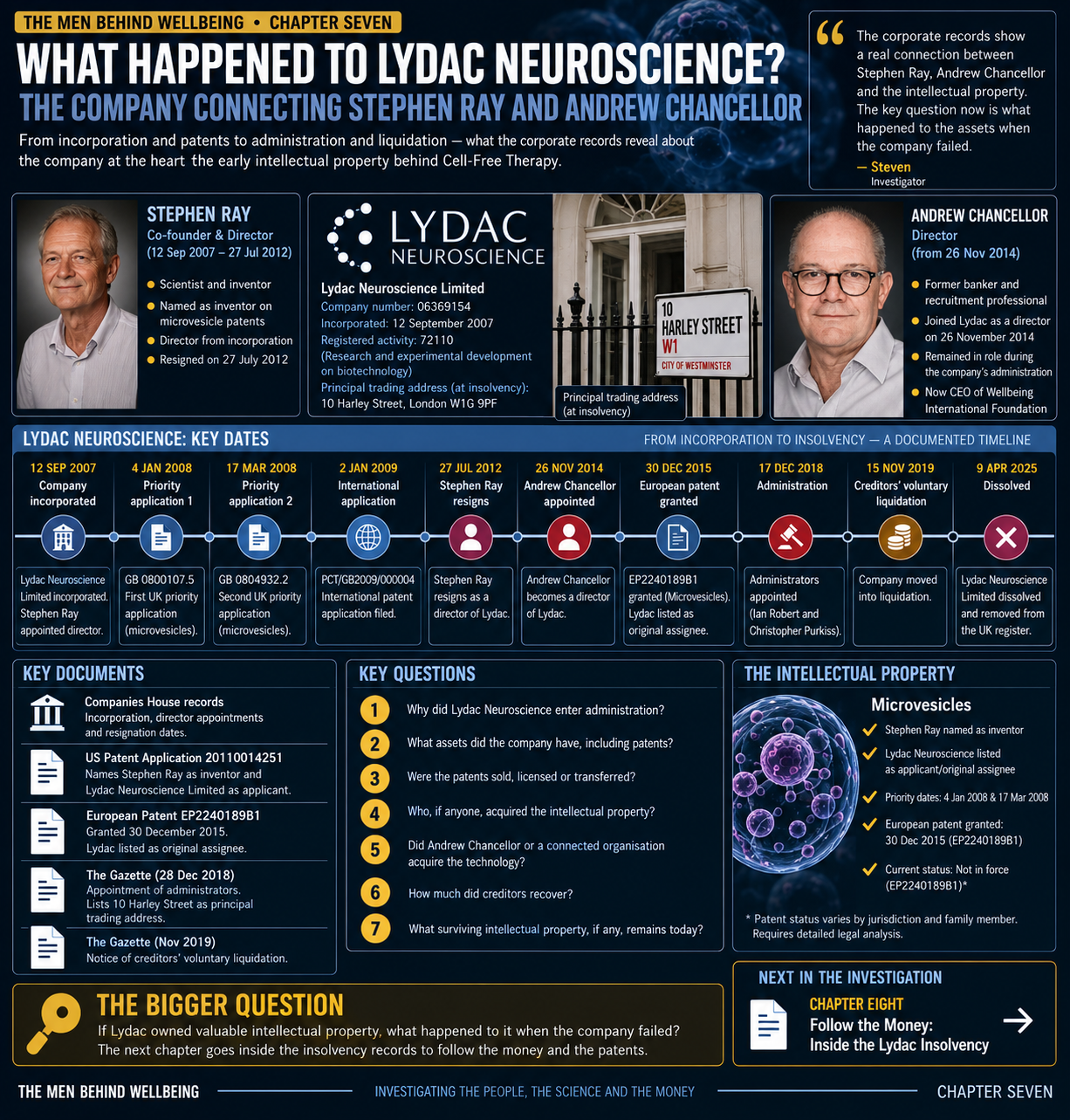
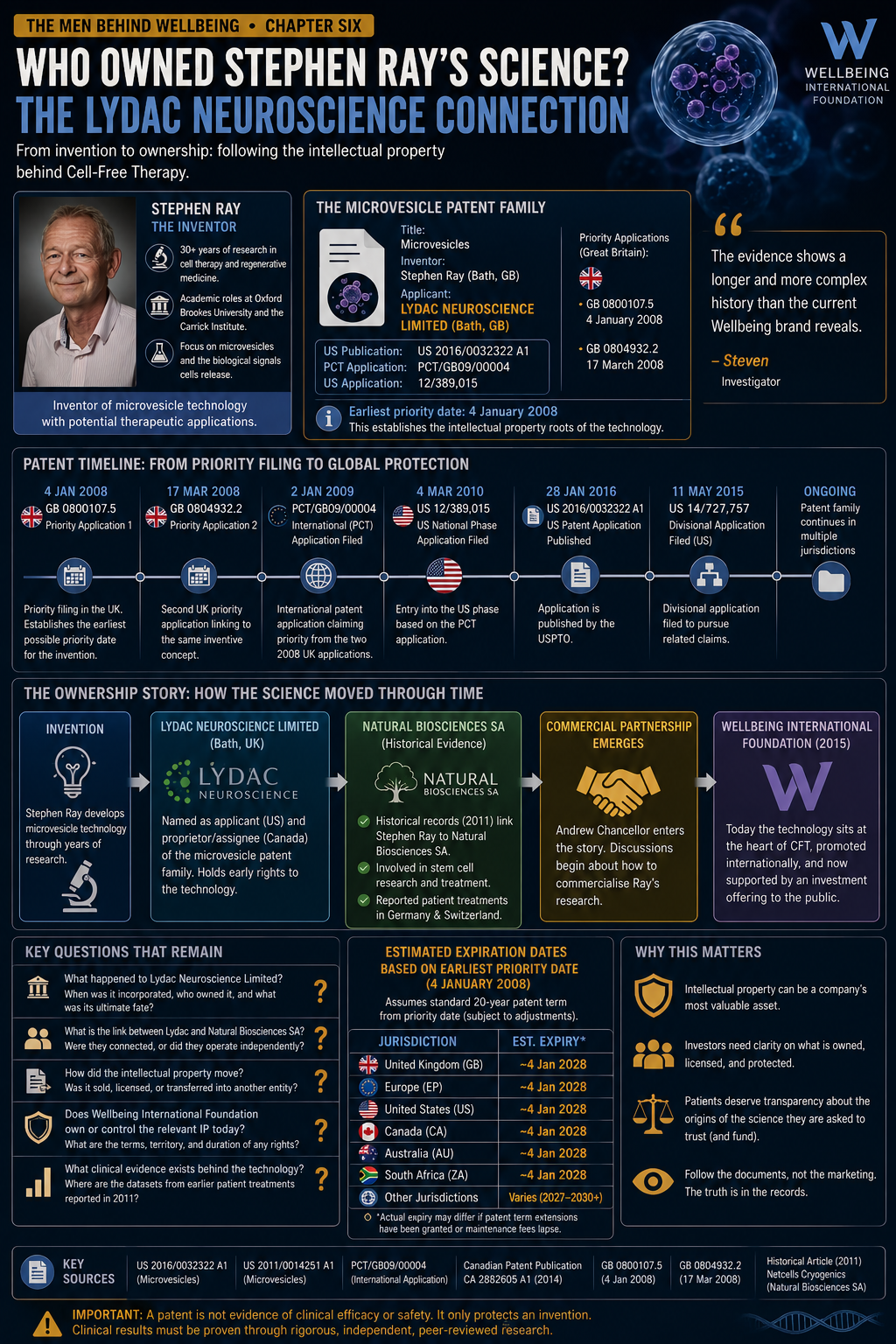
Perhaps no address carries more prestige in private healthcare than Harley Street.
For generations, Harley Street has been associated with elite medicine, specialist consultants, and private healthcare providers.
It is therefore unsurprising that many healthcare businesses highlight Harley Street connections within their marketing.
But there is an important distinction that patients should understand.
A Harley Street address does not automatically mean a company owns a clinic.
Many Harley Street addresses are:
- Serviced offices
- Virtual offices
- Consulting rooms
- Mail handling facilities
- Shared office suites
The presence of an address alone tells us very little.
The key question is always:
What actually happens there?
Without transparency, patients are left to fill in the blanks themselves.
The Partner Clinic Network
Perhaps the most revealing part of Wellbeing's own description is its reference to a network of partner clinics.
Notice the language carefully.
The company does not refer to "our clinics."
Instead, it refers to partner clinics.
That wording suggests a referral or partnership model rather than direct ownership.
Again, there is nothing inherently wrong with this structure.
Many healthcare companies work through partnerships.
The issue is transparency.
Consumers should know:
- Who owns the clinic?
- Who employs the doctor?
- Who administers treatment?
- Who carries liability?
- Who is responsible if complications occur?
These questions become especially important when treatments can cost tens of thousands of pounds.
The Testimonial Machine
The company's separate testimonial website adds another layer to the picture.
The website is dedicated entirely to success stories from patients and athletes who report positive experiences after treatment.
The site uses the same Bermuda address and branding as the main organisation.
The result is a marketing ecosystem that creates a powerful impression of scale and success.
Yet testimonials cannot answer questions about ownership, infrastructure, accountability, or evidence.
A positive story may influence a patient emotionally.
It does not explain who ultimately controls the treatment process.
The Accountability Gap
This is where the investigation becomes most important.
When a patient enters a traditional healthcare environment, accountability is usually clear.
There is a clinic.
There is a doctor.
There is a regulator.
There is an identifiable legal entity.
But what happens when treatment involves:
- An offshore headquarters
- A third-party laboratory
- Independent partner clinics
- Multiple jurisdictions
- International payment flows
The structure becomes far more complex.
Patients may not fully understand who is responsible for each part of the process.
That uncertainty creates an accountability gap.
Questions That Deserve Answers
Our investigation leaves several important questions unanswered:
Who owns Wellbeing International Foundation?
How many employees work at the Bermuda headquarters?
Does the organisation own any treatment facilities?
Does it own the German laboratory?
Who receives patient payments?
Who contracts directly with patients?
Which entity carries legal responsibility if treatment outcomes are disputed?
How are partner clinics selected and monitored?
What regulatory oversight applies across multiple jurisdictions?
These are reasonable questions for any organisation operating in the healthcare sector.
Conclusion
Wellbeing International Foundation presents itself as an international regenerative medicine organisation with a Bermuda headquarters, a German laboratory, Harley Street connections, and a network of partner clinics.
Our investigation found that the publicly listed Bermuda headquarters appears to be a commercial office building rather than a medical facility. Public information also suggests that key elements of the treatment process may be delivered through third-party laboratories and partner clinics rather than facilities directly owned by the organisation.
None of this proves wrongdoing.
But it does raise questions.
In healthcare, trust should be built on transparency.
Patients should know who owns the infrastructure, who provides the treatment, who receives the money, and who carries responsibility.
Until those questions are clearly answered, the image of a global medical organisation may remain just that — an image.