It is the credibility trap.
Across the world, thousands of patients are turning to regenerative medicine, stem cell therapies, exosome treatments and other forms of experimental biological interventions in the hope of finding solutions where conventional medicine has failed.
Many of these patients are intelligent, cautious people.
They conduct research.
They read articles.
They watch interviews.
They study websites.
They investigate company backgrounds.
Yet despite their efforts, many still fall into the same trap.
They mistake corporate credibility for medical credibility.
The Modern Healthcare Sales Machine
The private healthcare industry has changed dramatically over the past decade.
Medical businesses no longer rely solely on doctors and clinics to attract patients.
Today they use sophisticated marketing techniques borrowed from the corporate world.
Executive interviews.
Business magazine profiles.
Leadership articles.
Success stories.
Personal branding campaigns.
Social media influence.
Professional public relations.
Corporate storytelling.
The result is a carefully constructed image of authority.
The consumer begins to feel reassured.
The company appears successful.
The leadership appears confident.
The website appears professional.
The messaging appears consistent.
Before long, trust begins to develop.
But consumers should stop and ask themselves an important question:
What exactly am I trusting?
Being Successful In Business Is Not The Same As Being Qualified In Medicine
This distinction is often overlooked.
Many healthcare organisations are led by individuals with impressive backgrounds in business, finance, recruitment, sales, investment, technology or corporate management.
There is absolutely nothing wrong with that.
Businesses need capable leaders.
Healthcare organisations need effective management.
The problem occurs when commercial experience becomes confused with clinical expertise.
A successful entrepreneur is not automatically a medical expert.
A company director is not automatically a scientist.
A talented salesperson is not automatically a clinician.
An impressive executive profile is not evidence of medical effectiveness.
Yet consumers often absorb these signals subconsciously.
If someone appears successful, many assume they are also trustworthy in every other area.
Psychologists refer to this as the "halo effect."
The regenerative medicine sector appears particularly vulnerable to this phenomenon.
The Authority Effect
Investigations into private healthcare marketing repeatedly reveal the same pattern.
Consumers are introduced to a company through positive content.
They read an executive interview.
They discover articles discussing innovation.
They find success stories.
They see references to advanced science.
Gradually, authority is established.
The consumer begins to believe they are dealing with experts.
However, authority can be manufactured.
Real authority comes from:
- Clinical evidence
- Scientific validation
- Regulatory oversight
- Peer-reviewed research
- Medical qualifications
- Transparent governance
Everything else is marketing.
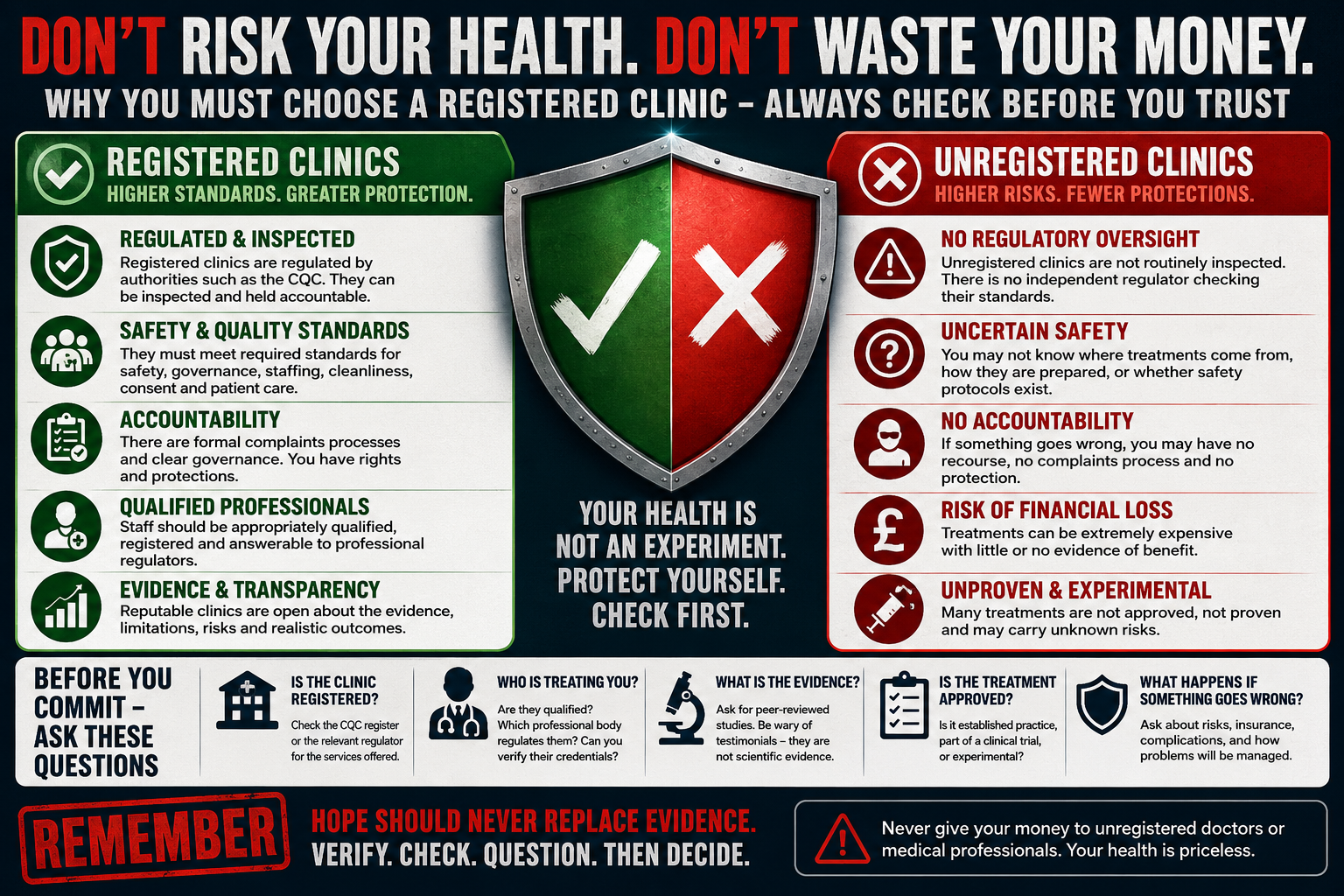
The Missing Questions
When patients are considering expensive regenerative treatments, they often focus on the treatment itself.
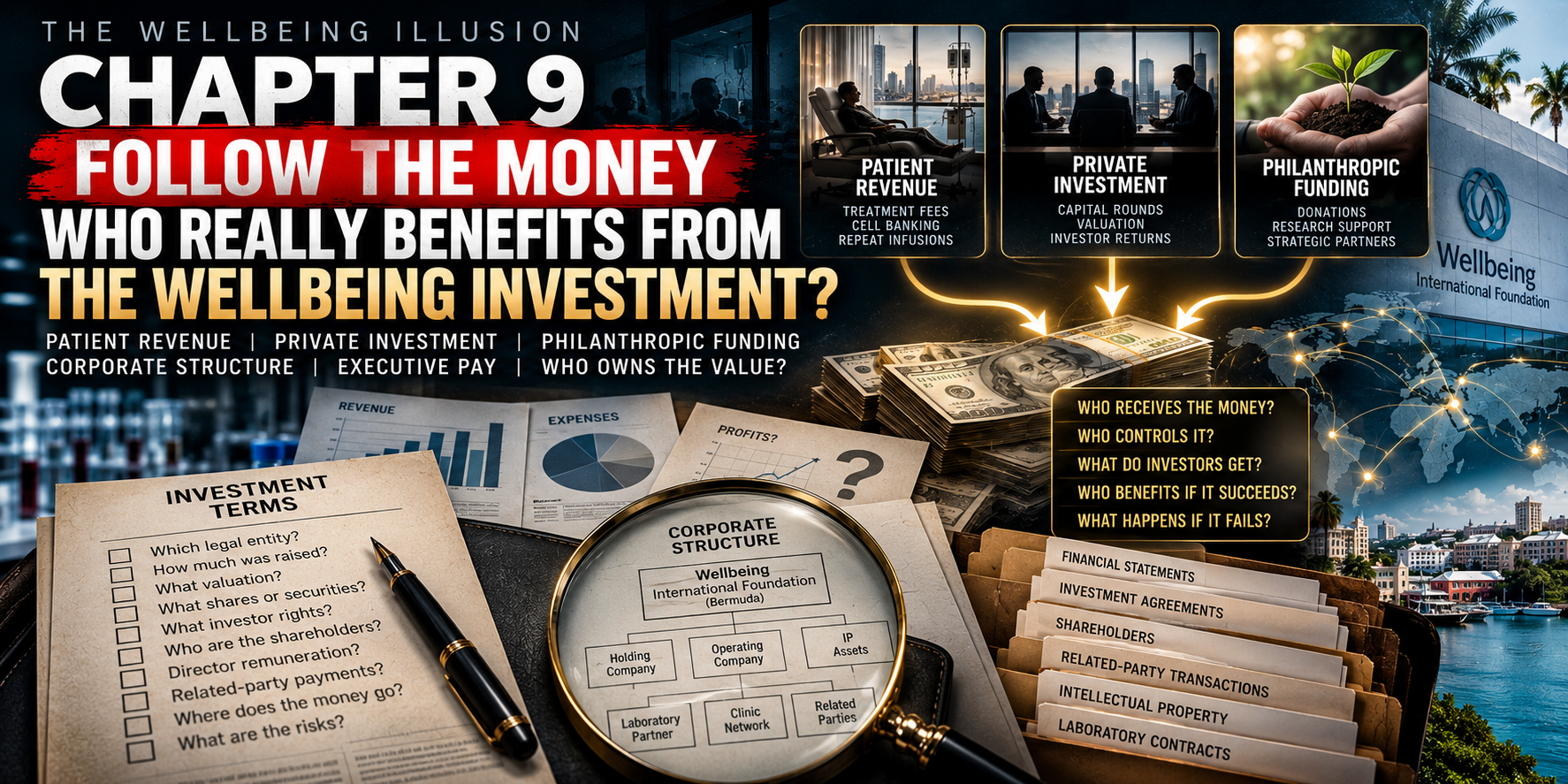
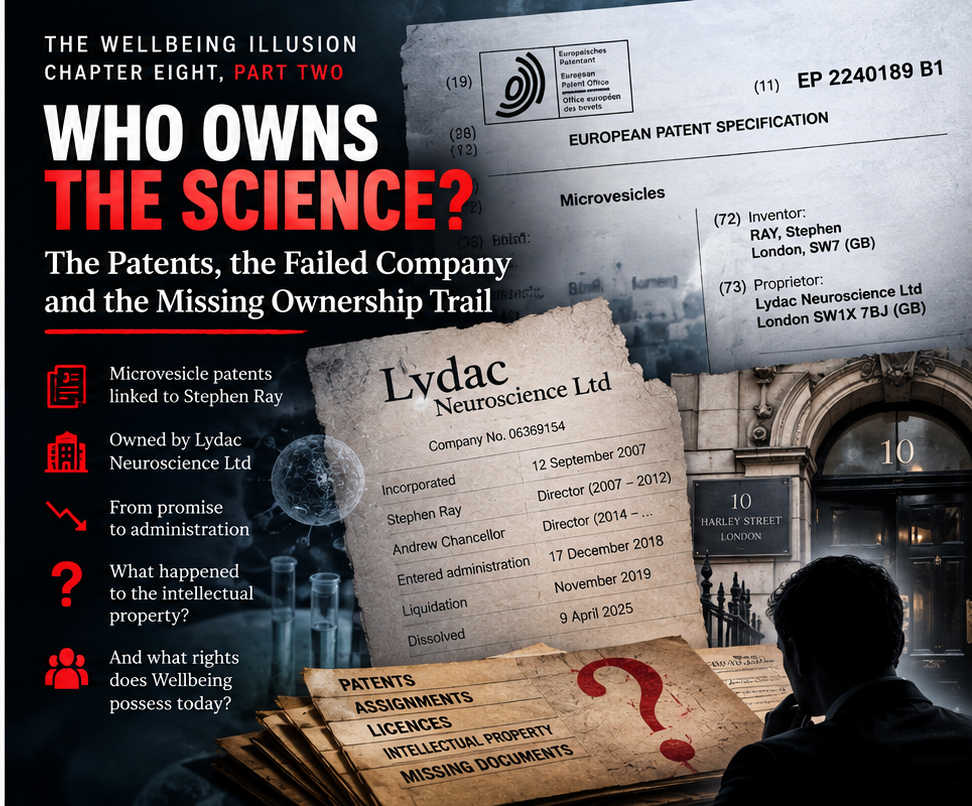
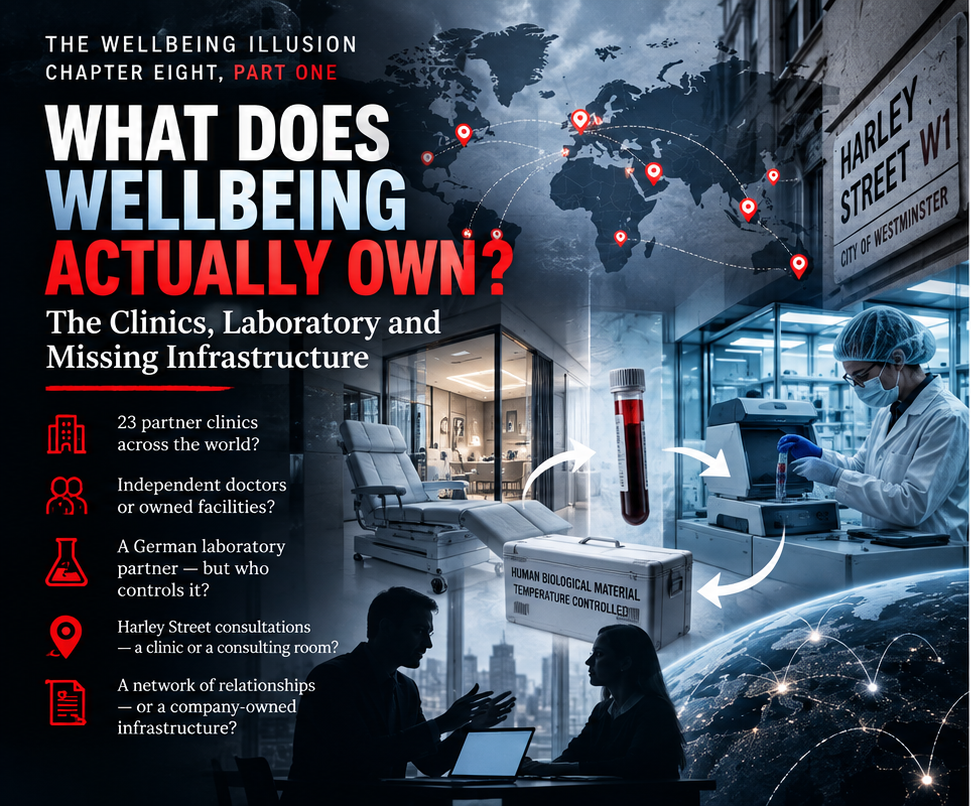
What they should also be investigating is the structure behind the business.
Questions worth asking include:
- Who owns the company?
- Who runs the company?
- Who makes treatment decisions?
- Who carries medical responsibility?
- Who regulates the treatment?
- Who carries professional liability?
- Who handles complaints?
- Who answers when things go wrong?
- Many patients never ask these questions.
- They assume someone else already has.
- That assumption can be costly.
Hope Creates Vulnerability
The regenerative medicine marketplace is unique because many of its customers are vulnerable.
People suffering from chronic illness.
People living with pain.
People caring for disabled children.
People with neurological conditions.
People facing progressive disease.
People who have been told there are limited treatment options available.
Hope is powerful.
And powerful emotions can influence decision-making.
This is not a criticism of patients.
It is human nature.
When someone believes a treatment might change their life, they naturally want to believe the people offering it are credible.
That is exactly why consumers must slow down and investigate thoroughly.
Follow The Evidence, Not The Personality
One of the oldest rules in investigative journalism is simple:
Follow the evidence.
The same principle applies to healthcare.
Consumers should not be persuaded by:
- Personal charisma
- Corporate titles
- Impressive websites
- Executive interviews
- Social media profiles
- Inspirational stories
Instead they should ask:
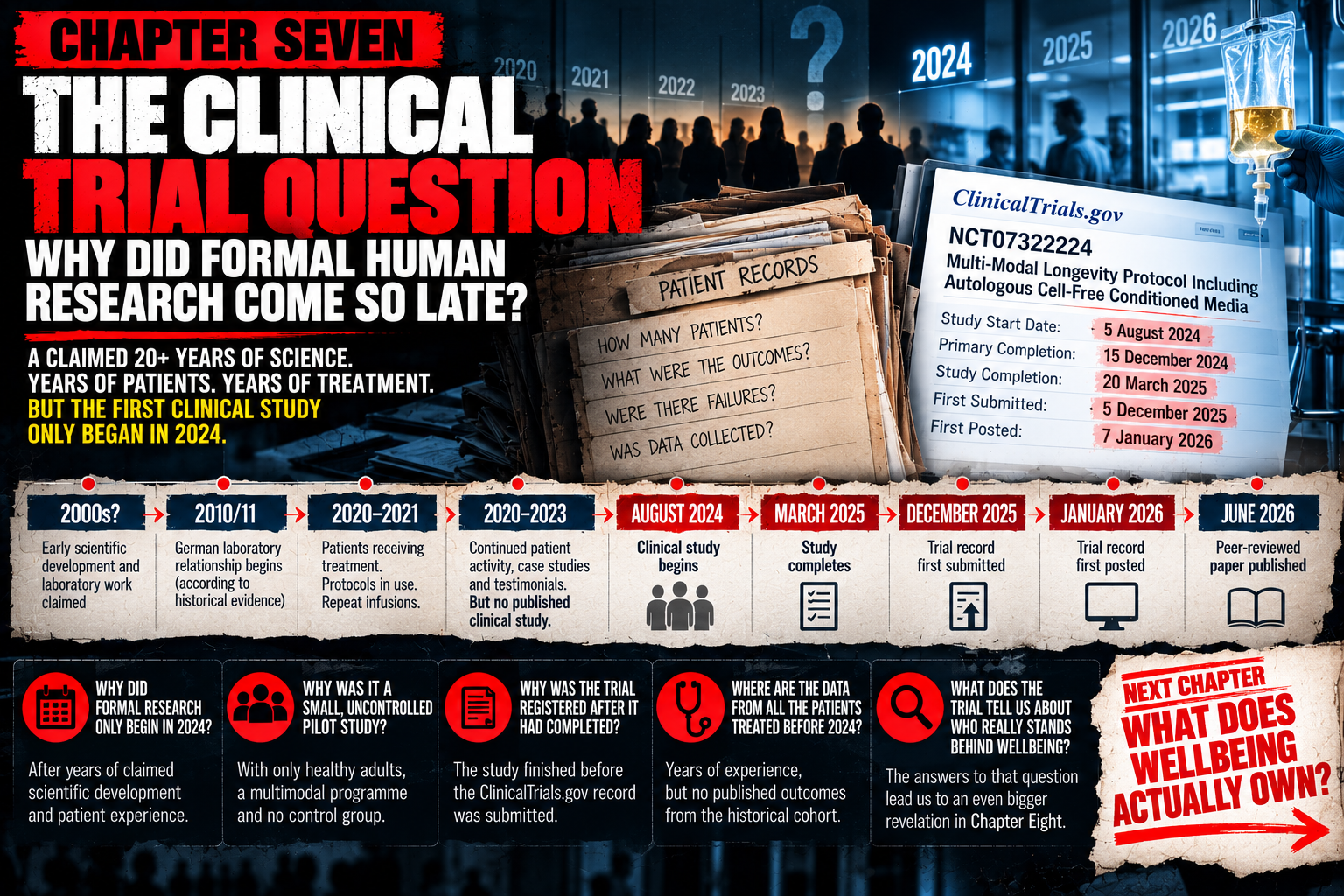
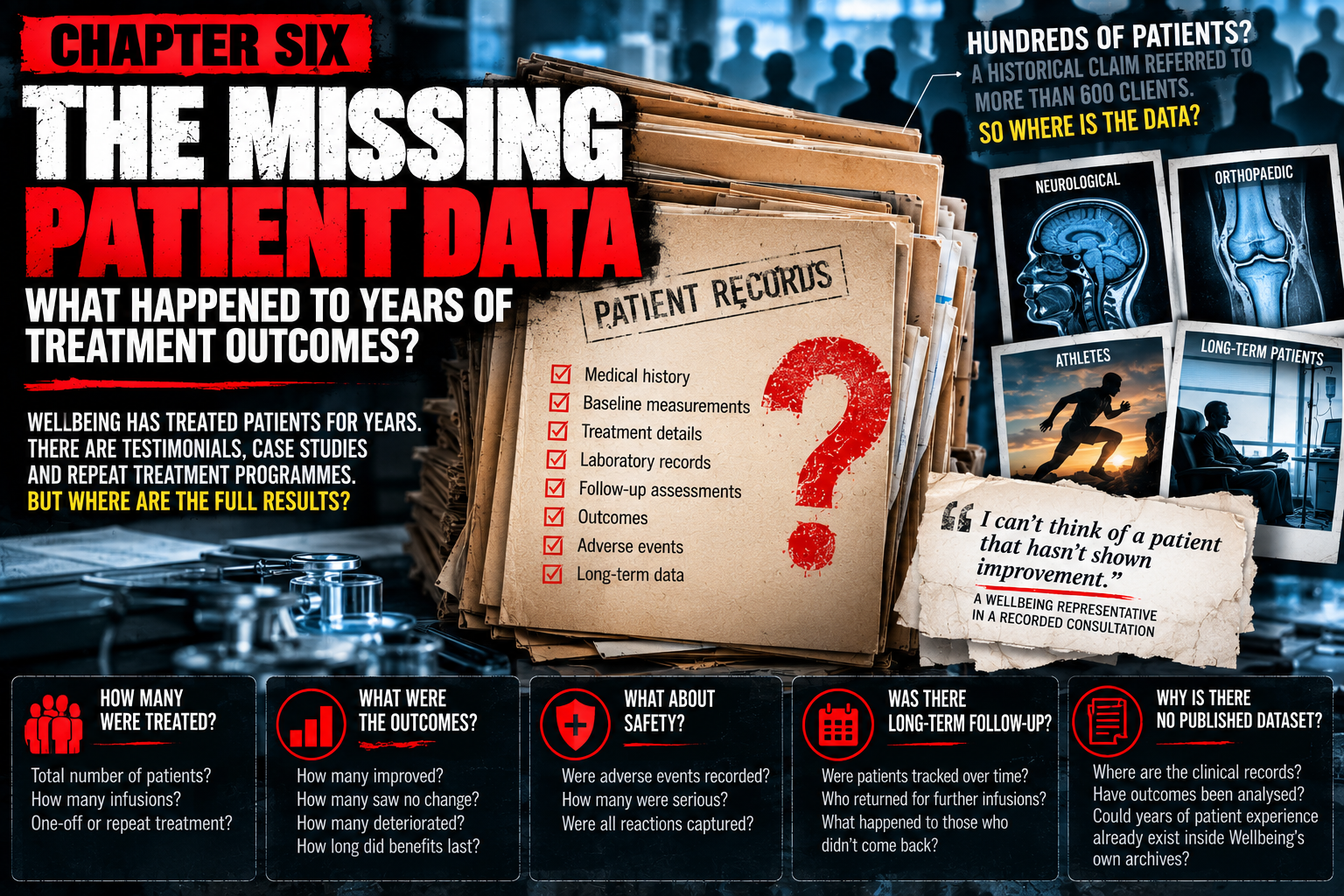
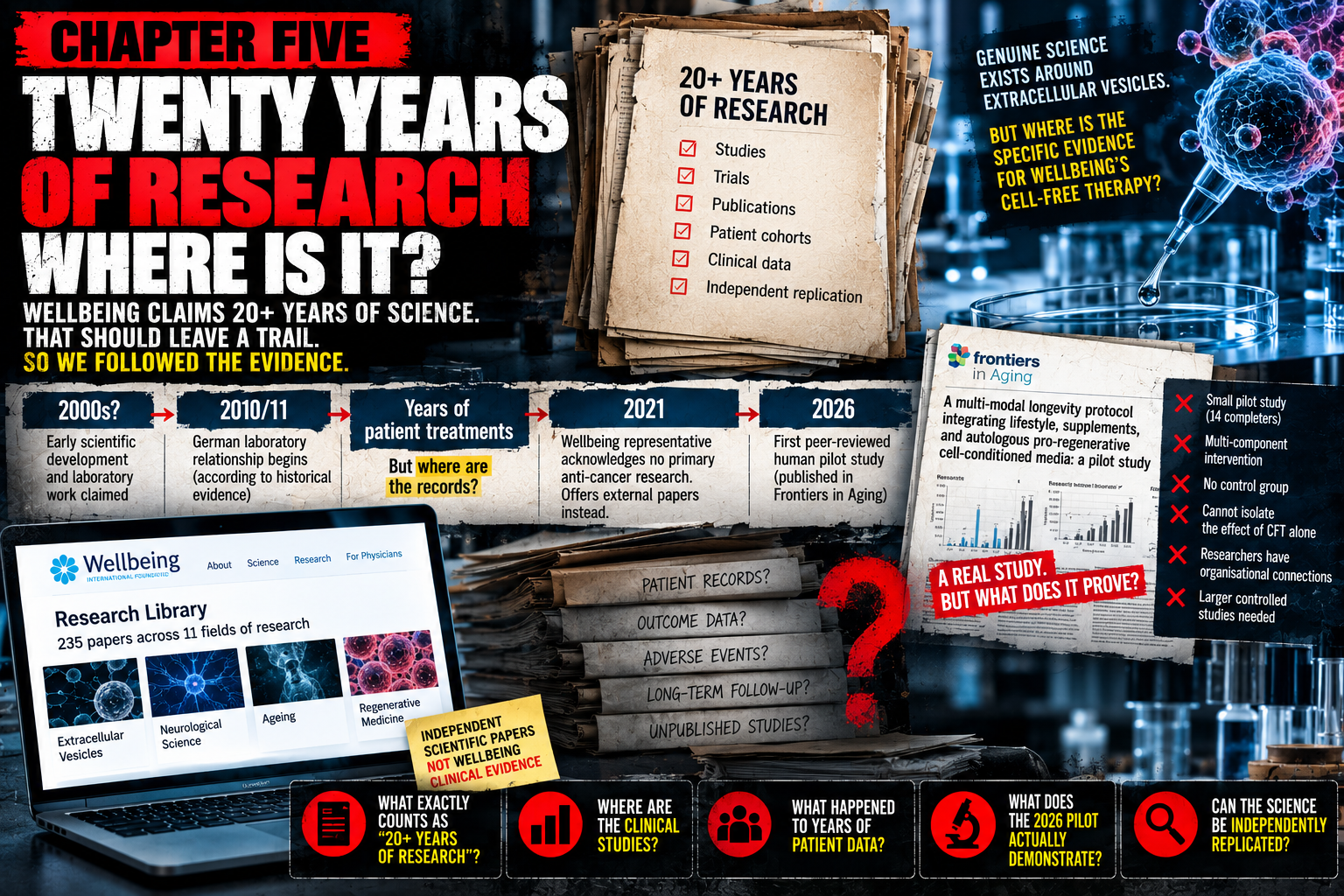
Where is the evidence?
What clinical data exists?
What independent research supports the claims?
What do regulators say?
What risks have been identified?
What outcomes have been documented?
Evidence should always outweigh personality.
Why Transparency Matters
Trustworthy organisations should welcome scrutiny.
They should welcome questions.
They should welcome independent examination.
Patients should never feel uncomfortable asking:
Are you regulated?
Are you registered?
Who is medically responsible?
What qualifications do your practitioners hold?
What evidence supports your treatment?
What are the risks?
What happens if the treatment fails?
These questions are not hostile.
They are responsible.
Any organisation handling healthcare decisions should be able to answer them clearly and transparently.
The Bottom Line
Corporate success can be impressive.
Professional branding can be impressive.
Strong leadership can be impressive.
But none of these things prove medical effectiveness.
Consumers must be careful not to confuse business credibility with scientific credibility.
The two are not the same.
Before committing significant amounts of money to any stem cell, exosome or regenerative medicine programme, take a step back.
Look beyond the website.
Look beyond the interviews.
Look beyond the testimonials.
Look beyond the personalities.
Focus on the evidence.
Because when healthcare is involved, the most important question is not who sounds convincing.
It is who can prove what they are claiming.
And in medicine, proof matters far more than presentation.