There is a moment that rarely gets spoken about. It doesn’t happen in the doctor’s office, or in the hospital corridor. It comes later, when everything has gone quiet.
It’s the moment when someone realises that what they’ve been told might not be enough.
That moment doesn’t arrive loudly. It creeps in. Late at night. In search bars and message boards. In stories of people who “tried something else.” It is the shift from medicine as it is known, to medicine as it might be imagined. And once that door opens, it is very hard to close.
Because what comes next is not always science. Sometimes, it is something that looks like it.
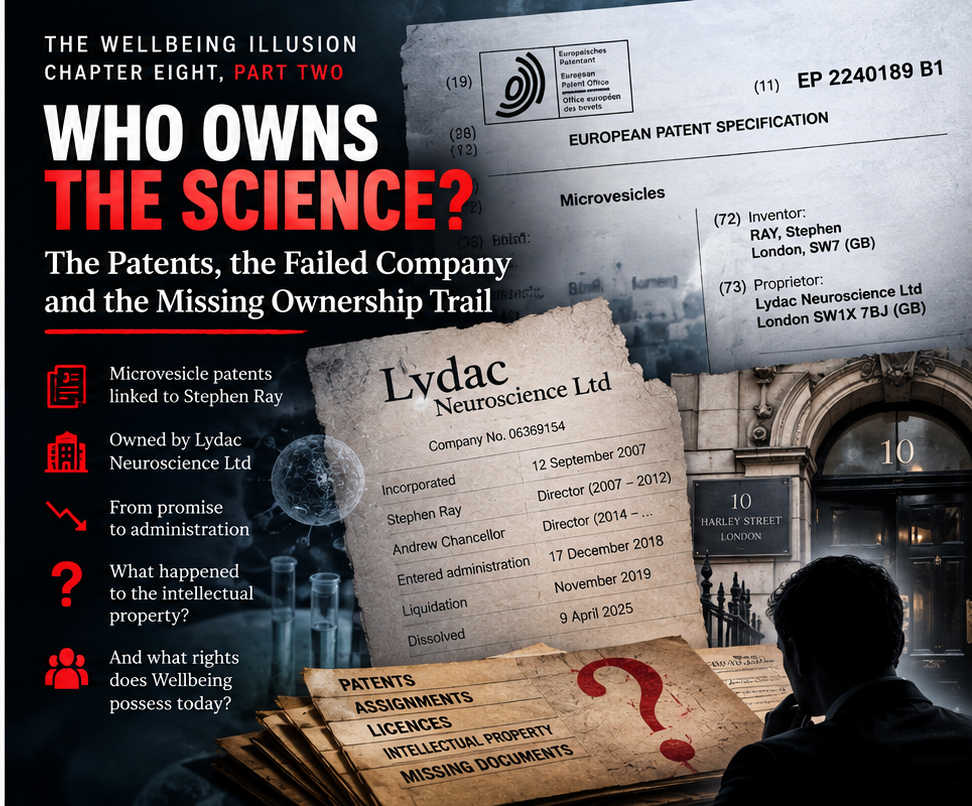
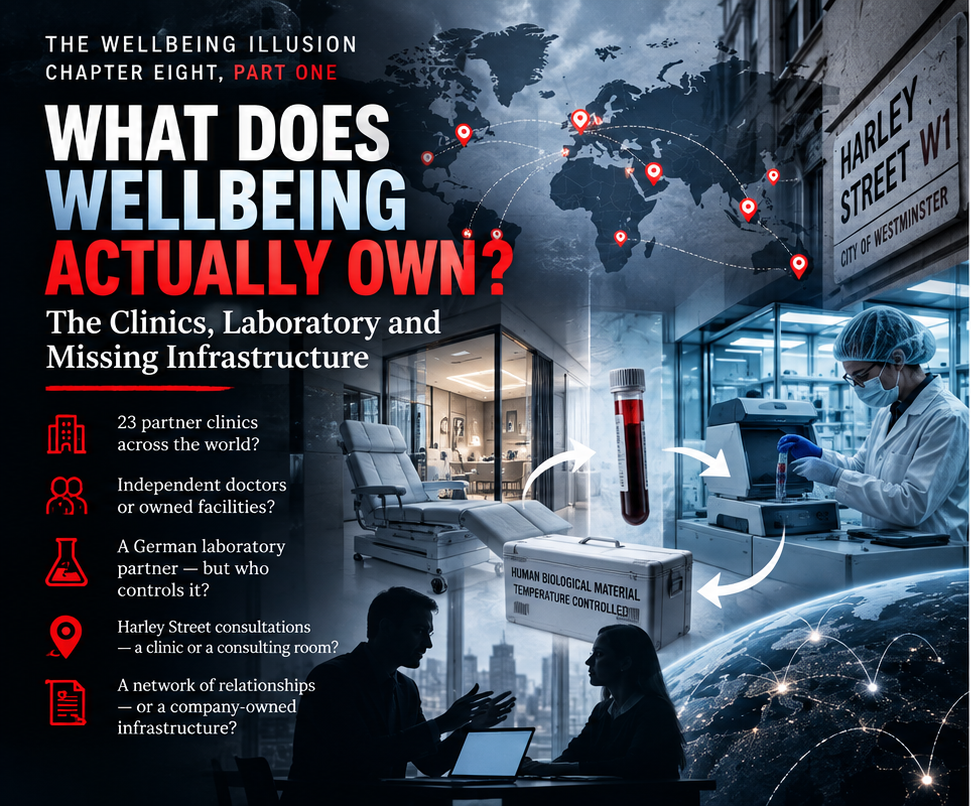
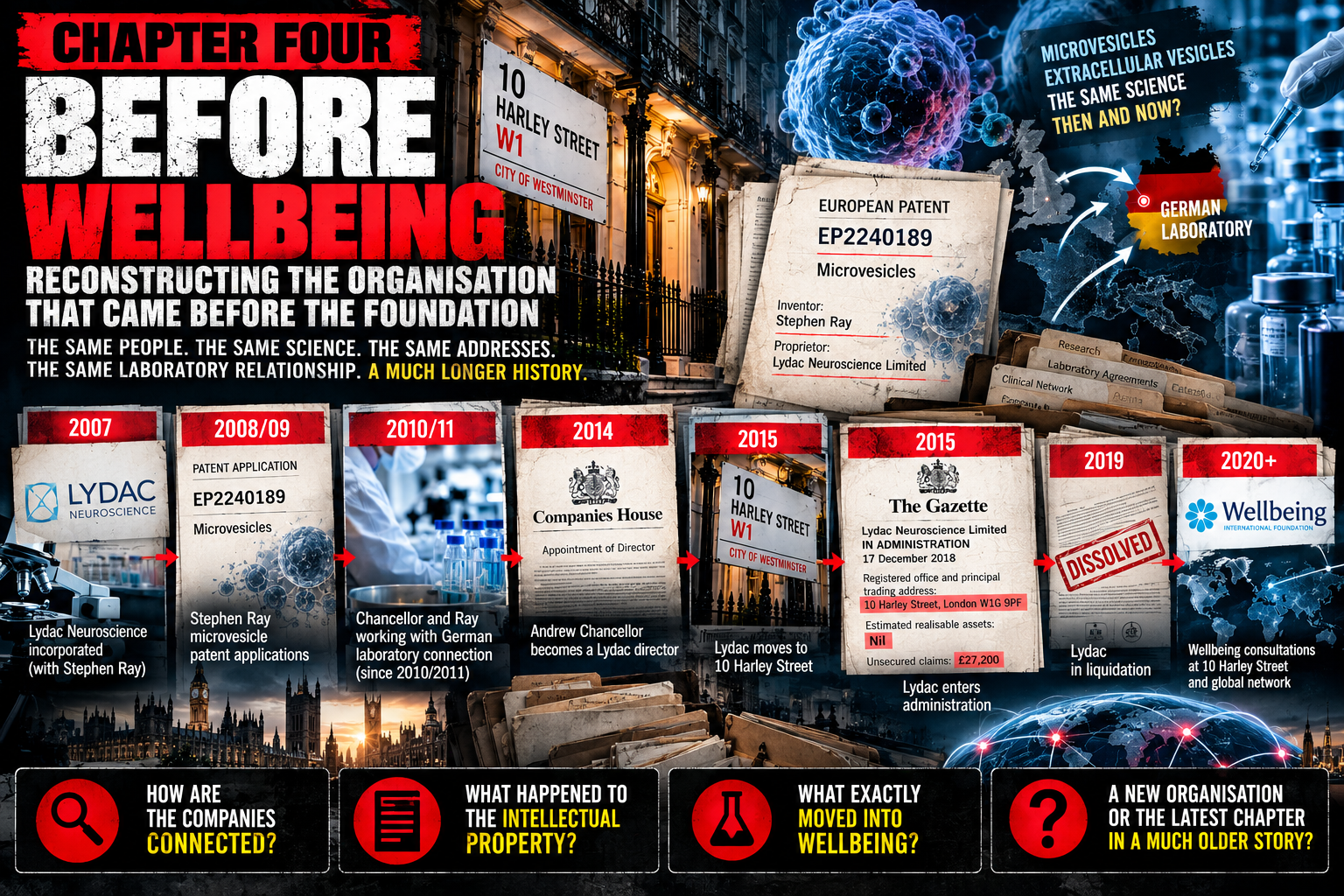
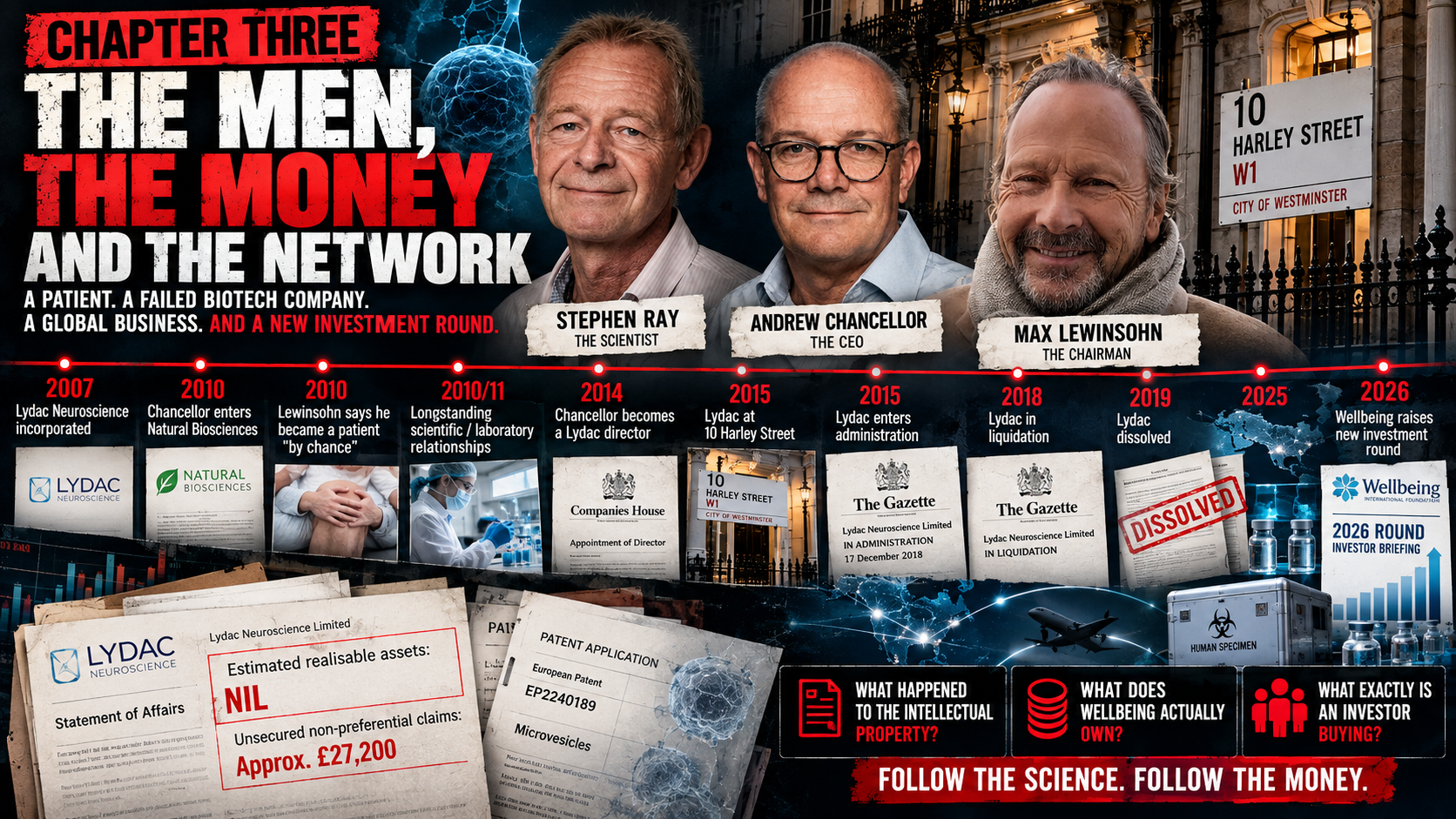
Harley Street is built on reputation. You don’t walk into a building there expecting uncertainty. The setting does half the work before a word is spoken. The lighting, the tone, the quiet professionalism — it all tells you that what happens inside these rooms is serious, considered, legitimate.
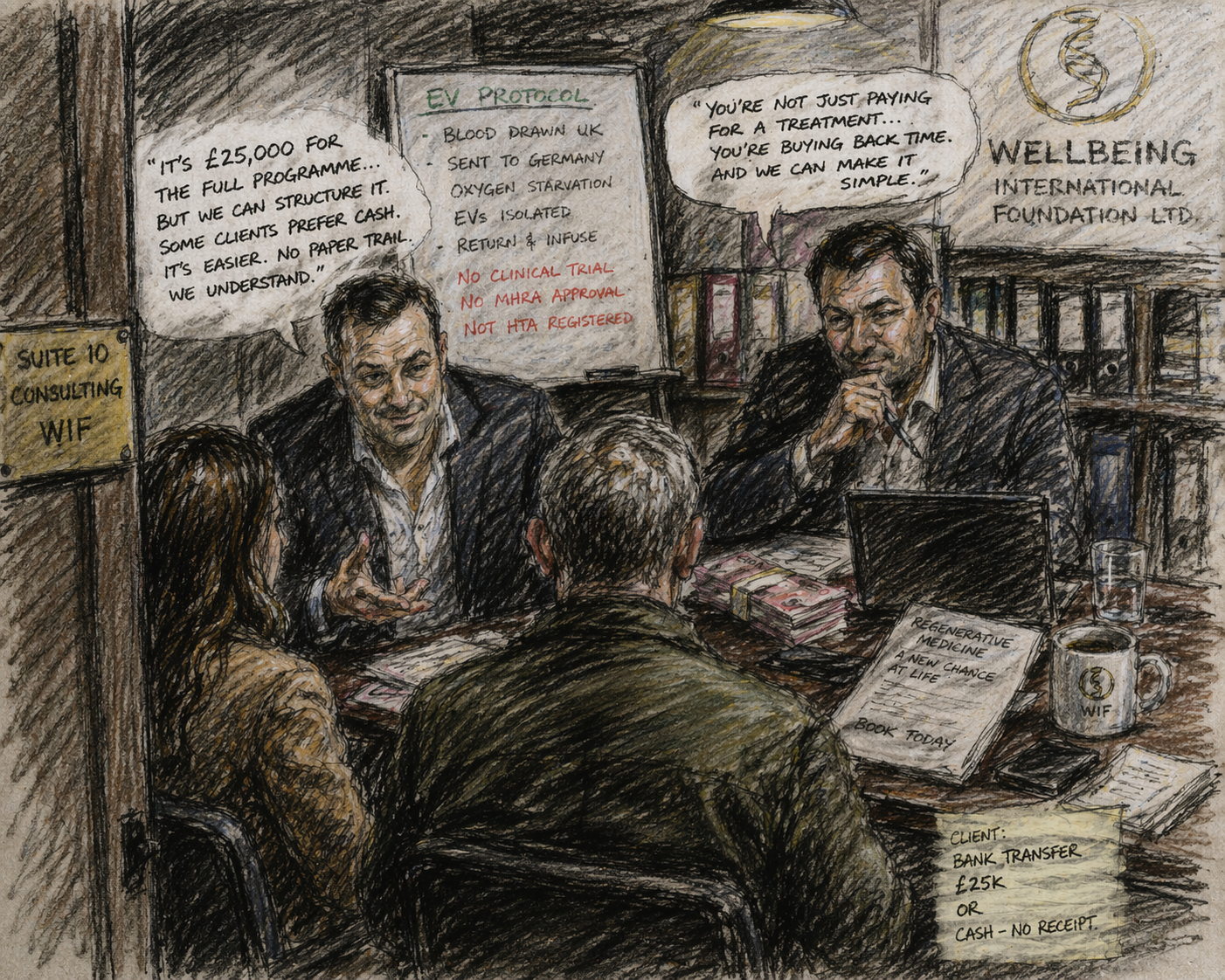
So when a patient sits down to discuss treatment with representatives linked to Wellbeing International Foundation Ltd, there is already a level of trust in place that doesn’t need to be earned. It is assumed.
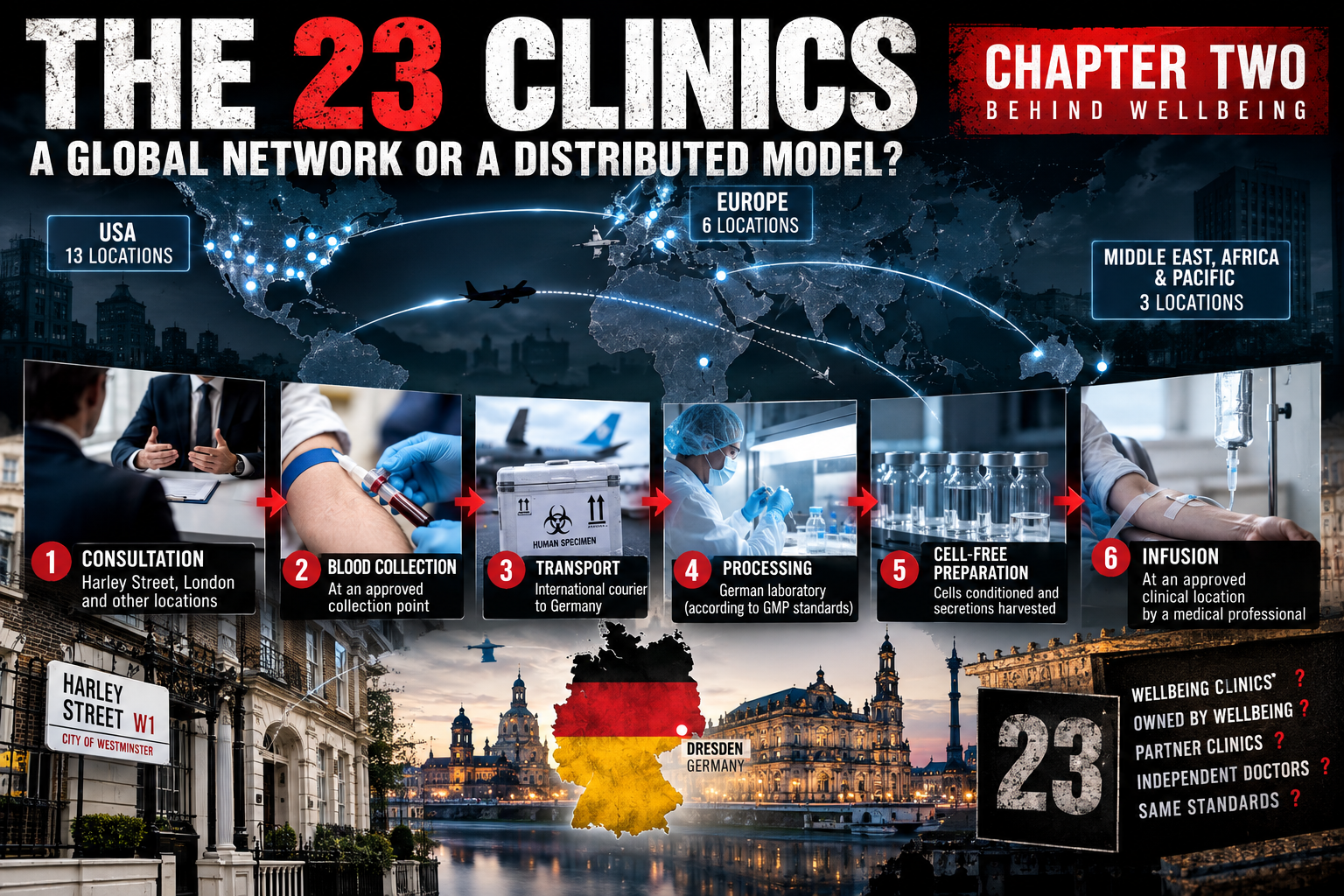
The conversation that follows is calm, confident, and measured. There is no sense of urgency, no hard sell. Instead, there is explanation. A process is described in a way that feels intuitive. Blood is taken. It is processed. Something within it — something regenerative — is encouraged, enhanced, returned to the body.
It is presented not as something foreign, but as something natural. Your own cells. Your own biology. Your own system, simply working better.
And that is where the idea takes hold.
The language is carefully chosen. It never needs to overpromise, because it doesn’t need to. The suggestion alone is enough. Improvement. Support. Recovery. Prevention. The words sit just on the right side of certainty, allowing the listener to fill in the gaps themselves.
It feels modern. It feels advanced. It feels like access to something that hasn’t quite reached everyone else yet.
And perhaps most importantly, it feels like control — at a time when control is often slipping away.
But step outside the room, and something begins to shift.
Because the treatment does not stay where it starts.
The blood that is taken in London is not processed in London. It is sent elsewhere. In this case, reportedly to Germany. It travels across borders, through systems the patient never sees, before returning in a form that is then used as part of the treatment.
At first, this can be framed as sophistication. Specialisation. A sign that something more advanced is happening behind the scenes.
But the more you sit with it, the harder it becomes to ignore the question that quietly follows.
Why?
Why would a process that is presented as safe, established, and effective need to leave one of the most advanced medical environments in the world to be completed somewhere else?
Transporting human biological material is not a simple act. It is regulated, documented, controlled. It requires oversight, compliance, and traceability. It introduces cost, complexity, and risk.
And yet, in this model, that complexity is not only present — it is central.
The deeper you look, the less this resembles a single treatment, and the more it begins to resemble a system.
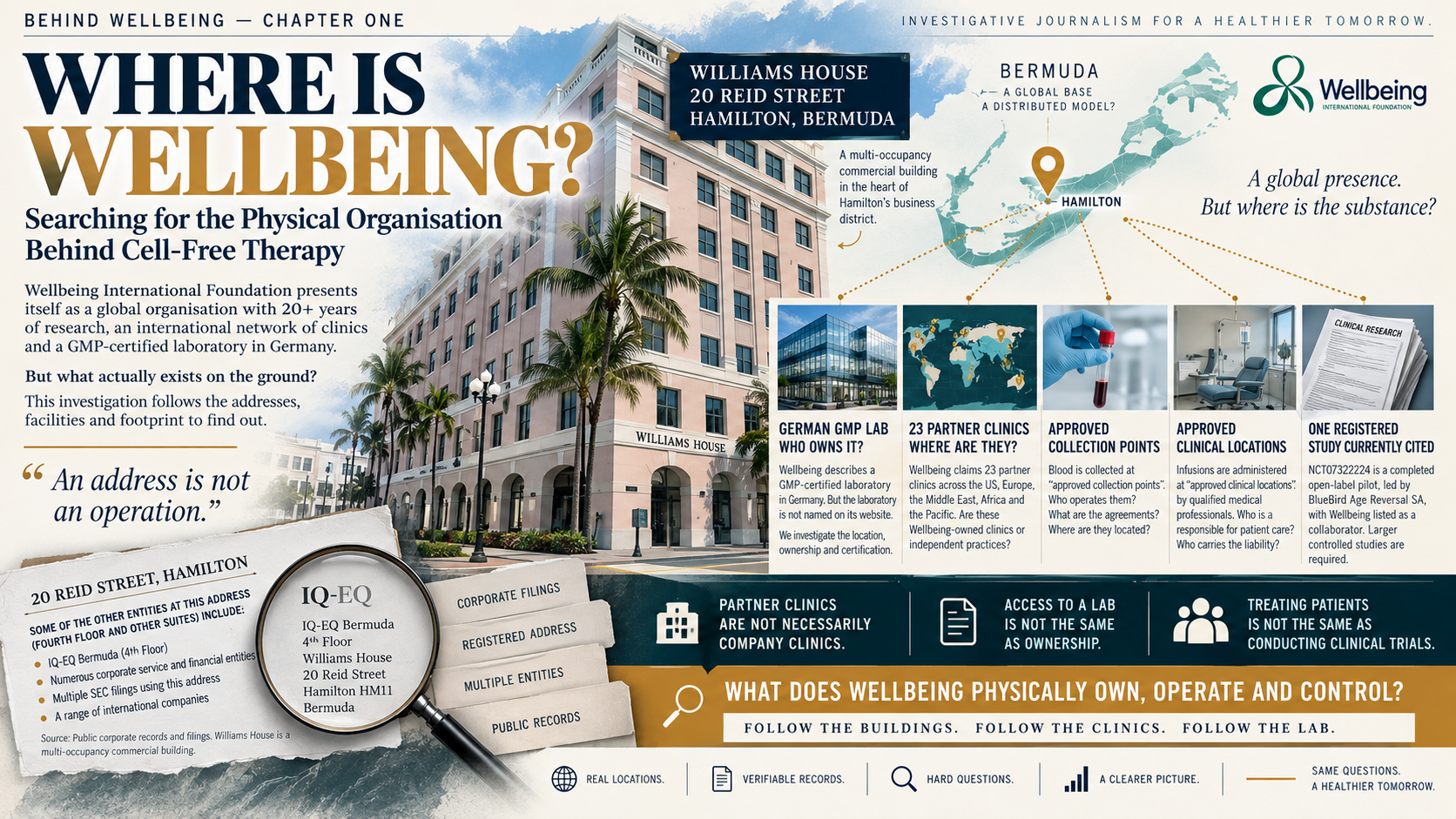
Not a hospital. Not a clinic in the traditional sense. But a structure made up of separate parts. A consultation in one place. A laboratory in another. A process that exists across jurisdictions, rather than within one.
Each part can be explained on its own. Each step can be justified in isolation.
But when viewed together, something feels different.
Medicine is usually built on clarity. Clear responsibility. Clear oversight. Clear pathways from diagnosis to treatment.
This feels harder to follow. Harder to define. Harder to pin down.
And in that lack of clarity, something important begins to slip.
For the patient, none of this is immediately visible.
What they see is something far more compelling. They see professionalism. They see structure. They see what appears to be a complete pathway — from consultation to treatment — presented in a way that feels coherent and reassuring.
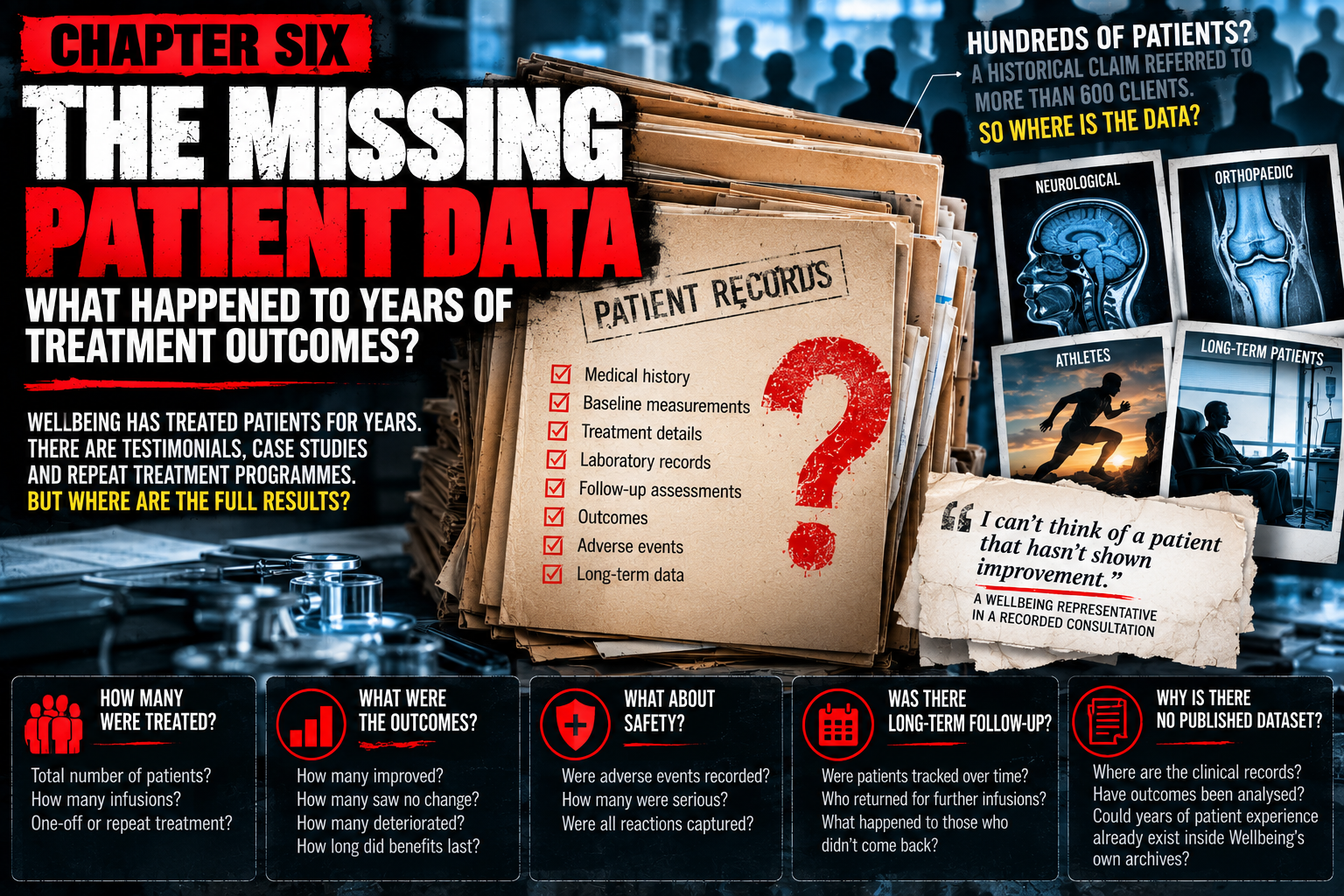
They are not shown regulatory classifications. They are not handed clinical trial data. They are not walked through the frameworks that normally underpin medical approval.
Instead, they are given something simpler.
A narrative that makes sense.
And when you are searching for answers, that can be enough.
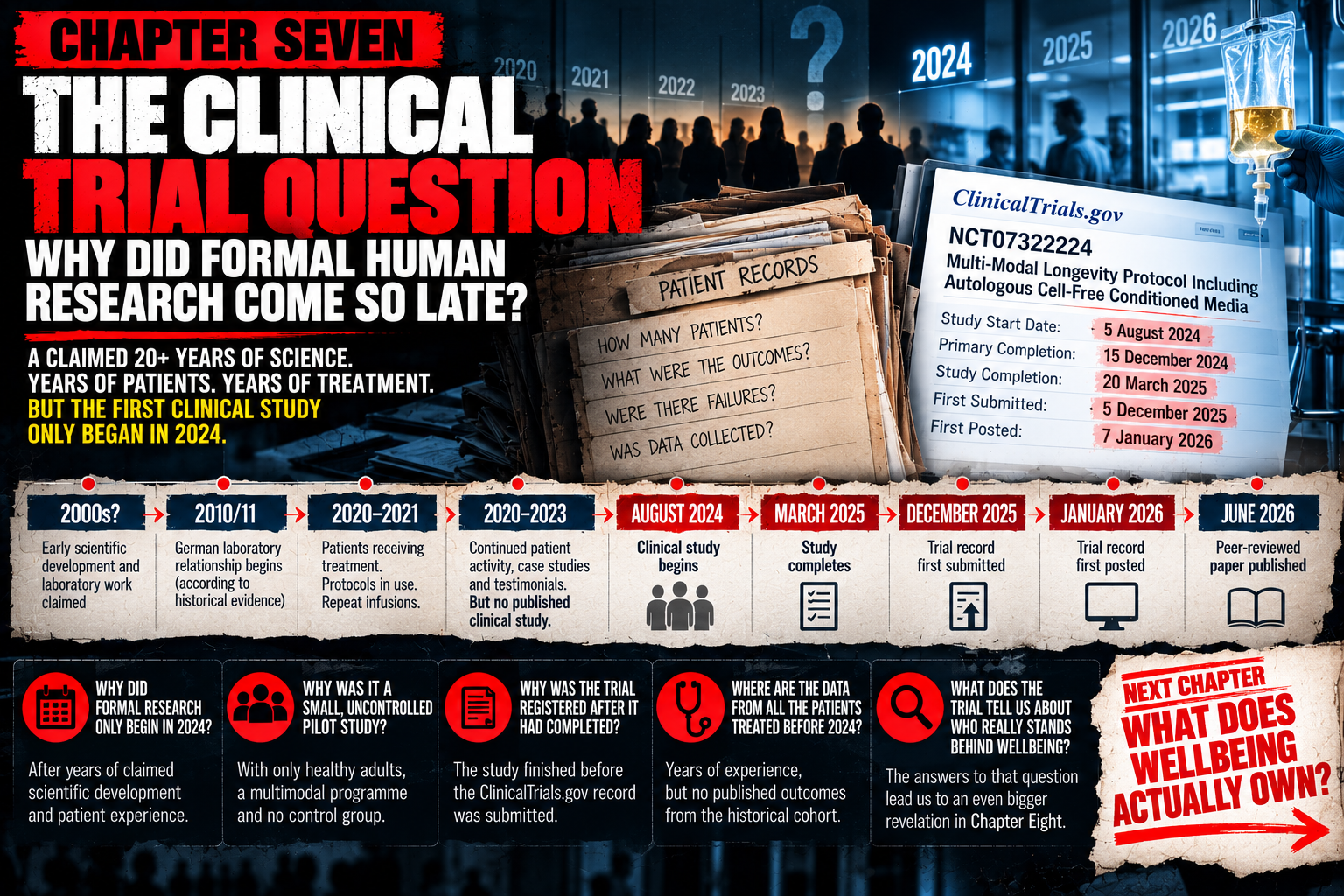
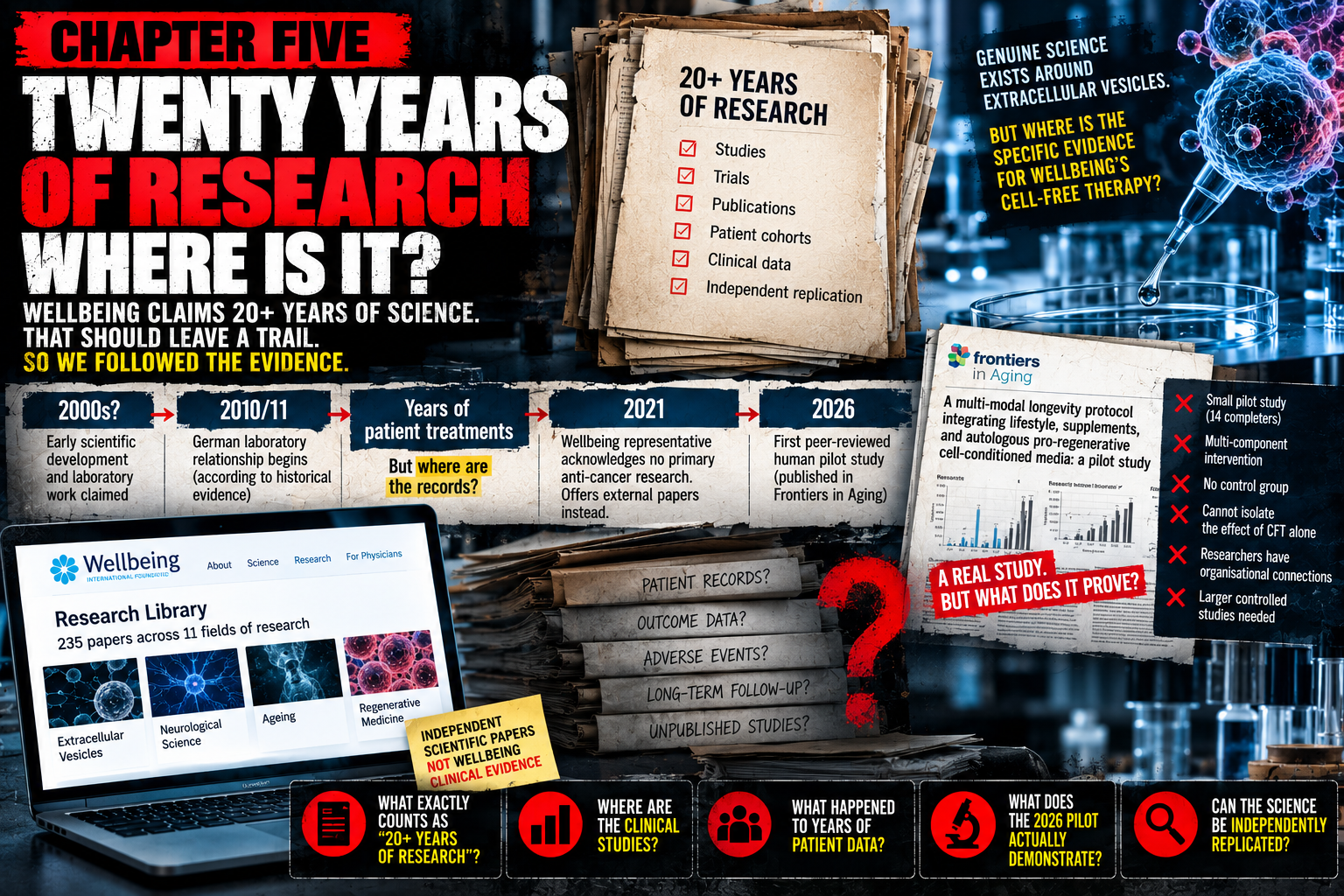
But medicine, at its core, is not built on narratives. It is built on proof.
It moves slowly because it has to. It demands evidence because the consequences of getting it wrong are too high. Treatments are tested, challenged, and verified before they are offered to patients as solutions.
That process is not a barrier. It is protection.
And when a treatment exists outside of that process — or appears to operate alongside it, rather than within it — the responsibility to question becomes greater, not smaller.
What makes this space so difficult to navigate is that it does not present itself as outside the system.
It borrows the language of medicine. The appearance of medicine. The setting of medicine.
It feels legitimate, because so many of its components resemble things that are.
And yet, when you begin to follow the path more closely — when you look at where things happen, how they are structured, how responsibility is divided — the picture becomes less clear.
Not necessarily illegal. Not necessarily fraudulent in the way people expect.
But operating in a space that feels carefully positioned between what is known, and what is not fully understood.
For someone sitting in that chair, weighing their options, this distinction is almost impossible to see.
Because the decision is not being made in a vacuum. It is being made under pressure. Under uncertainty. Often under fear.
And in that state, the question is not always “Has this been proven?”
It becomes something else.
“What if this works?”
That question is powerful. It always has been.
It is the reason medicine exists at all. The reason research continues. The reason progress happens.
But it is also the question that can be most easily shaped, most easily guided, and, in some cases, most easily used.
Stem cell science may well transform the future of medicine. There is no doubt about that.
But the future is not the same as the present.
And between the two, there is a gap.
A space where possibility exists without proof. Where language moves faster than evidence. Where systems can be built that are difficult to trace, difficult to regulate, and difficult to fully understand.
In the end, the most important question is not whether people are being offered something new.
It is whether they are being given something real.
And if that answer is not immediately clear — if it requires explanation, movement across borders, layers of structure, and a level of trust that cannot be easily verified — then perhaps the question needs to be asked again.
Not louder.
Just more carefully.