The commercial stem cell industry has grown rapidly over the past decade, with clinics around the world advertising regenerative medicine programs for conditions ranging from chronic pain to neurological disorders.
Among the most controversial areas is autism.
Families searching online are now routinely exposed to clinics promoting stem cell therapies as potential solutions for behavioural, developmental, or communication difficulties associated with autism spectrum disorder (ASD).
But according to major medical authorities, parents should be extremely careful before committing to expensive experimental treatments.
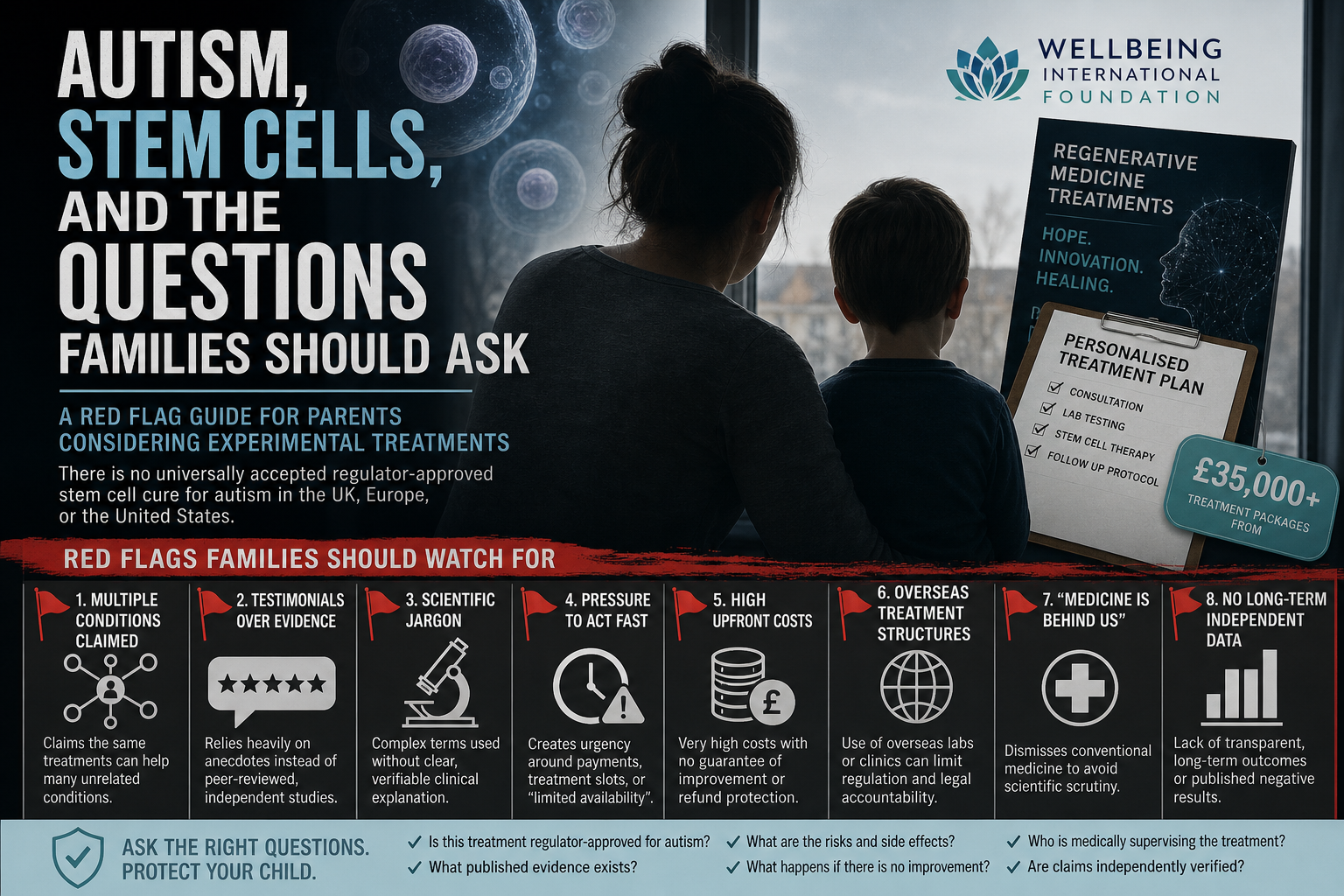
No Major Regulator Has Approved Stem Cell Therapy For Autism
At present:
- The U.S. Food and Drug Administration has not approved stem cell therapy as a treatment for autism.
- The National Health Service does not recognise stem cell therapy as a standard autism treatment.
- European regulators continue treating most autism-related stem cell therapies as experimental.
Researchers continue studying the field.
But experimental science and established medical treatment are not the same thing.
The Problem With Commercial Marketing
Critics argue that some clinics blur the line between scientific possibility and proven outcome.
Common marketing techniques include:
- Emotional recovery stories
- Before-and-after videos
- Technical medical language
- Claims of “advanced” therapy
- References to inflammation or neurological repair
However, many scientists say evidence supporting these claims remains limited or inconclusive.
Understanding Autism Complexity
Autism is not a single illness.
It is a broad developmental spectrum involving:
- Communication differences
- Behavioural traits
- Sensory variation
- Neurological diversity
Because autism naturally develops differently in every child, measuring treatment success becomes highly complicated.
Experts warn that developmental progress may sometimes occur naturally over time regardless of experimental intervention.
What Treatments Have Better Scientific Support?
While no treatment cures autism, specialists generally recommend evidence-based support approaches such as:
- Speech and language therapy
- Occupational therapy
- Behavioural intervention
- Educational support
- Social development programs
- Family support services
Major organisations providing evidence-based information include:
National Autistic Society
https://www.autism.org.uk/
Centers for Disease Control and Prevention
https://www.cdc.gov/autism/
World Health Organization
https://www.who.int/
Autism Speaks
https://www.autismspeaks.org/
Questions Families Should Ask Before Paying
Experts recommend parents ask:
- Is this treatment regulator-approved?
- What peer-reviewed evidence exists?
- What are the known risks?
- What percentage of patients show no benefit?
- Are claims independently verified?
Evidence Before Emotion
Families searching for hope deserve compassion, transparency, and honesty.
Stem cell science remains an active research field.
But until stronger clinical evidence exists, many experts believe autism-related stem cell treatments should be approached with serious caution — particularly when large sums of money and vulnerable families are involved.