There is a moment — often late in the consultation — where everything changes. The tone shifts, the science fades, and the sale begins. For thousands of patients across the United States, that moment marked the point where hope was transformed into a transaction, drawing them into one of the most aggressive stem cell marketing operations regulators have ever shut down. Now, in 2025, the verdict is no longer speculation — it is fact.
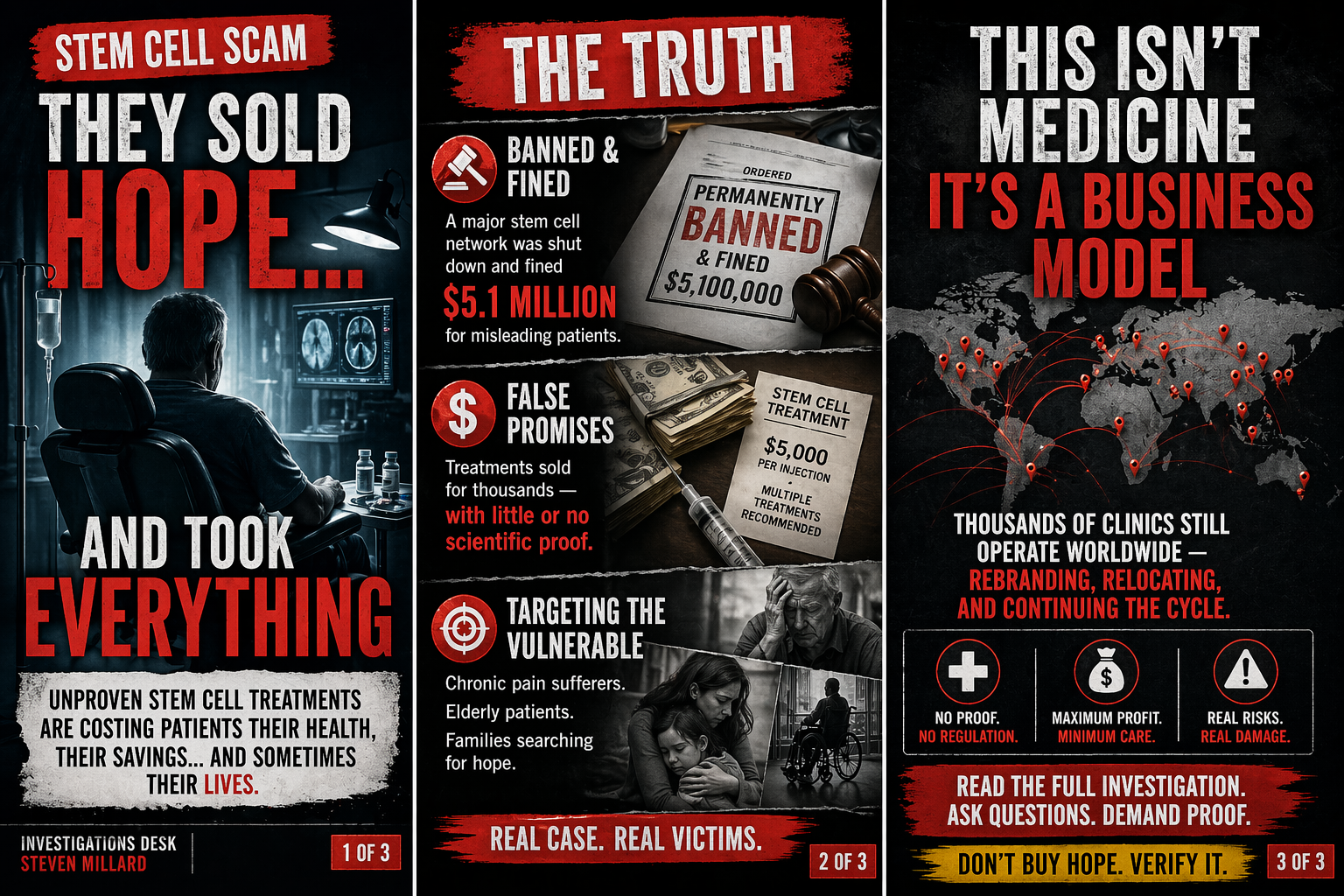
On January 8, 2025, U.S. authorities delivered one of the most decisive blows yet against the stem cell industry. The founders of the Stem Cell Institute of America, along with a network of associated companies, were permanently banned from marketing stem cell therapies and ordered to pay more than $5.1 million in penalties and refunds. Regulators concluded that patients had been misled with unproven medical claims, describing an operation that had “tricked people who needed real medical help into buying expensive, unproven stem cell therapy.” It was not a minor compliance failure or a technical oversight. It was a systemic breakdown in the boundary between medicine and marketing.
The investigation exposed a disturbing pattern of behaviour that went far beyond isolated misjudgement. This was not random advertising — it was targeted, structured, and deliberate. Authorities found that the network focused heavily on elderly and vulnerable patients, promoting treatments as solutions for arthritis, joint pain, and a wide range of chronic conditions. Messaging was carefully crafted to suggest outcomes comparable to, or even better than, conventional medicine. Patients were not simply informed; they were guided, persuaded, and ultimately positioned as customers within a highly refined sales funnel.
At the heart of the operation was a financial model that was as simple as it was devastating. Treatments were marketed at thousands of dollars per injection, with many patients encouraged to undergo multiple procedures. For individuals already dealing with chronic pain or deteriorating health, the promise carried enormous weight. The idea that a single treatment could restore quality of life was compelling. For many, it felt like a final opportunity. But for too many, the outcome failed to match the promise, leaving not only financial loss but a deeper sense of betrayal.
What investigators uncovered was not a single rogue clinic, but a coordinated system. The operation relied on seminars, infomercials, and digital campaigns designed to generate trust and attract patients. Marketing materials were distributed across multiple locations, and practitioners were trained to deliver consistent, persuasive messaging. The structure resembled a franchise model — scalable, repeatable, and driven by conversion. In that sense, it blurred the line entirely between healthcare and commercial sales. This was not medicine in its traditional form; it was persuasion, packaged as treatment.
Central to the case was the absence of reliable scientific evidence. Despite claims that stem cell injections could repair joints, reverse degenerative conditions, and deliver long-term relief, the court found these representations to be false and misleading. This distinction is critical. Stem cell research itself is not without merit — in certain areas of medicine, it holds genuine promise. But what this case exposed was the extent to which that promise can be stretched, repackaged, and sold far beyond what current science can support.
The court’s ruling went further than financial penalties. By imposing a permanent ban on marketing stem cell therapies, regulators signalled a shift in enforcement — from warnings and fines to complete removal from the marketplace. It was a clear message that certain practices would no longer be tolerated. Yet, despite the strength of the action, an uncomfortable truth remains. This was just one network.
Across the world, thousands of clinics continue to operate in a space that sits between innovation and regulation. They advertise treatments with limited evidence, use scientific language as a marketing tool, and often structure their operations across multiple jurisdictions to reduce oversight. Academic research has already warned that this environment allows distorted and exaggerated claims to flourish in commercial settings. The pattern is not accidental. It is embedded in the way the market functions.
The consequences extend far beyond financial loss. Medical experts have long cautioned that unproven stem cell treatments can carry serious risks, including infection, tissue damage, and irreversible harm. In documented cases, patients have suffered severe complications, including blindness, following procedures involving unregulated injections. These are not hypothetical dangers; they are real outcomes experienced by real people. And still, the marketing continues.
What makes this case particularly significant is not just the outcome, but the clarity it provides. For the first time, the inner workings of such an operation have been laid bare. The sales architecture, the targeting strategy, and the financial extraction model are no longer hidden behind polished branding. They are visible, documented, and understood. This was not an isolated failure. It was industrialised deception.
In the wake of the ruling, investigators are now looking more closely at the wider landscape. Questions are being asked about how many other organisations may be operating under similar models. Attention is turning to multi-clinic networks, cross-border treatment pipelines, and the use of “clinical trial” language without proper oversight. Payment structures are also under scrutiny, particularly where they obscure accountability or shift risk entirely onto patients. Once the pattern is recognised, it becomes difficult to ignore.
The stem cell industry is not disappearing. It is adapting. And what this case demonstrates, beyond doubt, is that the line between innovation and exploitation is not being blurred by accident. It is being crossed deliberately, driven by demand, opportunity, and the powerful human instinct to hope.
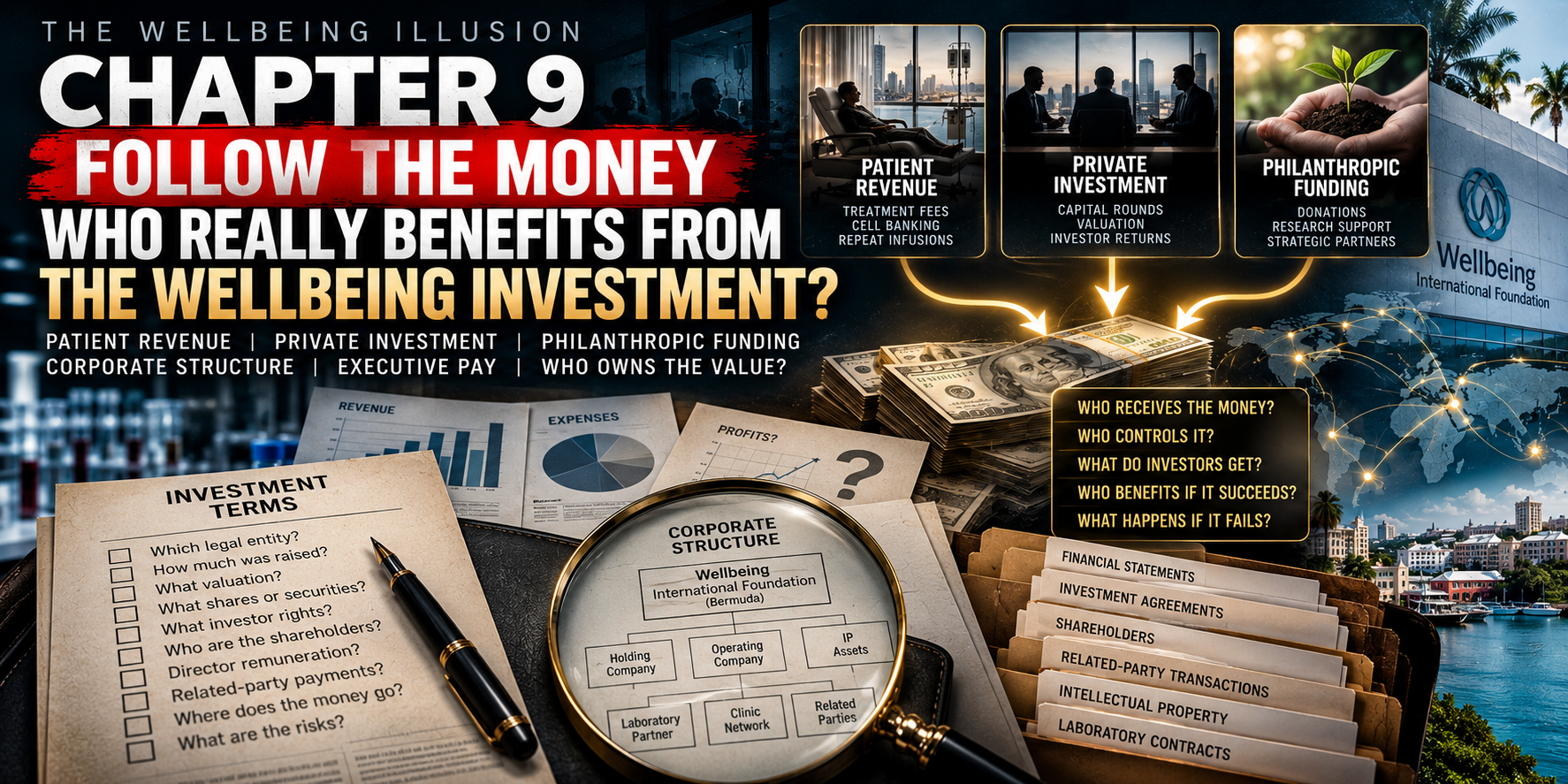
For patients, the message is simple but essential. Ask questions. Demand evidence. Follow the money. Because in an industry where science can be used as both a tool and a disguise, the difference between treatment and transaction can be difficult to see.
And in too many cases, hope is not just being offered.
It is being sold.