For many parents raising children with autism, life becomes a constant search for answers.
Therapies. Specialists. Diets. Support groups. New research. Alternative medicine.
And increasingly, stem cell clinics.
Over recent months, Investigations Desk has spoken with families who say they pursued expensive regenerative medicine treatments for autistic children after being exposed to persuasive marketing campaigns promising potential improvements in communication, behaviour, focus, and cognitive function.
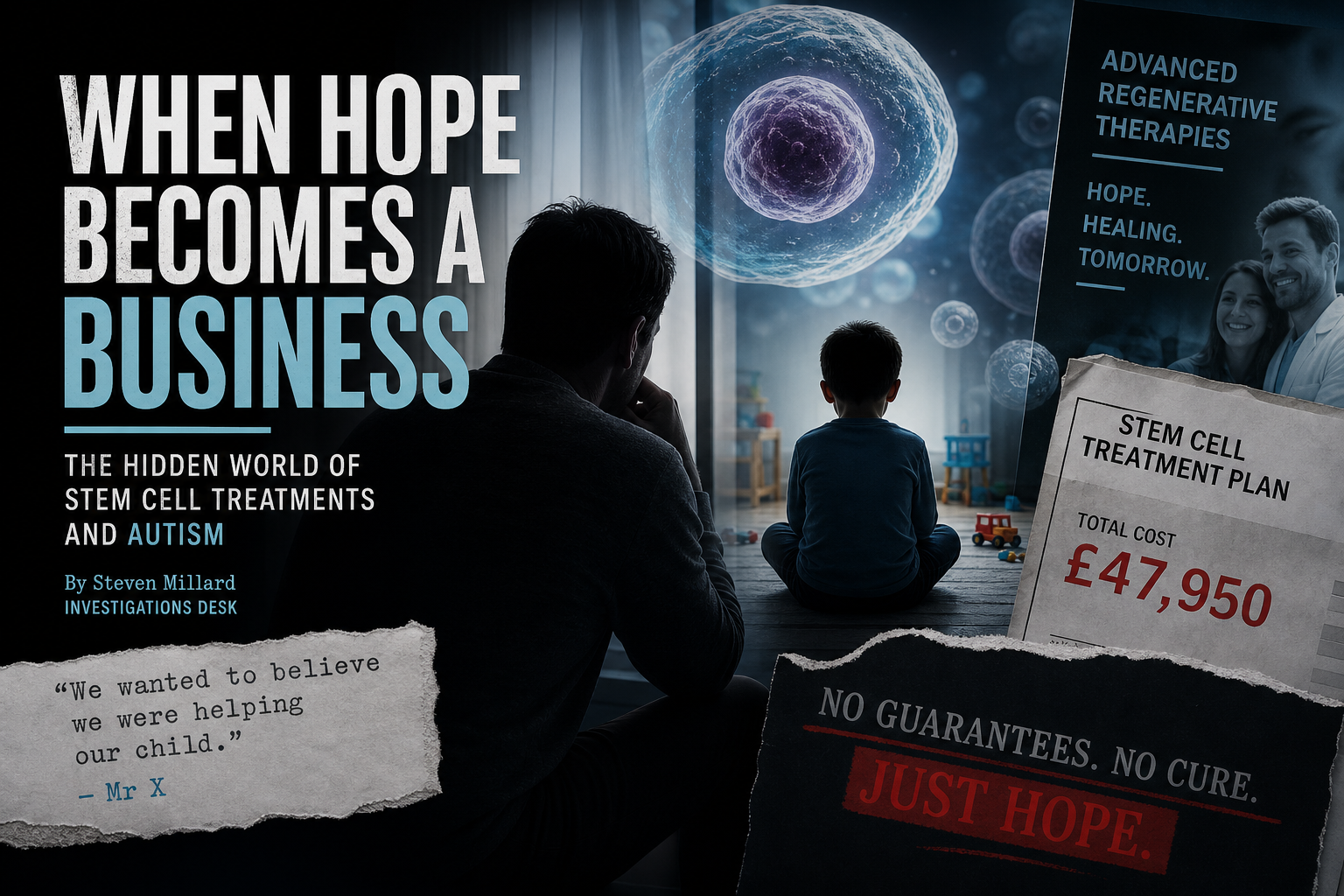
One parent — who we will identify only as Mr X to protect the child’s privacy — described a journey that began with optimism but eventually turned into doubt.
According to Mr X, the family underwent multiple treatment procedures after being encouraged to believe stem cell-based therapies could potentially assist with autism-related symptoms.
Initially, every small behavioural change felt significant.
But over time, the family says they began questioning whether the treatments had actually produced any measurable improvement at all.
“You want to believe something is happening,” Mr X explained.
“As a parent, you analyse every little change because you desperately want your child to improve.”
The family says the emotional pressure surrounding the process made objective judgment increasingly difficult.
The Rise Of Autism As A Commercial Treatment Market
Autism spectrum disorder has become one of the fastest-growing target areas within the global regenerative medicine industry.
Across websites and social media platforms, clinics frequently advertise:
- Stem cell therapy
- Exosome therapy
- Neuro-regenerative medicine
- Immune modulation programs
- Cellular repair treatments
Many use emotional testimonials alongside highly technical scientific language which can be difficult for ordinary families to independently verify.
Investigators examining this sector have repeatedly identified recurring marketing patterns:
- Dramatic recovery stories
- Scientific terminology with limited explanation
- Expensive treatment packages
- Overseas treatment arrangements
- “Breakthrough” medical language
- Claims that conventional medicine is “behind”
What Science Currently Says
Despite aggressive online marketing, there is currently no universally accepted regulator-approved stem cell cure for autism.
Research into stem cells and neurological conditions does exist.
However, leading experts continue warning that experimental research should not be confused with established medical treatment.
Autism itself is an extremely complex developmental condition involving a broad spectrum of behavioural and neurological differences.
That complexity makes it particularly difficult to scientifically measure treatment claims being promoted commercially.
Hope And Vulnerability
Parents affected by autism are not foolish for exploring possibilities.
They are hopeful.
And hope can become extremely powerful when families feel conventional support systems are slow, limited, or overwhelmed.
Critics of the commercial stem cell industry argue that some clinics may unintentionally blur the line between experimental science and proven medical outcomes.
That concern is now drawing increasing international attention from regulators, scientists, and consumer protection groups.
The Bigger Question
Mr X says the family eventually decided to speak privately with investigators after recognising similarities between their experience and concerns now being raised globally about commercial regenerative medicine businesses.
“We’re not against research,” he said.
“But families need to know the difference between evidence and hope.”
That distinction may now sit at the heart of one of the most controversial debates in modern alternative medicine.