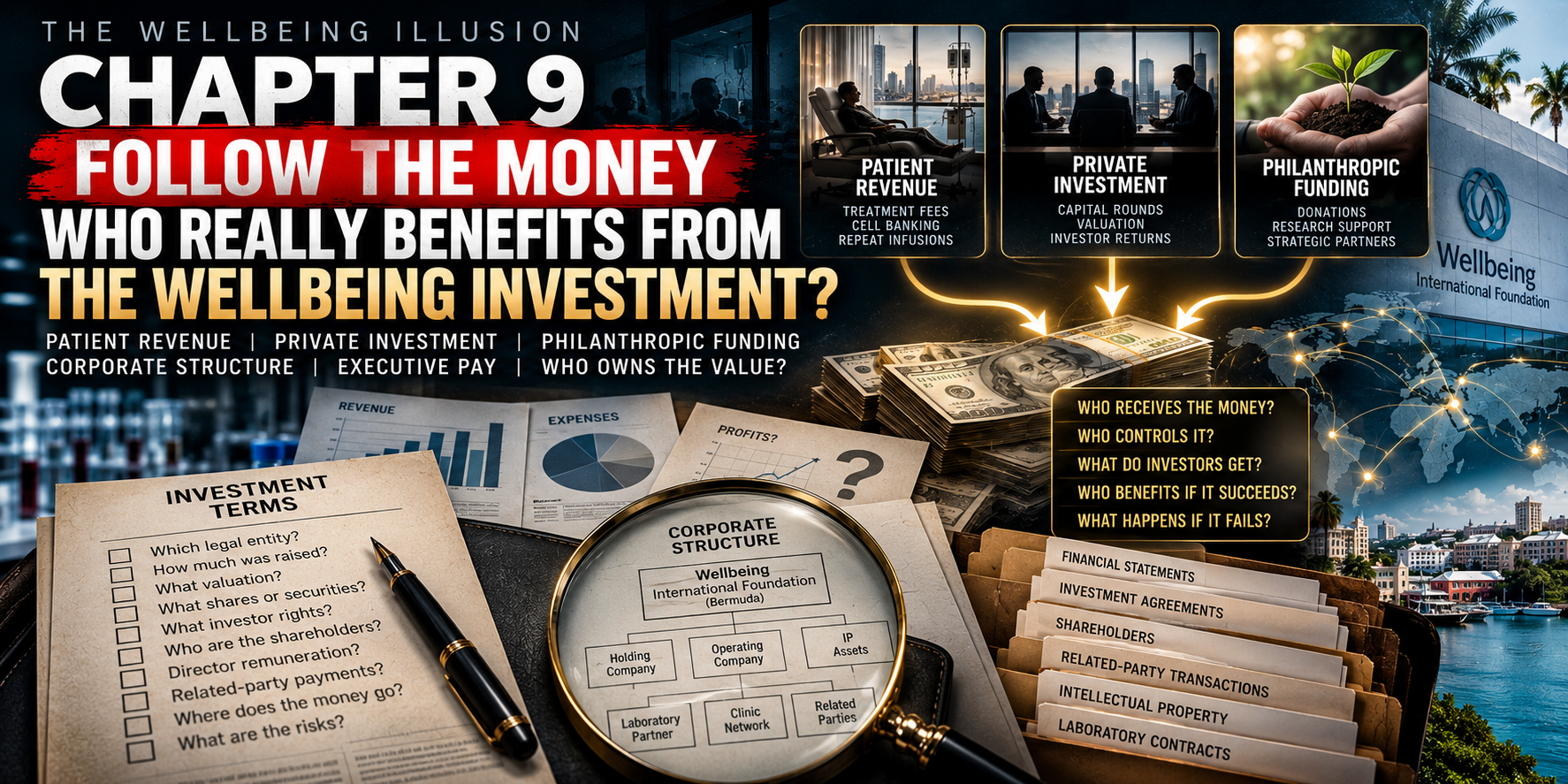
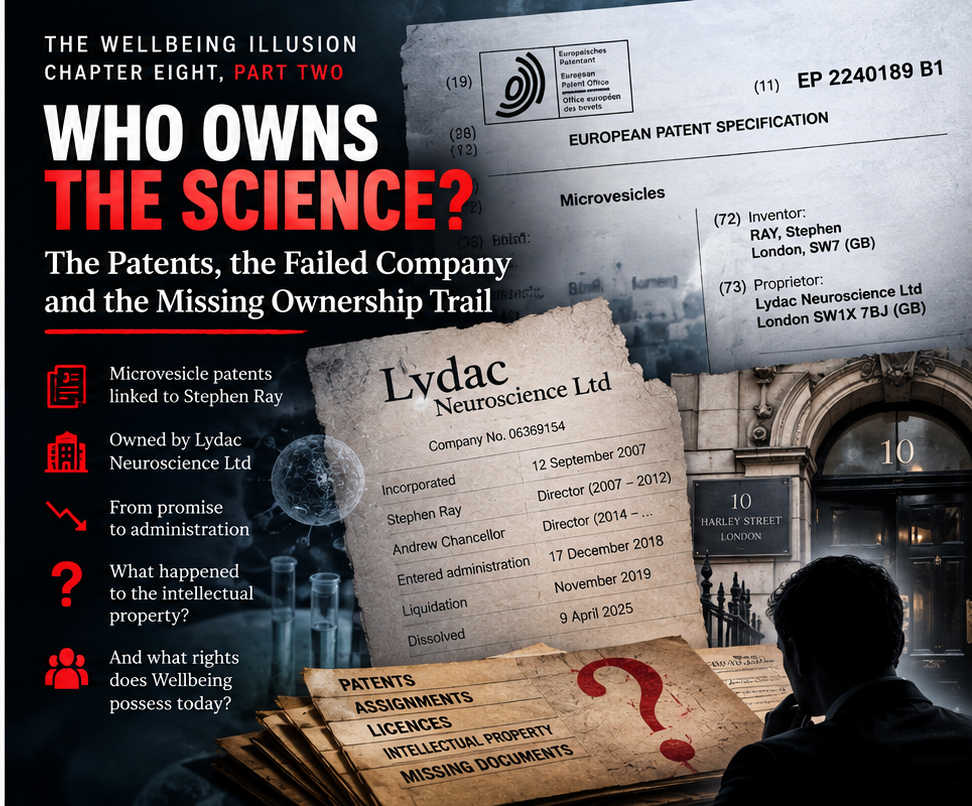
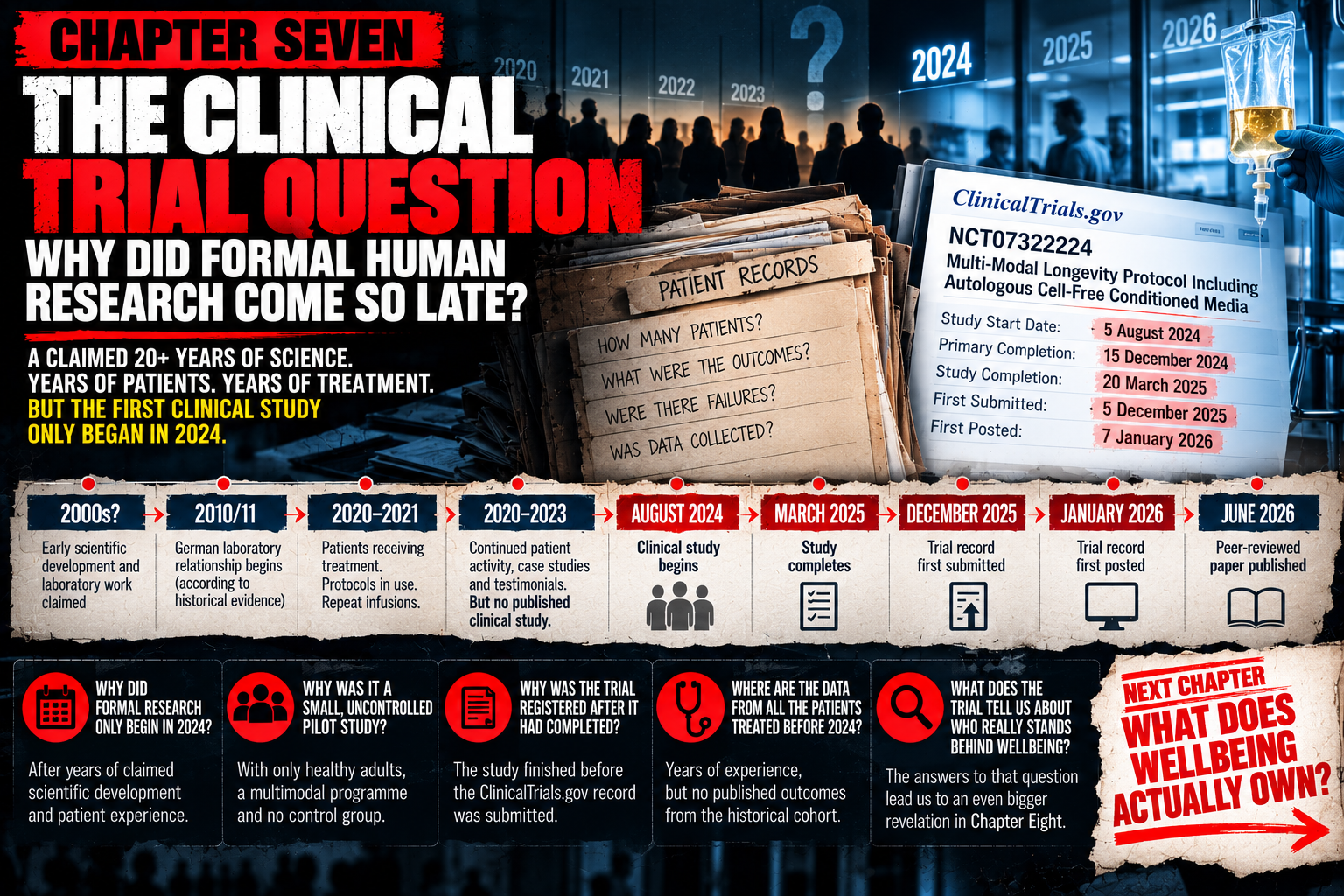
The Clinic With No Clinic? Inside the Corporate Structure Behind Wellbeing International Foundation Ltd

May 15, 2026

Share this article

As investigators continued examining the structure behind Wellbeing International Foundation Ltd,

Publicly, the organisation presents itself as a pioneering force in regenerative medicine — a groundbreaking operation positioned at the forefront of advanced stem cell science, ethical healing, and innovative therapies.

The branding is polished.
The language is ambitious.
The imagery projects scientific authority and medical sophistication.


But behind the carefully managed presentation, investigators repeatedly encountered the same unanswered question:

Where is the actual clinic?


A Medical Leader — Without Medical Leadership?

For any organisation presenting itself as a transformative force within advanced medicine, the public naturally expects to find certain fundamentals:

  • specialist doctors,
  • clinical directors,
  • laboratory scientists,
  • regulated treatment facilities,
  • and transparent medical oversight.

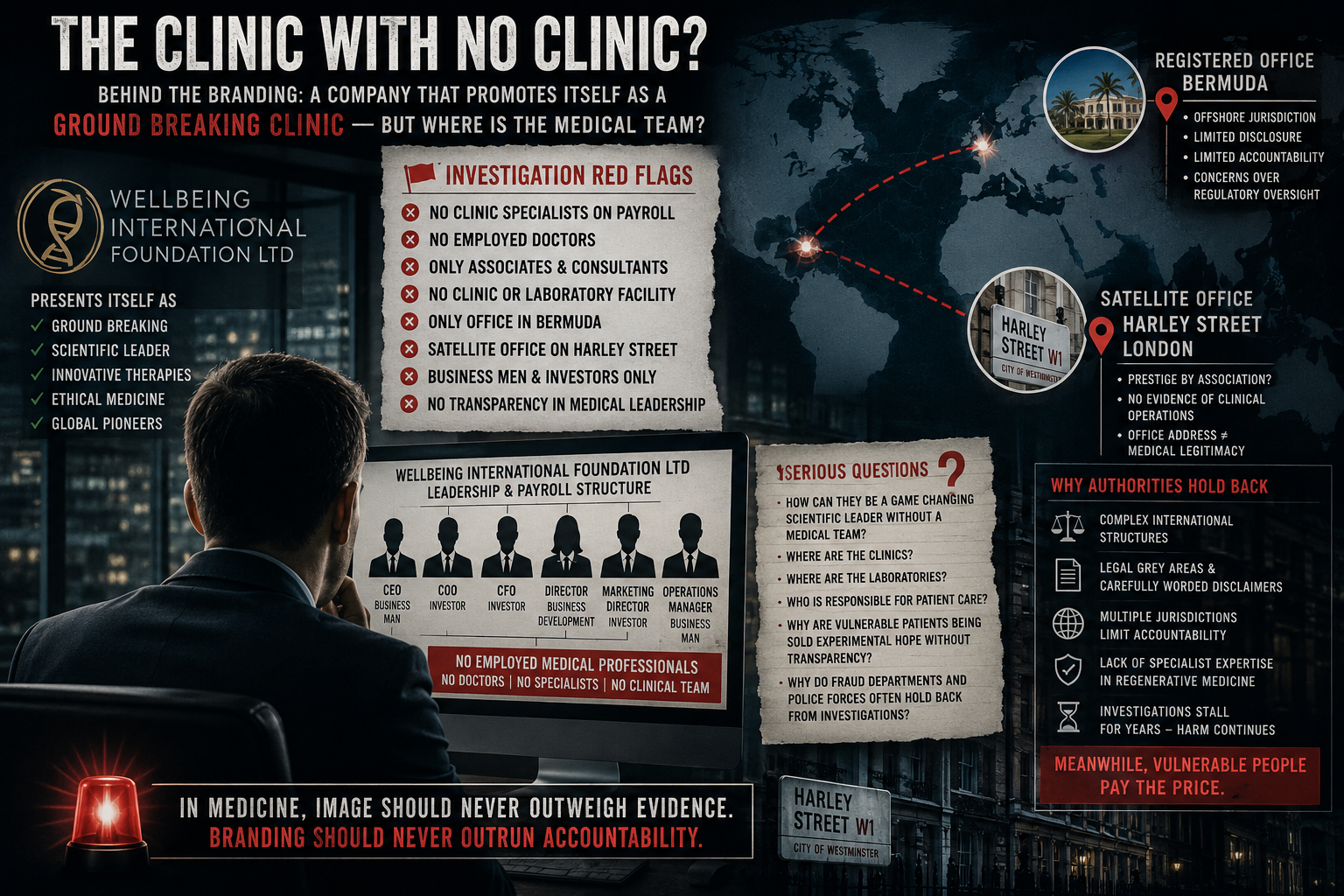
Yet investigators examining publicly available company information, biographies, and operational structures struggled to identify a visible in-house clinical core.

Instead, the structure appears heavily weighted toward:

  • business development,
  • consultancy relationships,
  • investment-linked operations,
  • external affiliations,
  • and commercial leadership.

According to public biographies published online, Managing Director Andrew Chancellor’s background is described primarily in banking, executive recruitment, commercial strategy, and business development rather than medicine or clinical practice.

Additional interviews and promotional profiles similarly reference commercial and recruitment sectors prior to involvement in regenerative medicine and bioscience ventures.

That fact alone does not imply wrongdoing.

Business professionals operate within healthcare industries every day.

However, it does raise an important public-interest question:

How does an organisation market itself as a world-leading regenerative medicine authority while its visible leadership structure appears rooted predominantly in business rather than transparent clinical expertise?


The Missing Infrastructure

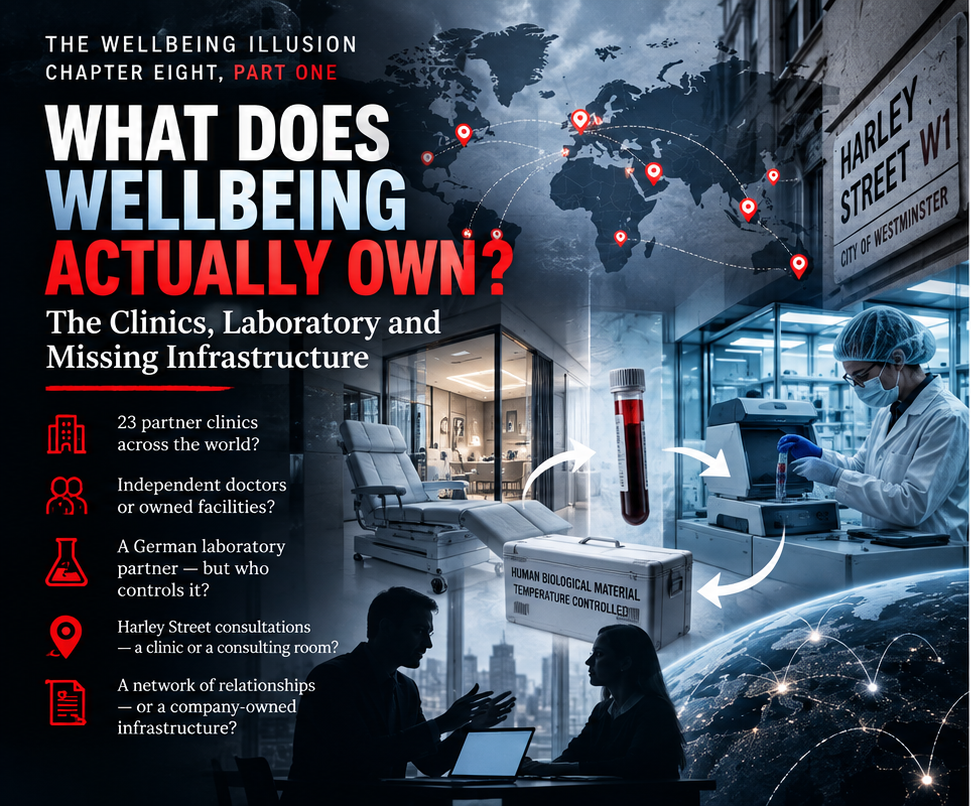
As the investigation deepened, further concerns emerged regarding the apparent absence of substantial clinical infrastructure directly owned or operated by the organisation itself.

Investigators struggled to identify evidence of:

  • owned hospitals,
  • permanent treatment facilities,
  • in-house laboratories,
  • or a transparent roster of permanently employed specialist doctors directly operating under the company structure.

Instead, the organisation appears to rely heavily upon:

  • consultants,
  • associates,
  • advisers,
  • external clinics,
  • and international affiliate relationships.

This distinction is critical.

Because vulnerable patients searching online for hope often believe they are engaging directly with fully established medical institutions when in reality they may instead be entering complex commercial networks operating across multiple countries and jurisdictions.

That gap between perception and reality sits at the centre of growing concerns surrounding the regenerative medicine industry worldwide.


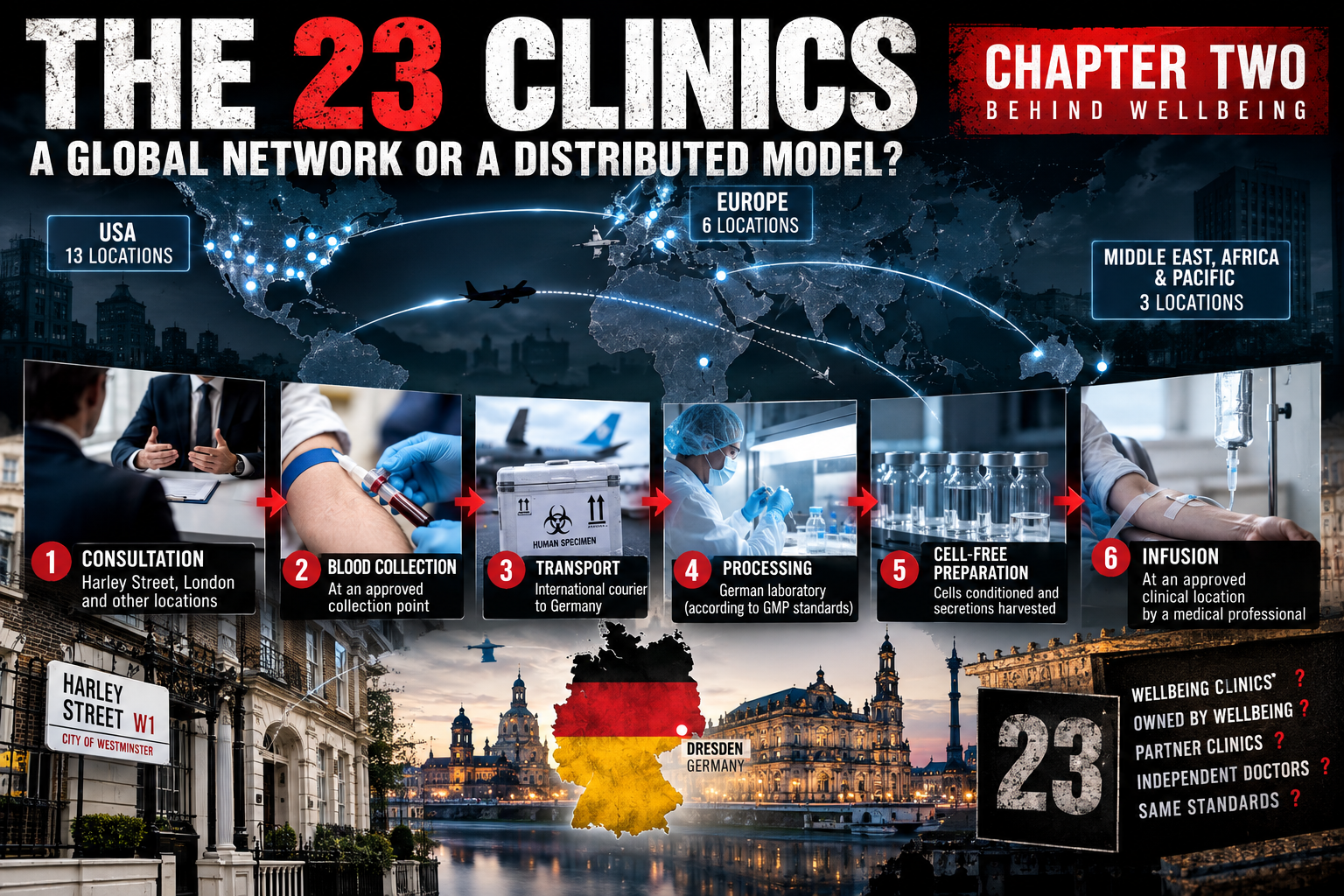
The Power of Harley Street

One of the most striking elements investigators encountered was the organisation’s connection to Harley Street — one of the world’s most recognised medical addresses.

For generations, Harley Street has been associated with elite private healthcare, specialist medicine, and medical prestige.

But investigators caution against confusing a prestigious address with clinical infrastructure.

Serviced offices, meeting rooms, consultation spaces, and satellite business facilities are widely available throughout Harley Street.

The postcode itself carries enormous commercial value.

Simply operating from, renting space within, or holding consultations in Harley Street does not automatically make an organisation a world-leading medical institution.

Yet from a branding perspective, the association can be extremely powerful.

The combination of:

  • luxury presentation,
  • scientific language,
  • professional consultation environments,
  • and a Harley Street address

can create an overwhelming perception of legitimacy in the minds of vulnerable patients.

Investigators therefore began asking a difficult question:

Are some regenerative medicine organisations leveraging the reputation of Harley Street itself to project a level of scientific authority that exceeds the visible reality of their underlying infrastructure?


Offshore Structures and Bermuda

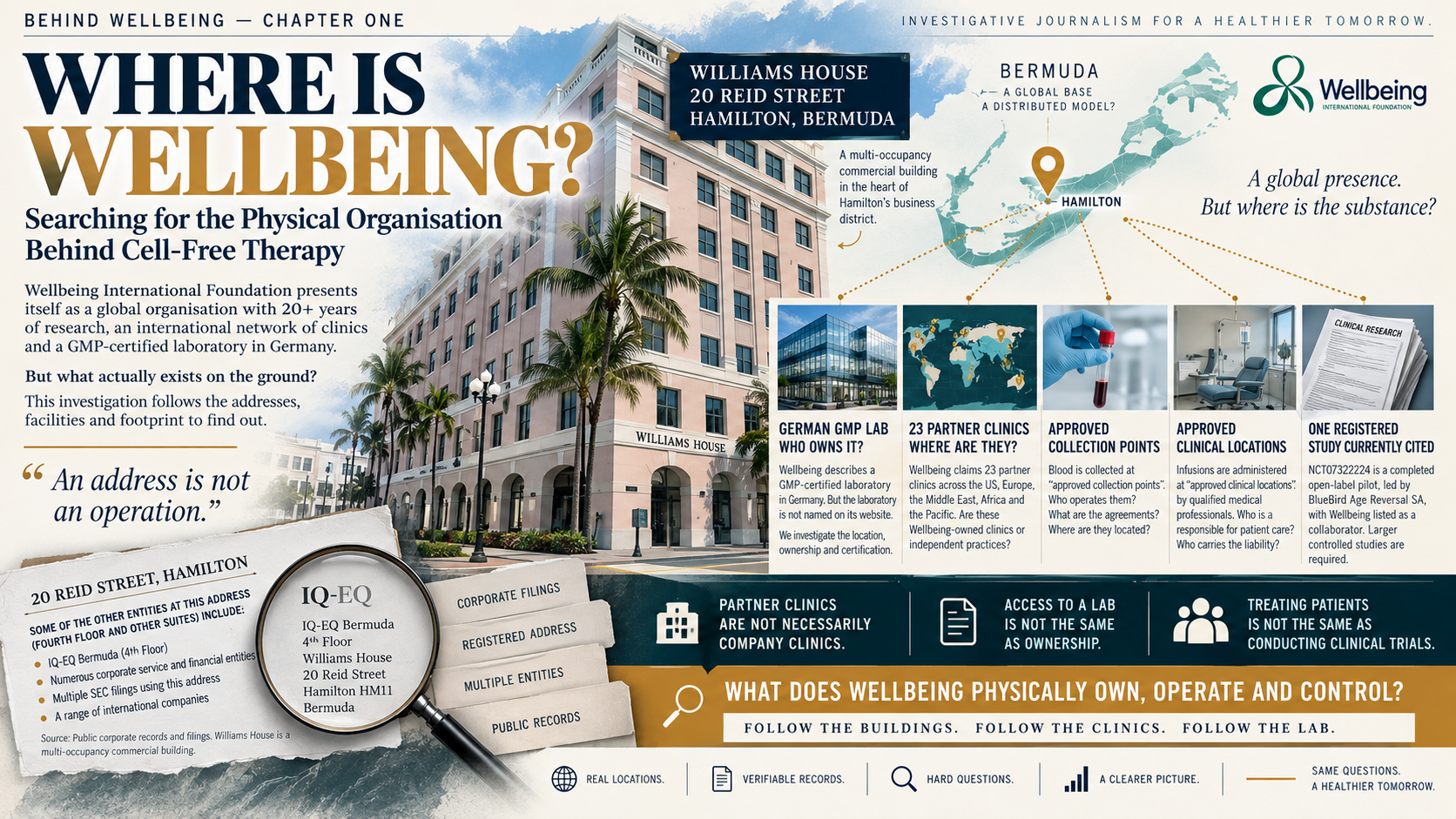
The investigation also uncovered links to Bermuda — an offshore jurisdiction commonly used within international business structures.

Again, offshore registration is not inherently improper.

Many legitimate global companies operate through offshore entities for legal and financial reasons.

However, within sectors involving expensive experimental medical treatments and vulnerable patients, offshore structures naturally raise additional questions regarding:

  • accountability,
  • transparency,
  • jurisdiction,
  • regulatory oversight,
  • and legal responsibility.

Patients considering life-changing therapies deserve to know:

  • who regulates the treatments,
  • where complaints can be pursued,
  • which legal systems apply,
  • and who ultimately carries responsibility if something goes wrong.

Yet investigators repeatedly encountered structures appearing significantly more international and corporate than medically transparent.


The Business of Hope

One theme continued emerging throughout this investigation:

Hope itself has become an industry.

The regenerative medicine sector now operates within a highly emotional marketplace involving:

  • autism,
  • neurological disorders,
  • chronic pain,
  • autoimmune disease,
  • anti-ageing,
  • and degenerative conditions.

Families facing serious diagnoses are often desperate for answers.
Patients living with chronic illness are often willing to try anything.
Conventional medicine can leave many people emotionally exhausted.

That creates a uniquely powerful commercial environment.

And within that environment, branding matters enormously.

Investigators observed repeated use of language centred around:

  • breakthroughs,
  • transformation,
  • healing,
  • advanced therapies,
  • innovation,
  • and life-changing treatment possibilities.

Importantly, many claims appear carefully phrased to imply hope without making direct guarantees.

That distinction matters.

Because emotionally suggestive language can be enormously persuasive even when explicit medical promises are avoided.


Why Authorities Often Struggle to Intervene

One of the most frustrating aspects of the regenerative medicine sector is how difficult it can be for regulators and law enforcement agencies to intervene quickly.

Why?

Because many operations function within carefully managed legal grey areas.

The structure itself creates complexity:

  • multiple jurisdictions,
  • offshore companies,
  • affiliate clinics,
  • consultants instead of direct employees,
  • carefully worded disclaimers,
  • and implied rather than explicit claims.

As a result, fraud investigators often face enormous evidential challenges before enforcement action can even begin.

Operations may present themselves as educational, experimental, consultative, or wellness-focused rather than directly claiming guaranteed medical outcomes.

That legal ambiguity allows many organisations to continue operating while scrutiny slowly builds around them.

Meanwhile, vulnerable patients continue searching online for hope.


The Question That Demands an Answer

This investigation does not claim that regenerative medicine itself lacks scientific potential.

It unquestionably remains an important area of ongoing research.

Nor does this investigation seek to make criminal allegations unsupported by evidence.

But it does raise serious public-interest concerns about the widening gap between:

  • scientific appearance,
  • commercial branding,
  • and transparent clinical accountability.

If an organisation presents itself as a revolutionary medical leader, the public deserves clear answers regarding:

  • who the doctors are,
  • where the clinics are,
  • where the laboratories are,
  • who regulates the treatments,
  • and who carries responsibility when vulnerable patients place their trust — and often enormous sums of money — into the system.


Because in medicine, image should never outweigh evidence. And branding should never outrun accountability.
Recent Posts

May 15, 2026
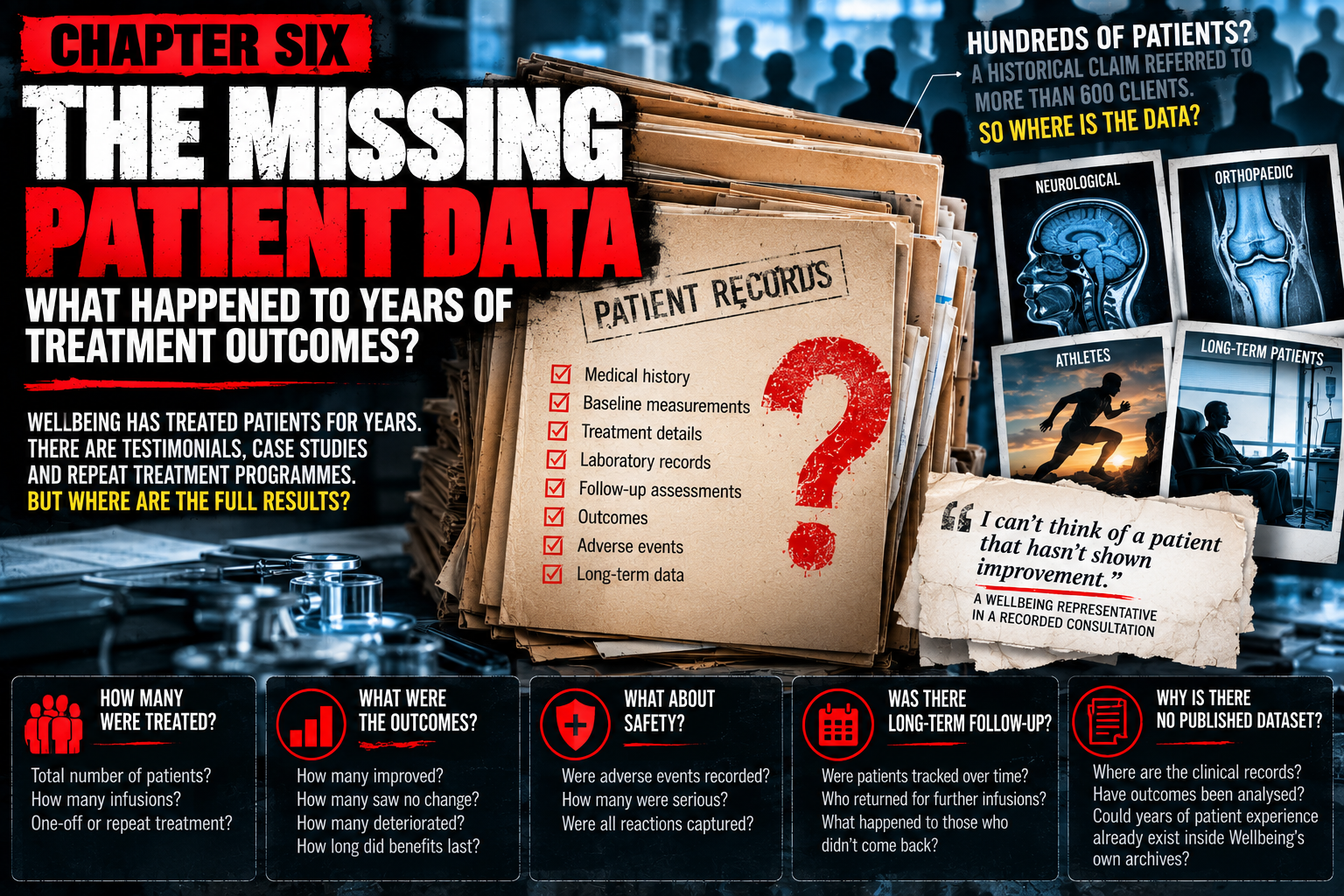
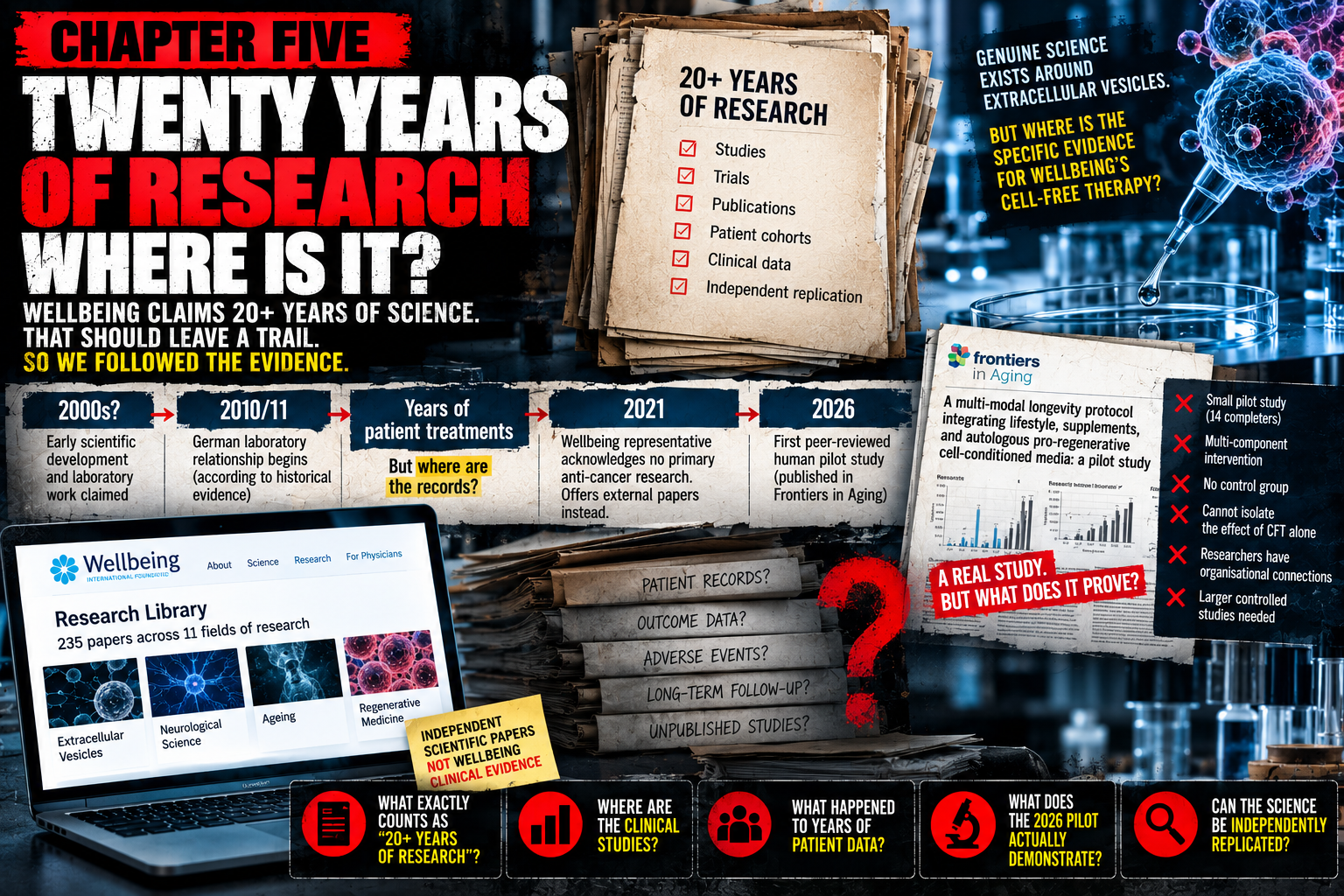
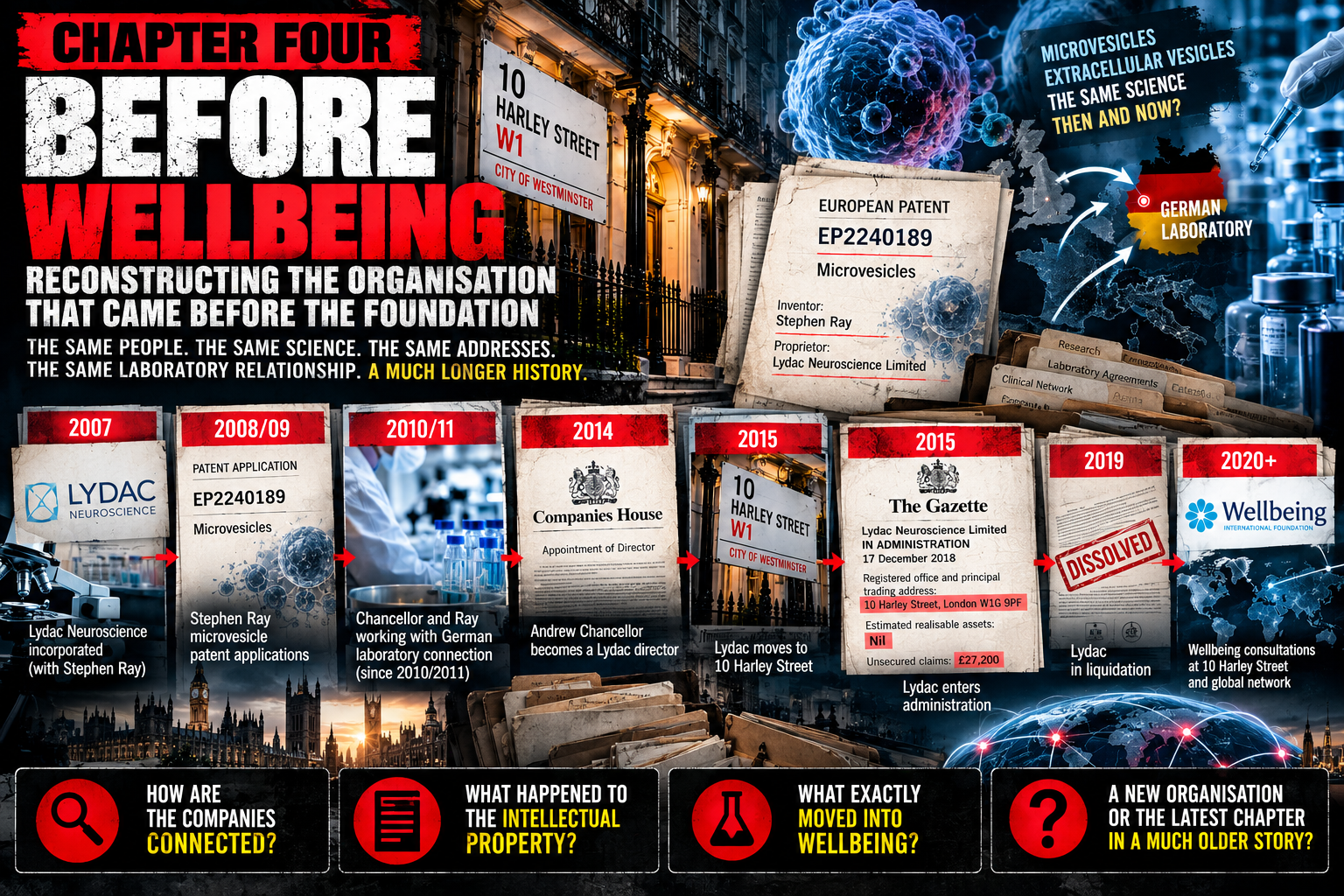
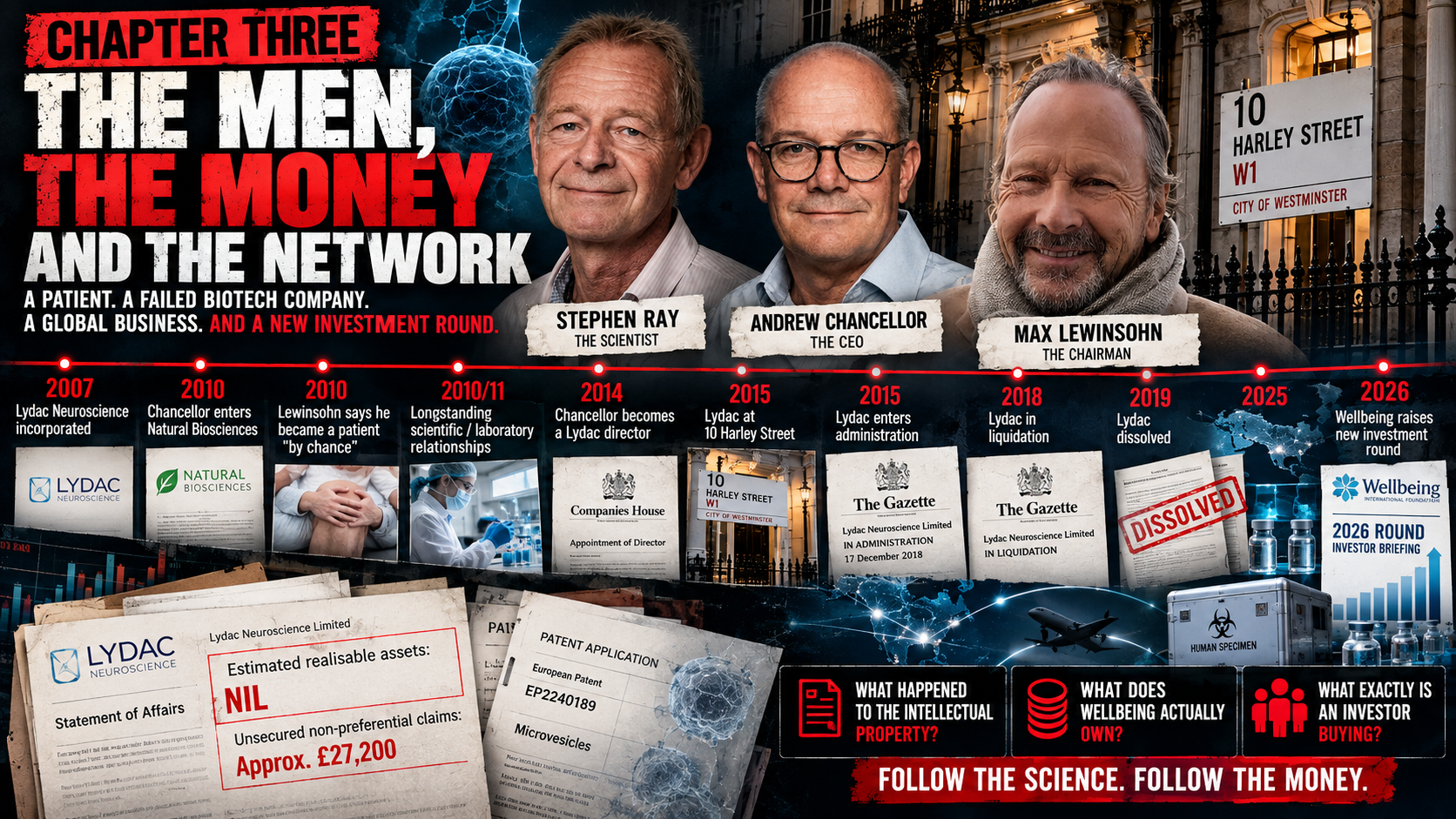
For months, investigators have examined the digital footprint, corporate structure, public marketing, and leadership profiles connected to Wellbeing International Foundation Ltd.
May 10, 2026
WELLBEING INTERNATIONAL FOUNDATION TESTIMONIALS
May 10, 2026
WELLBEING INTERNATIONAL FOUNDATION LTD: “ETHICAL HEALING”
May 3, 2026
The commercial stem cell industry has grown rapidly over the past decade, with clinics around the world advertising regenerative medicine programs for conditions ranging from chronic pain to neurological disorders. Among the most controversial areas is autism. Families searching online are now routinely exposed to clinics promoting stem cell therapies as potential solutions for behavioural, developmental, or communication difficulties associated with autism spectrum disorder (ASD). But according to major medical authorities, parents should be extremely careful before committing to expensive experimental treatments. No Major Regulator Has Approved Stem Cell Therapy For Autism At present: The U.S. Food and Drug Administration has not approved stem cell therapy as a treatment for autism. The National Health Service does not recognise stem cell therapy as a standard autism treatment. European regulators continue treating most autism-related stem cell therapies as experimental. Researchers continue studying the field. But experimental science and established medical treatment are not the same thing. The Problem With Commercial Marketing Critics argue that some clinics blur the line between scientific possibility and proven outcome. Common marketing techniques include: Emotional recovery stories Before-and-after videos Technical medical language Claims of “advanced” therapy References to inflammation or neurological repair However, many scientists say evidence supporting these claims remains limited or inconclusive. Understanding Autism Complexity Autism is not a single illness. It is a broad developmental spectrum involving: Communication differences Behavioural traits Sensory variation Neurological diversity Because autism naturally develops differently in every child, measuring treatment success becomes highly complicated. Experts warn that developmental progress may sometimes occur naturally over time regardless of experimental intervention. What Treatments Have Better Scientific Support? While no treatment cures autism, specialists generally recommend evidence-based support approaches such as: Speech and language therapy Occupational therapy Behavioural intervention Educational support Social development programs Family support services Major organisations providing evidence-based information include: National Autistic Society https://www.autism.org.uk/ Centers for Disease Control and Prevention https://www.cdc.gov/autism/ World Health Organization https://www.who.int/ Autism Speaks https://www.autismspeaks.org/ Questions Families Should Ask Before Paying Experts recommend parents ask: Is this treatment regulator-approved? What peer-reviewed evidence exists? What are the known risks? What percentage of patients show no benefit? Are claims independently verified?  Evidence Before Emotion Families searching for hope deserve compassion, transparency, and honesty. Stem cell science remains an active research field. But until stronger clinical evidence exists, many experts believe autism-related stem cell treatments should be approached with serious caution — particularly when large sums of money and vulnerable families are involved.
May 3, 2026
As commercial stem cell clinics continue expanding across Europe and beyond, increasing numbers of families affected by autism are being introduced to expensive regenerative medicine programs marketed as cutting-edge alternatives to conventional therapy. One organisation repeatedly mentioned during conversations with former clients and concerned families is Wellbeing International Foundation LTD. This article does not accuse the clinic of criminal behaviour or fraud. However, as concerns surrounding commercial autism-related stem cell treatments continue growing internationally, experts say families should approach all such clinics with careful scrutiny. Why Autism Has Become A High-Interest Market Autism spectrum disorder affects millions of families worldwide. Because there is no single cure — and because developmental progress can vary enormously from child to child — families are often vulnerable to treatments marketed as innovative or revolutionary. Investigators reviewing the regenerative medicine sector have identified repeated themes in clinic advertising: Hope-based messaging Emotional testimonials Scientific jargon “Breakthrough” language Claims of advanced neurological repair Large financial commitments For many parents, distinguishing between genuine science and commercial optimism can become extremely difficult. THE MAIN WARNING SIGNS 🚩 Clinics Suggesting One Treatment Can Help Many Conditions Experts urge caution when the same therapy is promoted for: Autism Neurological disease Chronic pain Anti-ageing Immune conditions Degenerative illness Complex medical conditions require highly specific evidence. 🚩 Testimonials Used As Primary Evidence Powerful personal stories can influence emotions deeply. But regulators repeatedly warn that testimonials alone do not prove clinical effectiveness. 🚩 Scientific Terminology Without Clear Proof Families should ask clinics to clearly explain: How treatments work What evidence exists What outcomes are independently verified Complicated language is not the same as scientific certainty. 🚩 Significant Financial Commitments Many families report spending very large sums on: Consultations Treatment programs Flights Accommodation Repeat procedures without guaranteed outcomes. 🚩 Overseas Structures And Limited Oversight International treatment arrangements can complicate: Legal accountability Consumer rights Medical regulation Long-term follow-up The Ethics Of Hope Medical ethics experts have increasingly raised concerns about the emotional vulnerability of families searching for autism support. Parents naturally want to help their children. That emotional reality can make high-promise treatments especially persuasive. Critics argue that hope should never be marketed in a way that risks creating unrealistic expectations.  Questions Families Should Always Ask Before committing to any stem cell-based autism treatment, families should request: Published evidence Independent clinical data Long-term outcomes Full risk disclosures Regulatory status information Transparency matters. Especially when vulnerable families are involved.
May 3, 2026
For many parents raising children with autism, life becomes a constant search for answers. Therapies. Specialists. Diets. Support groups. New research. Alternative medicine. And increasingly, stem cell clinics. Over recent months, Investigations Desk has spoken with families who say they pursued expensive regenerative medicine treatments for autistic children after being exposed to persuasive marketing campaigns promising potential improvements in communication, behaviour, focus, and cognitive function. One parent — who we will identify only as Mr X to protect the child’s privacy — described a journey that began with optimism but eventually turned into doubt. According to Mr X, the family underwent multiple treatment procedures after being encouraged to believe stem cell-based therapies could potentially assist with autism-related symptoms. Initially, every small behavioural change felt significant. But over time, the family says they began questioning whether the treatments had actually produced any measurable improvement at all. “You want to believe something is happening,” Mr X explained. “As a parent, you analyse every little change because you desperately want your child to improve.” The family says the emotional pressure surrounding the process made objective judgment increasingly difficult. The Rise Of Autism As A Commercial Treatment Market Autism spectrum disorder has become one of the fastest-growing target areas within the global regenerative medicine industry. Across websites and social media platforms, clinics frequently advertise: Stem cell therapy Exosome therapy Neuro-regenerative medicine Immune modulation programs Cellular repair treatments Many use emotional testimonials alongside highly technical scientific language which can be difficult for ordinary families to independently verify. Investigators examining this sector have repeatedly identified recurring marketing patterns: Dramatic recovery stories Scientific terminology with limited explanation Expensive treatment packages Overseas treatment arrangements “Breakthrough” medical language Claims that conventional medicine is “behind” What Science Currently Says Despite aggressive online marketing, there is currently no universally accepted regulator-approved stem cell cure for autism. Research into stem cells and neurological conditions does exist. However, leading experts continue warning that experimental research should not be confused with established medical treatment. Autism itself is an extremely complex developmental condition involving a broad spectrum of behavioural and neurological differences. That complexity makes it particularly difficult to scientifically measure treatment claims being promoted commercially. Hope And Vulnerability Parents affected by autism are not foolish for exploring possibilities. They are hopeful. And hope can become extremely powerful when families feel conventional support systems are slow, limited, or overwhelmed. Critics of the commercial stem cell industry argue that some clinics may unintentionally blur the line between experimental science and proven medical outcomes. That concern is now drawing increasing international attention from regulators, scientists, and consumer protection groups.  The Bigger Question Mr X says the family eventually decided to speak privately with investigators after recognising similarities between their experience and concerns now being raised globally about commercial regenerative medicine businesses. “We’re not against research,” he said. “But families need to know the difference between evidence and hope.” That distinction may now sit at the heart of one of the most controversial debates in modern alternative medicine.
April 24, 2026
There is a pattern. Once you’ve seen it, you can’t unsee it.
April 24, 2026
This Isn't Medicine Its a Business Model....
Show More