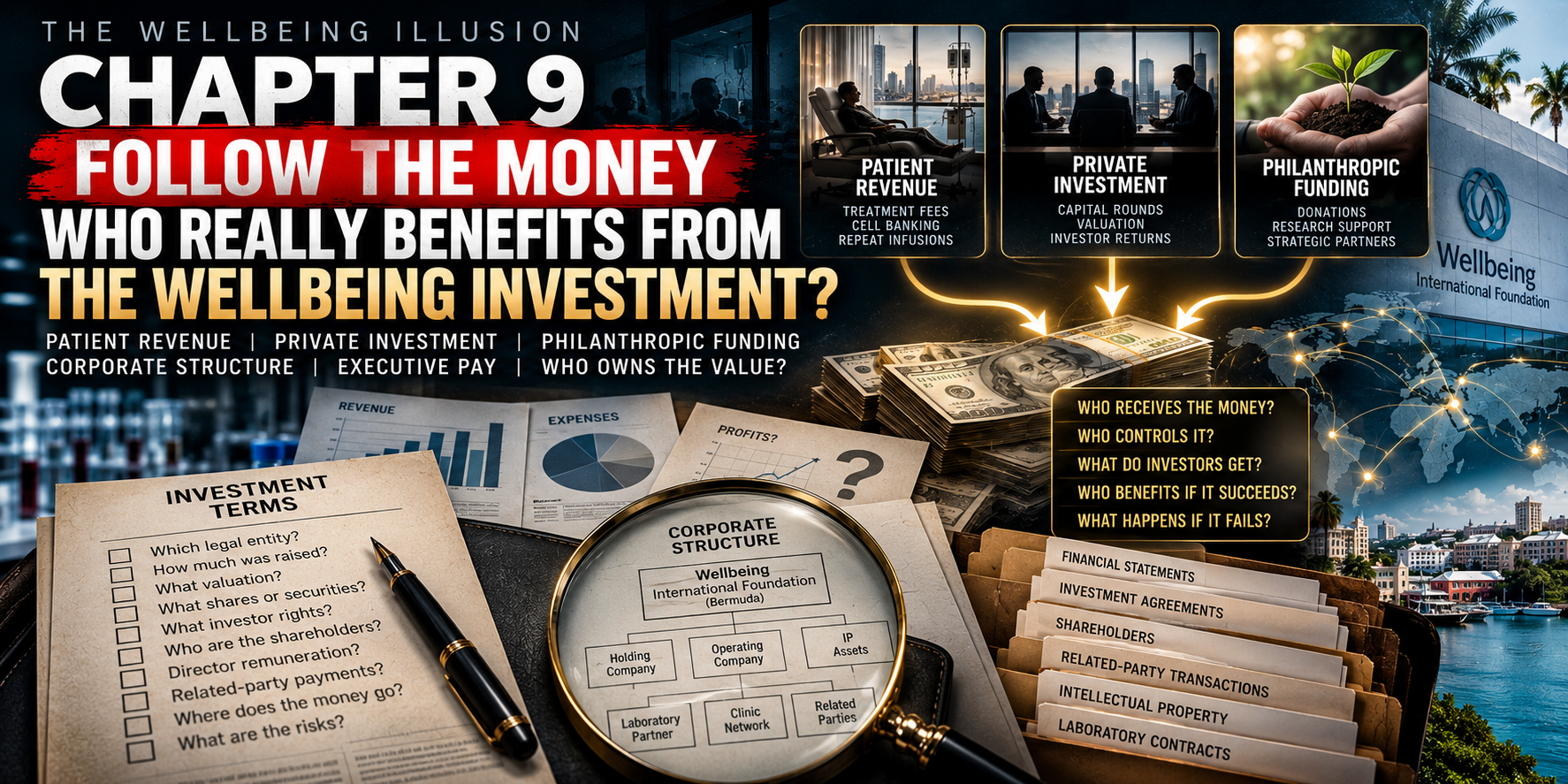
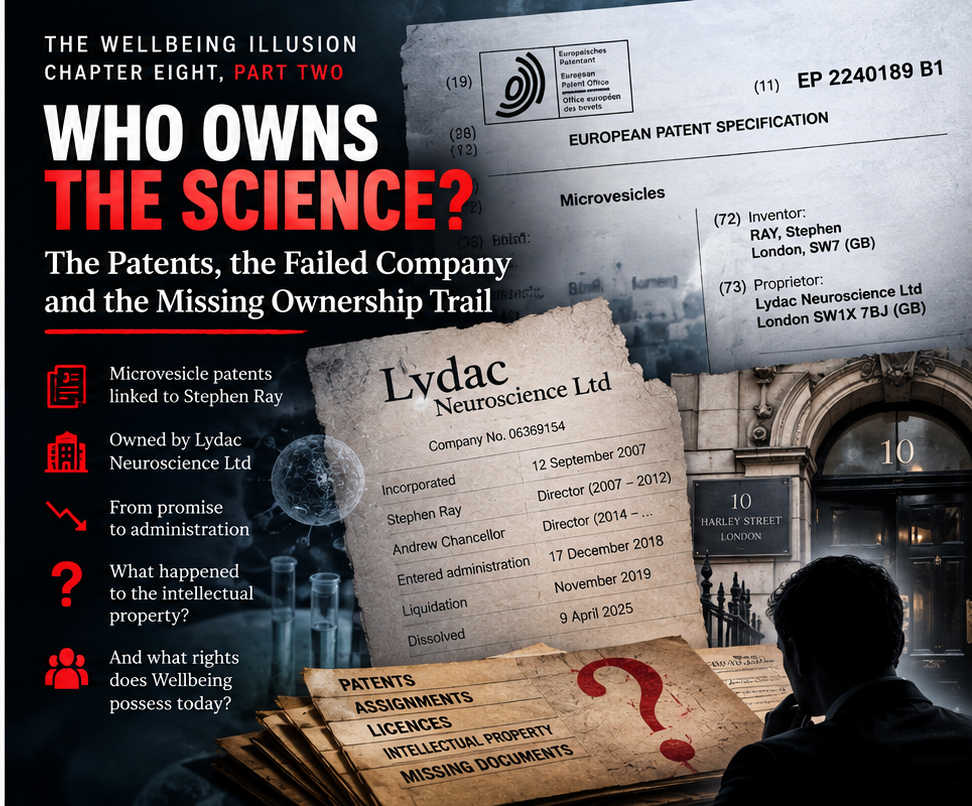
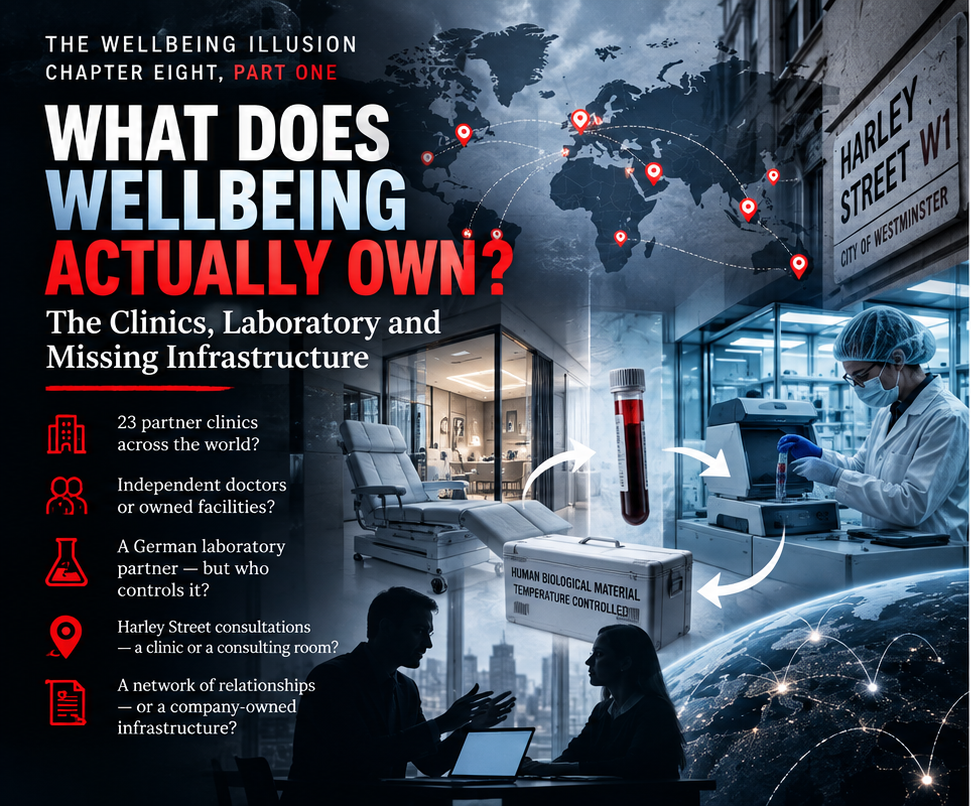
In previous reporting, we examined the rapid growth of the UK’s private stem cell treatment market — a sector criticised for operating ahead of clear clinical evidence while charging patients tens of thousands of pounds.
Now, attention turns to one organisation operating within that space:
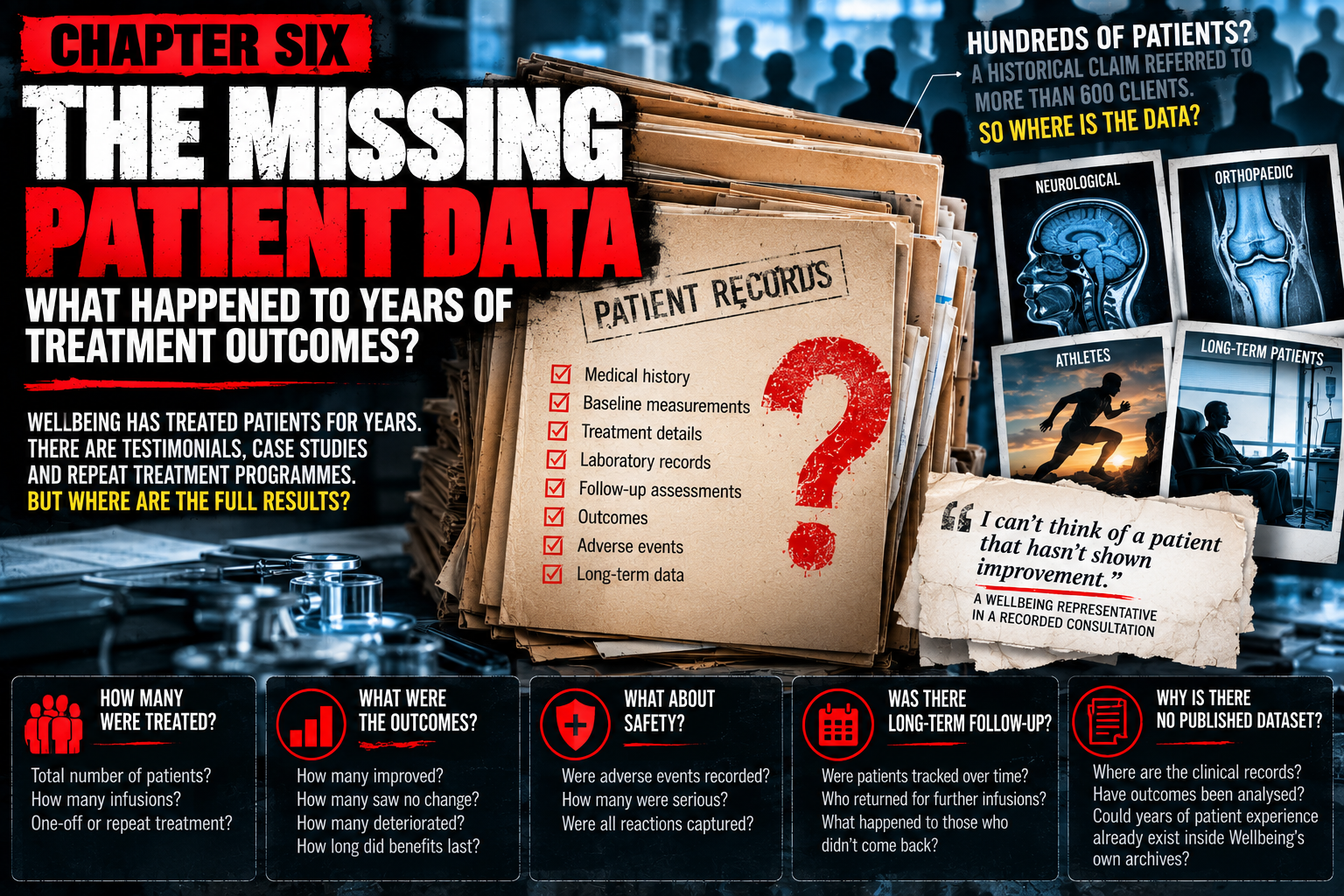
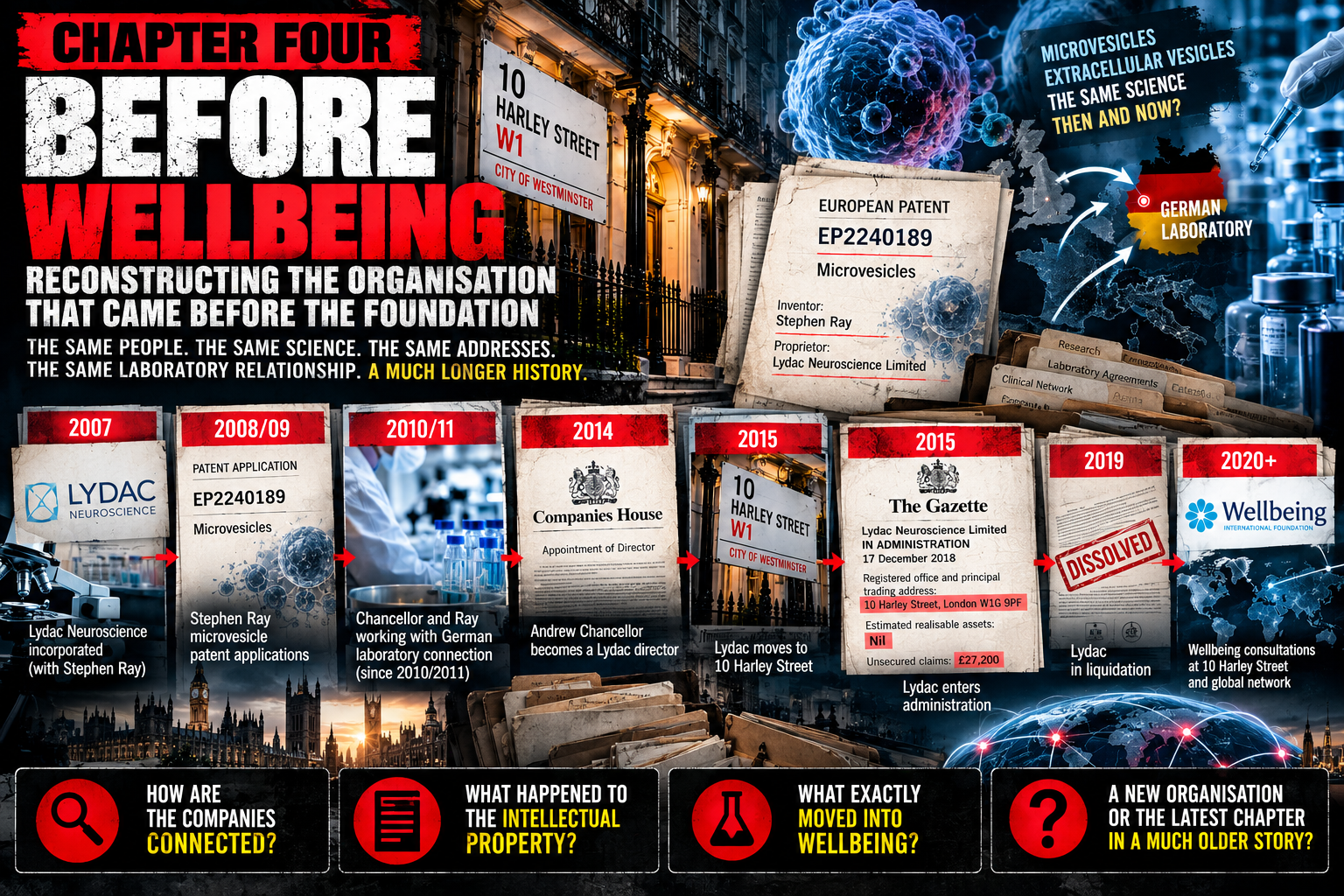
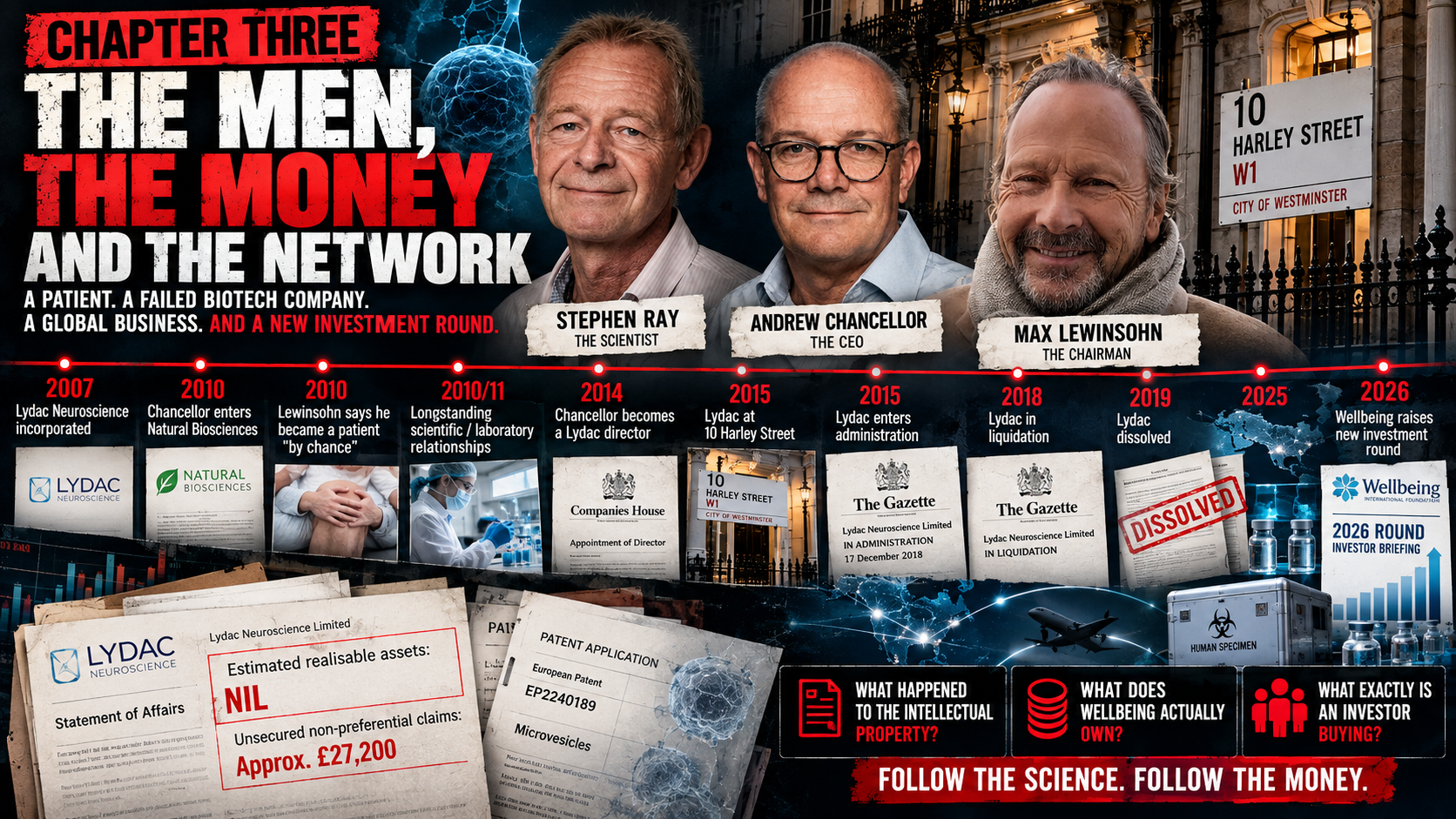
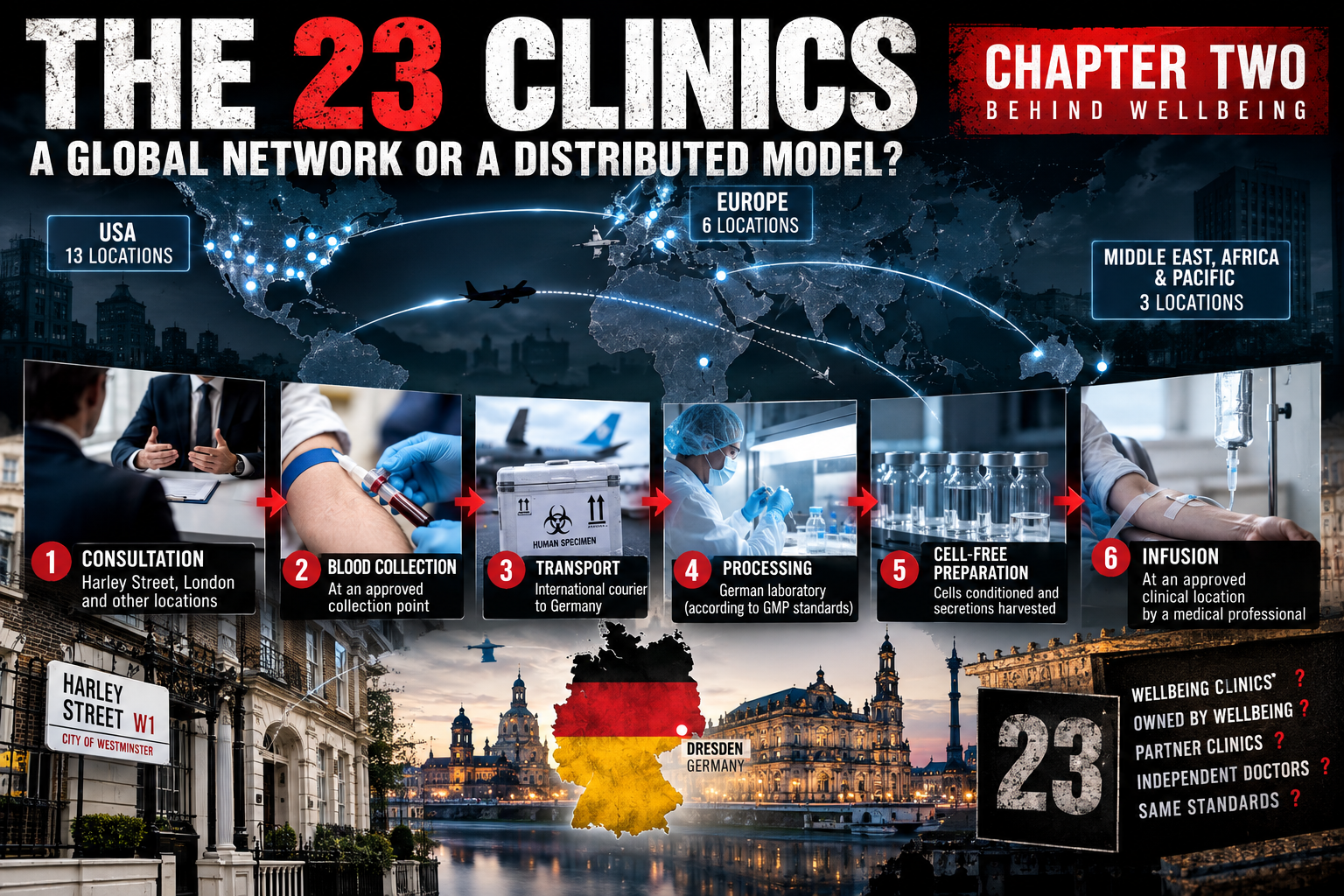
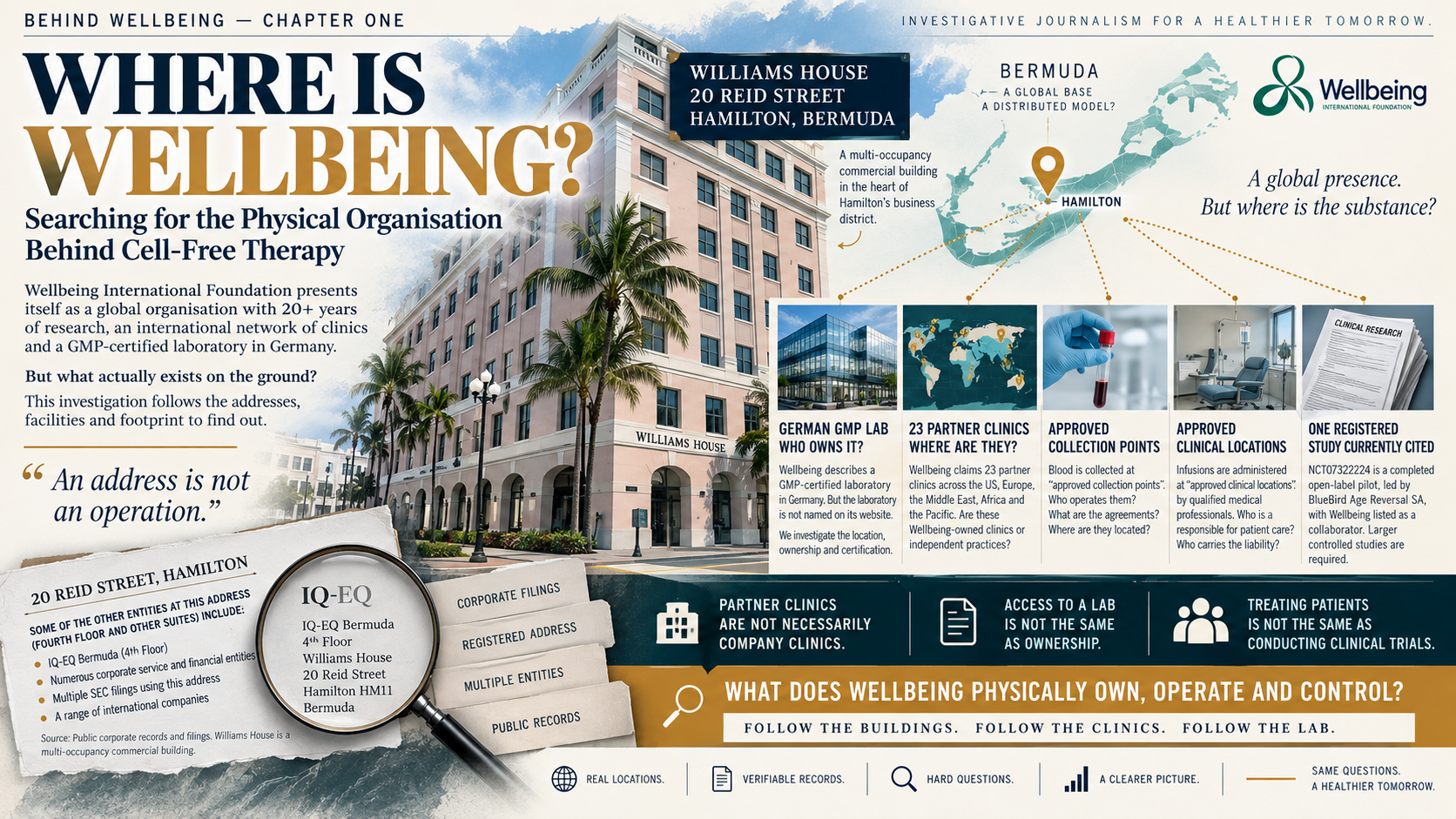
Wellbeing International Foundation Ltd (WIFL).
This article does not make findings of wrongdoing.
Instead, it examines whether patterns identified across the wider industry appear to be reflected in one specific case.
The Consultation Model
Across the industry, a consistent structure has emerged:
- Initial enquiry through online or referral channels
- Follow-up consultation
- Discussion centred on patient condition and potential outcomes
- Introduction of high-cost treatment options
In material reviewed during this investigation, a similar consultation structure appears to be present in interactions linked to WIFL.
Accounts describe:
- Long-form conversations focused on conditions and symptoms
- Strong emphasis on potential improvement
- Gradual transition toward treatment recommendation
As seen across the wider sector, the consultation appears to function as both:
information gathering — and decision shaping.
Pricing and Positioning
Industry-wide, stem cell and exosome treatments are frequently priced between £20,000 and £50,000+, depending on protocol and condition.
In separate enquiries connected to WIFL, pricing discussions have been reported within a comparable range.
Costs were framed not simply as treatment fees — but as:
“packages” or “programmes” of care.
This mirrors a broader industry trend where treatment is positioned as a comprehensive solution, rather than a single intervention.
The Language of Possibility
One of the most consistent features across the sector is the careful use of language.
Avoiding guarantees — while reinforcing potential outcomes.
Phrases commonly reported include:
- “We’ve seen strong results”
- “Many patients improve”
- “This could help your condition”
Similar language patterns have been observed in communications linked to WIFL.
This approach sits in a space that is:
- Persuasive
- Legally cautious
- Open to interpretation by patients
Who Is Leading the Conversation?
A recurring concern within the broader stem cell industry is who delivers the consultation.
Patients across multiple cases have reported:
- Speaking with individuals not clearly identified as medical doctors
- Receiving guidance from “advisors” or “specialists”
- Unclear delineation between medical and non-medical roles
Material reviewed in relation to WIFL suggests similar questions may arise regarding roles and qualifications within the consultation process.
This raises a wider issue:
When discussing medical treatment, how transparent should credentials be?
Scientific Framing and Credibility
Across the industry, treatments are often supported by references to:
- Research institutions
- Scientific developments
- Emerging regenerative medicine
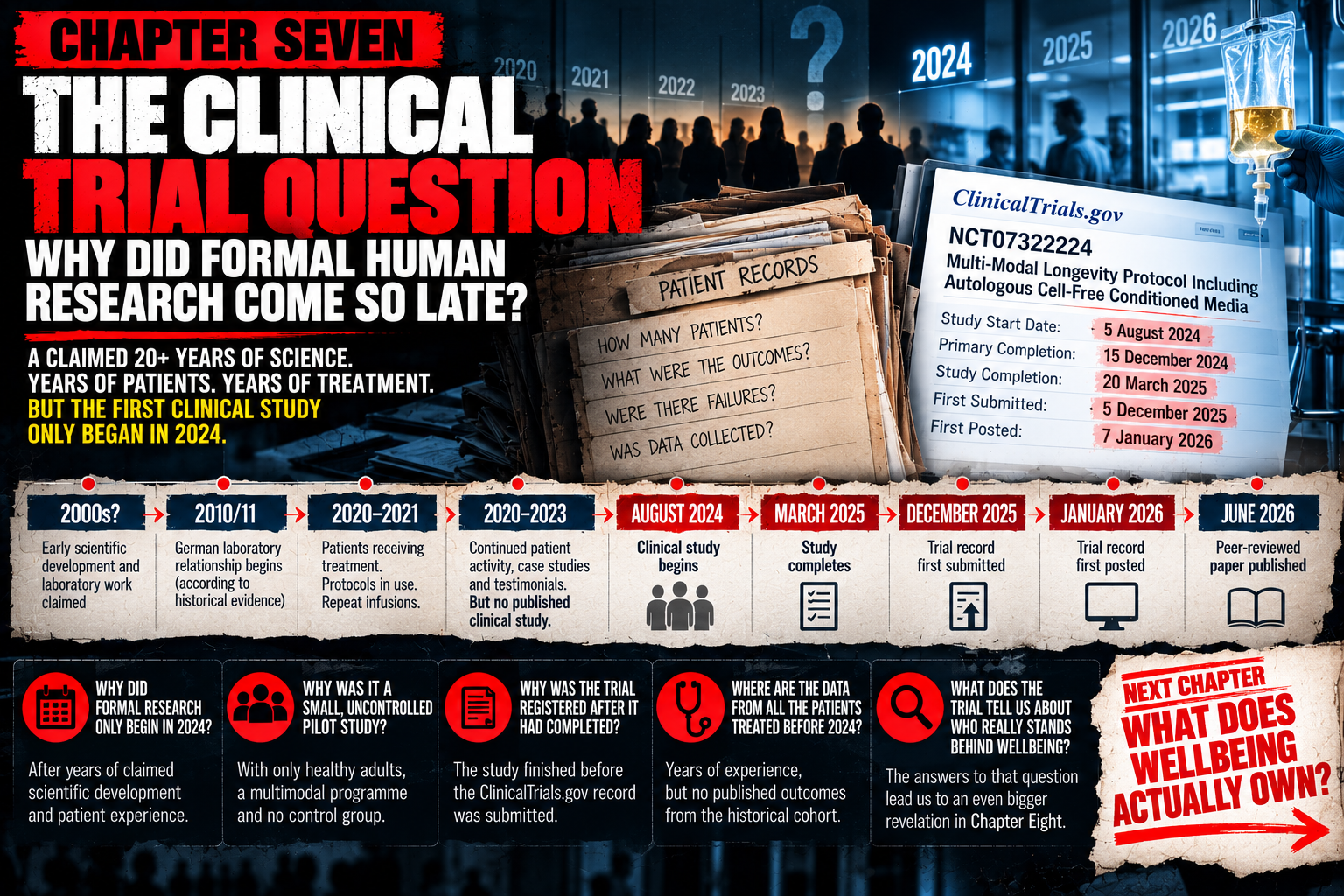
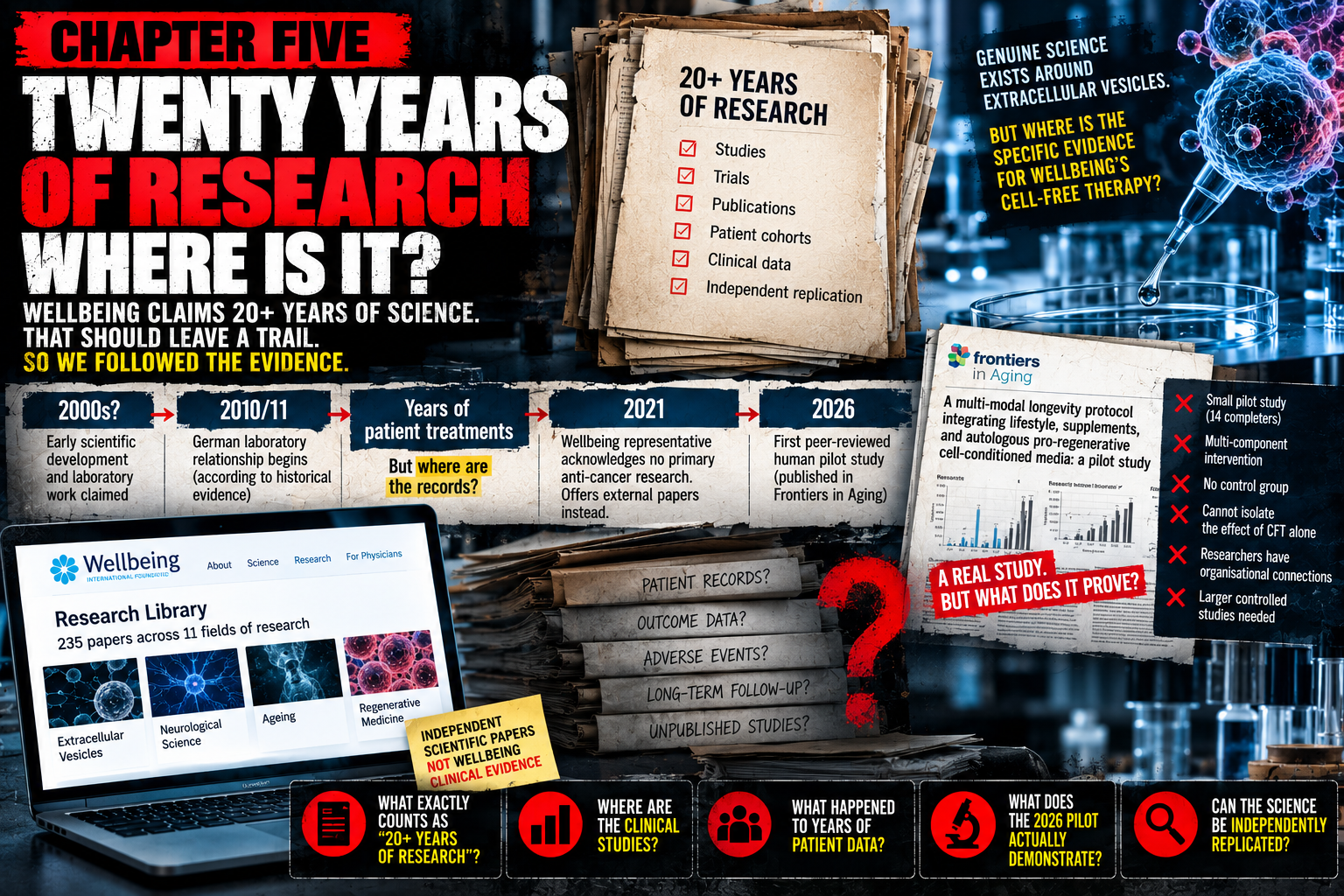
In the case of WIFL, references have been made to scientific work and associated research environments.
However, as explored in earlier reporting, parts of the broader regenerative medicine landscape have historical links to research controversies and investigations.
This does not establish direct connection or wrongdoing.
But it reinforces the importance of:
clear, transparent, and verifiable scientific grounding when treatments are marketed commercially.
A Familiar Structure
When viewed side by side, the similarities are difficult to ignore.
Across both:
- The wider stem cell treatment industry
- And the case of WIFL
We see recurring elements:
- High-cost private-pay treatment models
- Consultation processes that shape decisions
- Carefully framed language around outcomes
- Questions over roles and clinical oversight
- Reliance on emerging or incomplete evidence
Individually, each element may be explainable.
Collectively, they form a pattern.
The Bigger Question
This investigation is not about one organisation alone.
It is about a model.
A model where:
- Innovation meets commerce
- Scientific possibility meets patient vulnerability
- And treatment decisions may be influenced by factors beyond purely clinical need
Conclusion: A Reflection of the Industry?
Wellbeing International Foundation Ltd is not operating in isolation.
The structures, language, and pricing observed appear — at least in part — to reflect a broader industry approach.
Whether that represents:
- Standard practice
- A regulatory gap
- Or something requiring closer scrutiny
…remains an open question.
But one thing is clear:
This is no longer about individual clinics.
It is about an entire sector — and how it chooses to operate.